Mar 4, 20269 min read
12 of the Best Places to Visit in NamibiaOct 22, 2025
11 MIN READ
Contributors
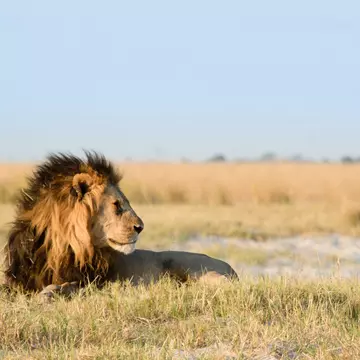
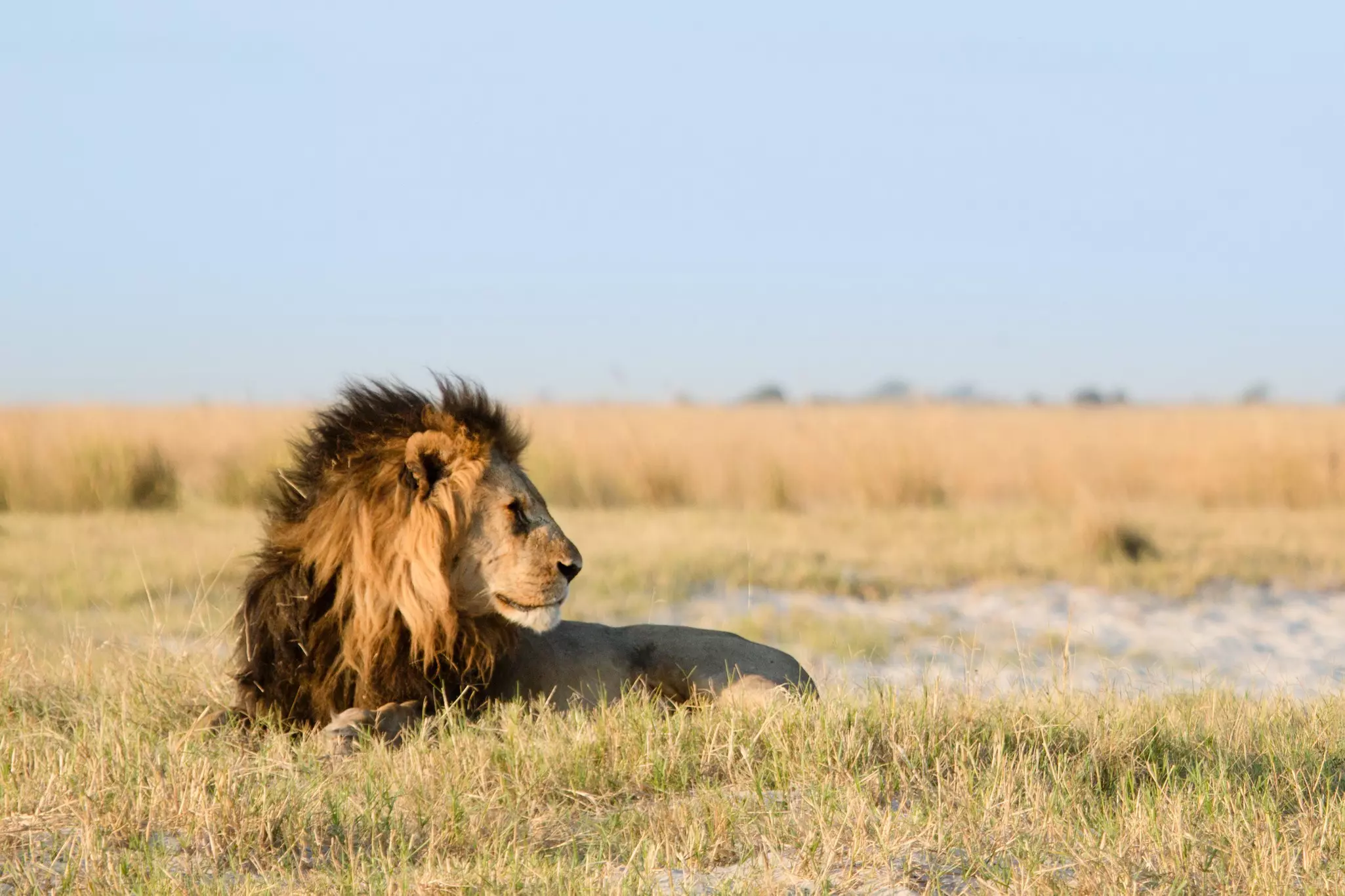
A black-maned lion in Central Kalahari Game Reserve. 2630ben/Shutterstock
Contributors

Stephanie McEvoy, Mary Fitzpatrick
Highlights
Writers Mary Fitzpatrick and Stephanie McEvoy share 12 Namibia highlights, desert to coast.
Begin in Windhoek for history, then walk the bleached-bone shores of the Skeleton Coast.
Climb Sossusvlei's towering dunes at dawn, then stargaze over the Namib Desert at night.
Safari Etosha for elephants and rhinos, or hike the otherworldly Fish River Canyon.
Lonely Planet may earn a commission from affiliate links on our site. All recommendations and reviews reflect our own independent opinions.
Namibia is a nation with some of the most incredible landscapes on earth, boasting vast expanses of desert, mountains, canyons and savannahs.
Hike across crimson dunes, past towering rock formations and lush countryside. Hire a car and take a road trip over black-tar roads that slice through dusty, gravel plains beneath dramatic pink clouds. Walk among ancient acacias that defy nature as they stand tall, dead but not petrified, stretching towards the sun.
Camp out in the desert and gaze up at the stars in one of the top dark sky locations on the planet. Explore a diamond-mining-settlement-turned-ghost-town. All of this and more awaits you in glorious Namibia.
Most international flights arrive in Windhoek, the country’s capital and largest city, so your Namibia adventure will likely begin and end here. Linger for a few days: There's plenty to see and do, especially for history buffs.
A good first stop is the Independence Memorial Museum, which rises imposingly over the city and houses sobering artifacts, drawings and dioramas that illustrate the country’s history and its struggle for freedom. Don’t miss the views over the city from the café-bar balcony on the museum’s top floor. From here, look down onto the now-closed Old Fortress, of which construction began in 1890, making it Windhoek’s oldest surviving building. Nearby is the Christuskirche (Christ Church), the oldest Lutheran church in Namibia and one of Windhoek’s best-known landmarks.
Local tip: A guided city tour is an excellent way to get an overview of Windhoek, past and present. Katutours and NamFlava City Tours are both recommended.
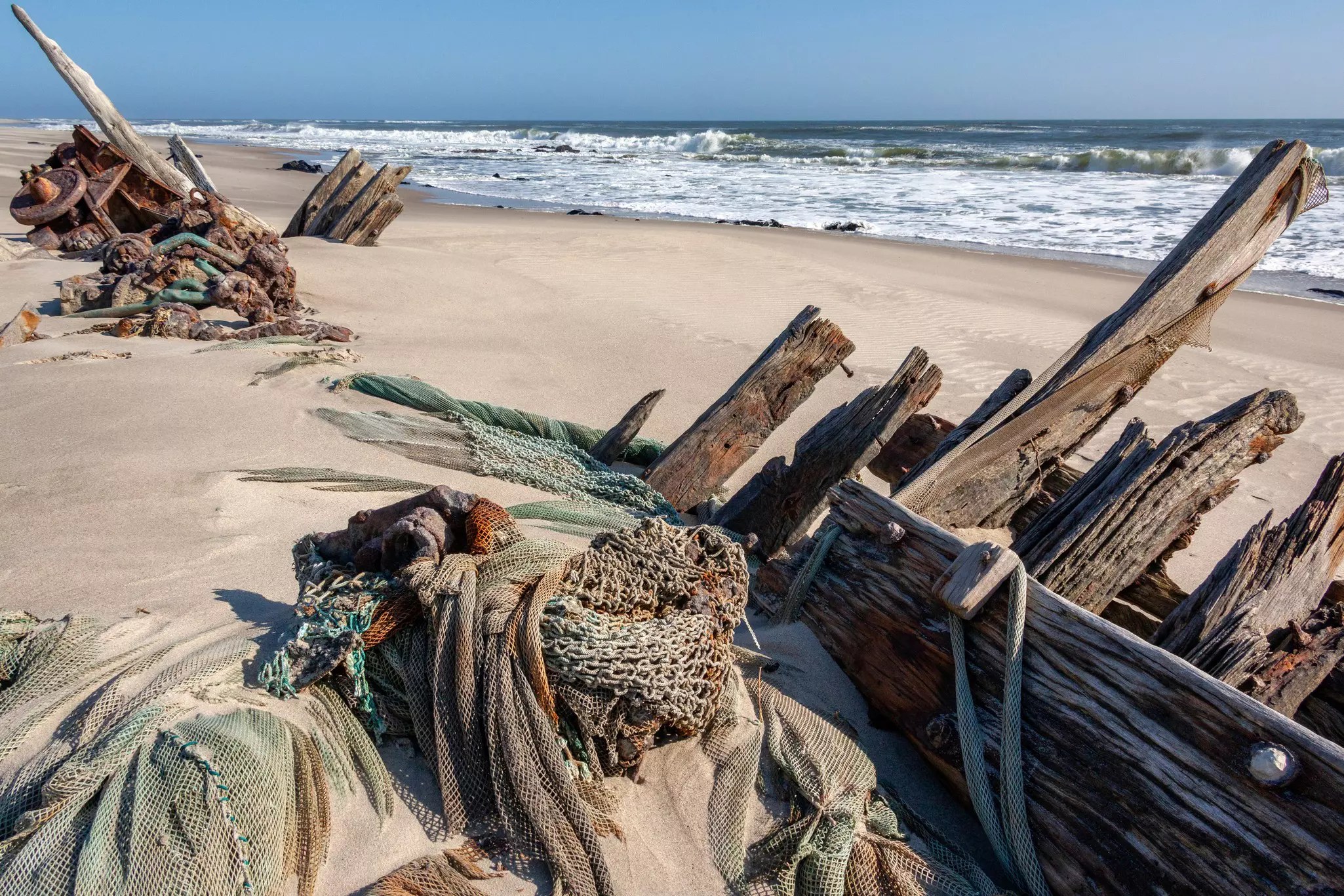
Northern Namibia is home to a hostile and desolate stretch of desert called the Skeleton Coast. The almost constant crashing of waves plus dangerous and hard-to-see rocky outcroppings create a barren and merciless landscape. Named for the broken and rusting remains of the ships that sank and then washed ashore, the beach is also a graveyard for whales and desert wildlife, whose bleached bones litter the golden sand. Sea mist and fog encircle the beach, making a hauntingly ethereal experience.
Planning tip: Wild Expeditions offer bespoke tours of the Skeleton Coast, up to its most remote sections near the Kunene River mouth.
There are few places on earth where giant dunes touch the ocean shore, yet on Namibia’s western coast the dunes of the Namib spread all the way west to an untamed and rarely charted section of the Atlantic Ocean. This part of the coast is hundreds of miles long. For a good introduction, set out from Swakopmund, Namibia’s largest coastal city, on a cycling or 4WD tour over the dunes to the coast, across ephemeral rivers to flamingo-filled lagoons.
Local tip: For a more in-depth dune-and-ocean experience, head to Sandwich Harbour, where massive dunes cascade directly into the sea. Both fat bike and 4WD trips can be arranged, starting in either Walvis Bay or Swakopmund.
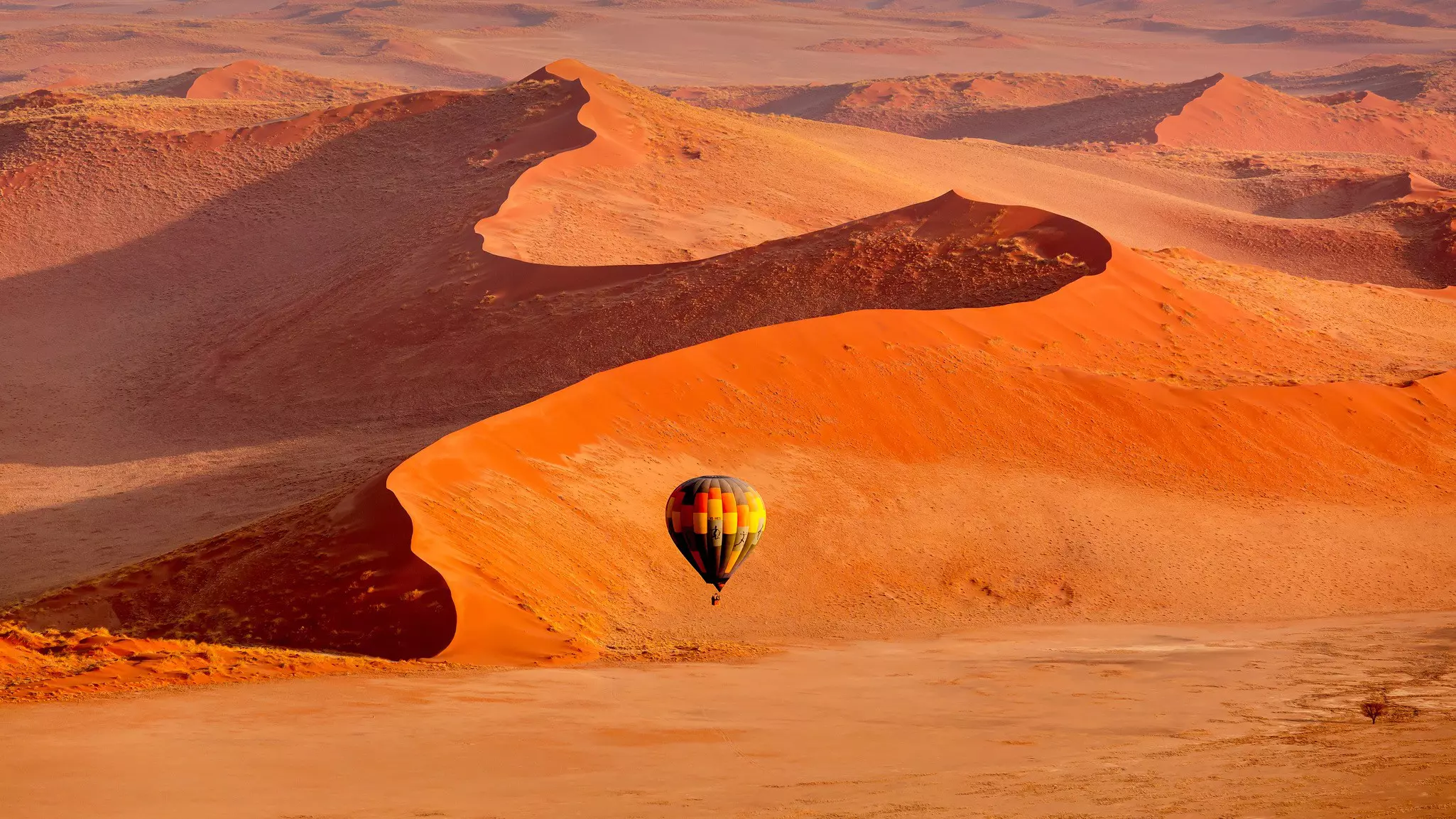
Sossusvlei – a large, usually parched, pan – is one of the best-known attractions in Namibia. The bright orange dunes surrounding it are some of the tallest in the world, and the spectacle of their ochre-hued flanks rising up against brilliant blue skies is one of the country’s most iconic panoramas.
Known as star dunes, they take their shapes from winds that blow in every direction, with razor-thin spines that seem no more than a single grain of sand wide atop the uppermost ridges. The best way to enjoy them is on an early morning climb. A highlight is Big Daddy, the tallest at 325m (1066ft), with its views over Sossusvlei’s smaller but stunning neighboring pan just to the west, Deadvlei.
The name translates to “dead marsh, ” since it was once a lush wetland filled with shrubs and acacia trees. Around 600 years ago, the surrounding dunes rose higher, eventually cutting the river off from the pan for good. All that remain are stark black skeletons of trees. The air is so dry and hot here that the trees will never decompose – rather, they stand as solitary sentinels, silhouetted against the scorched white clay and piercing blue sky.
Planning tip: The launching point to both Sossusvlei and Deadvlei is Sesriem junction, where you’ll find a campsite and nearby lodges. Only two lodges are located within the park gates. The usually busy Sesriem Camp is an ideal budget option, as it is inside Namib-Naukluft National Park’s outer gate, allowing you to get an hour’s jump start before sunrise towards Sossusvlei and the dunes, beating the crowds and the desert heat.
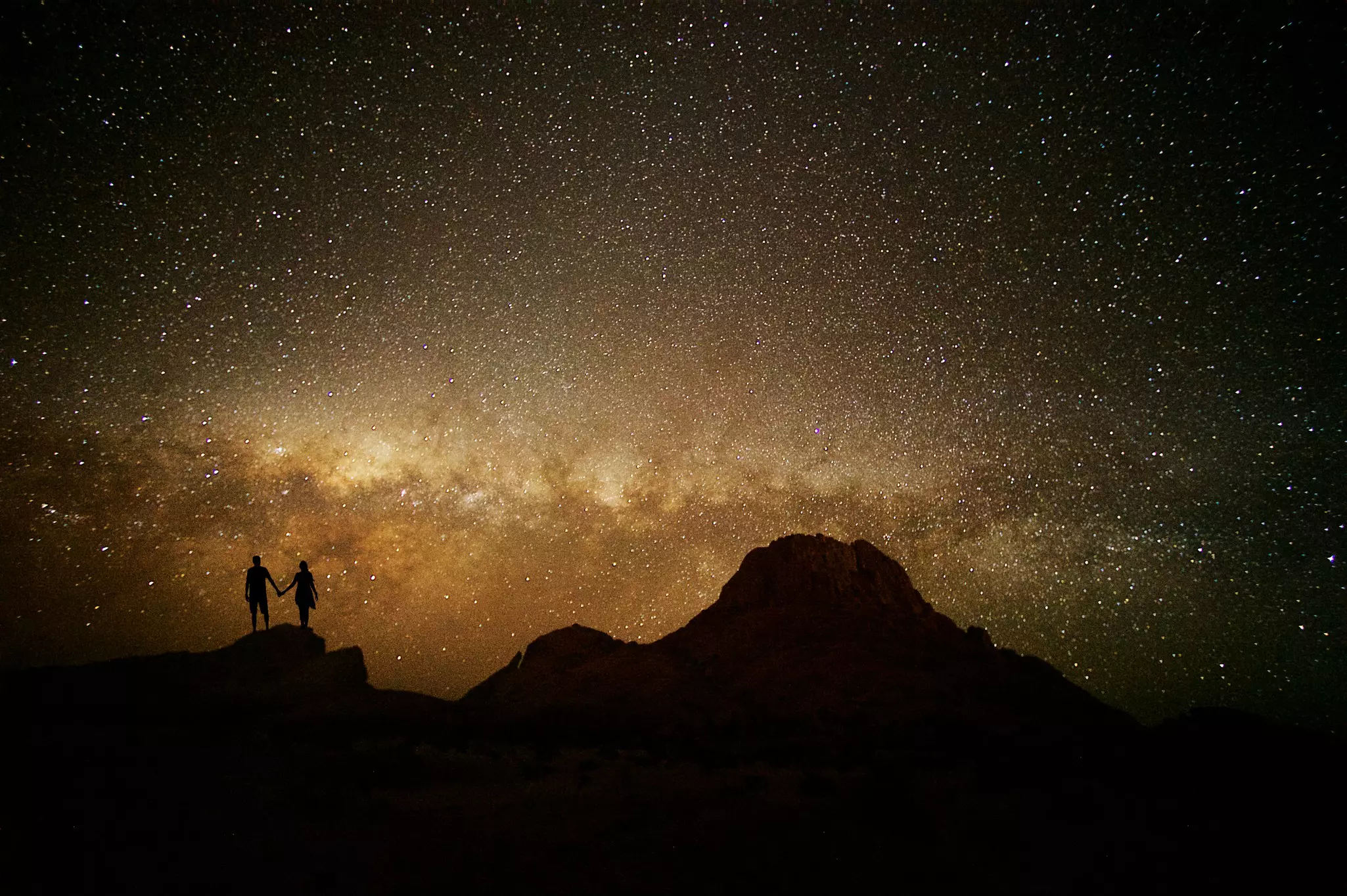
Astrophotographers come from around the world to capture the night sky in Namibia. The Namib Desert is the oldest in the world, and it’s so sparsely populated that much of it has zero light pollution, with guaranteed clear skies in June and July in Sossusvlei. As a result, stargazers enjoy peerless views up to the galactic center of the Milky Way, in all its celestial glory. The Southern Cross constellation is also visible, a rare treat for those visiting from the northern hemisphere.
Local tip: A good spot to watch the stars is Rooisand Desert Lodge. It’s on the edge of the Gamsberg mountain range, en route between Windhoek and Sossusvlei, and has its own observatory.
The Kalahari Desert is a vast and desolate expanse of harsh land and extreme temperatures that nonetheless teems with wildlife – leopards, cheetahs, black-maned lions, herds of elephants and packs of wild dogs are all plentiful here. The desert floor in Namibia turns red as the dunes rise and mix with iron oxide from the Orange River to the south, setting the scene for some of the most iconic sunsets in Africa.
For more than 30,000 years, the Kalahari has been home to the San, Africa’s first people and its oldest culture. Visits to San communities help preserve their hunter-gatherer traditions while offering much-needed support for individuals and families. You’ll also hear one of Africa’s oldest click languages: the San language, called Khoisan. It includes five clicks and is the most distinct of any. Explore these meaningful cultural experiences through living museums, such as that of the Ju/’Hoansi-San, and NGOs such as the Nyae Nyae Conservancy and N/a’an ku sê.
Local tip: If you can’t make it to the Kgalagadi Transfrontier Park in the southern part of the desert, Gondwana’s Kalahari Anib Lodge, easily reached from the main north–south highway, is a good alternative for experiencing the Kalahari area’s beauty. It offers camping and glamping (with Gondwana’s Camping 2Go option).
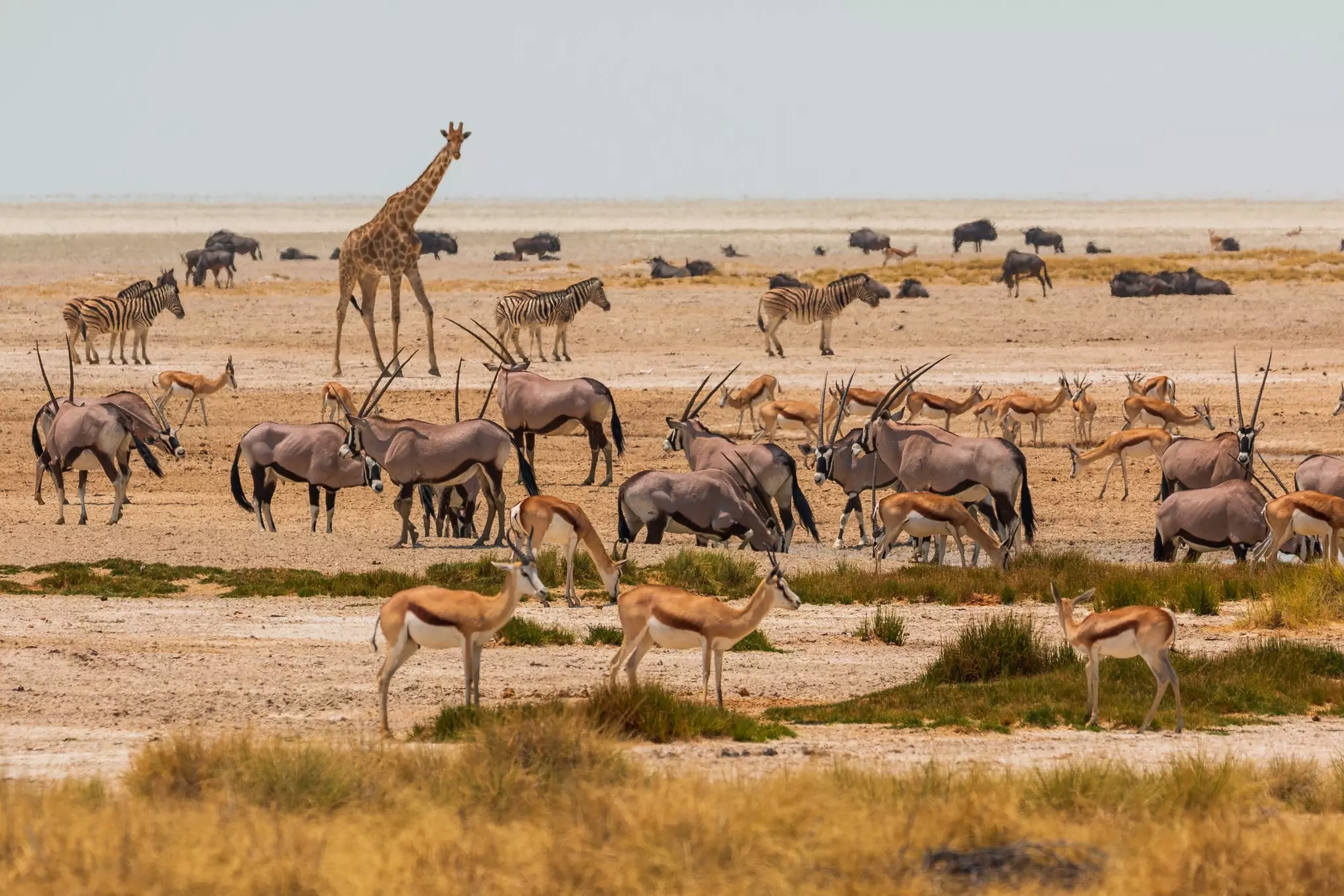
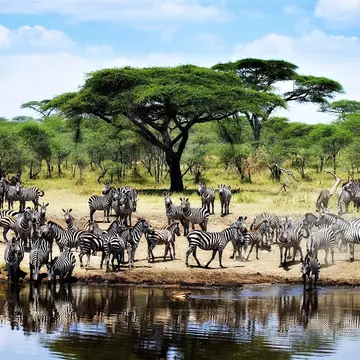
Since many species have adapted to life in the harsh desert, animals in Namibia can be seen from the road or even from your lodge. Yet for the most amazing display of wildlife, take a safari in Etosha National Park to see concentrations of big game like elephants, giraffes, lions, and white and black rhinos. The park is also home to a significant percentage of the world’s cheetahs.
Etosha is famous for its watering holes, some in prime view of game lodges; they offer the chance to see the scores of animals that come from various areas of the dusty pan in search of water. Expert guides drive you in open-air vehicles to the best viewing spots of the day, educating you on species and their behavior, as you watch, mesmerized. The park is also ideally suited for self-drive exploration.
Detour: The main route between Swakopmund and Etosha National Park passes close to Spitzkoppe, Namibia’s most famous peak, with brilliant sunset views in shades of red and orange, and rugged hiking. Further along the route, you’ll reach the Erongo massif and the area around Omaruru, where Ai-Aiba - The Rock Painting Lodge is a popular cycling base.
Viewing Namibia from the air offers magical views of its wildly diverse landscape. Hot-air balloons and doors-off helicopter tours provide unforgettable scenes and photographic opportunities in almost every region of interest. For example, an early morning flight over Sossusvlei lets you watch the sunrise over dune crests, creating sharp contrasts of light and shadow, while flying over the Skeleton Coast in search of shipwrecks offers a bird’s-eye view of this dramatic coastline. Those on a luxury adventure can opt for scenic fly-in safaris.
Planning tip: Swakopmund is the best base for scenic flights over the Namib desert, with many local operators including Sossusfly and Scenic Air. Skeleton Coast Safaris offers flying tours in the north.
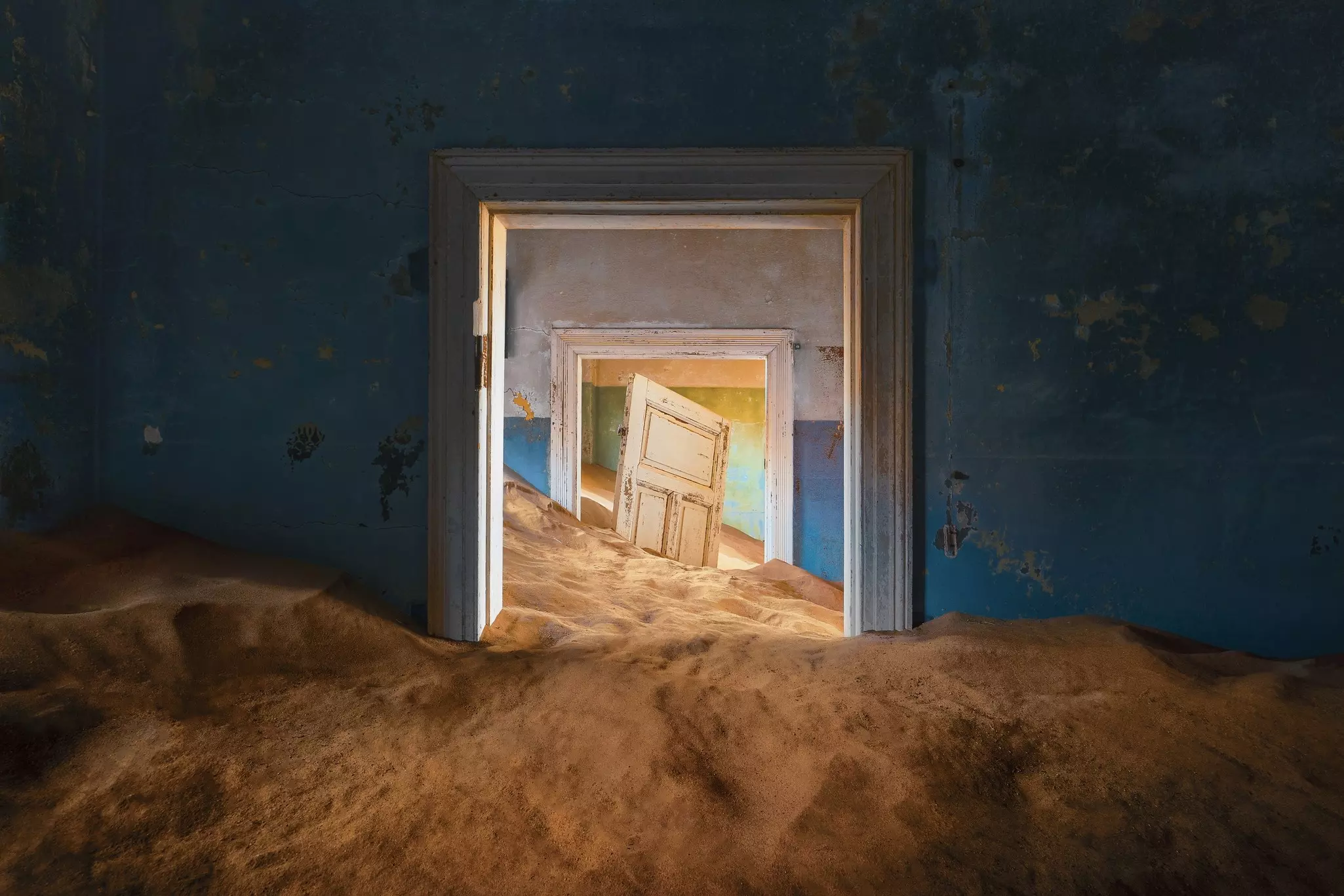
The once-thriving diamond mining settlement of Kolmanskop is now a strangely fascinating ghost town slowly being claimed by the Namib Desert. As the sand constantly shifts, filling up windows and doorways, you may have to crawl through a side window to get into some of the structures.
Once inside, see traces of human life in the form of brightly painted walls, stenciling, wallpaper and telephone hardware. Explore the buildings by walking through one-time workers’ homes, a schoolhouse, a hospital, a shopping center, a bowling alley and the first X-ray lab in the southern hemisphere. A millionaires’ row lies higher on the dune, where the mine’s director, architect, bookkeeper and other higher-ups once resided.
Each time you enter a new building, you’ll find something unique, like a bathtub carried into another room by the rising sand. Look down and you’ll find footprints of small critters and birds. If you’re lucky, you might even spot one of Africa’s most rare predators, the brown hyena; the region is a protected area for these beautiful, shy creatures.
Entrance to the park requires a permit, which you can purchase 10km (6 miles) away in the port town of Lüderitz. Splurge for the photographer’s pass if you want to avoid the afternoon crowds, as it allows you to enter before or after the gates close, when you’ll get a true sense of the site’s eeriness. Winds sing through the rafters and move loose boards and metal, making a visit here a surreal experience for the senses.
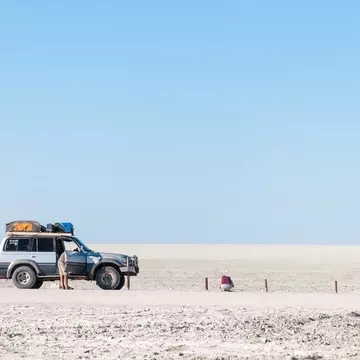
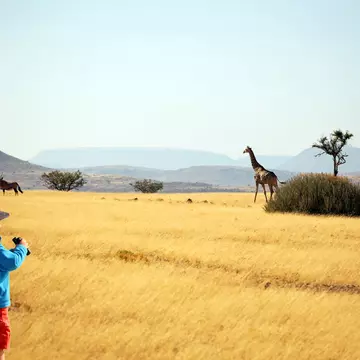
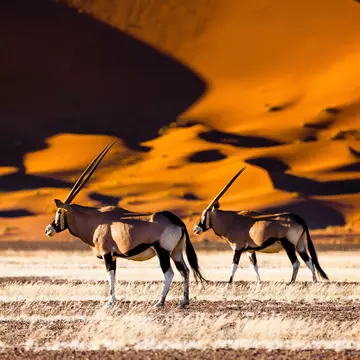
Many travelers don’t consider going on a road trip when visiting Africa – yet Namibia is a self-drive wonderland, a country of wide-open spaces where the scenery constantly evolves and shifts from desert to mountains to verdant valleys. But be sure to plan your drives carefully, as the distance between places of interest can range from 200km (124 miles) to 600km (372 miles) or more. Once you’re off the main highway, it could be hours before you see another vehicle. What will delight you instead is wildlife like oryx, zebra and giraffe.
Public roads in Namibia are graded A to D, with A being a broad paved highway and D being a rough dirt “road.” All 4WD rental vehicles come outfitted with two spare tires and two gas tanks, along with many additional options for safety and comfort. Bring an adventurous spirit and the proper supplies – and expect the road trip of a lifetime.
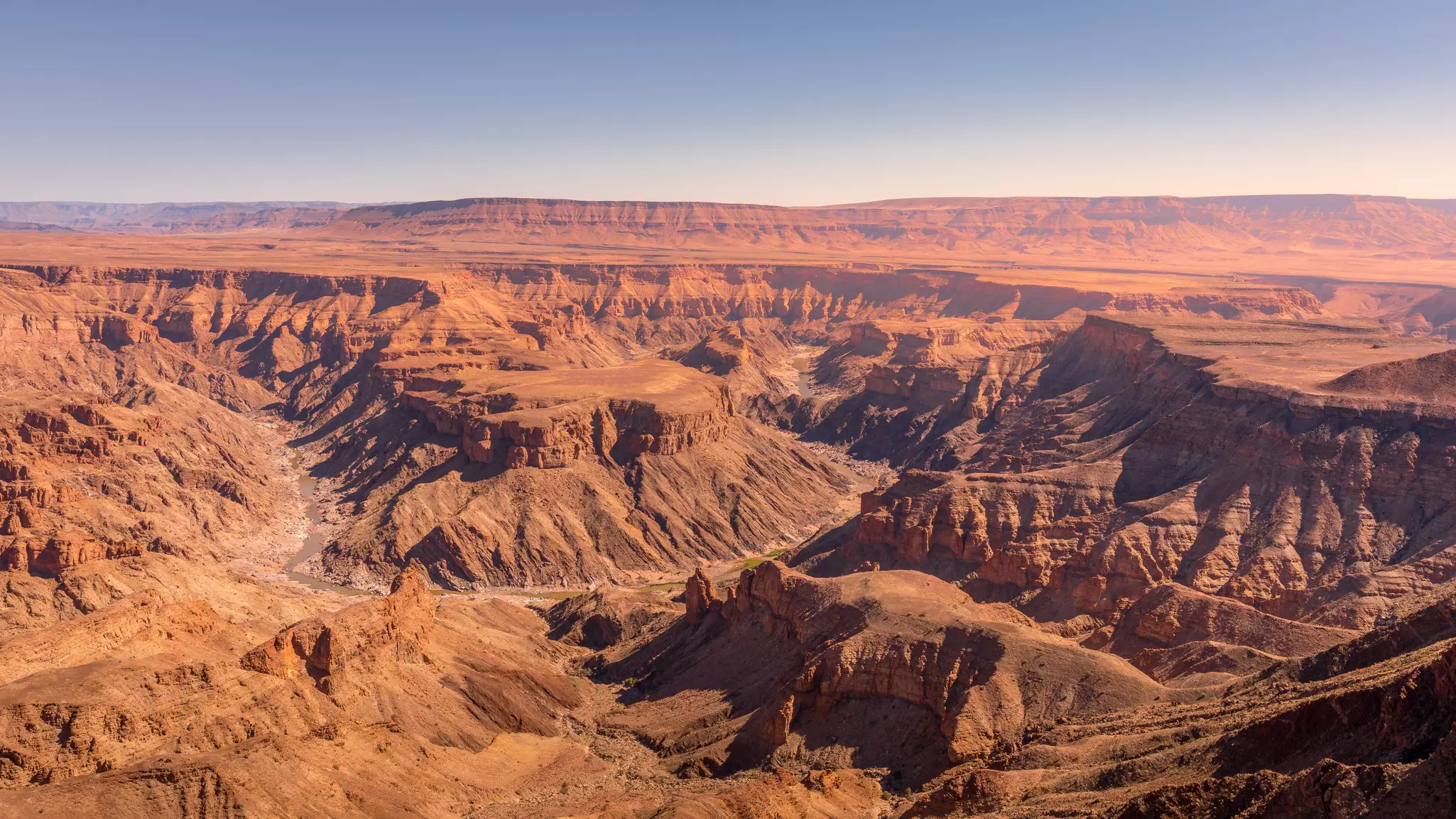
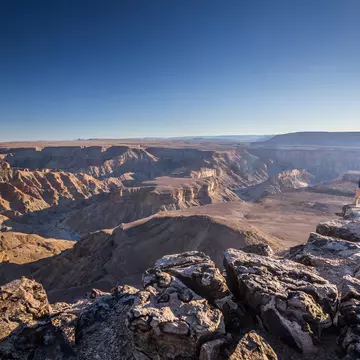
The world’s second-largest canyon, Fish River Canyon is a one-of-a-kind geological wonder. The site dates back more than 500 million years, and its sheer scale and raw natural beauty are a sight to behold. As you approach the area, you’ll think you landed on another planet: giant crimson boulders stacked upon each other create exciting formations and outcrops that make this place feel truly otherworldly.
Hiking the canyon in the dry winter months is popular for fit and well-prepared adventure enthusiasts. Several nearby lodges offer morning and evening drives, the latter making a requisite stop for alfresco cocktails.
Though stations and food options are few and far between on Namibian roads, unusual and quirky roadside stops tend to pop up in the middle of nowhere. Stop at McGregor’s Bakery in the tiny settlement of Solitaire for what is claimed to be the best apple pie in Africa, or the equally rustic shop at Betta Camp between Aus and Sesriem.
If you’re traveling in the north during the rainy season (January to March), you’ll likely see locals waving you down while holding oddly shaped white objects. These strange-looking items are giant mushrooms called omajova: they’re cultivated by termites and they’re a delicacy. If you bring some back to your lodge, the chef might be able to include them in your meal.
Explore related stories