Things to do in Paris
-
A
Eiffel Tower
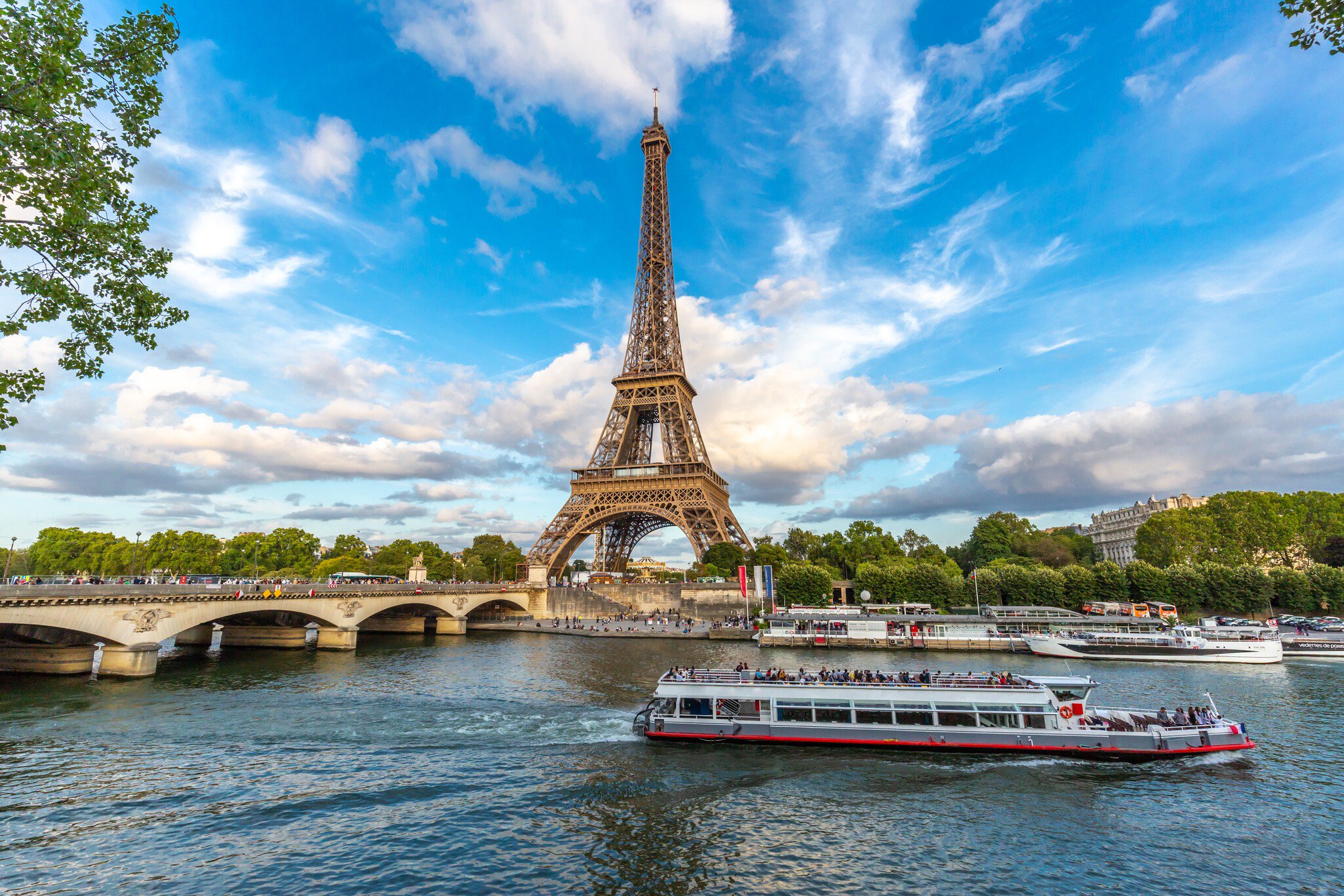
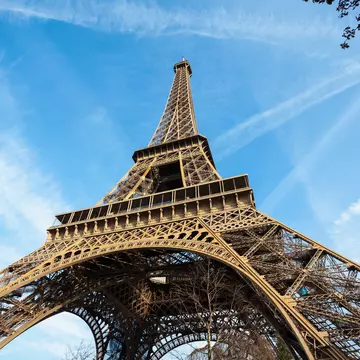
No one could imagine Paris today without its signature spire. But Gustave Eiffel only constructed this graceful tower – the world’s tallest, at 320m, until it was eclipsed by Manhattan’s Chrysler Building some four decades later – as a temporary exhibit for the 1889 Exposition Universelle (World Fair). Luckily, the tower’s popularity assured its survival beyond the fair, and its elegant art nouveau webbed-metal design has become the defining fixture of the city’s skyline.
Lifts/elevators yo-yo up and down the north, west and east pillars to the tower’s three platforms (57m, 115m and 276m); change lifts on the 2nd level for the final ascent to the top, from…
reviewed
-
B
Musée du Louvre
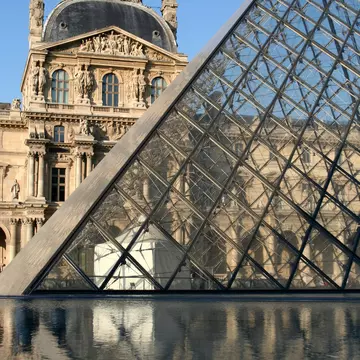
The vast Palais du Louvre was constructed as a fortress by Philippe-Auguste in the early 12th century and rebuilt in the mid-16th century as a royal residence. The Revolutionary Convention turned it into a national museum in 1793.
The paintings, sculptures and artefacts on display in the Louvre Museum have been amassed by subsequent French governments. Among them are works of art and artisanship from all over Europe and collections of Assyrian, Etruscan, Greek, Coptic and Islamic art and antiquities. The Louvre’s raison d’être is essentially to present Western art from the Middle Ages to about 1848 (at which point the Musée d’Orsay takes over), as well as works from…
reviewed
-
C
Musée d'Orsay
Fresh from renovations that incorporate richly coloured walls, a re-energised layout and increased exhibition space, the home of France’s national collection from the impressionist, postimpressionist and art nouveau movements spanning the 1840s and 1914 is the glorious former Gare d’Orsay railway station – itself an art nouveau showpiece – where a roll-call of masters and their world-famous works are on display.
Top of every visitor’s must-see list is the museum’s painting collections, centred on the world’s largest collection of impressionist and post-impressionist art. Just some of its highlights are Manet’s On The Beach and Woman With Fans; Monet’s…
reviewed
-
D
Cook’n With Class
Morning/evening/pastry classes available for €160/160/100.
reviewed
-
E
Basilique du Sacré-Cœur
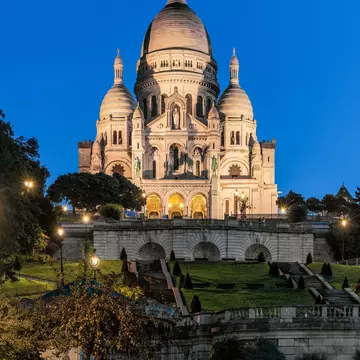
Crowning the Butte de Montmartre (Montmartre Hill), Sacred Heart Basilica was built from contributions pledged by Parisian Catholics as an act of contrition after the humiliating Franco-Prussian War of 1870–71. Construction began in 1876, but the basilica was not consecrated until 1919. In a way, atonement here has never stopped; a perpetual prayer ‘cycle’ that began at the consecration of the Basilica continues round the clock to this day.
Some 234 spiralling steps lead you to the basilica’s dome, which affords one of Paris’ most spectacular panoramas – up to 30km on a clear day. Weighing in at 19 tonnes, the bell called La Savoyarde in the tower above is the…
reviewed
-
F
Cathédrale de Notre Dame de Paris
This is the heart of Paris – so much so that distances from Paris to every part of metropolitan France are measured from place du Parvis Notre Dame, the square in front of the Cathedral of Our Lady of Paris. A bronze star across the street from the cathedral’s main entrance marks the exact location of point zéro des routes de France.
Notre Dame, the most visited unticketed site in Paris, with upwards of 14 million people crossing its threshold a year, is not just a masterpiece of French Gothic architecture; it was also the focus of Catholic Paris for seven centuries.
Built on a site occupied by earlier churches and, a millennium before that, a Gallo-Roman temple, it…
reviewed
-
G
Jardin du Luxembourg
This inner-city oasis of formal terraces, chestnut groves and lush lawns has a special place in the hearts of Parisians. Napoleon dedicated the 23 gracefully laid-out hectares of the Luxembourg Gardens to the children of Paris, and many residents spent their childhood prodding 1920s wooden sailboats with long sticks on the octagonal Grand Bassin pond, watching puppets perform Punch & Judy–type shows at the Théâtre des Marionnettes du Jardin du Luxembourg, and riding the carrousel (merry-go-round) or Shetland ponies. All those activities are still here today, as are modern playgrounds and sporting and games venues.
Dozens of apple varieties grow in the orchards in the…
reviewed
-
H
Centre Pompidou
Former French President Georges Pompidou wanted an ultracontemporary artistic hub, and he got it: competition-winning architects Renzo Piano and Richard Rogers effectively designed the building inside out, with utilitarian features such as plumbing, pipes, air vents and electrical cables forming part of the external façade, freeing up the interior space for exhibitions and events. Paris’ premier cultural centre has amazed visitors since it was inaugurated in 1977.
On the ground floor, the Forum du Centre Pompidou has temporary exhibitions and information desks, while the 4th and 5th floors house the Musée National d’Art Moderne, France’s national collection of art…
reviewed
-
I
Sainte Chapelle
The place to visit on a sunny day! Security checks make it long and snail-slow to get into this gemlike Holy Chapel, the most exquisite of Paris’ Gothic monuments, tucked away within the walls of the Palais de Justice (Law Courts). But once in, be dazzled by Paris’ oldest and finest stained glass – the light on sunny days is extraordinary.
Built in just under three years (compared with nearly 200 for Notre Dame), Ste-Chapelle was consecrated in 1248. The chapel was conceived by Louis IX to house his personal collection of holy relics (including the Holy Crown now kept in the treasury at Notre Dame). The chapel’s exterior can be viewed from across the street from…
reviewed
-
J
La Seine
In the city of romance, the Seine River is its lifeblood. Formerly a major trade route, today the river's islands, bridges and quays evoke the most romantic visions of Paris. This nostalgia is heightened after dark when the Seine shimmers with the watery reflections of floodlit monuments and bridges. C'est magnifique!
A stroll along the Seine is a quintessential Parisian experience.
The attractions along the river's main island, Île de la Cité, read like a who's-who of Paris' finery; from Notre Dame to Sainte Chapelle, the Conciergerie and the flower market. By contrast, Île St-Louis has a village-like, provincial calm. The area's charming 17th-century stone houses,…
reviewed
Advertisement
-
K
Arc de Triomphe
If anything rivals the Eiffel Tower as the symbol of Paris, it’s this magnificent 1836 monument to Napoleon’s 1805 victory at Austerlitz, which he commissioned the following year. The intricately sculpted triumphal arch stands sentinel in the centre of the Étoile (‘star’) roundabout. From the viewing platform on top of the arch (50m up via 284 steps and well worth the climb) you can see the dozen avenues. Av de la Grande Armée heads northwest to the skyscraper district of La Défense, where the Grande Arche marks the western end of the Axe Historique.
The most famous of the four high-relief panels at the base is to the right, facing the arch from the av des…
reviewed
-
L
Angelina
Take a break from the long trek along the Tuileries gardens and line up for a table at Angélina, along with lunching ladies, their posturing poodles and half the students from Tokyo University. This beautiful, high-ceilinged tearoom has exquisite furnishings, mirrored walls and fabulous fluffy cakes. More importantly, it serves the best and most wonderfully sickening ‘African’ hot chocolate in the history of time (€7.20), served with a pot of whipped cream and carafe of water, that prompts the constant queue for a table at Angelina. Buy it bottled to take home from Angelina’s small boutique.
reviewed
-
M
Musée de l'Orangerie
Located in the southwestern corner of the Jardin des Tuileries, this museum, with the Jeu de Paume, is all that remains of the once palatial Palais des Tuileries, which was razed during the Paris Commune in 1871. It exhibits important Impressionist works, including a series of Monet's Decorations des Nymphéas (Water Lilies) in two huge oval rooms purpose-built in 1927 on the artist's instructions, as well as works by Cézanne, Matisse, Picasso, Renoir, Sisley, Soutine and Utrillo. An audioguide costs €5.
reviewed
-
N
Aux Trois Éléphants
In a street where each restaurant is more original than the next, ‘At the Three Elephants’ takes the tart. Customers – a very mixed bag – are plunged into a highly exotic world where the extravagant ‘hostesses’ are equal to the dishes on offer. The subtle flavours of the yum plameuk (squid salad) and the homok pla (steamed fish served in a banana leaf; €10) are both excellent choices.
reviewed
-
O
Le Piano Vache
Down the hill from the Panthéon, this bar is covered in old posters above old couches and is drenched in 1970s and ’80s rock ambience. Effortlessly underground and a real student fave, here bands and DJs play mainly rock, plus some goth, reggae and pop.
reviewed
-
P
L’As du Felafel
The lunchtime queue stretching halfway down the street from this place says it all! This Parisian favourite, 100% worth the inevitable wait, is the address for kosher, perfectly deep-fried chickpea balls and turkey or lamb shwarma sandwiches. Do as every Parisian does and takeaway.
reviewed
-
Q
Musée National du Moyen Âge
The National Museum of the Middle Ages occupies both a frigidarium (cooling room), which holds remains of Gallo-Roman thermes (baths) dating from around AD 200, and the 15th-century Hôtel des Abbés de Cluny, Paris’ finest example of medieval civil architecture. Inside, spectacular displays include statuary, illuminated manuscripts, weapons, furnishings and objets d’art made of gold, ivory and enamel. But nothing compares with La Dame à la Licorne (The Lady with the Unicorn), a sublime series of late-15th-century tapestries from the southern Netherlands.
Small gardens northeast of the museum, including the Jardin Céleste (Heavenly Garden) and the Jardin d’Amour…
reviewed
-
R
Musée Rodin
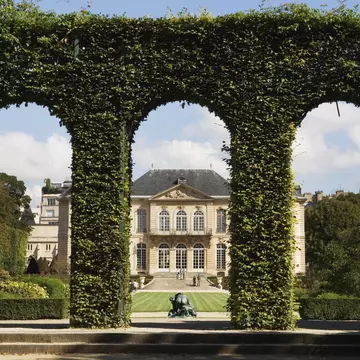
Sculptor, painter, sketcher, engraver and collector Auguste Rodin donated his entire collection to the French state in 1908 on the proviso that they dedicate his former workshop and showroom, the beautiful 1730 Hôtel Biron, to displaying his works. They’re now installed not only in the mansion itself, but in its rose-clambered garden – one of the most peaceful places in central Paris and a wonderful spot to contemplate his famous work The Thinker. Other sculptural highlights are The Gates of Hell, the 180 figures of which comprise an intricate scene from Dante’s Inferno; Rodin’s marble monument to love, The Kiss; and some 15 works by sculptor Camille Claudel,…
reviewed
-
S
Le Bon Marché
Built by Gustave Eiffel as Paris’ first department store in 1852, Le Bon Marché translates as ‘good market’ but also means ‘bargain’, which it isn’t. But it is the epitome of style, with a superb concentration of men’s and women’s fashions, beautiful homewares, stationery and a good range of books and toys as well as chic dining options.
The icing on the cake is its glorious food hall, La Grande Épicerie de Paris.
reviewed
-
T
Colette
Uber-hip is an understatement. Ogle at designer fashion on the 1st floor, and streetwear, limited-edition sneakers, art books, music, gadgets and other hi-tech, inventive and/or plain unusual items on the ground floor. End with a drink in the basement ‘water bar’ and pick up free design magazines and flyers for some of the city’s hippest happenings by the door upon leaving.
reviewed
Advertisement
-
U
Pozzetto
Urban myth says this gelato maker opened when a group of friends from northern Italy couldn’t find their favourite ice cream in Paris so they imported the ingredients to create it from scratch. Twelve flavours – spatula’d, not scooped – include gianduia torinese (hazelnut chocolate from Turin) and zabaione, made from egg yolks, sugar and sweet Marsala wine, along with the more usual peach, pistachio and poire William. Great Italian coffee, too.
reviewed
-
V
Pho 67 Restaurant Vietnam
Tuck into Vietnamese dishes such as fried boned eel, crusty lacquered duck, rare tender goat with ginger, sweetened pork and North Vietnamese soup amid the burgundy walls and suspended rattan lamps of this unpretentious gem. Pho's hidden in a little backstreet of the Latin Quarter, but is fortunately away from the over-touristy little maze of restaurants surrounding rue de la Huchette.
reviewed
-
W
Berthillon
Berthillon is to ice cream what Château Lafite Rothschild is to wine and Valhrona is to chocolate. And with nigh on 70 flavours to choose from, you’ll be spoiled for choice.
While the fruit-flavoured sorbets (cassis, blackberry etc) produced by this celebrated glacier (ice-cream maker) are renowned, the chocolate, coffee, marrons glacés (candied chestnuts), Agenaise (Armagnac and prunes), noisette (hazelnut) and nougat au miel (honey nougat) are richer. Eat in or grab a cone with one/two/three/four small scoops (€2.30/3.60/4.90/6.20) to takeaway.
reviewed
-
X
Moulin Rouge
Immortalised in the posters of Toulouse-Lautrec and later on screen by Baz Luhrmann, the Moulin Rouge twinkles beneath a 1925 replica of its original red windmill. Yes, it’s rife with bus-tour crowds. But from the opening bars of music to the last high kick it’s a whirl of fantastical costumes, sets, choreography and champagne. Booking advised.
reviewed
-
Y
Les Deux Magots
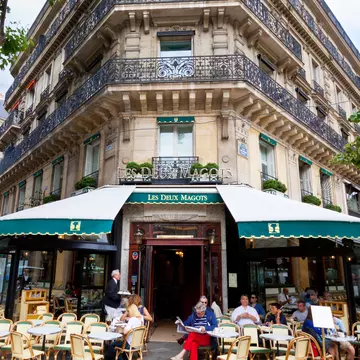
If ever there were a cafe that summed up St-Germain des Prés’ early-20th-century literary scene, it’s this former hangout of anyone who was anyone. You will spend beaucoup to sip a coffee in a wicker chair on the terrace shaded by dark-green awnings and geraniums spilling from window boxes, but it’s an undeniable piece of Parisian history.
If you’re feeling decadent, order its famous shop-made hot chocolate, served in porcelain jugs. The name refers to the two magots (grotesque figurines) of Chinese dignitaries at the entrance.
reviewed