go to content go to search box go to global site navigation

Denmark

Things to do in Denmark

‹ Prev

of 25

  1. A

    Tivoli

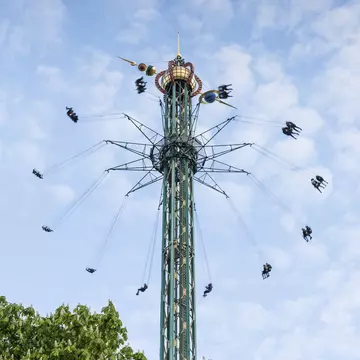
    There are three entrances to Tivoli: the main one on Vesterbrogade, another opposite the main entrance to the Central Station and one on HC Andersens Blvd opposite Ny Carlsberg Glyptotek. You pay both for entrance and then again for whatever rides you choose thereafter (usually around 25kr each), although a multiride ticket covers all the rides, among them the Star Flyer, reputedly the world’s tallest carousel. There are also plenty of free shows, including the Saturday-night fireworks (on show from mid-June to mid-August), the nightly laser show spectacular and the live band at Plænen every Friday at 10pm from mid-April to late September. Check the website for…

    reviewed

  2. B

    DGI-Byen

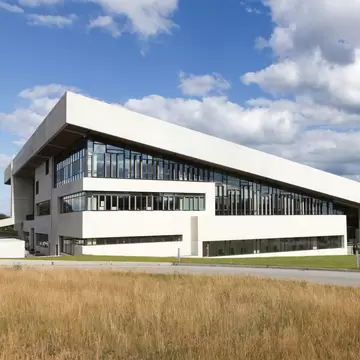
    Lying just south of Central Station, overlooking the tracks, you’ll find Copenhagen’s best leisure and sports complex, featuring a large indoor swimming pool, bowling alley, spa, restaurant, cafe and hotel, among other facilities. On offer at the spa are a wide range of beauty treatments, different massage therapies, algae and salt baths, mud packs and acupuncture.

    reviewed

  3. C

    Masken

    You’ll find a pretty mellow, easy-going atmosphere in this mainstream gay bar, with cheap beer and good snacks. It’s mainly a hang-out for gay men, but Thursday is Ladies Night.

    reviewed

  4. D

    Absolut Ice Bar

    Admittedly, some might call this an absolute rip-off, but this deep frozen bar is still worth a (one) visit if you have never been to any of the others in Sweden and Norway. Everything, including the glasses is made from the purest Swedish river water. On entering you are given an Arctic cape to protect you from the temperature that can reach –12°C, and warned not to lick the walls…

    reviewed

  5. E

    42°Raw

    The focus at hip and healthy 42°Raw is raw food, served in a series of gourmet salads (think tomato and avocado with parsley, garlic, lime, chilli, red quinoa, and a trout oil and vinegar dressing). Liquid options include smoothies and freshly squeezed juices, including a strangely sublime spinach, apple and basil concoction. Your mama will be proud.

    reviewed

  6. F

    Govindas

    Govindas serves savoury Indian-style vegetarian food in a pleasant setting with mellow music. Hare Krishna devotees cook up a nine-dish thali meal of basmati rice, soup, salad and a few hot dishes such as eggplant casserole for bargain prices, meaning that the place is very popular with students and travellers.

    reviewed

  7. Café Under Uret

    This bistro’s dim, candlelit interior is filled with wheat sheaves, comfy leather banquettes and easy-on-the-ear pop, while outside tables catch the evening sun. Well cooked, healthily huge brunches, sandwiches and burgers feature at lunch, while evening mains include chicken breast, beef and pasta.

    reviewed

  8. G

    Café Victor

    This classic French bar and brasserie is the doyen of the Copenhagen cafe scene and is enjoyably snobbish with jet-set pretensions and, generally, a more middle-aged crowd (regulation uniform: loafers, jeans and blazers for the men, Chanel for the women). The food is excellent, but a touch overpriced.

    reviewed

  9. H

    Post & Tele Museum Café

    This modern space does its best to bring the not overtly fascinating story of Post Danmark to life. The chief draw, however, is the excellent rooftop cafe, which serves a reasonable Danish-style lunch and has an outdoor terrace with fantastic views across the city centre to Christiansborg.

    reviewed

  10. I

    Lê Lê (7)

    For dinner try the terrific refined Vietnamese street food at Lê Lê (7) in Vesterbro, where you should get a good feed for under 100kr.

    reviewed

  11. Advertisement

  12. J

    Lyst Café

    Head to this kooky and kitsch spot (note the blowfish lamp) for freshly made wraps and perfect kanelsnegle (cinnamon rolls).

    reviewed

  13. Vesterbro

    The gritty, urban neighbourhood of Vesterbro begins at the western side of Central Station with the city's most infamous thoroughfare, Istedgade. Istedgade is home to the rather depressing red light district, which begins close to Central Station with numerous sex shops and massage parlours that coexist rather unfortunately with many of the city's lower range hotels.

    Since the police clamped down on official drug facilities, the junkies have taken to the streets here, which makes for a fairly shaming spectacle in a city so supposedly advanced in its social provision. However, persevere and you will find that Istedgade and Halmtorvet, to its south, are also packed with…

    reviewed

  14. K

    Christiansborg Slot

    Slotsholmen is the seat of national government and a veritable repository of historical sites. Located on a small island and separated from the city centre by a moat-like canal, Slotsholmen's centrepiece is Christiansborg Slot, a large palace that is home to Folketinget (the Danish parliament) and various government offices.

    Several short bridges link Slotsholmen to the rest of Copenhagen. If you walk into Slotsholmen from Ny Vestergade, you'll cross the western part of the canal and enter the large main courtyard of Christiansborg Slot, a large palace that is home to Folketinget (the Danish parliament) and various government offices. The main courtyard, which was once…

    reviewed

  15. Arken

    Arken was built to mark Copenhagen’s stint as European City of Culture in 1996. This remarkable contemporary art museum is as famed for the building that houses it – its nautical ship-shape inspired by its beachfront location on Ishøj Strand – as the international art contained within. After a few years in the doldrums, Arken has bounced back with a new extension opened in 2008. The permanent collection of works created after 1990 includes stunning pieces by top Danish artists such as Jeppe Hein, Peter Holst and Jacob Kirkegaard. One recent acquisition is Olafur Eliasson’s ambitious installation Your Negotiable Panorama, which uses visitors’ movements to…

    reviewed

  16. L

    Strøget

    The pedestrian shopping street Strøget runs through the city centre from Rådhuspladsen to Kongens Nytorv. Strøget is the city's main shopping thoroughfare and consists of five continuous streets.

    It's always busy and packed on Saturday but we can't help feeling it has begun to stagnate in recent years. While the rest of the city usually moves ahead of the times, Strøget seems a decade behind them, offering the same old international brand names at its posh, eastern end (designed entirely, it seems, to separate cruise-ship tourists from their money), and a scrappy mix of budget clothing stores, tourist shops and kebab houses to the west towards Rådhuspladsen. If…

    reviewed

  17. M

    Museumsø

    On Museumsø, adjacent to the Viking Ship Hall and also part of the Viking Ship Museum, craftspeople use Viking-era techniques and tools to build replicas of Viking ships. Ottar, Roar Ege, Helge Ask and Kraka Fyr (reconstructions of Skuldelev 1, 3, 5 and 6 respectively) are moored in the harbour, where you can really appreciate their light, flexible designs.

    In mid-2007 the largest Viking ship reconstruction ever sailed from Roskilde to Dublin. An incredible 340 trees went into the creation of Havhingsten fra Glendalough (based on the 60-oared warship Skuldelev 2), and the total labour totted up to 44,000 man hours. In mid-2008 it made its successful return to Roskilde:…

    reviewed

  18. N

    Slotsholmen

    Slotsholmen is the seat of national government and a veritable repository of historical sites. Located on a small island and separated from the city centre by a moat-like canal, Slotsholmen's centrepiece is Christiansborg Slot, a large palace that is home to Folketinget (the Danish parliament) and various government offices.

    The original Christiansborg palace was constructed in the 1730s to replace the pokey Copenhagen Castle and several buildings, namely the royal stables and edifices surrounding the main courtyard, date from this time.

    Folketinget, the parliamentary chamber, can be toured on Sunday year-round, as well as on weekdays over summer, and this includes a peek…

    reviewed

  19. O

    Grenen

    Appropriately enough for such a neat and ordered country, Denmark doesn't end untidily at its most northerly point, but on a neat finger of sand just a few metres wide, known as Grenen. You can actually paddle at its tip where the waters of the Kattegat and Skagerrak clash and you can put one foot in each sea - but not too far. Bathing here is strictly forbidden because of the ferocious tidal currents and often-angry seas that collide to create mane-tossing white horses.

    The tip is the culmination of a long, curving sweep of sand at Grenen, about 3km northeast of Skagen along Rte 40. Where the road ends there's a car park, restaurant and small art museum. From the car…

    reviewed

  20. Christianshavn

    Christianshavn is Copenhagen's enchanting canal quarter on the eastern flank of Copenhagen. It was established by Christian IV in the early 17th century as a commercial centre and also a military buffer for the expanding city. It's cut with a network of canals, modelled after those in Holland, but is equally famous as the home of the 'free state' of Christiania.

    Still surrounded by its old ramparts, Christianshavn today is an appealing mix of standard-issue public housing complexes and elegant period warehouses that have found second lives as upmarket housing and restored government offices. The neighbourhood attracts an interesting mix of boho-chic artists, yuppies,…

    reviewed

  21. P

    Night Watchman Tour

    One of the best free activities in Denmark is Ribe's 45-minute night watchman tour, which departs from out the front of Weis Stue, on Torvet, once or twice a night in the warmer months.

    Nowadays, it's a stroll through the town's historic streets, designed to entertain and educate visitors to Ribe, but the night watchman's walk was originally born of necessity. As early as the 14th century these watchmen made their nightly rounds in Ribe, making sure the streets were safe for locals to walk. They were also charged with being on the lookout for fires or floods threatening the town. The job was abolished in Ribe in 1902, but reinstated in 1935 as a tourist attraction. These…

    reviewed

  22. Advertisement

  23. Q

    Kronborg Slot

    Within cannon range of Sweden on the Danish side of the Øresund, further north from Malmö, lies Denmark’s most imposing castle, Kronborg Slot. Known to the world as Elsinore Castle and home to Shakespeare’s Hamlet, Kronborg was built here at the entrance to the Øresund and Baltic as a grandiose tollhouse, to extract money from ships passing between the coasts of Denmark and Sweden, and as a defensive post against fleets sailing on Copenhagen. The so-called Sound Dues were introduced in the 1420s by King Erik of Pomerania. He built a small fortress, Krogen, here to operate the toll. Frederik II rebuilt and enlarged the castle in a Renaissance style between 1574 and…

    reviewed

  24. R

    Det Kongelige Bibliotek

    The Royal Library has two very distinct parts: the original, 19th-century red-brick building and the breathtaking granite-and-glass extension, completed in 1999. The latter, nicknamed the Black Diamond, is the main draw. People come simply to marvel at the interior with its giant glass wall and views across the harbour, or to enjoy a bite in the cafe or the minimalist Søren K restaurant. You need to be a member to access what is the largest library in Scandinavia, containing 21 million books. Among them are original manuscripts and diaries by Kierkegaard and Hans Christian Andersen (including the fairy-tale writer’s unsuccessful application to work at the library). The…

    reviewed

  25. S

    Silkeborg Museum

    Silkeborg Museum is housed in the oldest building in Silkeborg (dating back to 1767). Speaking of old, inside the museum you can check out the amazingly well-preserved body of the Tollund Man, the central (albeit leathery) star in an otherwise predictable collection. Like the Grauballe Man at the Moesgård Museum outside Århus, the life (and death) of the Tollund Man remains a mystery. His intact remains were found around the outskirts of Silkeborg in 1950, and have been carbon dated to around 220 BC. The autopsy suggests he had been hanged, yet he was placed as though lying asleep with only a leather hat over his face and a thin leather noose around his neck. Was he an…

    reviewed

  26. Danfoss Universe

    Als’ big-ticket drawcard is the new Danfoss Universe, off Rte 405 en route north to Nordborg. It’s an ‘experience park for the curious’, according to its marketing; it opened in mid-2005 and is proving a popular attraction for families and schools. One local pithily summed it up as ‘brain gymnastics’ and the country’s minister for education has given it a shiny gold star, encouraging all Danish Grade 7s (12 to 13 year olds) to visit. There are more than 200 attractions enabling you to discover how nature and technology work. But education while you’re on holidays? Well, yes. It’s all well-designed, superinteractive fun and will stop the kids bothering you with questions…

    reviewed

  27. Bycykler

    Long before Paris got in on the act of free bikes, Copenhagen had its famous Bycykler, allowing anyone to borrow a bicycle for free. In all there are over 1000 bikes available from 1 May to 15 December.

    These gearless bicycles are rudimentary and are certainly not practical for long-distance cycling, but that's part of the plan - use of the cycles is limited to the city centre. To deter theft and minimise maintenance, the bicycles have a distinctive design that includes solid spokeless wheels with puncture-resistant tyres. The bikes can be found at 110 widely scattered street stands in public places, including S-train stations.

    The way it works is that if you're able to…

    reviewed