go to content go to search box go to global site navigation

Denmark

Sights in Denmark

‹ Prev

of 9

  1. A

    Tivoli

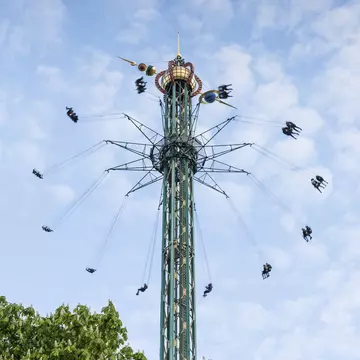
    There are three entrances to Tivoli: the main one on Vesterbrogade, another opposite the main entrance to the Central Station and one on HC Andersens Blvd opposite Ny Carlsberg Glyptotek. You pay both for entrance and then again for whatever rides you choose thereafter (usually around 25kr each), although a multiride ticket covers all the rides, among them the Star Flyer, reputedly the world’s tallest carousel. There are also plenty of free shows, including the Saturday-night fireworks (on show from mid-June to mid-August), the nightly laser show spectacular and the live band at Plænen every Friday at 10pm from mid-April to late September. Check the website for…

    reviewed

  2. Vesterbro

    The gritty, urban neighbourhood of Vesterbro begins at the western side of Central Station with the city's most infamous thoroughfare, Istedgade. Istedgade is home to the rather depressing red light district, which begins close to Central Station with numerous sex shops and massage parlours that coexist rather unfortunately with many of the city's lower range hotels.

    Since the police clamped down on official drug facilities, the junkies have taken to the streets here, which makes for a fairly shaming spectacle in a city so supposedly advanced in its social provision. However, persevere and you will find that Istedgade and Halmtorvet, to its south, are also packed with…

    reviewed

  3. B

    Christiansborg Slot

    Slotsholmen is the seat of national government and a veritable repository of historical sites. Located on a small island and separated from the city centre by a moat-like canal, Slotsholmen's centrepiece is Christiansborg Slot, a large palace that is home to Folketinget (the Danish parliament) and various government offices.

    Several short bridges link Slotsholmen to the rest of Copenhagen. If you walk into Slotsholmen from Ny Vestergade, you'll cross the western part of the canal and enter the large main courtyard of Christiansborg Slot, a large palace that is home to Folketinget (the Danish parliament) and various government offices. The main courtyard, which was once…

    reviewed

  4. Arken

    Arken was built to mark Copenhagen’s stint as European City of Culture in 1996. This remarkable contemporary art museum is as famed for the building that houses it – its nautical ship-shape inspired by its beachfront location on Ishøj Strand – as the international art contained within. After a few years in the doldrums, Arken has bounced back with a new extension opened in 2008. The permanent collection of works created after 1990 includes stunning pieces by top Danish artists such as Jeppe Hein, Peter Holst and Jacob Kirkegaard. One recent acquisition is Olafur Eliasson’s ambitious installation Your Negotiable Panorama, which uses visitors’ movements to…

    reviewed

  5. C

    Strøget

    The pedestrian shopping street Strøget runs through the city centre from Rådhuspladsen to Kongens Nytorv. Strøget is the city's main shopping thoroughfare and consists of five continuous streets.

    It's always busy and packed on Saturday but we can't help feeling it has begun to stagnate in recent years. While the rest of the city usually moves ahead of the times, Strøget seems a decade behind them, offering the same old international brand names at its posh, eastern end (designed entirely, it seems, to separate cruise-ship tourists from their money), and a scrappy mix of budget clothing stores, tourist shops and kebab houses to the west towards Rådhuspladsen. If…

    reviewed

  6. D

    Museumsø

    On Museumsø, adjacent to the Viking Ship Hall and also part of the Viking Ship Museum, craftspeople use Viking-era techniques and tools to build replicas of Viking ships. Ottar, Roar Ege, Helge Ask and Kraka Fyr (reconstructions of Skuldelev 1, 3, 5 and 6 respectively) are moored in the harbour, where you can really appreciate their light, flexible designs.

    In mid-2007 the largest Viking ship reconstruction ever sailed from Roskilde to Dublin. An incredible 340 trees went into the creation of Havhingsten fra Glendalough (based on the 60-oared warship Skuldelev 2), and the total labour totted up to 44,000 man hours. In mid-2008 it made its successful return to Roskilde:…

    reviewed

  7. E

    Slotsholmen

    Slotsholmen is the seat of national government and a veritable repository of historical sites. Located on a small island and separated from the city centre by a moat-like canal, Slotsholmen's centrepiece is Christiansborg Slot, a large palace that is home to Folketinget (the Danish parliament) and various government offices.

    The original Christiansborg palace was constructed in the 1730s to replace the pokey Copenhagen Castle and several buildings, namely the royal stables and edifices surrounding the main courtyard, date from this time.

    Folketinget, the parliamentary chamber, can be toured on Sunday year-round, as well as on weekdays over summer, and this includes a peek…

    reviewed

  8. F

    Grenen

    Appropriately enough for such a neat and ordered country, Denmark doesn't end untidily at its most northerly point, but on a neat finger of sand just a few metres wide, known as Grenen. You can actually paddle at its tip where the waters of the Kattegat and Skagerrak clash and you can put one foot in each sea - but not too far. Bathing here is strictly forbidden because of the ferocious tidal currents and often-angry seas that collide to create mane-tossing white horses.

    The tip is the culmination of a long, curving sweep of sand at Grenen, about 3km northeast of Skagen along Rte 40. Where the road ends there's a car park, restaurant and small art museum. From the car…

    reviewed

  9. Christianshavn

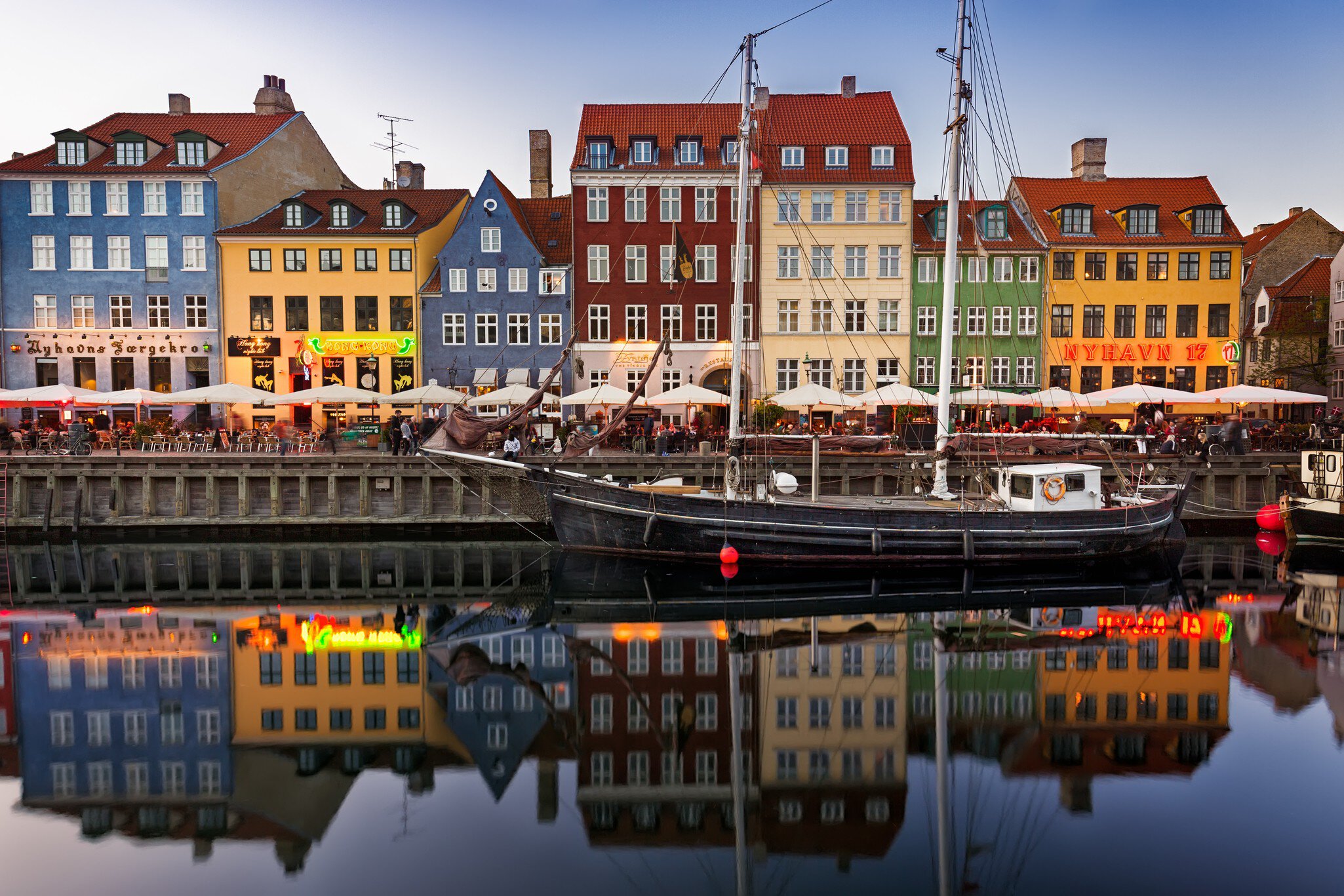
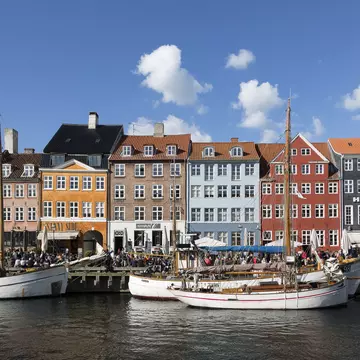
    Christianshavn is Copenhagen's enchanting canal quarter on the eastern flank of Copenhagen. It was established by Christian IV in the early 17th century as a commercial centre and also a military buffer for the expanding city. It's cut with a network of canals, modelled after those in Holland, but is equally famous as the home of the 'free state' of Christiania.

    Still surrounded by its old ramparts, Christianshavn today is an appealing mix of standard-issue public housing complexes and elegant period warehouses that have found second lives as upmarket housing and restored government offices. The neighbourhood attracts an interesting mix of boho-chic artists, yuppies,…

    reviewed

  10. G

    Kronborg Slot

    Within cannon range of Sweden on the Danish side of the Øresund, further north from Malmö, lies Denmark’s most imposing castle, Kronborg Slot. Known to the world as Elsinore Castle and home to Shakespeare’s Hamlet, Kronborg was built here at the entrance to the Øresund and Baltic as a grandiose tollhouse, to extract money from ships passing between the coasts of Denmark and Sweden, and as a defensive post against fleets sailing on Copenhagen. The so-called Sound Dues were introduced in the 1420s by King Erik of Pomerania. He built a small fortress, Krogen, here to operate the toll. Frederik II rebuilt and enlarged the castle in a Renaissance style between 1574 and…

    reviewed

  11. Advertisement

  12. H

    Det Kongelige Bibliotek

    The Royal Library has two very distinct parts: the original, 19th-century red-brick building and the breathtaking granite-and-glass extension, completed in 1999. The latter, nicknamed the Black Diamond, is the main draw. People come simply to marvel at the interior with its giant glass wall and views across the harbour, or to enjoy a bite in the cafe or the minimalist Søren K restaurant. You need to be a member to access what is the largest library in Scandinavia, containing 21 million books. Among them are original manuscripts and diaries by Kierkegaard and Hans Christian Andersen (including the fairy-tale writer’s unsuccessful application to work at the library). The…

    reviewed

  13. I

    Silkeborg Museum

    Silkeborg Museum is housed in the oldest building in Silkeborg (dating back to 1767). Speaking of old, inside the museum you can check out the amazingly well-preserved body of the Tollund Man, the central (albeit leathery) star in an otherwise predictable collection. Like the Grauballe Man at the Moesgård Museum outside Århus, the life (and death) of the Tollund Man remains a mystery. His intact remains were found around the outskirts of Silkeborg in 1950, and have been carbon dated to around 220 BC. The autopsy suggests he had been hanged, yet he was placed as though lying asleep with only a leather hat over his face and a thin leather noose around his neck. Was he an…

    reviewed

  14. Danfoss Universe

    Als’ big-ticket drawcard is the new Danfoss Universe, off Rte 405 en route north to Nordborg. It’s an ‘experience park for the curious’, according to its marketing; it opened in mid-2005 and is proving a popular attraction for families and schools. One local pithily summed it up as ‘brain gymnastics’ and the country’s minister for education has given it a shiny gold star, encouraging all Danish Grade 7s (12 to 13 year olds) to visit. There are more than 200 attractions enabling you to discover how nature and technology work. But education while you’re on holidays? Well, yes. It’s all well-designed, superinteractive fun and will stop the kids bothering you with questions…

    reviewed

  15. J

    Marmorkirken

    The Marble Church, or to give it its correct name, Frederikskirken, is one of the most imposing pieces of architecture in the city and, we might add, a fitting symbol for the Danish capital. Its dome was inspired by St Peter’s in Rome and measures more than 30m in diameter. The original plans for the church were ordered by Frederik V and drawn up by Nicolai Eigtved. Construction began in 1749 but, as costs spiralled and the Danish economy foundered, the project was mothballed. It wasn’t until Denmark’s wealthiest financier, CF Tietgen, agreed to finance the church in the latter part of the 19th century that construction began again. You can climb up to the dome at…

    reviewed

  16. K

    Amalienborg Slot

    Amalienborg is made up of four rather staid 18th-century palaces ranged around a large cobbled square. It has been home to the Danish royal family since 1794. If you enter the square from the harbour to the east, the palace on your left is the home of the current queen, Margrethe II. Copenhagen’s one great photo opportunity, the changing of the guard, takes place here every day at noon after the new guard has paraded through the city centre from its barracks beside Rosenborg Slot. Across the square in another palace is the Amalienborg Museum, which recreates various royal rooms from the 19th century to WWII. The Danes are fervent royalists and love this kind of stuff, but…

    reviewed

  17. Møns Klint

    The chalk cliffs at Møns Klint were created 5000 years ago when the calcareous deposits from aeons-worth of seashells were lifted from the ocean floor. The gleaming white cliffs rise sharply 128m (420ft) above an azure sea, making one of the most striking landscapes in Denmark.

    Møns Klint is a very popular tourist destination and the wooded arrival point above the cliffs has a busy cafeteria, souvenir shops and picnic grounds. But none of this detracts from the natural appeal of the cliffs themselves or the lovely woodland above them.

    The woods of Klinteskoven, behind the cliffs, have a network of paths and tracks. From near the cafeteria you can descend the cliffs by…

    reviewed

  18. L

    Ribe VikingeCenter

    Embrace your inner Viking (well, leave aside the raping and pillaging part) at the Ribe VikingeCenter, a much more hands-on experience than the museum. It attempts to re-create a slice of life in Viking era Ribe using various reconstructions, including a 34m Fyrkat-style longhouse. The staff, dressed in period clothing, bake bread over open fires, demonstrate archery and Viking era crafts such as pottery and leatherwork, and offer falconry shows (at 1pm and 3pm in July and August, 12.30pm in May, June and September). All of which you can actively partake in (and you’ll no doubt learn more about Viking life than you could from a textbook). The centre is about 3km south of…

    reviewed

  19. M

    Lindholm Høje

    The atmospheric Lindholm Høje is a Viking burial ground where nearly 700 graves from the Iron Age and Viking Age are strewn around a hilltop pasture ringed by a wall of tall beech trees. Many of the Viking graves are marked by stones placed in the oval outline of a Viking ship, with two larger end stones as stem and stern. At the end of the Viking era the whole area was buried under drifting sand and thus preserved until modern times.

    Adjoining the site is Lindholm Høje Museet, which explains the history and has displays on archaeological finds made during its excavation. Huge murals behind the exhibits speculate on what the people of Lindholm looked like and how they…

    reviewed

  20. N

    Esbjerg Kunstmuseum

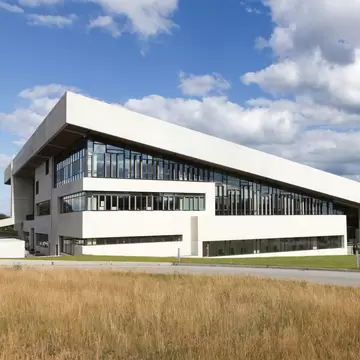
    The Utzon-designed Musikhuset Esbjerg is home to the small but eye-opening modern art collection of Esbjerg Kunstmuseum, which has notable works by Richard Mortensen, Robert Jacobsen and Per Kirkeby – also look out for work from Svend Wiig Hansen (he of Mennesket ved Havet). In quite a magnificent display of openness (and a nod to restricted space), the Åbne Magasiner (Open Stores) downstairs allows you to look up and admire undisplayed works from the museum’s collection. The other benefit to a visit is that from the museum it’s easy to admire the angles and details (especially the mushroomlike columns) of the Utzons’ architectural prowess.

    reviewed

  21. O

    Ny Carlsberg Vej 68

    This disused Carlsberg garage, on the outskirts of Vesterbro, is now home to four fascinating art spaces. Top of the heap is Galleri Nicolai Wallner, considered a major player on the contemporary Danish art scene (artists represented here include Jeppe Hein and Berlin-based Nordic duo Michael Elmgreen and Ingar Dragset). Neighbouring gallery Nils Stærk is equally established and renowned, while newcomer IMO mixes cutting-edge art with broader cultural events such as retro film screenings and performances. Next door, BKS Garage provides an exhibition platform for current students of the Royal Danish Academy of Fine Arts.

    reviewed

  22. Advertisement

  23. P

    Gammel Strand

    Gammel Strand (Old Beach) fronts the canal that partially encircles the island of Slotsholmen. This perfectly preserved row of 18th- and 19th-century town houses, with its restaurants and cafes, is among the most picturesque in Copenhagen and a great place for an outdoor drink on a sunny day. This used to be the site of the old fish market, a fact that is commemorated by the statue of the fishwife beside Højbro. On the other side of the bridge, in the waters of the canal itself, you can see a statue of a merman and his children, while facing the fishwife is a grander statue of Bishop Absalon, who founded Copenhagen over 1000 years ago. You can also catch the canal tour…

    reviewed

  24. Fanefjord Kirke

    A fascinating Møn church, 13th-century Fanefjord Kirke is adorned with superb frescoes. The oldest, from 1350, depicts St Christopher carrying Christ across a ford, but most of the vaults are covered with a cartoon-like ‘paupers’ Bible’ by the ‘Elmelunde master’. Unique images include a gruesome one of Judas, with two devils pulling out his soul; Mary on doomsday, tipping the judgement scales in humanity’s favour; and a gleeful horny-kneed demon listening to two women gossiping! You can see the master’s signature (which resembles a stick man with rabbit ears) on an altar-facing rib in the northeastern vault.

    reviewed

  25. Aalholm Automobil Museum

    Vintage car lovers will be in seventh heaven at the Aalholm Automobil Museum, which contains one of Europe’s largest collections of antique cars. Rare models include an 1899 Daimler, a 1900 Decauville, 1903 Ford Model A, 1905 Cadillac, 1911 Rolls Royce and a 1931 Bugatti. Those clueless about old vehicles might be impressed by the supercute pink-and-purple Heinkel, a car straight from a cartoon, or Professor Fate’s wacky Hannibal Twin-8, from the film The Great Race. The museum is in the grounds of the 12th-century Aalholm Slot, one of northern Europe’s oldest inhabited castles (closed to the public).

    reviewed

  26. Q

    Jens Olsens Clock

    You can poke around the main hall of the Rådhus (city hall) on your own but it’s more interesting to make the climb up the 105m clock tower for Jens Olsens Clock, which tops city hall, but expect a decent workout as there are some 300 steps along the way. The clock, designed by Danish astromechanic Jens Olsen (1872–1945) and built at a cost of one million kroner, is of special note to chronometer buffs, displaying not only the local time, but also solar time, sidereal time, sunrises and sunsets, firmament and celestial pole migration, planet revolutions, the Gregorian calendar and even changing holidays, such as Easter.

    reviewed

  27. R

    Davids Samling

    This jewel of a museum houses Scandinavia’s largest collection of Islamic art, including jewellery, ceramics and silk, and exquisite works such as an Egyptian rock crystal jug from AD 1000 and a 500-year-old Indian dagger inlaid with rubies. That’s all up on the 4th floor. On your way up, you can also spend a fruitful couple of hours taking in the museum’s fine Danish, English and French furniture and art from the 18th and 19th centuries. All of this was bequeathed to the museum by the barrister Christian Ludvig David, who died in 1960, and is maintained by his foundation. The museum is housed in his former home, a neoclassical mansion dating from 1806.

    reviewed