Activities in Colombia
-
Reserva Tanimboca
At Reserva Tanimboca visitors can monkey around atop 35m-high trees, then slide 80m along zip-lines from one tree to another through the beautiful forest canopy (COP$60,000). Other activities include kayaking (COP$20,000) and nocturnal jungle hikes (COP$150,000). Or splurge for an overnight stay in a treehouse (single/double/triple COP$150,000/200,000/300,000).
reviewed
-
Feria de Cali
The main city event is the Feria de Cali. It lasts from Christmas to New Year's, with parades, masquerades, music, theatre, bullfights and general citywide revelry. Given the city's staunch faith in the beauty of its women, it's no surprise that the beauty pageant also draws in hordes of spectators.
reviewed
-
A
Cycling
Paisas tend to be avid cyclists, and on weekends the mountain roads around the city fill up with bikers. Contact the tourist office for current information about opportunities to join local groups.
reviewed
-
Banda Dive Shop
Extra-friendly dive shop offering two-tank dives for COP$150,000 and PADI open-water certification for COP$730,000.
reviewed
-
Night Tour
You can also go on a Night Tour aboard a chiva, a typical Colombian bus, with a band playing vallenato. Chivas depart around 20:00 from Av San Martín between Calles 4 and 5 in Bocagrande for a three- to four-hour trip, and leave you at the end of the tour in a discotheque - a good point to continue your party for the rest of the night.
Vallenato is a typical musical genre of the coast. A classical vallenato ensemble includes the accordion, guacharaca and caja. The guacharaca is a percussion instrument of indigenous origins. It consists of a sticklike wooden body with a row of cuts, and a metal fork. The sound is produced by rubbing the stick with the fork. The caja is a…
reviewed
-
Turcol
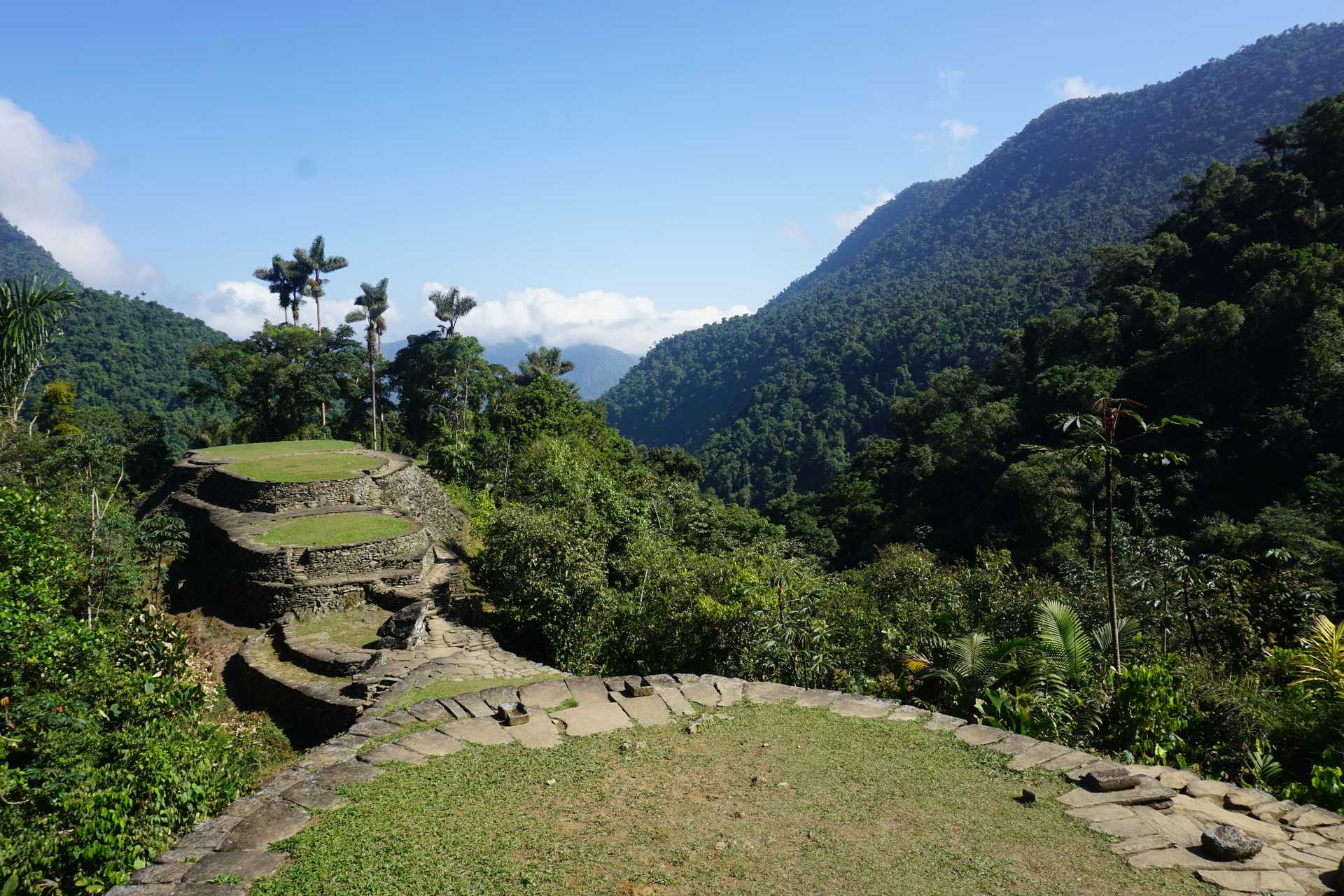
Santa Marta's tour market mainly revolves around Ciudad Perdida.
In pre-Columbian times, the Sierra Nevada de Santa Marta on the Caribbean coast was home to various indigenous communities, of which the Tayronas were the dominant and most developed group. The Tayronas are believed to have evolved into a distinctive culture since about the 5th century AD. A millennium later, shortly before the Spaniards came, the Tayronas had developed into an outstanding civilization, based on a complex social and political organization and advanced engineering.
The Tayronas lived on the northern slopes of the Sierra Nevada where they constructed hundreds of settlements, all of a very…
reviewed
-
Diving
Thanks to the beautiful coral reefs all around, San Andrés has become an important diving center, with more than 35 different spots for diving.
The reefs are notable for their sponges, which appear in an amazing variety of forms, sizes and colors. Other aquatic inhabitants include barracudas, turtles, lobsters, rays, groupers and red snappers.
Underwater visibility is remarkable, on average between 25m and 30m of sight throughout the year, though at some places it can be up to 45m or even 60m. This is largely due to the lack of currents and minimal erosion. The surface is also generally calm, particularly on the west side of the island. Last but not least, water…
reviewed
-
City Tours
City Tours, in a chiva (a colorful, traditional bus) depart daily at 14:00 from Av San Martín between Calles 4 and 5 in Bocagrande. The four-hour tour includes rides around Bocagrande, Castillo Grande and the walled city, plus visits to the Convento de la Popa and Castillo de San Felipe.
You can also take a city tour in a horse-drawn carriage, which gives a glance of Bocagrande and the walled city. The carriages depart from the corner of Av San Martín and Calle 4 in Bocagrande and go along the waterfront to the old town. After a run around the main streets of the walled city they return via either Av San Martín or the waterfront, whichever you prefer. They operate daily…
reviewed
-
B
Chiva Night Tours
If you're wary of setting off on your own, consider a night-time tour in a traditional bus called a chiva. One of the best is organized by Viajes Oganesoff. Its chiva, with live music aboard, departs from Hotel Intercontinental on Friday and Saturday at 20:00. The five-hour tour calls at several music spots (usually one in Juanchito and one on Av Sexta) and includes half a bottle of aguardiente per head and a snack.
reviewed
-
Turcol
This agency has the most experience on the route since the late '90s. It offers new mosquito nets, decent grub, purified water and its own housing on some nights. Although its employees could be more professional, its guides are just as good as any of the other firms. It has a second office at Calle 10C No C1-83 and a satellite office in front of Casa de Felipe in Taganga.
reviewed
Advertisement
-
Boomerang
With optimum wind currents and stunning topography, Medellín has become Colombia's premier destination for paragliding. Boomerang is one of the best local gliding schools, with highly experienced pilots and good equipment. It offers courses, equipment rental and tandem flights over the city (spectacular views) with a skilled pilot. No previous gliding experience is necessary for tandem flights.
reviewed
-
Colombia Paragliding
Bucaramanga’s most popular sport is paragliding. The hub for this high-flying activity is atop the Ruitoque mesa. Colombia Paragliding offers 15-minute tandem rides for COP$50,000, or go all-out and become an internationally licensed paragliding pilot; 10-day courses begin at COP$1,000,000. Owner/instructor Richi speaks English and also runs the KGB and the Nest hostels.
reviewed
-
Paradise Tour Contact
This small agency offers tours and a range of other services including bicycle rental (per day COP$10,000) and tours to El Pico (per person COP$40,000 to COP$65,000), horseback rides (COP$40,000), kayak trips (COP$40,000) and boat excursions around the island (per person COP$40,000 to COP$65,000). Boats normally call at the Canal Aury, Morgan’s Head, Cayo Cangrejo and Roland Roots Bar.
reviewed
-
Las Ardillas
The 10-hectare private nature reserve Las Ardillas has six canopy lines totaling 1200m that you can ride. There’s a swimming pool and sauna, and a restaurant serves drinks and snacks. The reserve is 8km south of Popayán. Take any bus bound for Timbío (COP$1000, 20 minutes) and get off at the Mi Bohío gas station. From here’s it’s a 2.4km walk to the actual site.
reviewed
-
Parque Natural Chicaque
Cloud forest (bosque de niebla) hikes await only 20km west of Bogotá in the gorgeous privately owned Parque Natural Chicaque. The 3-sq-km area features half a dozen walks (about 8km altogether), which are among the nation’s best marked. During rainy season, walks lead to waterfalls. On weekends you can hire a horse to ride back up the steep hill paths.
reviewed
-
Ostrich Farm
About 5km southwest of Villa de Leyva, in the direction of El Fósil, is this slightly incongruous Ostrich Farm, home to more than 120 ostriches and a handful of llamas, horses and sheep. There’s a small shop that sells ostrich leather shoes and enormous ostrich eggs. There’s also a restaurant where you can sample ostrich meat, but it’s only open on weekends.
reviewed
-
C
Destino Bogotá
Offers many playful city and area tours. Haunted Bogotá? Party-bus club-hopping? Salsa lesson and club debut? Check. Plus more standard fare like a worthy Guatavita/Zipaquirá day trip. Most trips require minimum of two or four people; city tours start at COP$40,000 per person, day trips start at COP$110,000. English-speaking staff (and guides); sometimes lower rates.
reviewed
-
Ecosistemas
Offers excursions and multiday tours to PNN Los Nevados.
reviewed
-
Semisubmarino Nautilus
A specially designed boat with large windows in its hull. It does trips from the wharf just west of the Casa de la Cultura. If you are not planning on scuba diving or snorkeling, this trip is probably the next best option for viewing the rich marine wildlife. Tickets can be bought from Mundo Marino or from the operator's desk at the wharf.
reviewed
-
La Piscinita
Also known as West View, just south of El Cove, La Piscinita is a good site for snorkeling, usually with calm water, plenty of fish (which will eat out of your hand) and some facilities, including a restaurant with traditional local food and snorkel rental. When the sea is rough, you can only feed the fish from land.
reviewed
Advertisement
-
Comfamiliares
Another outfit offering tours to PNN Los Nevados.
reviewed
-
Taxi Trips
Taxis in front of the bus terminal offer return taxi trips around the sights surrounding Villa de Leyva. The standard routes include El Fósil, El Infiernito and Convento del Santo Ecce Homo, and Ráquira and La Candelaria. Prices are per taxi for up to four people and include stops at the sights.
reviewed
-
Acuario
Next to Haynes Cay, off the east coast of San Andrés, Acuario is another place frequently visited by tourists by boat. The surrounding sea is shallow and calm and good for snorkeling. If you forget to bring your snorkeling gear you can rent some on the beach in Acuario for about US$2.
reviewed
-
Snorkeling, Sting Rays, Sunset & Beer
The name says it all, really. Jaime Restrepo runs a slightly flexible tour to swim with the sting rays at Haynes Cay, and throws in some deep-water snorkeling and brews on top of the package. It’s somewhat casual and limited to groups of 10. The tour leaves at 3pm from Tonino’s Marina.
reviewed
-
Club Social Los Amigos
A small, working-class bar, Club Social Los Amigos has two canchas de tejo where you can play a round of this unique Colombian game where you throw a heavy metal disc onto gunpowder, which then lets off a satisfying bang! A taxi here will cost around COP$6000.
reviewed