Sights in Tunisia
-
Chak Wak Park
Several kilometres southeast of the statue of Ibn Chabbat is the incongruous and trippy Chak Wak Park, an enormous testament to the vision of one passionate and wealthy man. The former mayor of Tozeur and the driving force behind the Dar Charaït museum, has created what amounts to a three-dimensional liberal education on evolution, history and religion. Surrounded by high walls reminiscent of the King Kong films, inside is a circuit that takes you from dinosaur-sized replicas of dinosaurs to a replica of Noah's Ark with models of animals lining up two by two while a sound system pipes in rain effects. Even the Biblical parting of the red sea is represented here with…
reviewed
-
Great Mosque
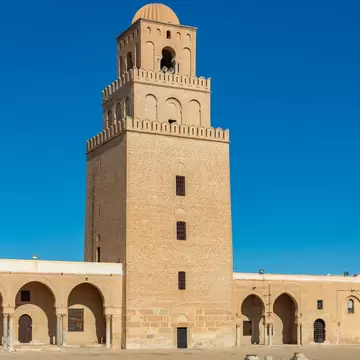
The Great Mosque, in the northeast corner of the medina, is North Africa's holiest Islamic site. It's also known as Sidi Okba Mosque, after the founder of Kairouan who built the first mosque here in AD 670. The original version was completely destroyed, and most of what stands today was built by the Aghlabids in the 9th century. Entry is with the multiple-site ticket.
The exterior, with its buttressed walls, has a typically unadorned Aghlabid design. Impressions change once you step into the huge marble-paved courtyard, surrounded by an arched colonnade. The courtyard was designed for water catchment, and the paving slopes towards an intricately decorated central drainage…
reviewed
-
Carthage
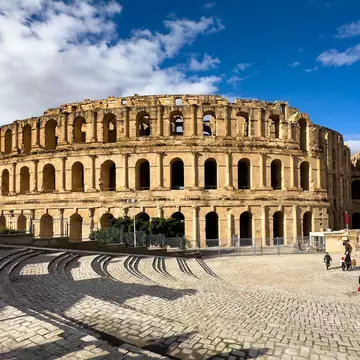
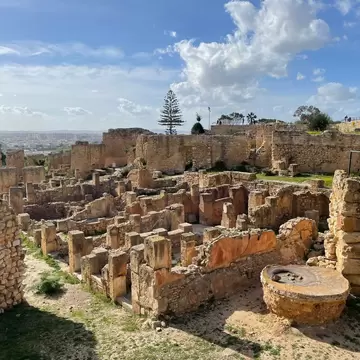
Founded by Phoenicians and home of Hannibal, Carthage was one of the greatest cities of the ancient world. The site retains its natural splendour, with lush vegetation and superb views over the gulf. Highlights are the museum and excavated quarter atop Byrsa Hill, the Antonine baths, the Punic ports, the Roman amphitheatre and the Sanctuary of Tophet.
Despite Carthage's fascinating history and the position of dominance it held in the ancient world, the Romans did such a thorough job demolishing it that the ruins today are something of a disappointment. Most of what remains is of Roman origin. There are six main sights spread out over a wide area. The TGM (light rail) line…
reviewed
-
A
Medina
Once the medina was Tunis, founded by the Arabs in the 7th century. Nowadays, to go from the new town into its closely knit streets, packed with generations of palaces and monuments, is to enter a different world. It's a Unesco World Heritage site.
A maze of tunnels and alleys dotted with hidden mansions, the medina's architecture is ideal for the climate, as the narrow streets are cool in summer and warm in winter. As space ran out, residents built upwards, constructing vaults and rooms above the streets. This gives the central lanes a subterranean feel, with watery shafts of sunlight filtering through. Apparently the vaults had to be built high enough to accommodate a…
reviewed
-
Zaytouna Mosque
Everything in the medina leads to or from the Zaytouna Mosque. Zaytouna means 'olive tree' - it's said the founder, Hassan Ibn Nooman, conqueror of Byzantine Carthage, used to hold lessons under a tree here.
Entering, it's impossible not to be awed by the calm of the open space after the busy souqs.
Dating from various eras, the building is remarkably harmonious. The first mosque here was built in AD 734, but it was rebuilt in the 9th century by the Aghlabid ruler Ibrahim ibn Ahmed (AD 856-63), and resembles the Great Mosque in Kairouan in design. The builders recycled 184 columns from Roman Carthage for the central prayer hall. The adjoining prayer room is 9th century.…
reviewed
-
Palmeraie
Tozeur's palmeraie is the second-largest in the country with at least 200,000 palm trees (locals claim twice that number) spread over an area of more than 10 sq km. It's a classic example of tiered oasis agriculture. The system is watered by more than 200 springs that produce almost 60 million litres of water a day, distributed around the various holdings under a complex system devised by the mathematician Ibn Chabbat in the 13th century AD.
The best way to explore the palmeraie is on foot. Take the road that runs south off ave Abdulkacem Chebbi next to the Hôtel Continental and follow the signs to the Zoo du Paradis. After about 500m the road passes the old quarter of…
reviewed
-
B
ribat
The ribat is northwest of the mosque and is the oldest monument in the medina, built in the final years of the 8th century AD.
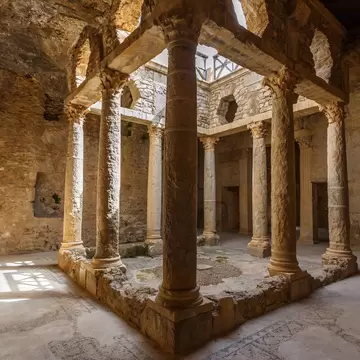
The entrance is through a narrow arched doorway flanked by weathered columns salvaged from the ruins of Roman Hadrumètum. The small ante-chamber was the last line of the building's defences - from high above the columns, projectiles and boiling liquids were rained down on intruders. A vaulted passage opens out into a courtyard surrounded by porticos. The ribat, designed principally as a fort, was garrisoned by devout Islamic warriors who would divide their time between fighting and silent study of the Quran in the tiny, cell-like rooms built into…
reviewed
-
C
Museum Dar Essid
This small, private museum is also not to be missed. In a quiet part of the medina, it occupies a beautiful old home, furnished in the style of a well-to-do 19th-century Sousse official and his family. The dimensions of the elaborately decorated, arched door are the first indication of the owner's status. It opens into a small anteroom for meeting strangers, and then into a tiled courtyard surrounded by the family rooms.
A plaque in the courtyard reveals that the house was built in AD 928, making it one of the oldest in the medina. There's an extravagance reflected in the Andalusian tiled façades and items ranging from European antique furniture to traditional perfume…
reviewed
-
D
Boujaffar Beach
Sousse's Boujaffar Beach, with its multi-kilometre stretch of high-rise hotels, cafés and restaurants, is the city's landmark. Named somewhat incongruously after a local Muslim holy man, the soft, sandy strip is a playground where families picnic, children frolic, foreigners sunbathe and the warm, calm waters of the Mediterranean is everyone's bathtub.
Only a few small parts of the strip are claimed by beachfront hotels with chaise lounges and parasols. Though these are usually not roped off, they are 'protected' by staff that generally looks kindly on foreigners while tending to treat rudely any Tunisians who wander through. Access to these areas is generally open to…
reviewed
-
Dar Charaït Museum
The museum is part of the impressive Dar Charaït complex. The building in which the museum is housed is an extravagant reproduction of an old palace and contains collections of pottery, jewellery, costumes and other antiques, as well as an art gallery. Scattered throughout the rooms off the splendid main courtyard is a series of replicas of scenes from Tunisian life, past and present.
They include the bedroom of the last bey (provincial governor in the Ottoman Empire), a palace scene, a typical kitchen, a hammam (public bathhouse), wedding scenes and a Bedouin tent. The museum attendants, dressed as servants of the bey, set the tone for the museum. The complex also…
reviewed
Advertisement
-
Kairouan Medina
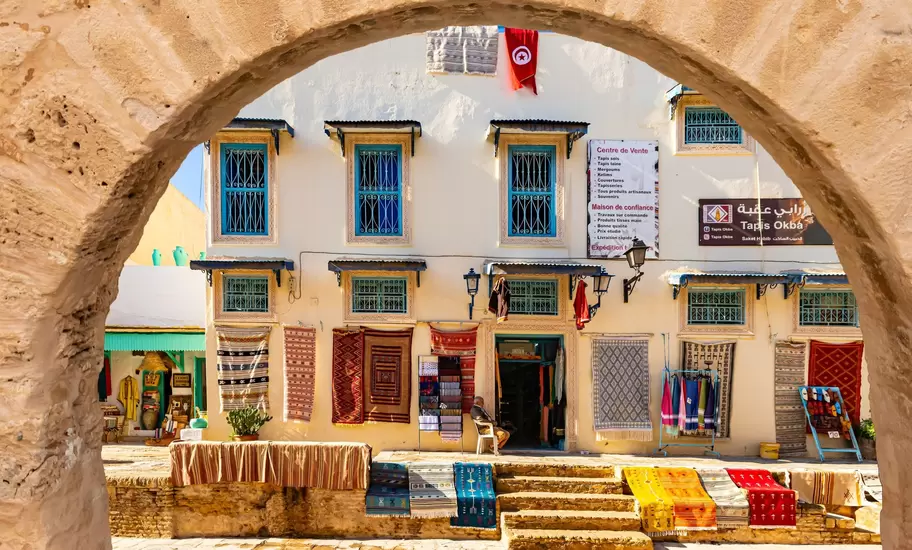
Less commercial than other medinas in the country, Kairouan's feels even more like it ebbs and flows to a different rhythm than modern Tunisia. Most of it is given over to quiet residential streets whose rather derelict façades are set off by grand and ornate doors, and windows, arches and shutters in bright blues and greens, more reminiscent of the Caribbean than of North Africa.
It's possible to wander much of the medina without being confronted by a single souvenir-buying opportunity as virtually all of the commerce is restricted to the main north-south thoroughfare of ave 7 Novembre. Here you'll find several carpet shops selling high quality products and all the…
reviewed
-
Zaouia of Sidi Sahab
This extensive zaouia, about 1.5km northwest of the medina, houses the tomb of Abu Zama el-Belaoui, a sahab (companion) of the Prophet Mohammed. He was known as the barber because he always carried three hairs from the Prophet's beard with him, and the zaouia is sometimes referred to as the Mosque of the Barber. While the original mausoleum dates back to the 7th century AD, most of what stands today was added at the end of the 17th century.
The additions include a funduq to house pilgrims, a medersa (Quranic school) and a mosque. Entry to the zaouia is with the multiple-site ticket. The entrance is along an unusually decorative marble passageway that leads to a stunning…
reviewed
-
E
Sahib Hammam
You haven't fully experienced Tunisia until you've been scrubbed down with an oven scourer by an enthusiastic elderly masseur. The oldest and most atmospheric hammams (public bathhouse) are in the medina, keeping residents steamed and cleaned. Often recognisable by their candy-striped red-and-green doorways and undecorated domes, they feel as if they haven't changed (or been cleaned) for hundreds of years. It's an amazingly exotic, sensual and relaxing experience.
You'll need a towel, and you might want a scrubbing mitt, shampoo and soap. To avoid undue attention, be aware that people don't bathe naked, but wear their underwear (men wear shorts). There are bucketloads to…
reviewed
-
F
El-Methihra Hammam
You haven't fully experienced Tunisia until you've been scrubbed down with an oven scourer by an enthusiastic elderly masseur. The oldest and most atmospheric hammams (public bathhouse) are in the medina, keeping residents steamed and cleaned. Often recognisable by their candy-striped red-and-green doorways and undecorated domes, they feel as if they haven't changed (or been cleaned) for hundreds of years. It's an amazingly exotic, sensual and relaxing experience.
You'll need a towel, and you might want a scrubbing mitt, shampoo and soap. To avoid undue attention, be aware that people don't bathe naked, but wear their underwear (men wear shorts). There are bucketloads to…
reviewed
-
Ouled el-Hadef
Tozeur's delightful old quarter was built in the 14th century AD to house the El-Hadef clan, which had grown rich on the proceeds of the caravan trade. The area is a maze of narrow, covered alleys and small squares. It's famous for its amazing traditional brickwork, which uses protruding bricks to create intricate geometric patterns in relief. The style is found only here and in nearby Nefta.
The easiest entrance to the Ouled el-Hadef is from ave de Kairouan.
Like the medinas further north in Tunisia, wandering through the Ouled el-Hadef is a journey of discovery best made by getting lost. The most well-preserved sections are east of the museum, including the house of the…
reviewed
-
G
Mosque of Sidi Mahres
There are mosques all over the medina; interiors are off-limits to non-Muslims. The finest include Mosque of Sidi Mahres, built in 1692 and named after Tunis' patron saint, who saved the city after it was captured by Abu Yazd during a rebellion against Fatimid rule in AD 944. He also allowed Jews to settle within the walls, and reorganised the souqs. His tomb lies opposite the entrance, in the Zaouia of Sidi Mahres.
The mosque is ranked as one of the city's finest Ottoman buildings, with a cluster of white domes resembling a heap of eggs. But there's something missing. It's the minaret - never added as the project ran into difficulties following 17th-century political…
reviewed
-
H
Great Mosque
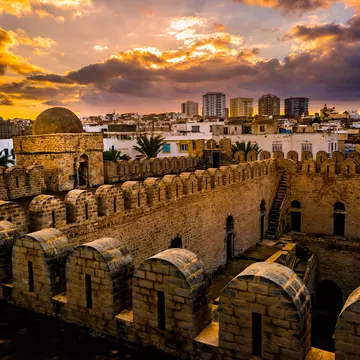
The Great Mosque is a typically austere Aghlabid affair. It was built, according to a Kufic (early Arabic) inscription in the courtyard, in the year AD 851 by a freed slave called Mudam, on the instructions of the Aghlabid ruler Abul Abbas. Mudam adapted an earlier kasbah (fort), which explains the mosque's turrets and crenulated wall, as well as its unusual location; the great mosque is usually sited in the centre of a medina.
The mosque is also unusual in that it has no minaret; its proximity to the ribat (fortified Islamic monastery) meant that the latter's tower could be used to call the faithful to prayer. The structure underwent 17th-century modifications and…
reviewed
-
I
Zitouni Hammam
You haven't fully experienced Tunisia until you've been scrubbed down with an oven scourer by an enthusiastic elderly masseur. The oldest and most atmospheric hammams (public bathhouse) are in the medina, keeping residents steamed and cleaned. Often recognisable by their candy-striped red-and-green doorways and undecorated domes, they feel as if they haven't changed (or been cleaned) for hundreds of years. It's an amazingly exotic, sensual and relaxing experience.
You'll need a towel, and you might want a scrubbing mitt, shampoo and soap. To avoid undue attention, be aware that people don't bathe naked, but wear their underwear (men wear shorts). There are bucketloads to…
reviewed
-
J
El-Kachachine Hammam
You haven't fully experienced Tunisia until you've been scrubbed down with an oven scourer by an enthusiastic elderly masseur. The oldest and most atmospheric hammams (public bathhouse) are in the medina, keeping residents steamed and cleaned. Often recognisable by their candy-striped red-and-green doorways and undecorated domes, they feel as if they haven't changed (or been cleaned) for hundreds of years. It's an amazingly exotic, sensual and relaxing experience.
You'll need a towel, and you might want a scrubbing mitt, shampoo and soap. To avoid undue attention, be aware that people don't bathe naked, but wear their underwear (men wear shorts). There are bucketloads to…
reviewed
-
Maison du Gouverneur
This 18th-century residence of the former beys or pashas of Kairouan called the Maison du Gouverneur, signposted as 'Tapis-Sabra', is an exquisitely restored medina house and an extravagant counterpoint to the austerity of the Aghlabids. The interior is a sumptuous combination of cedar and teak, marble latticework, plaster moulding and elegant tiled arches adorning the entrance hall, harem and reception hall where the governor received official guests and held meetings.
The house doubles, of course, as a carpet shop; after watching a woman demonstrate the painstaking art of carpet making (women make the carpets, men sell them), you'll be expected to view the carpets. If…
reviewed
Advertisement
-
Sousse Archaeological Museum
Sousse's excellent archaeological museum occupies the southern section of the old kasbah.
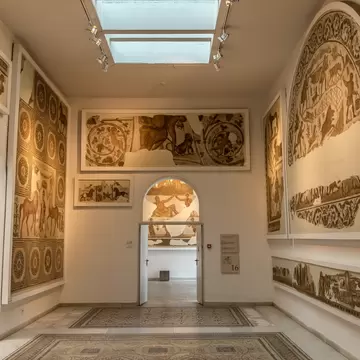
One of the best collections of mosaics in the country is housed in the rooms around the kasbah's two main courtyards. The highlight is the room on the northern side of the entrance courtyard with exceptional exhibits, including the Triumph of Bacchus, which depicts the Roman god of wine riding in a chariot at the head of a parade of satyrs, as well as many superb fishing scenes. Other rooms contain a collection of funerary objects from a Punic grave beneath the museum and a resident artist demonstrating the patient and painstaking artistry of mosaic-making. Note that there is no…
reviewed
-
K
Mosque of Youssef Dey
There are mosques all over the medina; interiors are off-limits to non-Muslims. The finest include Mosque of Youssef Dey, Tunis' first Ottoman-style mosque (1616), designed by Andalusian architect Ibn Ghalib in a colourful mishmash of styles. It was surrounded by Turkish souqs - El-Trouk (tailors), El-Berka (slaves) and El-Bechamkia (slippers) and catered to the Turkish traders.
Look out for the minaret crowned with a miniature green-tiled pyramid - this was the first, much-copied octagonal minaret in Tunis, serving as propaganda for the new masters. The mosque contains the tombs of Youssef Dey and his family - another innovative Ottoman custom.
reviewed
-
Aghlabid Basins
These cisterns, built by the Aghlabids in the 9th century are more impressive because of their engineering sophistication than as sights in themselves. Water was delivered by aqueduct from the hills 36km west of Kairouan into the smaller settling basin and then into the enormous main holding basin, which was 5m deep and 128m in diameter. In the centre of the main pool was a pavilion where the rulers could come to relax on summer evenings.
Most visitors do nothing more than peek at the cisterns from the rooftop of the syndicat d'initiative office nearby, but you can enter with the multiple-site ticket.
reviewed
-
Souq el-Attarine
The medina markets (souqs) were organised into different commercial areas. Refined trades surrounded the Zaytouna Mosque, while dirtier businesses such as tanners or blacksmiths stayed on the outskirts. The markets are either named after their traditional trade or their founding community, such as Souq el-Grana - the Livornese Jews' Souq. The main markets include the Souq el-Attarine - the Perfume Makers' Souq, dating from the 13th century, near the Zaytouna Mosque.
Today it's largely souvenirs, but there are plenty of essential oils too. The quilted satin baskets on sale are for wedding gifts.
reviewed
-
L
Bir Barouta
The Bir Barouta, just north of ave Ali Belhouane, was built by the Ottoman ruler Mohammed Bey in 1676 to surround the well that features in the city's foundation legend. Its waters are supposedly linked to the well of Zem-Zem in Mecca. The scene itself is a little staged for the uninitiated with a blinkered camel turning the wheel to draw water from the well for people to taste.
That said, this is an important religious moment for most visitors, many of whom genuinely believe that the well is connected to Mecca. Entry is with the multiple-site ticket.
reviewed