Things to do in The Netherlands
-
A
House of Bols
The House of Bols is a jenever (Dutch gin) museum run by the Bols distillery. The hour-long, self-guided tour includes a confusing sniff test, a company history and a cocktail made by one of the bartenders who train at the academy upstairs. You must be aged 18 or over to visit.
reviewed
-
B
Van Gogh Museum
The Van Gogh Museum is one of Amsterdam’s must-sees. Opened in 1973 to house the collection of Vincent’s younger brother Theo, it consists of about 200 paintings and 500 drawings by Vincent and his friends and contemporaries, such as Gauguin, Monet, Toulouse-Lautrec and Bernard. Vincent van Gogh was born in 1853 and had a short but astonishingly productive life. Through his paintings, the museum chronicles his journey from Holland, where his work was dark and sombre, to Paris, where, under the influence of the impressionists, he discovered vivid colour. From there he moved to Arles, where he was incredibly productive, often completing a canvas every day. Astoundingly Van …
reviewed
-
C
Bagels & Beans
Join the crowds for bagels with all the usual toppings, plus some new-fangled ones (smoked chicken with avocado and pesto). Top it all off with a slice of dense fig cake; it goes exceedingly well with coffee. It has another branch in De Pijp (Ferdinand Bolstraat 70).
reviewed
-
D
Begijnhof
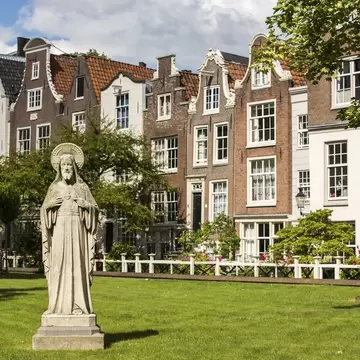
This enclosed former convent dates from the early 14th century. It’s a surreal oasis of peace, with tiny houses and postage-stamp gardens around a well-kept courtyard. The Beguines were a Catholic order of unmarried or widowed women who cared for the elderly and lived a religious life without taking monastic vows. The last true Beguines died in the 1970s. Contained within the hof (courtyard) is the charming Begijnhof Kapel, a ‘clandestine’ chapel where the Beguines were forced to worship after their Gothic church was taken away by the Calvinists. Go through the dogleg entrance to find marble columns, wooden pews, paintings and stained-glass windows commemorating the Mir…
reviewed
-
E
Anne Frank Huis
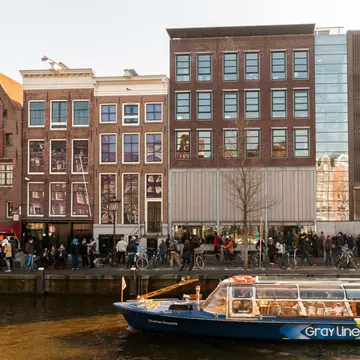
The Anne Frank Huis is the Western Canal Belt’s ubersight, drawing almost a million visitors annually. With its reconstruction of Anne’s melancholy bedroom and her actual diary – sitting alone in its glass case, filled with sunnily optimistic writing tempered by quiet despair – it’s a powerful experience. The focus of the museum is the achterhuis (rear house), also known as the secret annexe, a dark and airless space where the Franks and others observed complete silence during the daytimes, outgrew their clothes, pasted photos of Hollywood stars on the walls and read Dickens, before being mysteriously betrayed and sent to their deaths. The house stays open later…
reviewed
-
F
Vondelpark
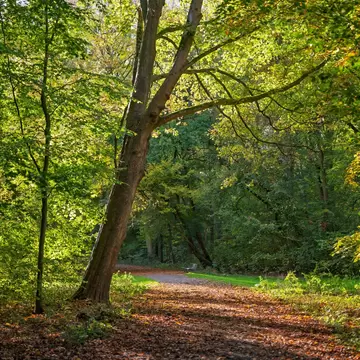
As vital to Amsterdam as Rembrandt, canals and coffeeshops, on a sunny day there’s no place better than the Vondelpark. As people from all walks of life descend on this sprawling equivalent to New York’s Central Park, a party atmosphere ensues. Some kick back by reading a book, others hook up with friends to share a spliff or cradle a beer at one of the cafes, while others trade songs on beat-up guitars. The Vondelpark offers an abundance of ponds, lawns, gardens and winding footpaths that encourage visitors to get out and explore. For bicycle rentals, the outlet of MacBike at Weteringschans is relatively close to the park’s main entrance.
reviewed
-
G
Thais Snackbar Bird
Don’t tell the Chinese neighbours, but this is some of the best Asian food on the Zeedijk – the cooks, wedged in a tiny kitchen, don’t skimp on lemongrass, fish sauce or chilli. The resulting curries and basil-laden meat and seafood dishes will knock your socks off. There’s a bit more room to spread out in the (slightly pricier) restaurant across the street (No 72).
reviewed
-
H
Canal Tours
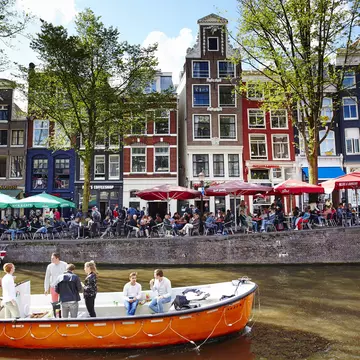
Canal Tours are a fine way to see the old town and the old water-level warehouses. The landing is on Oudegracht just south of Lange Viestraat. You can also rent canal bikes from in front of the municipal library.
reviewed
-
I
Waag
The very grand, multiturreted Waag (Weigh House) dates from 1488, when it was part of the city’s fortifications. It looked more like a castle in those days, fronted by a moatlike canal and built into the old city walls. From the 17th century onwards it was the main weigh house. The surgeons guild, which occupied the upper floor, commissioned Rembrandt’s famous The Anatomy Lesson of Dr Tulp (displayed in the Mauritshuis museum in Den Haag). The masons’ guild was based in the tower facing the Zeedijk; note the superfine brickwork. Public executions took place at the Waag, but more recently it served as a fire station and a vault for the city’s archives. A bar-restaurant…
reviewed
-
J
Heineken Experience
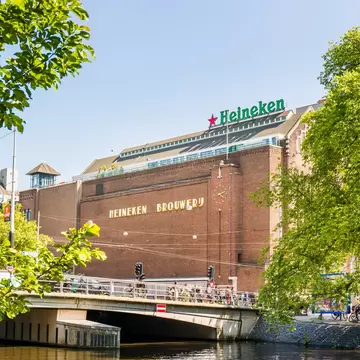
The district’s other draw is the Heineken Experience. On the site of the company’s old brewery, the newly renovated attraction let’s you take a self-guided tour that’s tantamount to brew-worship. Learn the history of the Heineken family, watch Heinie commercials from around the world, visit the horse stables and make your own music video. In the Experience’s crowning glory – a multimedia exhibit where you actually ‘become’ a beer – you’ll get shaken up, sprayed with water and subjected to heat. Afterward you get to down a couple of cold ones (though we should point out the suds are dismissed as ‘old man’s beer’ by many locals, while being sold at a premium abroad). Allo…
reviewed
Advertisement
-
K
Van Dobben
It has been open since the 1940s, the venerable Van Dobben has white tiled walls and white-coated counter men who specialise in snappy banter. Traditional meaty Dutch fare is the forte: try the pekelvlees (something close to corned beef), or make it a halfom, if you’re keen on that being mixed with liver. The kroketten (croquettes) are the best in town and compulsory after a late-night Rembrandtplein booze-up.
reviewed
-
L
Di’Vino Wijnbar
Finally, a dedicated wine bar in the Jordaan. It serves only quality Italian wines (glasses €4 to €6, bottles €19 to €55), plus divine charcuterie and cheese plates (€6.50 to €17.50). The polished wood bar, flickering candles and lofty corner windows beckon you in – though the snuggle-into-me blankets strewn about the tables and chairs outside are equally inviting. Choices, choices.
reviewed
-
M
Japanese Pancake World
If the Dutch are famous for pancakes of meat, seafood and vegies, so are the Japanese. At the continent’s only shop specialising in okonomiyaki (literally ‘cook as you like’), you’ll get yours in a hot iron dish with your choice of fillings, topped with flakes of dried fish. There’s a J-pop backdrop and barely two dozen seats.
reviewed
-
N
Los Pilones
Owners Hector and Pedro consistently set the standard among Amsterdam’s handful of Mexican restaurants. If you’re looking for wonderfully grilled bistek (beefsteak), crispy chicken rolls and fruity margaritas, you’re definitely in the right place. A few shots from the 60-plus tequila list, and you’ll be ready for a hat dance.
reviewed
-
Pata Negra
Tapas and only tapas. The alluringly tiled exterior is matched by a vibrant crowd inside, especially on weekends, downing sangria by the jug and all those small plates (the garlic-fried shrimps and grilled sardines are standouts). Margaritas are made with freshly squeezed lime juice, as they should be. Arrive before 6.30pm or reserve.
reviewed
-
O
Bazar Amsterdam
In a glorious former Dutch Reformed Church, the light-filled, Middle Eastern-style decor matches the Middle Eastern-style food. Fish and chicken dishes please meat eaters; aubergine and portobello mushroom dishes gratify vegetarians. Breakfast and lunch are served all day.
reviewed
-
P
Oriental City
This huge Hong Kong-style restaurant with the requisite red lanterns is always lively. Join gaggles of local Chinese for daily dim sum (11:30 to 16:30; we like the meaty, flavoursome cha sieuw bao pork buns) and a 24-page menu (!) of classic Canto cuisine.
reviewed
-
Q
Blauw
Blauw is the place for stylish Indonesian food in Utrecht. Young and old alike enjoy superb rijsttafels (array of spicy dishes served with rice) amid the red decor that mixes vintage art with hip minimalism.
reviewed
-
R
Ginger
As carefully arranged as a bento box, Ginger takes inspiration from Thailand to Japan, China to Bali. The menu bursts with goodness and authentic Asian flavours – hence the name.
reviewed
-
S
Nam Kee
It won’t win any design awards, but Nam Kee is the most popular Chinese spot in town. There’s a new, fancier location at Geldersekade 117.
reviewed
Advertisement
-
T
De Zeven Zonden
Unique, offbeat and cosy - try the kangaroo dish cooked French-provincial style.
reviewed
-
U
Albert Cuypmarkt
Exotic goods as well as cheap basics from nations around the globe.
reviewed
-
V
Binnenhof
Adjoining the Mauritshuis, the Binnenhof is surrounded by parliamentary buildings that have long been at the heart of Dutch politics, though parliament now meets in a modern building on the south side.
The central courtyard looks sterile now but was once used for executions. A highlight of the complex is the 13th-century Ridderzaal (Knights' Hall). The Gothic dining hall has been carefully restored.
The North Wing is still home to the Upper Chamber of the Dutch Parliament, in 17th-century splendour. The Lower Chamber used to meet in the ballroom, in the 19th-century wing. It all looks a bit twee and you can see why the politicians were anxious to decamp to the sleek new ex…
reviewed
-
W
Museumplein
Museumplein was laid out to host the World Exhibition in 1883, but gained its lasting title only when the Rijksmuseum was opened two years later. One of many facelifts raised a triangle of turf at the southern end, dubbed the ‘ass’s ear’ for its shape; it’s now a popular spot for sun worshippers. There’s a large supermarket, Albert Heijn, concealed below. For as long as anyone can remember, the square has been used for concerts, special events and political demonstrations. At other times it’s a relaxing place to hang out, play hacky-sack, skateboard (ramp provided), toss a frisbee or enjoy a picnic. In winter the long concrete pond is transformed into a festive skating ri…
reviewed
-
X
Hortus Botanicus
Established in 1638, the Hortus Botanicus became a repository for tropical seeds and plants brought by Dutch ships from the East and West Indies. From here, coffee, pineapple, cinnamon and palm-oil plants were distributed throughout the world. The 4000-plus species are kept in wonderful structures, including the colonial-era seed house and a three-climate glasshouse. The 300-year-old cycad is possibly the world’s oldest potted plant. The butterfly house is a hit with kids and stoned adults. Guided tours (additional €1) are held at 2pm Sunday year-round.
reviewed