Things to do in Cape Town
-
A
Boulders Beach
Some 3km south of Simon’s Town is Boulders, a picturesque area with a number of large boulders and small sandy coves, within which you’ll find Boulders Beach, home to a colony of 3000 jackass (African) penguins. Delightful as they are, the penguins are also pretty stinky, which may put you off getting too close.
There are two entrances to the penguins’ protected area. The first, as you come along Queens Rd (the continuation of St George’s St) from Simon’s Town, is at the end of Seaforth Rd; the second is at Bellevue Rd, where you’ll also find accommodation and places to eat. You can observe the penguins from the boardwalk at Foxy Beach and at Boulders Beach.
reviewed
-
B
Africa Café
Touristy, yes, but still one of the best places to sample African food. Come with a hearty appetite as the set feast comprises some 15 dishes from across the continent, of which you can eat as much as you like. The décor, different in every room, is fantastic. Bookings are advised and it’s closed on Sunday from June to October.
reviewed
-
C
Anatoli
You can always rely on this atmospheric Turkish joint that’s a little piece of Istanbul in Cape Town. Make a meal out of their delicious meze (R12 to R30 a dish) both hot and cold.
reviewed
-
D
Kirstenbosch Botanical Gardens
Covering over 500 hectares of Table Mountain, overlooking False Bay and the Cape Flats, these beautiful landscaped gardens merge almost imperceptibly with the surrounding natural fynbos (fine bush) vegetation. The gardens were established by Jan van Riebeeck, who appointed a forester in 1657.
A group of shipwrecked French refugees on their way to Madagascar was employed during 1660 to plant the famous wild almond hedge as the boundary of the Dutch outpost (it’s still here). Van Riebeeck called his private farm Boschheuwel, and most likely it wasn’t until the 1700s, when the gardens were managed by JF Kirsten, that they got the name Kirstenbosch. Apart from the almond…
reviewed
-
E
Signal Hill & Noon Gun
Separating Sea Point from the City Bowl, Signal Hill provides magnificent views from its 350m-high summit, especially at night. Once also known as Lion's Rump, as it is attached to Lion's Head by a 'spine' of hills, it is officially part of Table Mountain National Park. To reach the summit head up Kloof Nek Rd from the city and take the first turn-off to the right at the top of the hill.
Signal Hill was the early settlement's lookout point, and it was from here that flags were hoisted when a ship was spotted, giving the citizens below time to prepare their goods for sale and dust off their tankards.
At noon, Monday to Saturday, a cannon known as the Noon Gun is fired from…
reviewed
-
F
Chapman’s Peak Drive
Whether you choose to drive, pedal or walk along this 5km toll road linking Hout Bay with Noordhoek, take your time as it’s one of the most spectacular stretches of coastal road in the world. Unfortunately the road is plagued by dangerous rock slides, so it often gets closed during bad weather. There are a few places to stop to admire the view and it’s certainly worth taking the road at least one way en route to Cape Point. Perched on a rock near the Hout Bay end of the drive is a bronze leopard statue. It has been sitting there since 1963 and is a reminder of the wildlife that once roamed the area’s forests (which has also largely vanished).
reviewed
-
Victoria & Alfred Waterfront
The Victoria & Alfred Waterfront, always just called the Waterfront is likely to be one of the first places you head to. It’s a great example of how to best redevelop a declining dock area into a tourist hot spot. The atmosphere is always buzzing and there’s plenty to do, including making a trip out to Robben Island, the infamous prison island that is now a fascinating museum.
The Alfred and Victoria Basins date from 1860 and are named after Queen Victoria and her son Alfred. Although these wharves are too small for modern container vessels and tankers, the Victoria Basin is still used by tugs, harbour vessels of various kinds and fishing boats. In the Alfred Basin…
reviewed
-
G
Table Mountain National Park
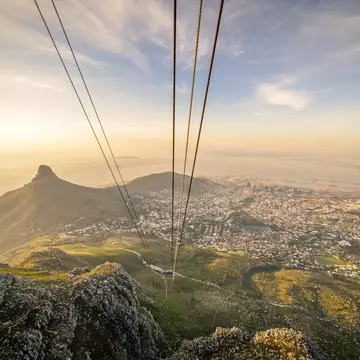
Covering some three-quarters of South Africa, Table Mountain National Park stretches from flat-topped Table Mountain to Cape Point. For the vast majority of visitors the main attraction is the 1086m-high mountain itself, the top of which can easily be accessed by the cableway, which runs every 10/20 minutes in high/low season.
reviewed
-
H
Table Mountain Café
Hallelujah! Table Mountain finally gets the café it so deserves. This self-serve place offers tasty deli items and meals, compostable plates and containers, and good coffee. They also sell wine and beer so there’s no need to cart your bottle up the slopes to toast the view.
reviewed
-
I
Empire Café
The surfies’ favourite hang-out is a great place for a breakfast or lunch of well-made pasta dishes and salads. Local art exhibitions enliven the walls. Call to see if it’s open for dinner on Thursday and Friday, November to March.
reviewed
Advertisement
-
J
Rondebosch Potters Market
If you’re interested in local ceramics, the date to mark in your diary is the twice yearly Rondebosch Potters Market held on the second-last Saturday of March and November.
reviewed
-
!Khwa Ttu
Don’t miss a visit to the very special !Khwa ttu off Rte 27 just south of Yzerfontein, 70km from Cape Town. Billed as the San Culture & Education Centre, !Khwa ttu is a joint venture by the San people and a Swiss philanthropic foundation (Ubuntu) and is the only San-owned and operated culture centre in the Western Cape.
Set within the ancestral lands of the San, !Khwa ttu is based on an 850-hectare nature reserve. There’s a good restaurant serving traditional South African cuisine and a wonderful craft shop. All the buildings operate on solar power, and a crèche has been built for the workers’ children. The land itself is sandveld, rising to renosterveld on the…
reviewed
-
K
Cape of Good Hope
Commonly called Cape Point, this 7750-hectare section of Table Mountain National Park, includes awesome scenery, fantastic walks and often deserted beaches. Some 250 species of birds live here, including cormorants and a family of ostriches that hang out near the Cape of Good Hope, the southwesternmost point of the continent.
Many people visit on organised bus tours but, if you have the time, exploring the reserve on foot or by bicycle is much more rewarding. Bear in mind, though, that there is minimal shade and that the weather can change quickly. Bookings are required for the two-day Cape of Good Hope Trail, a spectacular 33.8km circular route with one night spent at the…
reviewed
-
L
District Six Museum
If you visit only one museum in Cape Town make it this one. As much for the people of the now-vanished District Six as it is about them, this is a hugely moving and informative exhibition, and most township tours stop here to explain the history of the pass laws. Reconstructions of home interiors, photographs, recordings and testimonials build up an evocative picture of a shattered but not entirely broken community. The staff each have a heartbreaking story to tell. There’s also an excellent new annexe in the Sacks Futeran Building a couple of blocks away. Speak to staff about arranging a walking tour of the old District Six, for a minimum of 10 people.
reviewed
-
M
Iziko Slave Lodge
This museum, mainly devoted to the history and experience of slaves and their descendants in the Cape, also has artefacts from ancient Egypt, Greece, Rome and the Far East on the 1st floor.
One of the oldest buildings in South Africa, dating back to 1660, the Slave Lodge has a fascinating history in itself. Until 1811 the building was home, if you could call it that, to as many as 1000 slaves, who lived in damp, insanitary, crowded conditions. Up to 20% died each year. The slaves were bought and sold just around the corner on Spin St.
From the late 18th century the lodge was used as a brothel, a jail for petty criminals and political exiles from Indonesia, and then a…
reviewed
-
N
Company’s Gardens
What started as the vegetable patch for the Vereenigde Oost-Indische Compagnie (VOC, or Dutch East India Company) is now a shady green escape in the heart of the city. The surviving 6 hectares of Jan van Riebeeck’s original 18-hectare garden are found around Government Ave, with gates next to the National Library of South African and off both Museum and Queen Victoria Sts.
As the VOC’s sources of supply diversified, the grounds became a superb pleasure garden, planted with a fine collection of botanical specimens from South Africa and the rest of the world, including frangipanis, African flame trees, aloes and roses.
The squirrels that scamper here were imported to…
reviewed
-
O
Iziko Michaelis Collection
On the south side of Greenmarket Sq, the city’s second-oldest public space after the Grand Parade is the beautifully restored Old Townhouse, a Cape rococo building dating from 1755. It now houses the impressive art collection of Sir Max Michaelis, donated to the city in 1914. Dutch and Flemish paintings and etchings from the 16th and 17th centuries (including works by Rembrandt, Frans Hals and Anthony van Dyck) hang side by side with contemporary works – the contrasts between old and new are fascinating. The cool interior is a relief from the buzzing market outside on Greenmarket Square, while the relaxed Ivy Garden Restaurant in the courtyard behind is worth considering…
reviewed
-
P
Clifton Beaches
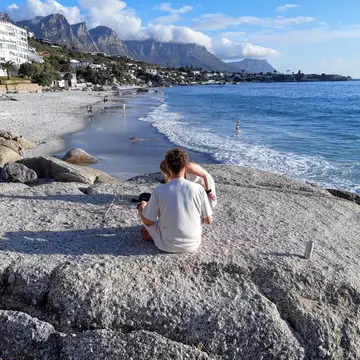
Giant granite boulders split the four linked beaches at Clifton, accessible by steps from Victoria Rd. Almost always sheltered from the wind, they are top sunbathing spots, despite the lack of local facilities. Local lore has it that No 1 and No 2 beaches are for models and confirmed narcissists, No 3 is the gay beach, and No 4, the busiest, is for families. If you haven’t brought your own supplies, vendors hawk drinks and ice creams along the beach, and you can hire a sun lounge and umbrella.
reviewed
-
Q
Iziko SA National Gallery
The impressive permanent collection of South Africa’s premier art space harks back to Dutch times and includes some extraordinary pieces. But it’s often contemporary works, such as the Butcher Boys sculpture by Jane Alexander, looking like a trio of Lord of the Rings orcs who have stumbled into the gallery, that stand out the most. Also check out the remarkable teak door in the courtyard, carved by Herbert Vladimir Meyerowitz with scenes representing the global wanderings of the Jews. His carvings also adorn the tops of the door frames throughout the gallery. There’s also a good shop with some interesting books and gifts.
reviewed
-
Circe Launches
Although increasingly given over to tourism, Hout Bay’s harbour still functions and the southern arm of the bay is an important fishing port and processing centre. From here you can catch a boat to Duiker Island (also known as Seal Island because of its colony of Cape fur seals, but not to be confused with the official Seal Island in False Bay). Three companies run cruises daily, usually with guaranteed sailings in the mornings. The cheapest, with a none-too-spectacular glass-bottomed boat, is Circe Launches; the others are Drumbeat Charters and Nauticat Charters.
reviewed
Advertisement
-
R
Irma Stern Museum
The pioneering 20th-century artist Irma Stern (1894–1966) lived in this house for almost 40 years and her studio has been left virtually intact, as if she’d just stepped out into the verdant garden for a breath of fresh air. Her ethnographic art-and-craft collection from around the world is as fascinating as her own expressionist art, which has been compared favourably to Gauguin’s. To reach the museum from Rosebank station, walk a few minutes west to Main Rd, cross over and walk up Chapel St.
reviewed
-
Spier
There’s something for everyone at this mega-estate, a major sponsor of the arts, which offers golf, horse riding, a cheetah-conservation project, a performing-arts centre, beautifully restored Cape Dutch buildings and several restaurants, including the spectacular if somewhat cheesy African-themed Moyo. Its wines have improved over the years, and in the tasting room you can try lots of other vineyards’ wines. There’s also a good hotel, the Village at Spier.
reviewed
-
S
Amadoda
Attempting to pull off a township braai (barbecue) and shebeen atmosphere à la Mzoli’s, but not quite matching the real thing, is this slickly decorated venue tucked away down a side road beside the railway tracks. The juke box is stacked with African, jazz and house music tracks and the butchery will provide whatever kind of meat you’d like to have grilled with your beer or rum and coke. Worth checking out late on a weekend evening.
reviewed
-
Kommetjie Beaches
A focal point for surfing on the Cape, Kommetjie offers an assortment of reefs that hold a very big swell. Outer Kommetjie is a left point out from Slangkop Lighthouse at the southern end of the village. Inner Kommetjie is a more-protected, smaller left with lots of kelp (only at high tide). They both work best with a southeasterly or southwesterly wind. For breezy beach walks, it doesn't get much better than the aptly named Long Beach, accessed off Benning Dr.
reviewed
-
Grande Provence
A beautifully revamped 18th-century manor house is home to a stylish restaurant and a splendid gallery showcasing the best local artists. In the tasting room you can try the very easy-drinking Angel Tears blends or the flagship Grande Provence red (tasting R50). The Jonkershuis lounge (used for meetings and conferences) is worth a look, and if you really want to push the boat out, the luxurious Owner’s Cottage is available to sleep in.
reviewed