Things to do in Serbia
-
Ada Ciganlija
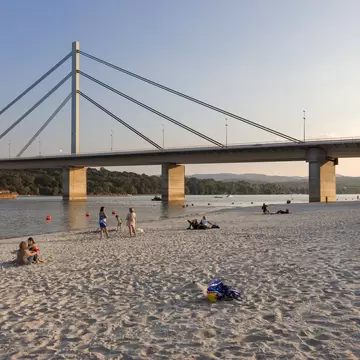
Ada Ciganlija, a green and sandy island park in the Sava River, is Belgrade's summer retreat. Gentle choices are swimming in the lake (naturists 1km upstream, please), renting a bicycle or just strolling through the woodland. Adrenaline junkies might fancy the bungy jumping or the water-ski tow. Plenty of places overlooking the lake sell restorative cold beers.
reviewed
-
A
Kalemegdan Citadel
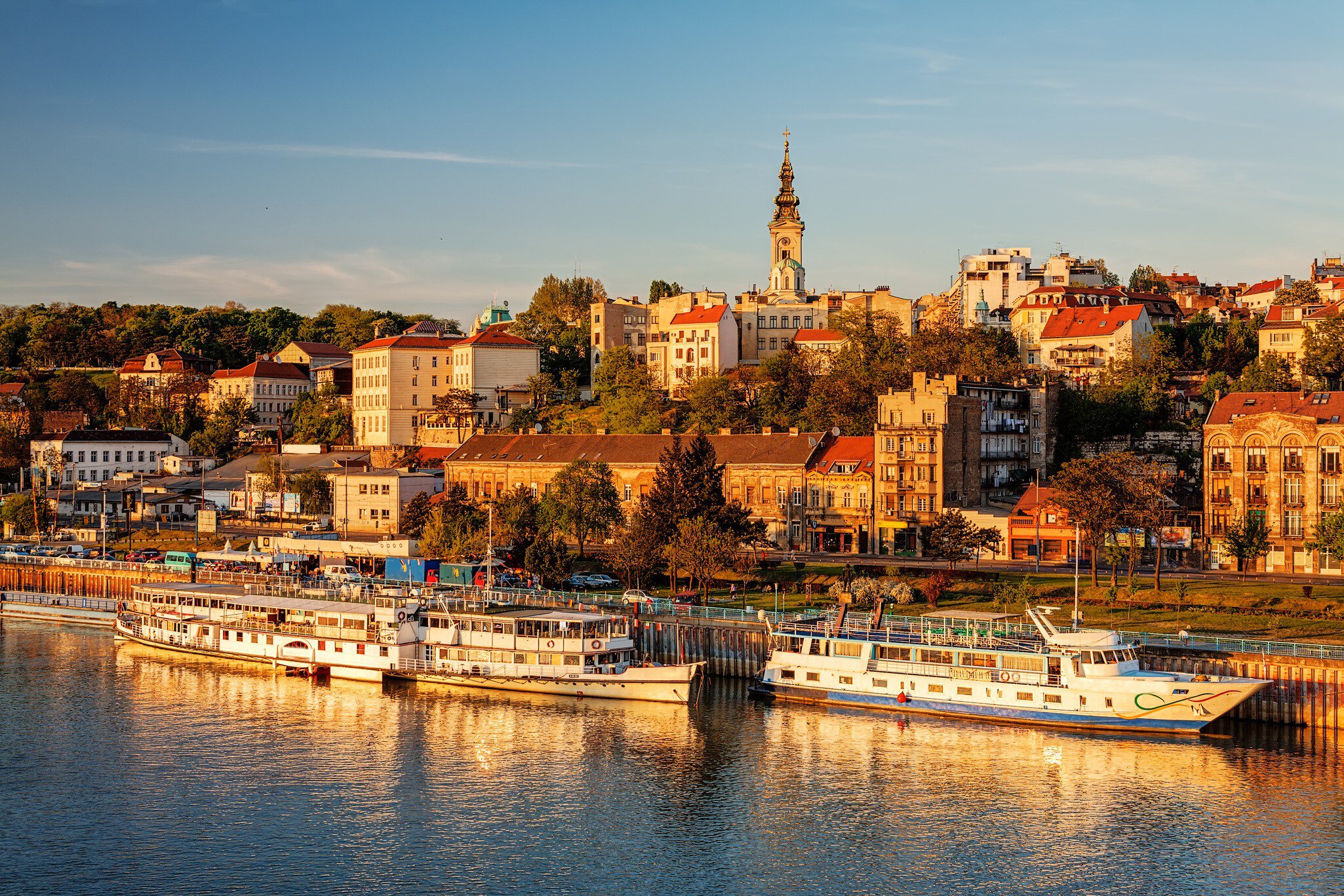
Capture the hill protected by the junction of the Sava and Danube Rivers and you control the land to the south. This explains why there has been a fortified settlement here since Celtic times, but such prime real estate attracts enemies. Over the last 2300 years some 115 battles have been fought over this site, and parts of it and the outer city have been razed 44 times, as one conqueror removed another.
What remains today dates from the 18th century. The core of the fortifications is the Upper Citadel, accessed by several massive gates and bridges (now wooden) over deep moats.
The main entrance is the Stambol Gate, built by the Turks around 1750, which leads to the…
reviewed
-
B
Skadarska
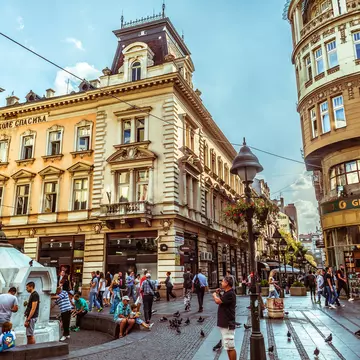
Often hailed as Belgrade's Montmartre, Skadarska was the bohemian hang-out of poets and artists in the early 1900s. Today this cobbled street is famous for its Balkan taverns, strolling musicians, cafés and art galleries. In summer, the restaurants spill out onto the street, and music, theatre and cabaret performers entertain customers and passers-by.
The restaurants rejoice in unusual names, such as Tri Šešira (Three Hats - it was once a millinery), Ima Dana (There Are Days), Dva Jelena (Two Deer) and Dva Bela Goluba (Two White Doves).
reviewed
-
C
Palace of Princess Ljubice
The Palace of Princess Ljubice is a Balkan-style palace built for the wife of Prince Miloš in 1831. Mostly, it's a collection of period furnishings, carpets and paintings but it desperately needs the addition of personal items to bring out how the princess led her life. To one side is a little hammam (Turkish bath), where the princess would have had steam baths and massages, and were she a woman of today, her yoga or Pilates class.
reviewed
-
D
Nikola Tesla Museum
One of Belgrade's more interesting museums is the Nikola Tesla Museum dedicated to one of Serbia's few heroes, the man who discovered alternating current. Apart from demonstrations of Tesla's fascinating inventions, the big thrill is when the curator turns on a high-frequency oscillator that lights up the (unconnected) fluorescent tube you're gingerly holding in your hand. Shades of Star Wars' light sabres!
reviewed
-
E
Šešir Moj
An intimate little restaurant that has alcoves decorated with an art gallery of oils and pastels. A place for romantics, especially when members of a Roma band swirl in, playing their hauntingly passionate music. Go for the punjena belavešanica, which is a pork fillet stuffed with kajmak. Finish with Serbian coffee and a piece of orasnica (walnut cake) if you've any room left.
reviewed
-
Sirogojno
Set on a picturesque mountainside, Sirogojno is a meticulous reconstruction of a 19th-century Serbian village. The high-roofed wooden houses are furnished, and under the cooking utensils warm ashes smell as if someone has just heated a pot of stew.
After a walk among the pines your appetite will be roaring for a homemade lunch and a hot rakija (Serbian spirit) in the wooden hut restaurant.
reviewed
-
F
Federal Association of World Travellers
A wonderfully eclectic basement bar in which you feel you've gate-crashed a surrealists' house party, and been welcomed in. It's decorated as though various members have returned from the four corners of the earth bearing one object as a contribution to the furnishings. Just open the big black gate, follow the lights that come on, and listen for the music, which is live every night.
reviewed
-
Manasija Monastery
From the outside this structure defies the concept of a monastery as a place of peace and spirituality. What confronts visitors is a massive block of a fortress, dating from the early 1400s when it was built by a community fleeing the Ottoman takeover of Kosovo. The surviving frescoes are patchy, but still have startling vitality and colour.
reviewed
-
G
Sveti Sava
Started in 1935 and interrupted by Hitler, communism and lack of cash, Sveti Sava is billed as the biggest Orthodox church in the world. The church lies on the reputed site where the Turks burnt the relics of St Sava, the youngest son of a 12th-century ruler and founder of the independent Serbian Orthodox church.
reviewed
Advertisement
-
Sveti Marko
Behind the post office stands Sveti Marko, a solid church supported by four massive internal pillars containing the grave of the Emperor Dušan (1308-55). Behind, and dwarfed, is a petite blue-domed Russian Church erected by refugees who fled the October Revolution.
reviewed
-
H
Plastic
The sizable dance floor with a seamless mix of house, techno and drum'n'bass keeps Belgrade's clubbers up to all hours. Plastic is very popular; you may have to queue a while.
reviewed
-
Stari Grad
South of the citadel lies Stari Grad, built mostly when the Habsburgs grabbed Belgrade from the declining Ottoman Empire.
reviewed
-
I
Tourist Guides Association of Serbia
Independent and licensed guides for city or country tours.
reviewed
-
J
Petrovaradin Citadel
The most impressive sight in Novi Sad is the Petrovaradin Citadel. A massive piece of work perched on a hill overlooking the river, it is often referred to as the 'Gibraltar of the Danube'. Designed by the French architect Vauban, it was built by slaves, murderers and thieves who were 'earning their purgatory' in the process dubbed by many as hell. It is estimated that 70 to 80 men died per day in the 88 years it took to build the citadel (from 1692 to 1780).
Petrovaradin was built to protect the town from Turkish invasions and was mainly populated by Austro-Hungarian army soldiers, although historical characters like Karađorđe and Tito were held prisoners within its…
reviewed
-
K
?
The shortest restaurant name in town came about because of a dispute between a long-past owner and the abstemious clergy of the Orthodox cathedral opposite, who objected to its then name, Cathedral Tavern. The clergy threatened action so the landlord changed the signboard to a '?' signalling his perplexity as to what the fuss was about. Inside is an original Balkans tavern that could be a set for a noir film.
Chiaroscuro light from panelled windows creeps in to pick up cigarette smoke and dust specks dancing through the sunbeams. Furniture and foot-polished floorboards glow with a patina of antiquity, diners sit at low wooden tables on equally low half-moon chairs while…
reviewed
-
L
Ethnographical Museum
The outstanding Ethnographical Museum has a comprehensive collection of Serbian costumes, folk art and items of everyday existence. The costumes show a superb quality of weaving and embroidery using russet browns, wine reds and muted yellows. Some retro-designer just has to discover these patterns. Agrarian tools and equipment take up much of the top floor, with several displays of rooms furnished to reflect various periods of time and different communities.
Explanations are in English and a small shop sells examples of the crafts.
reviewed
-
M
Polet Restaurant
Fat shiny brass ship-railings surrounding the upper mezzanine floor, slatted shutters over portholes and a Mediterranean décor of blues and whites provide just the right ambience for this hideaway seafood restaurant. Enter from the street through the blue frontage; don't linger at the bar but descend 'below decks'. The menu ranges from the tasty fish soup to scampi à la Parisienne. The calamari is chargrilled to perfection, misted with lemon, and succulent.
reviewed
-
N
Clock Tower
The citadel's clock tower was erected by the Germans, who then introduced a 'clock tax' for each house that could see the clock - practically the entire town. The old clockwork has not been changed (perhaps because the tax is no more) so the clock is a little slow in the winter, when the cold temperatures make the metal contract, and fast in the summer, when the mechanism relaxes. The hour hand is the longer one, so that everyone can tell what the hour is from a distance.
reviewed
-
O
Military Museum
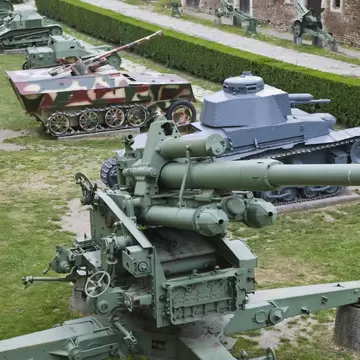
Inside Belgrade's impressive Kalemegdan Citadel lies this large museum complex which presents a complete military history of the former Yugoslavia. Proudly displayed are captured Kosovo Liberation Army (KLA) weapons and bits of the American stealth fighter that was shot down in 1999.
Outside are several bombs and missiles, which have been contributed from the air by NATO, plus a line-up of old guns and tanks, some quite rare. There's a guidebook in English.
reviewed
Advertisement
-
P
Biblioteka
We've always felt that a library and a drinking den were a natural combination of pleasures. Biblioteka provides both. Books and magazines are racked up for reading, while waiters in cheeky red-banded bowlers, green checked shirts and large skirt aprons flit around to help with your drink and food requests. Many come here to meet friends, and the unobtrusive background music allows for quiet conversation or reading. Breakfasts are served until 13:00.
reviewed
-
Q
Ben Akiba
We liked this place, its bubbly atmosphere and those cocktails - so smooth, so seductive and so moreish. You could easily leave here early in the morning brain- and wallet-drained. Another one of Belgrade's hidden bars, Ben Akiba started out as a secret drinking den for liberals opposed to Milošević. Slip round the back of the main building, go up to the 1st floor and knock. Then be prepared to heave yourself into the happy mass.
reviewed
-
R
Kod Lipa
A great atmosphere that beams you into a different age and good traditional Vojvodinian cooking are a seductive combination, making this the place to eat in Novi Sad. Opened in the late 19th century, the yellowed photographs on the wall show the place looking exactly the same then and now. Descend into the converted cellars and smell mellow wine in the vast barrels; there is seating among them within secluded alcoves.
reviewed
-
S
Red Cow
Is this the long-lost partner of Red Bull? A young crowd spends its evenings in this busy Irish publike bar with a wooden interior and tons of seating in the bar area and the upstairs attic room. A relaxed atmosphere and 16 different kinds of bottled beer, as well as draught Guinness and Nikšičko. Go into the courtyard opposite the city library on Zmaj Jovina, and climb to the 1st floor.
reviewed
-
Plava Frajle
A popular knees-up restaurant just southwest of the centre. On Thursdays and weekends traditional music bands play their hearts out, the clientele join in with gusto and the party rips on until dawn. A good taster of local food is the paprika u pavlaci (an appetiser of yellow peppers in crème fraîche). We never understood why there were chairs fixed to the ceiling.
reviewed