Things to do in Scotland
-
A
Real Mary King's Close
Across from St Giles is the City Chambers, originally built by John Adam (brother of Robert) between 1753 and 1761 to serve as the Royal Exchange – a covered meeting place for city merchants. However, the merchants preferred their old stamping ground in the street and the building became the city council offices in 1811.
Part of the Royal Exchange was built over the sealed-off remains of Mary King's Close, and the lower levels of this medieval Old Town alley have survived almost unchanged in the foundations of the City Chambers for 250 years. Now open to the public as the Real Mary King's Close, this spooky, subterranean labyrinth gives a fascinating insight into the dai…
reviewed
-
B
St Giles Cathedral
Dominating High St is the great grey bulk of St Giles Cathedral. Properly called the High Kirk of Edinburgh (it was only a true cathedral – the seat of a bishop – from 1633 to 1638 and from 1661 to 1689), St Giles Cathedral was named after the patron saint of cripples and beggars. A Norman-style church was built here in 1126 but was destroyed by English invaders in 1385; the only substantial remains are the central piers that support the tower.
The present church dates largely from the 15th century – the beautiful crown spire was completed in 1495 – but much of it was restored in the 19th century. The interior lacks grandeur but is rich in history: St Giles was at th…
reviewed
-
C
Urquhart Castle
Commanding a brilliant location 1.5 miles east of Drumnadrochit, with outstanding views (on a clear day), Urquhart Castle is a popular Nessie-watching hotspot. A huge visitor centre (most of which is beneath ground level) includes a video theatre (with a dramatic ‘unveiling’ of the castle at the end of the film) and displays of medieval items discovered in the castle.
The castle was repeatedly sacked and rebuilt (and sacked and rebuilt) over the centuries; in 1692 it was blown up to prevent the Jacobites from using it. The five-storey tower house at the northern point is the most impressive remaining fragment and offers wonderful views across the water. The site inclu…
reviewed
-
D
Mum’s
After a change of name due to management fall-outs, the original founder of Monster Mash has reopened with a new name. This nostalgia-fuelled cafe continues to serve up classic British comfort food of the 1950s – bangers and mash, shepherd’s pie, fish and chips. But there’s a twist – the food is all top-quality nosh freshly prepared from local produce, including Crombie’s gourmet sausages. And there’s even a wine list!
reviewed
-
Seafood Temple
Locally sourced seafood is the god that’s worshipped at this tiny temple – a former park pavilion with glorious views over the bay. Owned by a former fisherman who smokes his own salmon, what must be Oban’s smallest restaurant serves up whole lobster cooked to order, scallops in garlic butter, plump langoustines, and the ‘platter magnifique’ (£60 for two persons), which offers a taste of everything. Booking essential.
reviewed
-
E
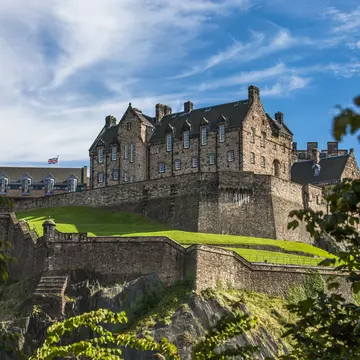
Edinburgh Castle
The brooding, black crags of Castle Rock rising above the western end of Princes St are the very reason for Edinburgh's existence. This rocky hill was the most easily defended hilltop on the invasion route between England and central Scotland, a route followed by countless armies from the Roman legions of the 1st and 2nd centuries AD to the Jacobite troops of Bonnie Prince Charlie in 1745.
Edinburgh Castle has played a pivotal role in Scottish history, both as a royal residence – King Malcolm Canmore (r 1058–93) and Queen Margaret first made their home here in the 11th century – and as a military stronghold. The castle last saw military action in 1745; from then until the …
reviewed
-
F
Waterfront Restaurant
Housed on the top floor of a converted seamen’s mission, the Waterfront’s stylish, unfussy decor – dusky pink and carmine with pine tables and local art on the walls – does little to distract from the superb seafood freshly landed at the quay just a few metres away.
The menu ranges from crispy-battered haddock and chips to pan-fried scallops with lime, chilli and coriander pickle. There’s an early evening menu (5.30pm to 6.45pm) offering two courses for £11.50, or soup followed by fish and chips for £9.75. Best to book for dinner.
reviewed
-
G
Maison Bleue
Eating here is a comfortably laid-back affair – the candlelit ground-floor dining room has basketwork chairs, chunky wooden tables and modern art on bare stone walls; upstairs is brighter and more cafe-like. The menu lists bouchées (French for ‘mouthfuls’) – starter-size helpings of which you can have as many or as few as you wish – and the food is an eclectic mix of European, North African and Far Eastern influences.
reviewed
-
H
Scott Monument
The eastern half of Princes Street Gardens is dominated by the massive Gothic spire of the Scott Monument, built by public subscription in memory of the novelist Sir Walter Scott after his death in 1832. The exterior is decorated with carvings of characters from his novels; inside you can see an exhibition on Scott's life, and climb the 287 steps to the top for a superb view of the city.
reviewed
-
I
Arthur's Seat
The rocky peak of Arthur’s Seat (251m), carved by ice sheets from the deeply eroded stump of a long-extinct volcano, is a distinctive feature of Edinburgh’s skyline. The view from the summit is worth the hike, extending from the Forth Bridges in the west to the distant conical hill of North Berwick Law in the east, with the Ochil Hills and the Highlands on the northwestern horizon.
reviewed
Advertisement
-
J
Meadows
This mile-long stretch of lush grass crisscrossed with tree-lined walks was once a shallow lake known as the Borough Loch. Drained in the 1740s and converted into parkland, it’s a great place for a picnic or a quiet walk – in springtime its walks lie ankle-deep in drifts of pink cherry blossom, and there are great views of Arthur’s Seat.
reviewed
-
K
Café Marlayne
The second branch of the New Town French bistro is a hidden gem, down a steep cobbled alley off the Royal Mile, with a changed-daily menu of market-fresh produce and a lovely little lunchtime sun-trap of an outdoor terrace.
reviewed
-
L
Kerachers
This classic seafood restaurant keeps things simple, combining fresh seafood with ingredients that add hints of flavour to complement but not overpower the dishes − a recipe for success!
reviewed
-
M
National Museum of Scotland
Broad, elegant Chambers St is dominated by the long facade of the National Museum of Scotland. Its extensive collections are spread between two buildings, one modern, one Victorian.
The golden stone and striking modern architecture of the museum building, opened in 1998, is one of the city's most distinctive landmarks. The five floors of the museum trace the history of Scotland from geological beginnings to the 1990s, with many imaginative and stimulating exhibits – audio guides are available in several languages. Highlights include the Monymusk Reliquary, a tiny silver casket dating from AD 750, which is said to have been carried into battle with Robert the Bruce at Ban…
reviewed
-
Loch Ness, Glencoe and the Highlands Small Group Day Trip from Edinburgh
11 hours 30 minutes (Departs Edinburgh, United Kingdom)
by Viator
Take the high road to the Scottish Highlands and Loch Ness on a small group day trip from Edinburgh. You'll travel through beautiful Glencoe, admire the spectac…Not LP reviewed
from USD$70.10 -
N
Princes Street Gardens
These beautiful gardens lie in a valley that was once occupied by the Nor’ Loch (North Loch), a boggy depression that was drained in the early 19th century. They are split in the middle by The Mound – around two million cart-loads of earth dug out from foundations during the construction of the New Town and dumped here to provide a road link across the valley to the Old Town. It was completed in 1830.
In the middle of the western part of the gardens is the Ross Bandstand, a venue for open-air concerts in summer and at Hogmanay, and the stage for the famous Fireworks Concert during the Edinburgh Festival. At the gate beside The Mound is the Floral Clock, a working cloc…
reviewed
-
O
Loch Ness
Loch Ness is Britain's largest body of fresh water, holding more water than all the lakes in England and Wales combined. Its rugged hills climb steeply from the loch's dark, bitterly cold 330m-deep waters. However, most visitors here are interested in one thing: Nessie-spotting. See if you can see the famous long-necked beastie for yourself.
The A82 running along the western side of the loch is choked with buses and hire-car traffic in summer, while on the southeastern shore the more tranquil, picturesque B862 is quiet (and agonisingly slow) year-round. A complete circuit of the loch covers about 113km (70mi) - travel anticlockwise for the best views.
reviewed
-
P
Old Calton Burial Ground
One of Edinburgh’s many atmospheric old cemeteries, Old Calton is dominated by the tall black obelisk of the Political Martyrs’ Monument, which commemorates those who suffered in the fight for electoral reform in the 1790s. In the southern corner is the massive cylindrical grey stone tomb of David Hume (1711–76), Scotland’s most famous philosopher. Hume was a noted atheist, prompting rumours that he had made a Faustian pact with the devil; after his death his friends held a vigil at the tomb for eight nights, burning candles and firing pistols into the darkness lest evil spirits should come to bear away his soul.
reviewed
-
Q
Willow Tearooms
Admirers of the great Mackintosh will love the Willow Tearooms, an authentic reconstruction of tearooms Mackintosh designed and furnished in the early 20th century for restaurateur Kate Cranston. Relive the original splendour of this unique tearoom and admire the architect's stroke in just about everything. He had a free rein and even the teaspoons were given his distinctive touch. Reconstruction took two years and the Willow opened as a tearoom again in 1980 (having been closed since 1926). The street name Sauchiehall means 'lane of willows', hence the choice of a stylised willow motif.
reviewed
-
R
Our Dynamic Earth
The modernistic white marquee pitched beneath Salisbury Crags marks Our Dynamic Earth, billed as an interactive, multimedia journey of discovery through Earth's history from the big bang to the present day. Hugely popular with kids of all ages, it's a slick extravaganza of whiz-bang special effects and 3D movies cleverly designed to fire up young minds with curiosity about all things geological and environmental. Its true purpose, of course, is to disgorge you into a gift shop where you can buy model dinosaurs and souvenir T-shirts.
reviewed
Advertisement
-
St Andrews and Fife Small Group Day Trip from Edinburgh
8 hours 30 minutes (Departs Edinburgh, United Kingdom)
by Viator
Pay homage to the home of golf at St Andrews and visit the fishing villages of Fife on a small group day trip from Edinburgh. With a maximum group size of 16 pa…Not LP reviewed
from USD$54.53 -
S
Maxie's Bistro
Maxie's candlelit bistro, with its cushion-lined nooks set amid stone walls and wooden beams is a pleasant enough setting for a cosy dinner, but at summer lunchtimes people queue for the outdoor tables on the terrace overlooking Victoria St. The food is dependable – Maxie's has been in the food business for more than 20 years – ranging from pastas, steaks and stir-fries to seafood platters and daily specials, and there's an excellent selection of wines.
reviewed
-
T
Duddington Village
Nestling under the southeastern slopes of Arthur’s Seat, the picturesque village of Duddingston is one of the oldest parts of the city, dating from the 12th century, though all that remains of that era are parts of the parish church. At the western end of the village stands an 18th-century pub, the Sheep Heid, and at the eastern end is Prince Charlie’s Cottage, where the Young Pretender held a council of war before the Battle of Prestonpans in 1745.
reviewed
-
U
Dome Grill Room
Housed in a magnificent former banking hall, with a lofty glass-domed ceiling, pillared arches and a mosaic-tiled floor, the Dome Grill Room boasts one of Edinburgh’s most impressive dining rooms. The menu here holds few surprises – from smoked salmon to chargrilled chicken or roast lamb – but it’s really the setting that sells the place; it’s hard to keep your eyes on your plate with all the stupendous finery that surrounds you.
reviewed
-
V
British Golf Museum
The British Golf Museum has an extraordinarily comprehensive overview of the history and development of the game and the role of St Andrews in it. Favourite fact: bad players were formerly known as ‘foozlers’. Interactive panels allow you to relive former British Opens (watch Paul Azinger snapping his putter in frustration), and there’s a large collection of memorabilia from Open winners both male and female.
reviewed