Things to do in Portugal
-
Belém
Portugal's caravels sailed off to conquer the great unknown from Belém, and today this leafy riverside precinct is a giant monument to the nation's Age of Discoveries.
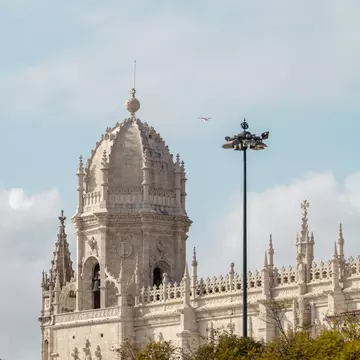
First stop should be the Mosteiro dos Jerónimos, a Manueline masterpiece whose intricate decoration and peaceful spaces will leave you inspired.
A short walk away is the Torre de Belém, the much-photographed symbol of Portugal's maritime glory. The imposing limestone Monument to the Discoveries, also facing the river nearby, is shaped like a caravel and features key players from the era.
If you have time, look around the Centro Cultural de Belém, one of Lisbon's main cultural venues, which houses the Mu…
reviewed
-
A
Pastéis de Belém
Sublime, divine traditional pastéis de Belém custard tarts, with the eggiest, lightest, crispiest tarts, served warm with a sprinkling of cinnamon and sugar. The recipe is secret, but these tarts taste like they've been made by angels. Founded in 1837, the traditional tiled tearoom is pretty.
reviewed
-
B
Á Capella
A tiny, 14th-century chapel transformed into a candlelit cocktail lounge, Á Capella regularly hosts the city’s most renowned fado musicians. The setting is as intimate as the music itself, with heart-rendingly good acoustics. Be forewarned that these shows cater directly to a tourist crowd, but the atmosphere and music are both superb.
reviewed
-
Baixa
Rebuilt after the 1755 earthquake, the Baixa's wide avenues and pedestrianised Rua Augusta are a great place to shop and have coffee. The area's highlight is the Elevador de Santa Justa. This imposing wrought-iron lift offers an easy ride up to the Bairro Alto, plus a rooftop cafe with views to kill for.
Built in 1902 by Gustave Eiffel follower Raul Mésnier du Ponsard, the lift has more than a passing resemblance to the Eiffel Tower.
Avoid the touristy umbrella-topped cafes below and save your coffee break for this still touristy but far more elegant architectural gem. Time your visit to enjoy a drink at sunset.
reviewed
-
C
Castelo de São Jorge
Towering dramatically above Lisbon, the hilltop fortifications of Castelo de São Jorge sneak into almost every snapshot. These smooth cobbles have seen it all – Visigoths in the 5th century, Moors in the 9th century, Christians in the 12th century, royals from the 14th to 16th centuries, and convicts in every century. Roam its snaking ramparts and pine-shaded courtyards for superlative views over the city’s red rooftops to the river.
reviewed
-
Praia do Guincho
The long, wild Praia do Guincho is a surfer's and windsurfer's paradise (the site of previous World Surfing Championships) with massive crashing rollers. The strong undertow can be dangerous for swimmers and novice surfers.
reviewed
-
D
Santini
All hail Santini for its yummy 100% natural gelati, made to an age-old family recipe. Grab a cone and skedaddle to the beach before it melts.
reviewed
-
E
Palácio Nacional da Pena
Rising up from a thickly wooded peak and often enshrouded in swirling mist, Palácio Nacional da Pena is pure fantasy stuff. The wacky confection is a riot of onion domes, Moorish keyhole gates, writhing stone snakes, and crenellated towers in sherbet-bonbon pinks and lemons. Ferdinand of Saxe Coburg-Gotha, the artist-husband of Queen Maria II, commissioned Prussian architect Ludwig von Eschwege in 1840 to build the Bavarian-Manueline epic (and as a final flourish added an armoured statue of himself, overlooking the palace from a nearby peak).
reviewed
-
F
Parque Eduardo VII
An urban oasis with British roots, Parque Eduardo VII is named after his highness Edward VII, who visited Lisbon in 1903. The sloping parterre affords sweeping views over the whizzing traffic of Praça Marquês de Pombal to the river. The estufas are a highlight, with lush foliage and tinkling fountains. Look out for tree ferns and camellias in the estufa fría (cool greenhouse), coffee and mango trees in the estufa quente (hot greenhouse) and cacti in the estufa doce (sweet greenhouse).
reviewed
-
G
Elevador de Santa Justa
If the lanky, wrought-iron Elevador de Santa Justa seems uncannily familiar, it’s probably because the neo-Gothic marvel is the handiwork of Raul Mésnier, Gustave Eiffel’s apprentice. It’s Lisbon’s only vertical street lift. Get there early to beat the crowds and zoom to the top for sweeping views over the city’s skyline.
reviewed
Advertisement
-
H
Nakité
This pleasant vegetarian restaurant has satisfying daily specials featuring tofu, seitan and tempeh paired nicely with goat cheese, shiitake mushrooms and other fresh ingredients. Nakité also has fresh juices and good desserts. Dine inside (amid piped-in New Age tunes) or on the back patio next to a gurgling fountain.
reviewed
-
I
Confeitaria Do Bolhão
This cheerful belle-époque cafe, popular with everyone but especially ladies of a certain age, serves good food at great prices, including a daily lunch special of soup, main course and freshly squeezed juice for €5. The front counter serves an irresistible array of local sweets to go.
reviewed
-
J
Jardim da Estrela
Anyone seeking green respite should head for Jardim da Estrela. This garden is perfect for a stroll, with paths weaving past pine, monkey puzzle and palm trees, rose and cacti beds and the centrepiece – a giant banyan tree. Kids love the duck ponds and animal-themed playground.
reviewed
-
K
Oceanário
The closest you’ll get to scuba-diving without a wetsuit, Lisbon’s Oceanário is mind-blowing. No amount of hyperbole about it being Europe’s second-largest aquarium, where 8000 species splash in 7 million litres of seawater, does it justice.
reviewed
-
L
Viagem de Sabores
Travel your tastebuds at this worldly haunt behind the sé. Your affable host is João Baptista, the design industrial cool with quirks like an illuminated zeppelin. From tender Moroccan lamb to chocolate cannelloni – globetrotting here is moreish, we swear.
reviewed
-
M
Terra
Our readers sing the praises of Terra for its superb vegetarian buffet (including vegan options) of salads, kebabs and curries, plus organic wines and juices. A fountain gurgles in the tree-shaded courtyard, lit by tealights after dark.
reviewed
-
N
Jardim Zoológico
Two metro stops north of Parque Eduardo VII is the kid-pleasing but somewhat cooped-up Jardim Zoológico, in attractive gardens with more than 2000 animals. There's also a dolphin show and row boats.
reviewed
-
O
Casanova
Casanova seduces with wood-fired pizza that’s thin, crisp and authentically Italian. Bag a table on the riverside terrace (heated in winter).
reviewed
-
P
Pão Pão Queijo Queijo
Join the snaking queue for Belém’s tastiest falafel (both hands required), sardine baguettes and Mexican salads.
reviewed
-
Q
A Tasca
This simple, friendly tavern serves good-value specials like grilled squid and hake.
reviewed
Advertisement
-
Alfama
Wander down (to save your legs) through Alfama's steep, narrow, cobblestoned streets and catch a glimpse of the more traditional side of Lisbon before it too is gentrified. Linger in a backstreet cafe along the way and experience some local bonhomie without the tourist gloss.
As far back as the 5th century, the Alfama was inhabited by the Visigoths, and remnants of a Visigothic town wall remain. But it was the Moors who gave the district its shape and atmosphere. In Moorish times this was an upper-class residential area. After earthquakes brought down many of its mansions (and post-Moorish churches) it reverted to a working-class, fisherfolk quarter. It was one of the few…
reviewed
-
R
Lagos
Lagos oozes life. A vibrant, sunny town, its pretty cobbled streets bristle with cafes, restaurants and bars. It's a magnet for backpackers and surf dudes, who swing between its clubs and nearby sweeping beaches and striking coastal coves. Lagos also has historical clout, having launched many naval excursions during Portugal's Age of Discoveries.
Lagos' little Igreja de Santo António (Rua General Alberto da Silveira; admission €2; 09:30-12:30 & 14:00-17:00 Tue-Sun), bursting with 18th- and 19th-century gilded, carved wood, is a stupendous baroque extravaganza. Beaming cherubs and ripening grapes are much in evidence.
Enter from the adjacent Museu Municipal (tel: 282 76…
reviewed
-
S
Torre de Belém
Jutting out onto the Rio Tejo, the World Heritage–listed fortress of Torre de Belém epitomises the Age of Discovery. Francisco de Arruda designed the pearly-grey chesspiece in 1515 to defend Lisbon’s harbour and nowhere else is the lure of the Atlantic more powerful. The Manueline show-off flaunts filigree stonework, meringue-like cupolas and – just below the western tower – a stone rhinoceros. The ungulate depicts the one Manuel I sent Pope Leo X in 1515, which inspired Dürer’s famous woodcut. Breathe in to explore the poky former dungeons and climb a narrow spiral staircase to the tower, affording breathtaking views over Belém and the river.
reviewed
-
T
Museu Condes de Castro Guimarães
The grounds of Parque Marechal Carmona harbour the Museu Condes de Castro Guimarães, the whimsical early-19th-century mansion of Irish aristocrat Jorge O’Neill, complete with castle turrets and Arabic cloister. But the clover leaves inside didn’t bring him luck – he went bankrupt and had to sell up. His successor, Count of Castro Guimarães, lavishly decorated the abode with 17th-century Indo-Portuguese cabinets, Oriental silk tapestries and 17th-century azulejos. Don’t miss the rare 16th-century manuscript depicting pre-earthquake Lisbon. Admission is with half-hourly guided tours.
reviewed
-
U
Igreja de São Roque
The plain facade of 16th-century Jesuit Igreja de São Roque belies its dazzling interior of gold, marble and Florentine azulejos – bankrolled by Brazilian riches. Its star attraction is Capela de São João Baptista, to the left of the altar, a lavish confection of amethyst, alabaster, lapis lazuli and Carrara marble. Its four mosaics depicting scenes from the saint’s life are as elaborate as oil paintings. Portugal’s extravagant king, Dom João V, had the chapel built in Rome in 1742, then shipped it over to Lisbon for a cool UK£225,000.
reviewed