go to content go to search box go to global site navigation

Poland

Things to do in Poland

‹ Prev

of 53

  1. Auschwitz

    Established within disused army barracks in 1940, Auschwitz was initially designed to hold Polish prisoners, but was expanded into the largest centre for the extermination of European Jews. Two more camps were subsequently established: Birkenau and Monowitz. In the course of their operation, between one and 1.5 million people were killed.

    Auschwitz was only partially destroyed by the fleeing Nazis, so many of the original buildings remain as a bleak document of the camp's history. A dozen of the 30 surviving prison blocks house sections of the State Museum Auschwitz-Birkenau.

    The cinema in the visitors centre shows a short documentary film about the liberation of the camp…

    reviewed

  2. A

    Salt Mine

    Just outside the administrative boundaries of Kraków, some 14km southeast of the city centre, Wieliczka (vyeh- leech -kah) is famous for its ultra-deep Salt Mine, which has been in continuous operation for 700 years and can be visited. It’s an eerie world of pits and chambers, and everything has been carved by hand from salt blocks. The mine was included on Unesco’s World Heritage List in 1978.

    reviewed

  3. B

    Chłopskie Jadło

    Old Town (012 429 5157; ul Św Jana 3) This place, a short walk south of Wawel, looks like a rustic country inn somewhere at the crossroads in medieval Poland, and serves up traditional Polish ‘peasant grub’ (as its name says). Live folk music is performed here on Friday and Saturday, and seating in antique sleighs adds to the rustic atmosphere. We love the żurek (sour rye) soup in a bread loaf.

    reviewed

  4. C

    St Mary's Church

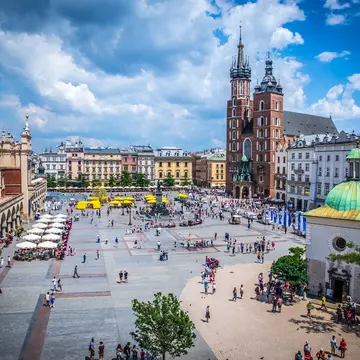
    Rising over the northeastern corner of Rynek Główny, St Mary's is Kraków's most important church, after Wawel Cathedral. The original church, built in the 1220s, was destroyed during the Tatar raids, and the edifice you see today is a 15th-century creation. From the outside, the most striking feature of the church is its two towers, of unequal height.

    reviewed

  5. D

    Gruzińskie Chaczapuri

    Gruzińskie Chaczapuri ul Floriańska (ul Floriańska 26) ul Grodzka (ul Grodzka 3) If you have a hankering for something a little different, this cheap and cheerful chain of Georgian restaurants with five branches in Kraków serves up grills, salads and steaks and, the house speciality: cheese pie.

    reviewed

  6. Hiking

    Gorlice sits at the foot of the mountains and is excellent starting point for hiking into the Beskid Niski. Two marked trails, blue and green, start near the tourist office and wend southeast from the town up the mountains, joining the main west-east red trail that crosses the range.

    reviewed

  7. E

    Oskar Schindler’s Enamelware Factory

    About 400km east of Plac Bohaterów Getta is Oskar Schindler’s enamelware factory.

    reviewed

  8. F

    Monastery of Jasna Góra

    Impressive though it is, the exterior of Monastery of Jasna Góra gives little indication of the grandeur layered behind its walls. Exploring this functioning monastery gives a fascinating insight into its history, and a deep appreciation for its present day relevance. Arrive early and take your time.

    You are free to wander around the complex at your own leisure (crowds permitting). Audio guides are available for four routes; the most important covers the main sanctuary and takes 45 minutes.

    In the oldest part of the complex, the Chapel of Our Lady (Kaplica Cudownego Obrazu) contains the revered Black Madonna.The picture is ceremoniously unveiled at 06:00 and 13:30 (14:00…

    reviewed

  9. G

    Kazimierz

    Today one of Kraków's inner suburbs and located within walking distance south of Wawel and the Old Town, Kazimierz was for a long time an independent town with its own municipal charter and laws. Its colourful history was determined by its mixed Jewish-Polish population, and though the ethnic structure is now wholly different, the architecture gives a good picture of its past, with clearly distinguishable sectors of what were Christian and Jewish quarters.

    The suburb is home to many important tourist sights, including churches, synagogues and museums. The western part of Kazimierz was traditionally Catholic, and although many Jews settled here from the early 19th century…

    reviewed

  10. H

    Cathedral of Ss John the Baptist & John the Evangelist

    Of the historical buildings outside the museum’s administration, the largest and most impressive is the giant Gothic Cathedral of SS John the Baptist & John the Evangelist. Work started around 1260 and was only completed at the end of the 15th century, by which time the church dominated the town’s skyline, as it still does today. Its massive tower houses Poland’s second-largest historic bell (after the one in the Wawel Royal Cathedral of Kraków), the Tuba Dei (God’s Trumpet). Cast in 1530, it weighs 7238kg and is rung for significant religious and national events. On the southern side of the tower, facing the Vistula, is a large 15th-century clock; its original face and…

    reviewed

  11. Advertisement

  12. Former Jewish Ghetto

    Before WWII, much of Warsaw's thriving Jewish community lived in Mirów and Muranów, two districts to the west of Al Jana Pawła II. It was here that the Nazis created the Warsaw Ghetto in 1940, which was razed after the 1943 Ghetto Uprising. Today the area is characterised by cheap, communist-era apartment buildings, but a few remnants of Jewish Warsaw still survive in the former Jewish Ghetto. It is a large area to cover on foot, but fortunately the main sights are clustered together in the northern part.

    reviewed

  13. I

    Ul Próżna

    Ul Próżna, a short street leading off Plac Grzybowski, opposite the Teatr Żydowski (the Jewish Theatre), is an eerie and incongruous survivor of WWII. Its crumbling, unrestored redbrick façades, the ornamental stucco long since ripped away by bomb blasts, are still pockmarked with bullet and shrapnel scars. A few blocks to the south, in the courtyard of an apartment building at ul Sienna 55, stands one of the few surviving fragments of the redbrick wall that once surrounded the Warsaw Ghetto.

    reviewed

  14. J

    Royal Chambers

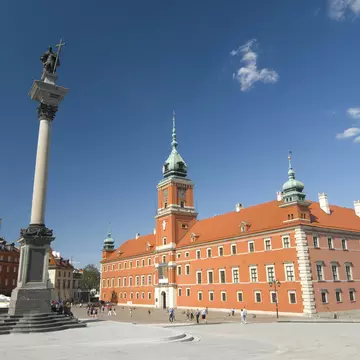
    The Royal Chambers, also known as the State Rooms, is the largest and most impressive exhibition; the entrance is in the southeastern corner of the courtyard, from where you’ll ascend to the 2nd floor Proceed through the apparently never-ending chain of two-dozen rooms and chambers of the castle, restored in their original Renaissance and early Baroque style and crammed with period furnishings, paintings, tapestries and works of art.

    reviewed

  15. K

    Museum of the Origins of the Polish State

    The Museum of the Origins of the Polish State, on the far side of Lake Jelonek, illustrates Gniezno’s pivotal role in Polish history. The permanent collection contains archaeological finds and works of art related to the development of the Polish nation from pre-Slavic times to the end of the Piast dynasty. The museum also runs an audiovisual presentation about Poland under the Piasts (English soundtrack available).

    reviewed

  16. L

    Ruins of the Castle

    History buffs should take the opportunity to check out the remnants of the town's original medieval fortifications. To the east, in a triangle squeezed between the Old and New Towns, are the Ruins of the Castle, built by the Teutonic Knights. It was destroyed by the town's inhabitants in 1454 as a protest against the order's economic restrictions (they must have been really ticked off - those Teutonic castles were solidly built).

    reviewed

  17. Bison Reserve

    The Bison Reserve is a park where animals typical of the puszcza, including bison, elks, wild boar, wolves, stags and roe deer, are kept in large, ranch-style enclosures. You can also see the żubroń, a cross between a bison and cow, which has been bred so successfully in Białowieża that it is even larger than the bison itself, reaching up to 1200kg.

    reviewed

  18. M

    Restauracja Kubicki

    This family firm has served solid, tasty Polish food from its waterfront location since the last days of the German Empire in 1918, making it Gdańsk’s oldest continuously operated restaurant. There’s plenty of fresh fish on the menu, priced by weight, and a wide-ranging wine list including several Bulgarian drops. There’s a great river view from the outdoor seating.

    reviewed

  19. N

    Gardzienice Theatre's Ticket Office

    Founded in 1977, 28km southeast of Lublin, Gardzienice Theatre is renowned in artistic circles for energetic, heady performances. Under the guidance of artistic director and founder Wlodzimierz Staniewski, dramatic montages derive inspiration from gatherings with indigenous communities throughout and beyond Poland. Check whether they are in town at the ticket office.

    reviewed

  20. O

    With Fire & Sword

    Named after the historical novel by Henry Sienkiewicz, this dark, atmospheric restaurant re-creates the Poland of yesteryear. The wood interior is made even more rustic with animal pelts and a roaring fire. The menu features well-researched old-time recipes, such as the succulent roasted pig that comes stuffed with fruit.

    reviewed

  21. P

    U Babci Maliny

    U Babci Maliny ul Sławkowska (012 422 7601; ul Sławkowska 17) ‘At Granny Raspberry’s’ is a godsend for travellers on a budget, with hearty Polish staples at giveaway prices served in an overwrought boudoir-like basement eatery. Love the boas and the chandelier.

    reviewed

  22. Advertisement

  23. Q

    Parish Church

    The Parish Church was originally built for the Jesuits by architects from Italy. After more than 80 years of work (1651–1732), an impressive baroque church was created, with an ornamented façade and a lofty interior supported on massive columns and crammed with monumental altars.

    reviewed

  24. R

    Singer Café

    Louche hang-out of choice among the Kazimierz cognoscenti, this bar pays tribute to the sewing machine that was once produced here. By day, it's an atmospheric, antique-filled cafe, where patrons sit at sewing machines and sip cappuccinos. By night, they turn up the music and the place hums until dawn.

    reviewed

  25. S

    Kuranty

    The menu is firmly based on the three Ps: pizza, pasta and pierogi (including a rather tasty baked version which looks suspiciously like the Italian calzone). Random photos and extraordinary Art Nouveau lights add to the atmosphere. Be warned: sports-playing TVs hang off the walls.

    reviewed

  26. T

    Jama Michalika

    Established in 1895, Jama Michalika is famous as the birthplace of the Młoda Polska movement - a hang-out for writers, painters and other creative types in the days of yore. The grand Art Nouveau interior has historic appeal, but the bored staff do not offer much in the here and now.

    reviewed

  27. U

    Church of St John of Jerusalem

    One of the oldest brick churches in the country, this late-12th-century building was extended in the Gothic period and later acquired a baroque chapel. The interior contains beautiful Gothic star vaults, and the Romanesque doorway in the main western entrance is magnificent.

    reviewed