Sights in Philippines
-
Intramuros
When Miguel Lopez de Legazpi wrested control of Manila, he chose to erect his fortress on the remnants of the Islamic settlement by the mouth of the Pasig River. Intramuros, as Legazpi's walled city came to be called, was invaded by Chinese pirates, threatened by Dutch forces, and held by the British, Americans and Japanese at various times, yet it survived until the closing days of WWII, when it was finally destroyed by US bombing during the Battle of Manila.
From its founding in 1571, Intramuros was the exclusive preserve of the Spanish ruling classes. Within its massive walls were imposing government buildings, stately homes, churches, convents, monasteries, schools,…
reviewed
-
A
Rizal Park
Still widely known as 'Luneta' (its name until it was officially changed in the 1950s), Rizal Park is spread out over some 60 hectares of open lawns, ornamental gardens, paved walks and wooded areas, dotted with monuments to almost every Filipino hero you care to mention. It's a pretty area but also shabby in parts, dangerously so near the closed National Museum on P Burgos St.
Every day hundreds of Filipinos come here to stroll, jog, picnic, sing and play music, or just relax away from the swarming traffic. At dawn, various groups gather to practise t'ai chi or the local martial art of arnis, or arnis de mano, a pre-Hispanic style of stick-fighting. There are formalised…
reviewed
-
Tamaraw Falls
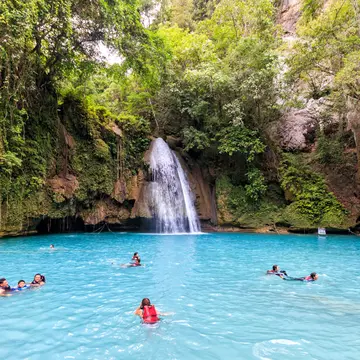
At Tamaraw Falls cool mountain waters plummet 30m into a natural pool beside the road, run under a stone bridge into two constructed swimming pools, then flow out again into a jungle gorge.
The Tamaraw Falls are popular on the weekend, especially on Sunday when admission is free, but during the week you can just about have them to yourself. Bring a packed lunch and enjoy the views; thatched shelters, perched on the edge of the pools, are available for picnicking. There are toilets, and a kiosk at the entrance selling snacks, soft drinks and beer.
The falls are 14km from Puerto Galera on the rough, mountainous road to Calapan - only the first 7km of which is paved. To get…
reviewed
-
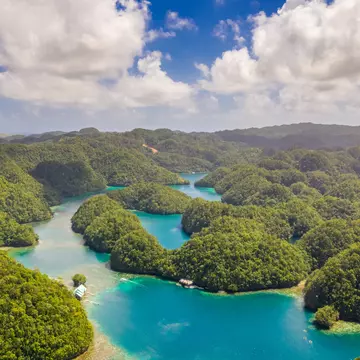
Hundred Islands National Park
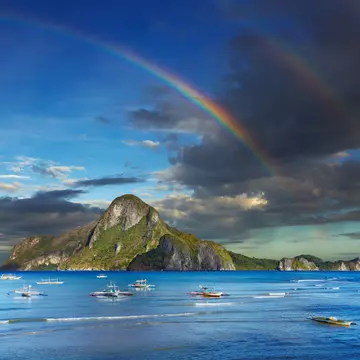
This small national park off the coast of Alaminos contains 123 separate islets, although some are just large rocks. Over the centuries the tides have eaten away at the bases of these limestone islands, giving them a distinctive, mushroom-like appearance.
The friendly and useful Hundred Islands National Park office is on the wharf in barangay Lucap, the jumping-off point to the national park.
The three most popular islands are Quezon Island, Governor's Island and Children's Island, but you're definitely better off finding your own island on weekends, as these fill up with loads of large families and beach vendors.
By far the best way to experience the park is in a tandem…
reviewed
-
Taoist Temple
Perched high in the northern hills overlooking the city, the Taoist Temple is a symbol of the city's large and prosperous ethnic Chinese population. It's not one for temple aficionados; the architecture is functional and austere by Chinese standards. Nevertheless the trip here, past the gated mansions of exclusive Beverly Hills, is a good excuse to see how Cebu's wealthier citizens live, and the views over the city are noteworthy.
To get to the temple take a Lahug or Calunasan jeepney and ask to stop at the Taoist Temple or Beverly Hills (around P5) - you've then got a short walk uphill. Alternatively, take a taxi from uptown for about P80.
reviewed
-
B
Fort Santiago
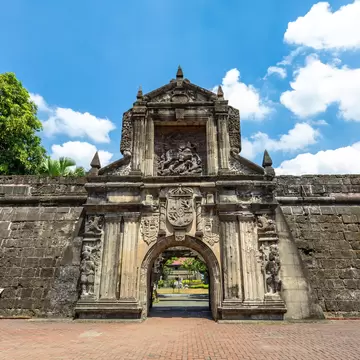
Guarding the vital entrance to the Pasig River, Fort Santiago was once the seat of Spanish military power. Designated a Shrine of Freedom in 1950, today it is a memorial to Dr José Rizal, who was imprisoned here in the final days before his execution in 1896 for inciting revolution against the Spanish colonials. It is also a memorial to all Filipinos who have fought or died for the cause of freedom.
reviewed
-
C
Cultural Center of the Philippines
The Cultural Center of the Philippines is set back from Roxas Blvd and constructed in the bombastic style favoured by dictators everywhere. The building has a grand design by noted Filipino architect Leandro Locsin. Inside is an art gallery (admission free; 8am-6pm Tue-Sun), a library (8am-5pm Tue-Fri) and a museum of musical instruments (adult/child P40/20; 10am-6pm Tue-Sun).
reviewed
-
Fort San Pedro
Built in 1565 by Miguel Lopez de Legazpi, conqueror of the Philippines, Fort San Pedro has served as an army garrison, a rebel stronghold, a prison camp and the city zoo. These days, it's retired as a peaceful, walled garden and handsomely crumbling ruin. A perfect retreat from the chaos and madness of downtown Cebu.
reviewed
-
Palawan Butterfly Garden
Situated near Santa Monica, is the Palawan Butterfly Garden, where you will get the chance to walk around a number of different species of fluttering butterflies. Before entering, you can watch a short video that explains the life cycle of these delicate creatures.
reviewed
-
Palawan Wildlife Rescue & Conservation Center
A complex of concrete buildings houses the Palawan Wildlife Rescue & Conservation Center. There are guided tours leaving every 30 minutes through the facilities where you can see hundreds of slow-moving crocodiles.
reviewed
Advertisement
-
Donsol Visitors Center
The Donsol Visitors Center, situated 1.5km north of the river bridge (by tricycle from town), is the place to go. The experience is quite regimented – it has to be, given the well-being of the animals, the number of visitors and the need to rotate boat crews fairly – and access to the whale sharks is limited to a maximum of 25 boats. During the busy Holy Week, you will be lucky to get a look in; so it is best to avoid this time if you can. This is how the process went when we visited. First, pay your registration fee (Filipino/foreigner P100/300). Second, book a boat. This costs P3500 for a maximum of seven, and includes the services of a Butanding Interaction Officer…
reviewed
-
Makati
The business centre of Manila has also become its nightlife centre. The towers here house the nation's major corporations and most of the major hotels. It all came about after WWII when the Ayala family seized upon the destruction of the rest of the city as a chance to start building.
Makati, the former local airport (Ayala and Makati Aves were the runways), seems to have boundless growth ahead of it. But just when you think you're someplace like Singapore, a whiff of sewage will bring you down to earth. The excellent Filipinas Heritage Library is housed in the much-restored 1930s terminal for the former airport.
On the north side of Makati is the P Burgos St area, a…
reviewed
-
D
Casa Gorordo Museum
Downtown, in a quiet residential area, the newly renovated Casa Gorordo Museum is one of the hidden gems of Cebu City. Originally a private home, it was built in the 1850s and purchased by the Gorordos, one of Cebu’s leading families. The lower part of the house has walls of Mactan coral stone, which makes it deliciously cool in the middle of the day. The stunning upper-storey living quarters are pure Philippine hardwood, held together not with nails but with wooden pegs. As well as having Spanish and native influences, the house incorporates principles of feng shui, owing to the Chinese ancestry of Gorordo matriarch Donna Telerafora (whose death portrait graces the…
reviewed
-
The Coconut Palace
Of all of Imelda’s wacky schemes, this one may be the wackiest. Hearing that Pope John Paul II was planning a visit to his flock in the Philippines, Imelda ordered that a grand palace be built. Huge teams of craftsmen laboured overtime to complete this edifice in time for the pontiff’s arrival. As Imelda readied herself to throw open the door to welcome the pope, she got stiffed. After sternly chastising that the US$37 million cost could have gone to better uses, such as clean water for the people, the pope went elsewhere. Today the palace is rented for wedding parties, but you needn’t get hitched to enjoy the place; tours of the palace are available. Among other…
reviewed
-
Philippine Eagle Research & Nature Center
To view one of the largest eagles in the world (in terms of wing span), head to the Philippine Eagle Research & Nature Center, which is dedicated to conserving these endangered birds. Around 35 Philippine eagles (also known as monkey-eating eagles) are here, 20 of which were bred through artificial insemination. The camp is set in a pocket of native forest near Malagos, 36km north of Davao. There are enough wild birds flitting around to keep even the least avid birdwatcher happy – other species of eagles and animals also call the centre home. You can watch an informative video about eagles in the wild – there are about 500 in the Philippines – and the threats they are…
reviewed
-
E
Malacañang Palace
The official residence of the President of the Philippines, Malacañang Palace was originally a Spanish grandee’s summer house. Unlike some other recent presidents, Gloria Macapagal Arroyo actually lives and works in the palace. Given the propensity of the Philippine people to show up in hundreds of thousands and ask that the president leave, the executive branch prefers to keep the public a bit distant. Tours of the palace and the Museo ng Malacañang (Tel: 735 6201), which displays memorabilia related to the Philippines’ past 13 presidents, along with old photos of Manila, are possible by appointment only. You’ll need to write a letter of request to Jeremy Barnes, at…
reviewed
-
Banaue
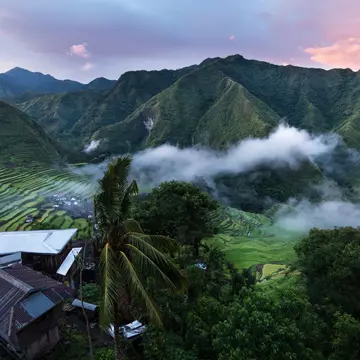
Banaue sits at the foot of a truly mesmerising display. Its mud-walled rice terraces, North Luzon's most famous sight, have a pleasing, organic quality that differentiates them from the stone-walled terraces in most of the Cordillera. World Heritage-listed, they are impressive not only for their chiselled beauty but because they were created around 2000 years ago.
The rice terraces were built by the Ifugao. Along with being the most feared head-hunters in the Cordillera, they were skilled engineers who invented a sophisticated irrigation system of bamboo tubes and elaborate mud channels to bring water to the terraces.
The well-staffed Banaue Tourist Information Center…
reviewed
-
F
Chinatown
After centuries of suppression by the Spanish, Manila's Chinese population quickly rose on the economic and social ladder under more liberal administrations. Today the centre of the vibrant Chinese community is Chinatown , which straddles Santa Cruz and Binondo.
Chinatown is demarcated by Goodwill Arches. The main street is Ongpin St; walking its length - this is recommended - will take perhaps 10 minutes, but exploring the neighbourhood can take hours. As in any other Chinese enclave around the world, here you'll find dozens of goldsmiths, herbalists, teahouses and shops selling mooncakes, incense, paper money to burn for ancestors, trinkets and all kinds of curios.…
reviewed
-
Lake Barracuda
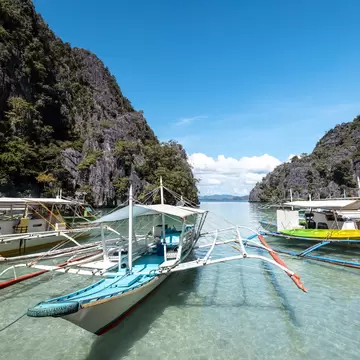
This island, only a 20-minute bangka ride from Coron town, has an imposing, mysterious skyline that wouldn’t be out of place in a King Kong film. Flying over Coron, you see that what lies inland, on the other side of the fortresslike jungle-clad rocky escarpments, is only more inaccessible terrain pockmarked with lakes. Lake Barracuda is one of them and is one of Coron’s primary attractions. Lake Barracuda is of more interest to divers for its unique layers of fresh, salt and brackish water and dramatic temperature shifts, which can reach as high as 38°C. It’s accessible by a short but tricky 25m climb over a jagged rocky wall (good sandals are recommended) that ends…
reviewed
-
Crisologo Museum
The Crisologos, Vigan’s most prominent political dynasty, have also converted their ancestral home into a strange but interesting family shrine, the Crisologo Museum. In addition to the usual fare of books, photos and other personal items, there is the old Chevy that Governor Carmeling Crisologo was in when she was ambushed in 1961. She survived, but her husband, Floro, a long-time congressman, was not so lucky when he was attacked in a church in 1970. There are a few lurid photos of the killing, and the blood-stained pants he was wearing are preserved in a glass case. The 1st-floor sala is kept mostly as it was when it was occupied, and contains several pieces of…
reviewed
Advertisement
-
G
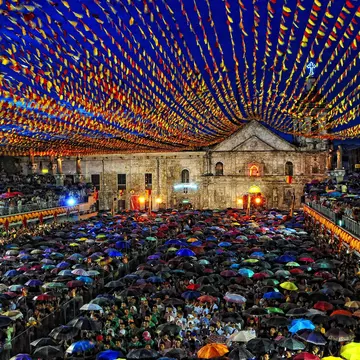
Basilica Minore del Santo Niño
This holiest of churches is a real survivor. Built in 1565 and burnt down three times, it was rebuilt in its present form in 1737. Perhaps it owes its incendiary past to the perennial bonfire of candles in its courtyard, stoked by an endless procession of pilgrims and other worshippers. The object of their veneration is a Flemish image of the infant Jesus, sequestered in a chapel to the left of the altar.
It dates back to Magellan's time and is said to be miraculous (which it probably had to be to survive all those fires). Don't forget to look up and admire the heavenly ceiling murals while you're here. Every year, the image is the centrepiece of Cebu's largest annual…
reviewed
-
Olango Island Wildlife Sanctuary
The Olango Island Wildlife Sanctuary takes in 1030 hectares of sand flats and mangroves on Olango’s southern shores. This is a vital refuelling depot for around 50,000 birds of 47 species (including the endangered Chinese egret Egretta eulophotes and Asiatic dowitcher Limnodromus semipalmatus) on the east-Asian migratory route to Australia. The birds, which prefer Olango to neighbouring islands because of the abundant food and ideal nesting sites, arrive in late September and leave in early March, but the best time for twitchers is between November and February. Tragically, you may also encounter organised hunting parties, which are imperilling shorebird populations.
reviewed
-
H
Camp John Hay
Formerly a US military rest-and-recreation facility, 246-hectare Camp John Hay has been reinvented as a mountain resort with restaurants, hotels, shops and a fantastic golf course sprinkled amid rolling hills and stands of Benguet pines. Worth a visit is the Historical Core with the attractively landscaped Bell Amphitheatre and some walking trails. Nearby is the unique Choco-laté de Batriol restaurant. There’s a nice panorama from the Mile High viewpoint; the Butterfly Sanctuary is also worth a look. It’s free to enter Camp John Hay, although modest admission fees apply to some sights.
reviewed
-
Tops Lookout
Mt Busay makes a mighty backdrop for Cebu City, but the best view is from the mountain itself, which is where you'll find Tops Lookout. Better known simply as 'Tops', this modernist, fortresslike viewing deck provides spectacular views, especially at sunrise or sunset. There are snack stalls up here, which sell beer if you are so inclined.
Many Lahug jeepneys get within about 500m (1640ft) of the lookout (take one on Osmeña Blvd, north of Del Rosario - you may have to change at Cebu Plaza Hotel - and ask for a jeepney to Tops), from where it's a steep, winding road to the top. If you choose to catch a taxi, you will probably have to pay the driver's admission too.
reviewed
-
I
Ayala Museum
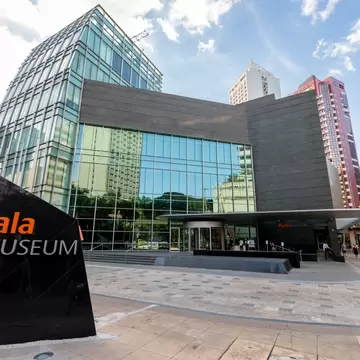
Housed in an impressive building, the Ayala Museum is an excellent museum with changing exhibits on Filipino culture, art and history. Past exhibits have included a well-curated one on the proselytising of the early Catholic Church. At the heart of the collection are dozens of dioramas tracing the nation's history. Just as stained-glass windows were a way for churches to engage and educate the masses, so too are these models.
As you browse, it quickly becomes apparent just how violent local history has been. Number 17 showing early troubles for monks rivals anything in the Pirates of the Caribbean for colourful mayhem.The guided tours are highly recommended.
reviewed