go to content go to search box go to global site navigation

Peru

Getting around

Boat

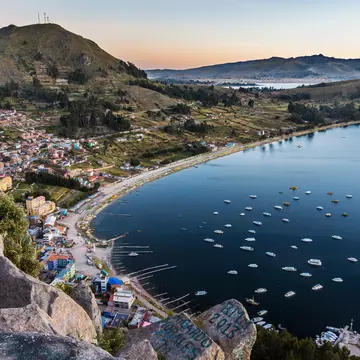
There are no passenger services along the Peruvian coast. In the Andean highlands, there are boat services on Lake Titicaca. Small motorized vessels take passengers from the port in Puno to visit various islands on the lake, while hydrofoils and catamarans zip over to Bolivia.

In Peru’s Amazon basin, boat travel is of major importance. Larger vessels ply the wider rivers. Dugout canoes powered by an outboard engine act as water taxis on smaller rivers. Some of the latter are powered by a strange arrangement that looks like a two-stroke motorcycle engine attached to a tiny propeller by a 3m-long propeller shaft. Called peki-pekis, these canoes are a slow and rather noisy method of transportation. In some places, modern aluminum launches are used.

The classic way to travel down the Amazon is while swinging in your hammock aboard a banana boat piloted by a grizzled old captain who knows the waters better than the back of his hand. You can travel from Pucallpa or Yurimaguas to Iquitos and on into Brazil this way. The lower deck of these boats is for cargo, and the upper deck (or decks) for passengers and crew.

At ports, there are chalkboards with ships’ names, destinations and departure times displayed; the departure times are usually optimistic. The captain has to clear documents with the capitanía (harbor master’s office) on the day of departure, so asking the person in charge of this at the capitanía can yield information. But asking the captain is best. Nobody else really knows. Departure time often depends on a full cargo, and mañana (tomorrow) may go on for several days if the hold isn’t full. Usually, you can sleep on the boat while waiting if you want to save on hotel bills. Never leave your luggage unattended.

Bring your own hammock, or rent a cabin for the journey. If using a hammock, hang it away from the noisy engine room and not directly under a light, as these are often lit late at night, precluding sleep and attracting insects. Cabins are often hot, airless boxes, but are lockable (for your luggage) and not too hot at night. Sanitary facilities are basic but adequate, and there’s usually a pump shower on board.

Basic food is usually included in the price of the passage, and may be marginally better on some bigger and better ships, or if you are in cabin class. Finicky eaters or people with dietary restrictions should bring their own food. Bottled soft drinks are usually available and priced very reasonably.

^ Back to top

Bus & tram

Bus

Buses are the normal form of transport for most Peruvians and many travelers. Fares are relatively cheap. Services are frequent on the major long-distance routes, but buses are of varying quality. Less-traveled and remote rural routes are often served by older, more uncomfortable vehicles, many with inadequate leg-room for taller travelers. Try to avoid seats at the back of the bus, because the ride is bumpier.

The scores of competing Peruvian bus companies have their own offices, and no one company covers the entire country. In some towns, the companies have their offices in one main bus terminal. In many cities, bus companies are clustered around a few city blocks, while elsewhere, the terminals may be scattered all over town. Slowly, Peruvian cities are moving toward having just one long-distance bus terminal.

Buses rarely arrive or depart on time and can be much delayed during the rainy season, particularly in the highlands and the jungle. Especially from January through to April, quoted journey times can double or buses can even be delayed indefinitely because of landslides and bad road conditions.

Local and long-distance buses alike can be a risk to your personal safety, as fatal accidents are not unusual in Peru. Avoid overnight buses, on which muggings and assaults are more likely to occur.

Classes

The bigger companies often have luxury buses (called Imperial, Royal, Business, Executive or something similar), for which they charge up to 10 times more than económico buses. The former are express services with toilets, snacks, videos and air-conditioning. Some companies offer bus-camas (bed buses) on which the seat reclines halfway or almost fully – you can sleep quite well on them. But for trips under six hours, you may have no choice but to take an económico bus, which is usually pretty beat-up.

Better long-distance buses stop for bathroom breaks and meals (except on luxury buses, which serve paltry snacks and don’t stop). Many companies have their own special rest areas, sometimes in the middle of nowhere, so you’ll have no choice but to eat there. The food is fairly inexpensive, but not particularly appetizing, so many travelers bring their own food. Almost every bus terminal has a few convenience shops where you can stock up. Be aware that económico services don’t stop for meals, although snack vendors will board the bus, and men and women alike have to answer nature’s call in the open at the side of the road – ladies, you may want to wear a skirt or tie a jacket around your waist.

Costs & reservations

Schedules and fares change frequently and vary from company to company; therefore, the prices quoted here are only approximations. You can check schedules online (but not make reservations, at least not yet) for the major players, including Cruz del Sur (www.cruzdelsur.com.pe), Ormeño (www.grupo-ormeno.com) and Transportes Línea (www.transporteslinea.com.pe, in Spanish).

There is no bus-pass system. Students with international student cards may be able to get a small discount. During off-peak travel periods, some companies offer discounted fares. Conversely, fares can double around major holidays, especially for Christmas, Semana Santa (the week leading up to Easter) or Fiestas Patrias at the end of July, when tickets sell out several days ahead of time.

At other times, reservations for short journeys aren’t usually necessary. Just go to the terminal and buy a ticket for the next bus to your destination. For long-distance or overnight journeys, or if you’re headed someplace remote with only limited services, buy your ticket at least the day before. Most travel agencies will make reservations for you, but shockingly overcharge you for the ticket. Except in Lima, it’s cheaper to take a taxi to the bus terminal and buy the tickets yourself.

Luggage

When waiting in bus terminals, watch your luggage very carefully. Some terminals have left-luggage facilities. If not, the bus company may agree to keep your bags behind the desk, especially if you have an onward ticket later that same day.

During the journey, your luggage will travel in the luggage compartment unless it is small enough to carry on board. This is reasonably safe. You are given a baggage tag in exchange for your bag, which should be securely closed or locked. Watch to be sure that your bag actually gets onto – and stays on – the bus.

Your hand luggage is a different matter. If you’re asleep with a camera around your neck, you might wake up with a neatly razored strap and no camera. Hide all your valuables! Some travelers prefer to bring their rucksack on the bus with them, because there are occasional reports of theft from luggage compartments. This only works if your pack is small enough to shove between your legs or keep on your lap. Never place any bags into the overhead luggage racks, which are unsecured.

Bus

Local buses are slow and crowded, but startlingly cheap. Ask locally for help, as there aren’t any obvious bus lines in most towns.

A faster, more hair-raising alternative is to take micros or combis, sometimes called colectivos (though that term usually refers to taxis). Typically, micros and combis are, respectively, minibuses or minivans stuffed full of passengers. They can be identified by stickers along the outside panels and destination placards in the front windows. You can flag one down or get off anywhere on the route. A conductor usually leans out of the vehicle, shouting out destinations. Once inside, you must quickly squeeze into any available seat, or be prepared to stand up or crouch down. The conductor will come around and collect the fare, or you can pay when getting off. Know that safety is not a high priority for combi drivers. The only place for a passenger to safely buckle up is the front seat, but in the event of a head-on collision (not an unusual occurrence), that’s the last place you’d want to be.

^ Back to top

Car & motorcycle

It’s a long way from Lima to most destinations, so it’s better to take a bus or flight to wherever you want to go and rent a car once you get there. Given all the headaches and potential hazards of driving yourself around, consider hiring a taxi instead.

At roadside checkpoints, where the police or military conduct meticulous document checks, you’ll occasionally see Peruvian drivers slipping an officer some money to smooth things along The idea here is not to offer an (illegal) bribe, but simply a ‘gift’ or ‘on-the-spot fine’ so that you can get on your way. If you are driving and are involved in an accident that results in injury, know that drivers are routinely imprisoned for several days or even weeks until innocence has been established.

Rental

Major car-rental companies have offices in Lima, and a few other large cities. Renting a motorcycle is an option mainly in jungle towns, where you can go for short runs around town or the surrounding areas, but not much further.

Economy car rental starts at US$25 a day. But that doesn’t include sales taxes of 19%, additional airport fees, ‘super’ collision-damage waiver, personal accident insurance and so on, which together can total at least $55 per day, not including excess mileage (around US$0.10 per kilometer). Vehicles such as 4WD jeeps are more expensive to rent.

Make sure you completely understand the rental agreement before you sign. A credit card is required, and renters normally need to be aged over 25.

^ Back to top

Train

The privatized rail system, PeruRail (084-23 8722; www.perurail.com), has daily services between Cuzco and Aguas Calientes, aka Machu Picchu Pueblo, and services between Cuzco and Puno on the shores of Lake Titicaca three times a week. Passenger services between Puno and Arequipa have been suspended indefinitely, but will run as a charter for groups.

Train buffs won’t want to miss the lovely Ferrocarril Central Andino (FCCA; 01-361 2828; www.ferroviasperu.com.pe), which reaches a head-spinning altitude of 4829m. It usually runs between Lima and Huancayo weekly from mid-April through October, but click to www.incasdelperu.org/statusofthetrain.htm for updates. In Huancayo, cheaper trains to Huancavelica leave daily from a different station. Another charmingly historic railway makes inexpensive daily runs between Tacna on Peru’s south coast and Arica, Chile.

^ Back to top

Travel documents

Tickets

Two one-way tickets typically cost the same as a round-trip ticket. Most travelers travel in one direction overland and save time returning by air. The peak season for air travel within Peru is late May to early September, as well as around major holidays. Buy tickets for smaller destinations (ie anywhere other than Lima and Cuzco) as far in advance as possible, as these infrequent flights book up quickly.

Buying tickets and reconfirming flights is best done at airline offices; in remote areas, find a responsible travel agent to do this for you. You can sometimes buy tickets at the airport on a space-available basis, but don’t count on it. It’s almost impossible to buy tickets for just before major holidays, notably Semana Santa (the week leading up to Easter) and Fiestas Patrias (the last week in July). Overbooking is the norm, not underbooking.

Ensure all flight reservations are confirmed and reconfirmed 72 and 24 hours in advance; airlines are notorious for bumping passengers off flights. Flights are changed or canceled with surprising frequency, so it’s even worth calling the airport or the airline just before leaving for the airport. Members of South American Explorers (SAE) can have the club reconfirm for them, though many hotels and guesthouses will do this free of charge if you ask. Confirmation is especially essential during the peak travel season, particularly during the busy months of June, July and August.

If you’re planning to travel around the country only by air, all of the air passes currently available offer no substantial savings compared with buying individual one-way tickets. These passes inconveniently lock you into a pre-planned itinerary, with additional fees charged for making any changes. You’ll enjoy more flexibility with flight schedules and a greater choice of airlines by not buying an air pass.

^ Back to top

Tours

Major tourist towns have dozens of travel agencies offering group tours of the surrounding area. Whether you want to visit archaeological ruins, watch wildlife or be whisked around the city’s sights in a private air-con minibus, there’s a tour guide waiting for you.

In fact, the local tourism industry makes it too easy to join a tour, especially since doing it yourself can be more rewarding. Keep in mind that group tours rarely give you enough time to enjoy the places you want to visit. The major exception is trekking the Inca Trail, for which you’re legally required to sign up for a group tour in advance.

Lima, Cuzco, Arequipa, Puno, Trujillo, Huaraz, Puerto Maldonado and Iquitos have the most travel agencies offering organized tours.

For more specialized, individual or small-group tours, you can hire a good Spanish-speaking guide for about US$25 a day plus expenses; tours in English or other languages are more expensive. Some students or unregistered guides are cheaper, but the usual caveat applies – some are good, others aren’t. It’s always good to ask other travelers for up-to-date recommendations.

^ Back to top

Local transport

Taxi

Taxis seem to be everywhere. Private cars that have a small taxi sticker in the windshield aren’t regulated. Safer, regulated taxis usually have a lit company number on the roof and are called for by telephone. These are more expensive than taxis flagged down on the street, but are more reliable. Solo women travelers should stick to regulated taxis, especially at night.

Always ask the fare in advance, as there are no meters. It’s acceptable to haggle over a fare; try to find out what the going rate is before taking a cab, especially for long trips. The standard fare for short runs in most cities is around US$1. Tipping is not the norm.

Hiring a private taxi for long-distance trips costs less than renting a car and takes care of many of the problems outlined earlier. Not all taxi drivers will agree to drive long distances, but if one does, you should carefully check the driver’s credentials and vehicle before hiring.

Colectivo (shared) taxis for longer trips wait on busy corners and at major roundabouts, often by a signposted taxi stand.

^ Back to top

Air

Domestic-flight schedules and prices change frequently. New airlines open every year, as those with poor safety records close (check out www.airsafe.com). Most cities are served by modern jets, while some smaller towns are served by propeller aircraft. A useful website is www.traficoperu.com, which has schedules and fares between major cities.

Airlines in Peru

Many domestic airlines have sprung up recently, but not all have proven to be long lived. At press time, the following had the most extensive services:

Aero Condor Perú (code ARD; 01- 614 6014; www.aerocondor.com.pe) Flies to Cuzco, Iquitos and Lima, as well as smaller destinations, including Andahuaylas, Arequipa, Ayacucho, Cajamarca, Chiclayo, Piura, Puerto Maldonado, Tacna and Trujillo.

LAN (code LPE; 01-213 8200; www.lan.com) Peru’s major domestic carrier flies to the most-touristed destinations (Arequipa, Cuzco, Iquitos, Lima, Puerto Maldonado and Trujillo), as well as to Arica, Chiclayo, Juliaca, Piura, Tacna and Tarapoto.

LC Busre (code LCB; 01-619 1300; www.lcbusre.com.pe) Mostly charter flights on small turbo-prop aircraft, but some passenger services between Lima and Ayacucho, Cajamarca, Huánuco and Pucallpa.

Star Perú (code SRU; 01-705 9000; www.starperu.com) Flies most often to Cuzco, but also to Chiclayo, Iquitos, Pucallpa, Tarapoto and Trujillo.

TACA (code TAI; 01-511 8222, 01-800 18222; www.taca.com) International carrier offers limited services between Lima and Cuzco only.

Most domestic airlines have offices in Lima. Branch offices for these and other smaller carriers are listed under destinations earlier in this book. More remote towns require connecting flights, and smaller towns are not served every day. Many of the airports for these places are often no more than a grass strip in the jungle. They can be reached on some of the small airlines or by chartered light aircraft.

Be at the airport at least 60 minutes before your flight departs (at least 90 minutes early in Cuzco, and two hours in Lima). This is a precaution as your flight may be overbooked, baggage handling and check-in procedures tend to be chaotic, and it’s not unknown for flights to leave before their official departure time because predicted bad weather might cancel the flight later. Also be aware that flights are frequently late.

^ Back to top

Bicycle

The major drawback to cycling in Peru is motorists. On narrow, two-lane highways, drivers can be a serious hazard to cyclists. Cycling is more enjoyable and safer, though very challenging, off paved roads. Mountain bikes are recommended, as road bikes won’t stand up to the rough conditions.

Reasonably priced rentals (mostly mountain bikes) are available in popular tourist destinations, including Cuzco, Are­quipa, Huaraz and Huancayo. These bikes are rented to travelers for local excursions, not to make trips all over the country. For long-distance touring, bring your own bike from home.

Airline policies on carrying bicycles vary, so shop around. Some airlines will fly your bike as checked baggage if it’s boxed. However, boxing the bike gives baggage handlers little clue to the contents, and the box may be roughly handled. If it’s OK with the airline, try wrapping it in heavy-duty plastic, so baggage handlers can see the contents. Domestic airlines may charge up to US$60 extra per flight, and that’s if they even allow a checked bike.

^ Back to top

Things to do