Things to do in Panama
-
Habla Ya Language Center
The reader-recommended Habla Ya Language Center offers both group and private lessons. Five hours of group/private lessons starts at around US$50/around US$75, though significant discounts are given for lengthier programs - 25 hours of group/private lessons is only around US$200/around US$300. The language school is also well-connected to local businesses, so students can take advantage of discounts on everything from accommodations to tours.
reviewed
-
A
Casco Viejo
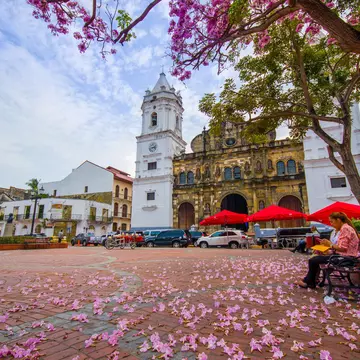
Following the destruction of the old city by Henry Morgan in 1671, the Spanish moved their city 8km southwest to a rocky peninsula on the foot of Cerro Ancón. The new location was easier to defend as the reefs prevented ships from approaching the city except at high tide. The new city was also easy to defend as it was surrounded by a massive wall, which is how Casco Viejo got its name.
In 1904, when construction began on the Panama Canal, all of Panama City existed where Casco Viejo stands today. However, as population growth and urban expansion pushed the boundaries of Panama City further east, the city's elite abandoned Casco Viejo, and the neighborhood rapidly…
reviewed
-
B
Martín Fierro
For top-quality sirloins, porterhouse cuts and filet mignon, there is only one name in Panama City, and it's Martín Fierro. The quality of meat served here is unparalleled - top selections include the best in US-imported New York rib steaks, grass-fed Argentinean fillets and locally-raised Panamanian cuts. And of course, nothing washes down braised beef quite like a deep and bold glass of red wine, and Martín Fierro has no shortage of Chilean standards to round out your meal.
reviewed
-
Boquete Mountain Cruisers
This expat-owned outfit offers two daily tours through some scenic back-country roads in its open-air trucks. The first leaves at 08:30 and makes a number of stops in and around Boquete - highlights include coffee, basalt formations and waterfalls. The second tour departs at 14:00 and heads straight for the Caldera hot springs. Both tours last four hours. There is no booking office, so call for reservations; trips include pickup at your hotel.
reviewed
-
C
Spanish Panama
This immensely popular language school gets rave reviews from travelers. It has a similar structure to ILERI's: four hours of one-on-one classes daily and homestays with meals for around US$380 per week (long-term discounts are available). It also offers a 'backpacker special,' which includes classes with dorm stay for US$275 per week.
reviewed
-
Isla Bastimentos
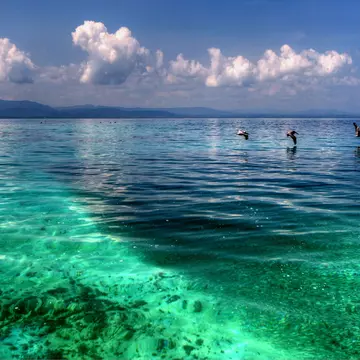
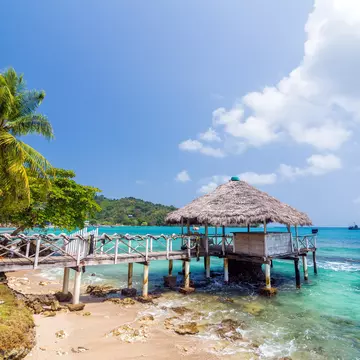
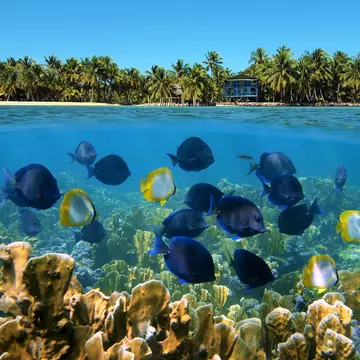
Although it's a mere 10min boat ride from the town of Bocas del Toro, Isla Bastimentos is a different world. The northern coast of the island is home to palm-fringed wilderness beaches that serve as nesting grounds for sea turtles, while most of the southern coast consists of mangrove islands and coral reefs that fall within the boundaries of the Parque Nacional Marino Isla Bastimentos.
The main settlement on Bastimentos is the historic West Indian town of Old Bank, which has its origins in the banana industry. Here, you'll hear Gali-Gali, the distinctive Creole language of Bocas del Toro Province that combines Afro-Antillean English, Spanish and Ngöbe-Buglé. The island…
reviewed
-
Scuba Coiba
Run by an experienced Austrian dive master, Scuba Coiba offers divers a chance to experience some of the spectacular marine life around Isla Coiba. Two-tank dives start around US$70 per person, though diving in the park costs more since the distance is much greater.
Scuba Coiba also offers day trips (around US$130) as well as two-day trips (around US$320) to Isla de Coiba, which include entry into the national park, lodging at the ANAM station on Coiba and meals; there's a two-person minimum for these trips. You can also get PADI-certified here for around US$230, and snorkeling gear is available for hire (around US$6 per day). The dive shop is located on the main road…
reviewed
-
D
El Sabrosón
This much-loved local institution cooks up cheap and filling Panamanian cuisine served cafeteria style. Although Boquete is rapidly being colonized by gringo-friendly boutique eateries, this is one local institution that stays true to its roots.
reviewed
-
Panama Canal
The Canal is both an engineering marvel and one of the most significant waterways on the planet. Seeing a huge ship nudge its way through the narrow canal with vast tracts of virgin jungle on both sides is truly an unforgettable sight. As impressive as it is now, an ambitious expansion plan is set to completely transform the the canal.
Stretching 80km (49mi) from Panama City on the Pacific coast to Colón on the Atlantic coast, the Canal provides passage for nearly 14,000 ocean-going vessels per year. The easiest and best way to visit the canal is to go to the Miraflores Locks, on the northeastern fringe of Panama City, where a platform offers visitors a good view of the…
reviewed
-
Summit Botanical Gardens & Zoo
The botanical gardens were founded in 1923 to introduce, propagate and disseminate tropical plants from around the world into Panama. They contain more than 15,000 plant species, and many of these are marked along a trail.
Also at the park is an expanding zoo that contains animals native to Central America. Its greatest attraction is its harpy eagle compound, which opened in 1998 in the hope that conditions would prove conducive to breeding; at the time of writing, there were no baby harpies to report.
The harpy eagle is the national bird, and many ornithologists consider it the most powerful bird of prey. Also at the zoo is a roomy jaguar compound and a remarkably…
reviewed
Advertisement
-
E
Fuerte San Lorenzo
The Fuerte San Lorenzo was built in 1595, by order of Felipe II of Spain, to fortify the Río Chagres and the trade route to the city of Panamá. Despite its violent history, which includes constant pirate attack (and occupation by Sir Francis Drake himself), much of San Lorenzo is well preserved, including the moat, the cannons and the arched rooms.
Together with Portobelo, Fuerte San Lorenzo was declared a Unesco World Heritage Site in 1980. Like its contemporary fortresses at Portobelo, San Lorenzo was constructed of blocks of cut coral, and armed to the teeth with rows upon rows of cannons. If you inspect the cannons closely, you'll notice that some of them are…
reviewed
-
Handicrafts Market
El Valle is home to one of Panama's largest handicrafts market. Mostly Ngöbe Buglé, but also some Emberá and Wounaan, bring a variety of handicrafts to sell to tourists (most of whom are Panamanians from the capital). If you're self-catering, the market also stocks a good selection of fresh produce from around the country. Although the market runs every day, stop by on Sunday for the full-on affair.
One of the most popular items up for sale are bateas, which are large trays carved from a local hardwood and used by the Ngöbe Buglé for tossing rice and corn. You can also find figurines, colorful baskets made from palms, gourds painted in brilliant colors, clay…
reviewed
-
F
La Cocotte
Fine Parisian cuisine reigns supreme under the stewardship of chef Fabien Migny, who studied at the Ecole Hotelliére Belliard while simultaneously training at the renowned Restaurant Jamin de Joel Robouchon in Paris. Appetizers like pâté de canard (duck pate) meld nicely with entrées of confit de canard (roasted duck) or fresh salmon in a red wine sauce, and everything is expertly topped off with crêpes soufflées au chocolat (chocolate crepes soufflé).
The fixed-price lunch is a good way to sample Migny's cuisine without breaking the bank, though there are certainly less enjoyable ways to spend your hard-earned money.
reviewed
-
Chorro El Macho
The most famous waterfall in the El Valle area is the 85-high Chorro El Macho, which is located a few kilometers north of town near the entrance to the canopy tour. As its somewhat humorous name implies, this towering waterfall is more dramatic than its dainty counterpart, and makes for some excellent photographs. If the summer sun is beating down more than usual, you can take a refreshing bath at the base of the falls.
Here below the falls, you'll find a large swimming pool made of rocks, surrounded by rainforest and fed by river water. There are also a series of short hiking trails here that wind into the surrounding forest.
reviewed
-
G
Restaurante Las Bóvedas
This utterly unique French restaurant is set in the vaults of a 300-year-old fort that housed political prisoners for most of the 19th century - fortunately for the crowds who converge here on the weekends, the ghosts of the past haven't had a deleterious effect on the cooking. Specializing in local seafood with a French twist, the menu varies daily, subject to the catch of the day, but always includes a fish fillet, mixed seafood and a cut of steak just to round things out a bit.
A guitarist performs in the last vault nightly except Friday and Saturday, when there's jazz; the music usually starts around 21:00.
reviewed
-
H
René Cafe
With an unbeatable location underneath the shadows of the Iglesia Catedral and overlooking the Plaza de la Independencia, this relative newcomer is primed to become one of the most popular restaurants in the city. Drawing on the successes of Manolo Caracol, René Cafe also offers prix-fixe five-course lunches and seven-course dinners that change daily.
However, the difference is that René emphasizes the international nature of the capital by infusing traditional Panamanian favorites with influences as broad as Pan-Asian and Continental cuisine to create some truly unique tapas.
reviewed
-
Canopy Adventure
The Canopy Adventure is a suspended ride that uses cables, pulleys and a harness to allow you to view a rainforest from dozens of meters above the jungle floor. You'll be in a harness dangling among jungle trees as you ride from one platform to another (there are six in all), at times gliding over Chorro El Macho. Although its ecological merit is somewhat questionable, there's no denying the rush you'll get as you soar through the air with your legs flailing to and fro.
Of course, unless you like to expose your private parts to strangers, don't do this in a dress or short shorts.
reviewed
-
I
Siete Mares
Artful lighting and a few impressionistic paintings scattered along the exposed brick walls sets the mood for some serious seafood dining, which attracts suits from all corners of Panama City's financial district. The speciality here is lobster, though if the sea hasn't been bountiful, you can choose from a wide variety of options including sea bass, jumbo shrimp and red snapper.
Despite the fact that the street is lined with countless other eateries, the crowds flocking in front of Siete Mares are testament to the fact that seafood here is about as fresh as it gets.
reviewed
-
Parillada Jimmy
The long open porch with high ceilings and wrought-iron chandeliers lends a farmhouse feel to this Panama City institution. The grill flares in the corner giving an indication of the specialties served here, namely some serious cuts of beef, meaty chicken breasts and fresh country-style sausage.
Although it's located in the San Francisco district just east of the old Aeropuerto Paitilla, Parillada Jimmy still packs in lunchtime diners from the business district and it's always hopping with the after-work crowd.
reviewed
-
J
Machu Picchu
Machu Picchu is a low-key but traditional restaurant where blue-vested waiters make the rounds among a mix of Peruvian expats and in-the-know Panamanians. True to its roots, the authentic menu has a long list of Peruvian specialties including pan-fried sea bass served with cream sauce, topped with shrimp or half a dozen other ways. And of course, nothing quenches your thirst and cleans your palate quite like a Pisco Sour, Peru's sometimes sweet and sometimes tart national drink.
reviewed
Advertisement
-
K
Gatún Dam
The Gatún Dam, constructed in 1908 to shore up the Río Chagres and to create Lago Gatún, was the world's largest dam until 1940. When created, it submerged 262 sq km (163 sq mi) of jungle, entire villages (the people were relocated first) and large sections of the Panama Railroad. Although the dam is always impressive, it's especially worth coming out here if the spillway is open - the sight of millions of gallons of water rushing out is amazing.
reviewed
-
Parque Nacional Coiba
This national marine park contains Panama's largest island, the 493-sq-km Isla de Coiba, as well as astounding biodiversity; 23 species of dolphin and whale have been identified, including humpback, killer and sperm whales. Several species of crocodile and turtle, and 15 species of snake roam the island as well as myriad birdlife.
Santa Catalina is the best place to base yourself if you're interested in informal trips into the park and onto the island.
reviewed
-
Fuerte Amador Resort & Marina
At the end of Isla Flamenco, you'll find one of the city's newest attractions, the Fuerte Amador Resort & Marina. This complex contains a two-story shopping center (the Flamenco Shopping Center), a marina, a cruise ship terminal and a number of restaurants and bars. At night, these open-air spots are a big draw, providing a fine setting for cocktails or a decent meal. At the marina, daily boats leave for the nearby resort island of Isla Taboga.
reviewed
-
L
Museo del Canal Interoceánico
The impressive Museo del Canal Interoceánico is housed in a beautifully restored building that once served as the headquarters for the original French canal company. The Panama Canal Museum (as it's more commonly known) presents excellent exhibits on the famous waterway, framed in its historical and political context. Signs are in Spanish, but English-speaking guides and audio tours (around US$5) are available.
reviewed
-
Museo El Valle
On the eastern side of El Valle's conspicuous church is the very modest Museo de El Valle, which contains exhibits of petroglyphs and ceramics left by the indigenous peoples who lived in the area hundreds of years ago. There is also some religious art (the museum is owned by the church next door), mostly statues of Christ and the Virgin, as well as some historical and geological information on El Valle's volcano.
reviewed