Pulau Penang Tips & articles

Penang: Malaysia in miniature

  • Adam Karlin
  • Lonely Planet Author

Note: Javascript is disabled in your browser.
To see the gallery in all its glory, you'll need to enable Javascript.

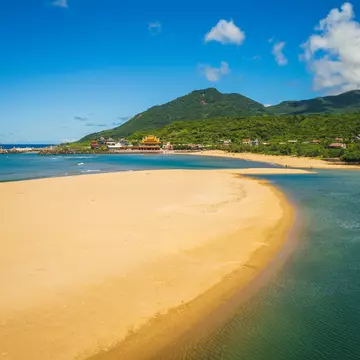
Kek Lok Si Temple, Malaysia

There’s a place in Penang, south of Little India in Georgetown, where you can find good food, sport on the TV, a pretty temple and somewhere around the corner, the soul of the island.

Hyperbolic? OK, a little. But this place truly is the sort of spot where the island’s many identities – Malay, Chinese, Indian, British colonial, modern tourist – thread together into a beautiful knot. You stand here, at the intersection of Lebuh King and Lebuh Ah Quee, and you’re a the intersection of Southeast Asia and its patterns of migration, trade and history, itself at the intersection of the world’s patterns of all of the above – the quest for spice, for colonial empire, for tourism paradise – so maybe, in a way, you are in that very moment at the centre of the universe

Yes. Well. The point is, this is a cool spot.

To your south is a Chinese assembly hall. Assembly halls are scattered all over Georgetown and Penang (and Malaysia in general), but ‘assembly hall’ is a somewhat sterile term that doesn’t cut to the heart of how cool these buildings are. They’re part neighbourhood association centre, part temple, part community foundation, and almost always decorated in coiling dragons, paintings of Immortals, Confucian sages, Taoist demigods and Buddhist scripture, photos of ancestors and inlaid classical Chinese script.

Indeed, you wander in the courtyard of your average assembly hall and you get the sense Chow Yun Fat is about to break out of the walls in a spectacularly choreographed fight scene. And just around the corner of here is the Khoo Kongsi, the most spectacular assembly hall in Penang, a testament to the influence the Chinese have had on this island’s culture (Penang is the only majority-Chinese state in Malaysia). And the influence other cultures have had on the Chinese; among the guardian statues standing sentinel over the entrance to Khoo Kongsi’s incredibly pastiche of Chinese architectural styles and decorative arts is a stone Sikh warrior, a reminder of the time sub-continental soldiers provided the security in this former jewel of the British Empire.

North of here are other testaments to Chinese wealth, including the Pinang Peranakan Mansion. Both a lovely example of what happens when colonial and Chinese architectural styles blend, the mansion is also a monument to the entrepreneurial skill and posturing that, to this day, animates the local ‘Baba Nonya’ community, descendants of those Chinese merchants who settled in the great Malay and Indonesian archipelagos.

To get here you wander through another slice of Penang: Little India, where the spice is shaped into little mountains, the gold jewelry is sold on poker tables and the Bollywood music is cranked to 11. There may be no place on Penang island where you have a sense of being so palpably somewhere else, where the atmosphere is so redolent of adventure. Pick up some milky sweets or eat a nice, hot curry off a banana leaf, and see some stunning examples of Tamil temple architecture at the Sri Mariamman Temple, whose four walls enclose both the holy space of worship and, to the faithful, the universe entire. Even among the Hindu faithful, you may notice there are statues of Chinese deities like Kuan Yin that are decorated with the same garlands draped on Shiva and Ganesh, another testament to Penang’s cross-cultural appeal.

At the risk of painting with a very broad brush, it’s safe to say Malays have a thing for food, especially good street food, and as such a great place to see Malays at their most relaxed and happy is Georgetown’s many hawker stalls. These pushcart affairs can be found anywhere – at the east end of the backpacker ghetto on Lebuh Chulia, in the Red Garden center behind the Hotel Continental, on the seafront esplanade. If street food frightens you, try New World Park, a spic-and-span modern hawker ‘mall’ where you can often find families eating out for the night – always a sign of good hygiene – and food from across Malaysia.

Comments

  1. 12 January 2011 1:51PM ianmrob Report this comment

    Good article on one of Malaysia's most fascinating places. Unfortunately the writer confuses the terms Malays and Malaysians in the last paragraph, the meanings are very different.

  2. 14 March 2011 6:16PM urbanite101 Report this comment

    The music that the writer heard cranked to 11 in Little India was most probably NOT Bollywood music but music from the Tamil film industry since the majority of Indians in Penang and elsewhere in Malaysia are descended from Tamils. Among Indians in Malaysia, it's the Tamil films that rule the roost and not Bollywood. Another typical mistake by Westerners who think Bollywood is India and India is Bollywood. Those who have traveled to South India will know that in these respective South Indian states, it's their respective language movies (dubbed regional movies by the Northern English press as though implying that Hindi movies are national which it is not) that rule supreme. So, chances are that the songs beings played in Little India in Penang are more often than not Tamil songs.
  3. 30 March 2011 4:57PM mamerito1 Report this comment

    Best Place in the World. Visited Penang in July 2010, had our accommodation at Gurney Hotel on one of the floors i could clearly see the sea. Penang offers you the opportunity to see the world in a new dimension or explore the other side of KL. Beautiful old building, huge temples, nice food connections by sea or by wonderful Penang bridge. It's a must visit if you love to adventure. I look forward to have my honeymoon here.

Add a comment

Sign in or register to add your comment.

Things to do