Sights in Madagascar
- Sort by:
- Popular
-
Parc National de L'Isalo
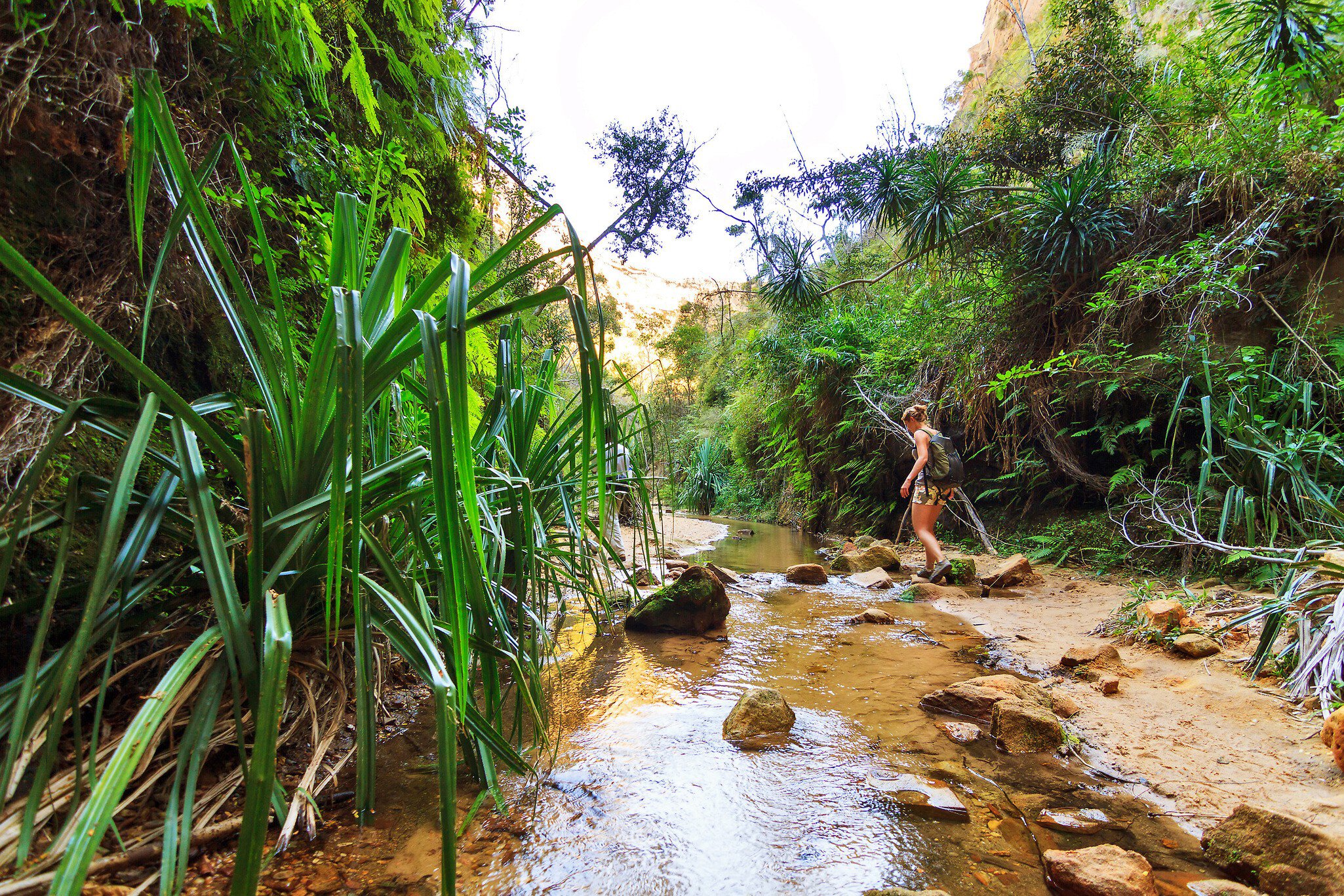
The flat, grassy plains of the hauts plateaux near Ranohira are abruptly broken by towering sandstone massifs sculpted by wind and water into gorges and craggy bluffs. It's one of the country's most spectacular regions, perfect for overnight hikes, rock-hopping along cool canyons and spotting lemurs.
It's best to visit during the cooler months (April to October), when the bizarre pachypodiums and periwinkles are in flower on the rock faces and walking is more comfortable. The Sakalava people used to bury their dead in caves high up on cliff faces and some areas are fady (taboo) even today.
Official guides are compulsory for visits to the park and fees depend on the length…
reviewed
-
Parc National de Ranomafana
Parc National de Ranomafana is 41,500 hectares (102,549 acres) of lush rainforest, riddled with small streams that plummet into the Namorona River, and teeming with 12 lemur species, including red-bellied lemurs and broad-nosed gentle lemurs.
The park entrance and Angap office are at Ambodiamontana village. Permits are compulsory and are available at the Angap office.
Guided walks range from two to four hours, try a nocturnal walk for the chance to spot the fanaloka, or Malagasy civet, and the dainty brown mouse lemur.
reviewed
-
Ifaty
Most travellers visit the quiet coastal area of Ifaty, featuring the villages of Ifaty, Mangilly and Mandio Rano, or sit under a palm tree on a white sandy beach. With coral reefs just offshore, sea breezes whispering in the casuarina trees and a relaxed tropical ambience, who can blame them?
There's whale-watching in July and August, and the amazing spiny forest along the road just north of Mangilly is well worth a look.
reviewed
-
A
Musée Regional de l'Université de Toamasina
The small Musée Regional de l'Université de Toamasina constitutes barely 2½ rooms of farming tools, fishing implements, archaeological finds and tribal charms, along with poster displays on deforestation and local conservation projects. Some of the captioning is in English, including translations of some typically cryptic Malagasy proverbs.
reviewed
-
Zoma
Fianar is a market town, with at least one small market open every day. Fianar's largest market is the weekly Zoma, where you'll find everything from beef sausages to party hats. It's held on Friday along Araben'ny Fahaleovantena, and is hugely popular with locals who come as much to catch up on the week's events as to purchase dinner.
reviewed
-
Fort Flacourt
On Fort Dauphin's northeastern tip is Fort Flacourt, built by the French in 1643. Today, little remains but a few cannons. To see what is left, and to admire the view, you can negotiate a 'fee' with a soldier at the gate who will show you around. Photos of the fort are permitted, but not of the barracks.
reviewed
-
Musée Regional de l'Université de Toliara
A few blocks southwest of the market, the Musée Regional de l'Université de Toliara has undergone a recent renovation and features exhibits on local culture, an egg from the pre-historic elephant bird Aepyornis, and other oddities including a freaky ancient mask with real human teeth.
reviewed
-
Centre Ecologique de Libanona
The Centre Ecologique de Libanona was established to help educate locals and visiting scientists about environmental issues. The centre is located in Libanona on the cliff overlooking Libanona beach, and makes for an interesting visit if you're interested in environmentalism and speak French.
reviewed
-
Stadium
On Sunday afternoon, spirited games of football (soccer) are played at the Stadium, near the train station. There are also occasional beer festivals here, attended enthusiastically by university students from as far away as Antananarivo. Look out for posters around town.
reviewed
-
Nosy Kely Beach
The beach at Nosy Kely is fairly attractive, although it has also suffered severe erosion over the last decade. Check out the southern end for the most sand. Strong currents prevent swimming in many areas, and views are marred by concrete pilings.
reviewed
Advertisement
-
Mozea Akiba
Preserved fish and dinosaur bones are on exhibit at the Mozea Akiba. It also has a few small displays including photographs and explanations (some are in English) about the Grottes d'Anjohibe, the Parc National d'Ankarafantsika and Cirque Rouge.
reviewed
-
B
Asabotsy Market
Saturday is market day in Antsirabe, and it's worth a wander around the town's two big markets, Asabotsy Market and Petit Marché. The town also has numerous handicraft shops and is a good place to stock up on gifts for the folks back home.
reviewed
-
C
Fort Rova
Fort Rova, at the end of Rue du Maréchal Joffre, was built in 1824 by King Radama I and extensively damaged during the French-Malagasy wars of the late 19th century. The Rova offers good views over the city and bay.
reviewed
-
Betania Beach
The best beach is quiet Betania beach at the southern end of the peninsula. There is now one place to stay, but even if you don't, it makes a good day trip. To get to the beach arrange transport with a pirogue captain.
reviewed
-
Musée de la Mer
Only really worth a visit for sea-lovers, the Musée de la Mer has displays of pickled sea life, coral and shells, including a rare coelacanth. It's near the end of the road that leads to the port.
reviewed
-
Haute-Ville
The oldest and most attractive part of town is Haute-Ville. A stroll (or climb) around the cobbled streets here offers great views of the surrounding countryside.
reviewed
-
Baie des Galions Beach
The beach along Baie des Galions to the north of Libanona is the place for surfing and windsurfing (late August to May only).
reviewed
-
Ambozontany Cathedral
In the centre of Haute-Ville, and dominating the skyline, is the imposing Ambozontany Cathedral, which dates back to 1890.
reviewed
-
Libanona Beach
The cleanest and prettiest beach in Fort Dauphin itself is at Libanona, on the southwestern side of the peninsula.
reviewed