Things to do in Kenya
-
Masai Mara National Reserve
This world-renowned reserve, which stretches over 1510 sq km (938 sq mi) of open rolling grasslands, is backed by the spectacular Esoit Oloololo (Siria) Escarpment, watered by the Mara River and littered with an astonishing amount of wildlife.
Of the big cats, lions are found in large prides everywhere, and it is not uncommon to see them hunting. Cheetahs and leopards are less visible, but still fairly common. Elephants, buffalos, zebras and hippos also exist in large numbers.
The ultimate attraction is undoubtedly the annual wildebeest migration in July and August, when millions of these ungainly beasts move north from the Serengeti. While you're more likely to see…
reviewed
-
A
Carnivore
Vegetarians, please look away now. This is hands down the most famous nyama choma restaurant in Kenya. At the entrance is a huge barbecue pit laden with real swords of beef, pork, lamb, chicken, camel, ostrich and crocodile. As long as the paper flag on your table is flying, waiters will keep bringing the meat, which is carved right at the table.
reviewed
-
Deep-Sea Fishing
If you want to ape the fish-wrestling antics of Ernest Hemingway, Deep-Sea Fishing is possible at Ocean Sports Hotel and Hemingway's (high season, up to four anglers per boat). People are a little more environmentally sensitive now than in old Ernie's day - tag and release is standard procedure.
reviewed
-
Dhow Trip
Taking a Dhow Trip is almost obligatory and drifting through the mangroves is a wonderful way to experience the islands. You'll be approached by touts and would-be captains almost as soon as you arrive, but it's worth shopping around to find a captain you like and a price you're happy with. Prices vary depending on where you want to go and how long you go for. Groups of more than five aren't recommended as the boats aren't very big.
Solo travellers joining an existing group to make up numbers will often be offered a great price, on the condition that they don't tell their fellow passengers how much they paid. As this generally means the others paid the extortionate asking…
reviewed
-
B
Nairobi National Park
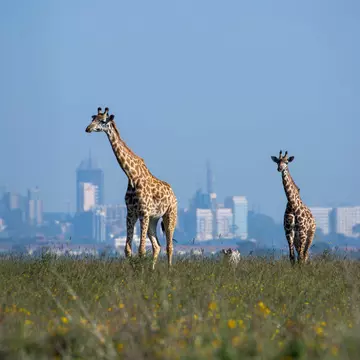
A visit to Nairobi National Park, a few kilometres from the city centre, is a great way to fill in a few hours before you catch a plane. There's plentiful wildlife, including most of the plains animals (except elephants), against the bizarre backdrop of Nairobi skyscrapers. The headquarters of the KWS are at the main gate. The 'Park Shuttle' is a KWS bus that leaves the main gate at 15:00 Sunday for a 2½-hour tour of the park.
reviewed
-
C
Bangkok Chinese Restaurant
The Bangkok has been in business for a number of years but was clearly named by someone with no grasp of geography, as there's virtually nothing Thai on the menu at all. If the disappointment gets too much you can always crack open a bottle of Moët.
reviewed
-
D
Bomas of Kenya
The Bomas of Kenya is a cultural centre at Langata, near the main gate to Nairobi National Park. The talented resident artistes perform traditional dances and songs taken from the country's 16 various tribal groups, including Arab-influenced Swahili taarab music, Kalenjin warrior dances, Embu drumming and Kikuyu circumcision ceremonies. It's touristy, of course, but it's still a spectacular afternoon out.
The centre itself has such a high profile that the first meeting of the National Constitutional Conference was held here in 2003, producing the so-called Bomas Draft of the new constitution. Bus or matatu No 125 or 126 runs here from Nairobi train station, taking about…
reviewed
-
E
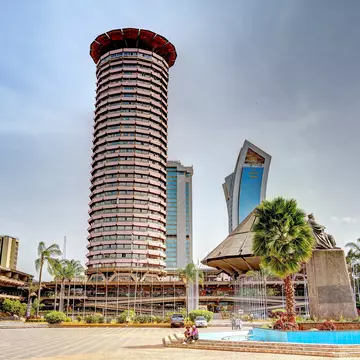
Kenyetta Conference Centre
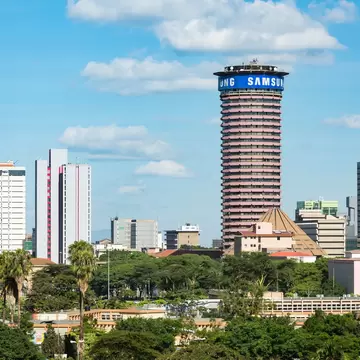
Towering over City Square, Nairobi's signature building the Kenyetta Conference Centre was designed as a fusion of modern and traditional African styles, though the distinctive saucer tower looks a little dated next to some of the city's flashier glass edifices.
Staff will accompany you up to the viewing platform and helipad on the roof for wonderful views over Nairobi. The sightline goes all the way to the suburbs, and on clear days you can see aircraft coming in to land over the Nairobi National Park. You're allowed to take photographs from the viewing level but not elsewhere in the building. Access may be restricted during events and conferences.
reviewed
-
Ethiopian Explorer
44 days (Gonder)
by Intrepid
Spot Ethiopia's exotic wildlife on a game drive, Be amazed by the pink brilliance of flocks of flamingos, Experience distinct local cultures and traditions in…Not LP reviewed
from USD$4,050 -
Watamu Turtle Watch
Several species of marine turtle lay their eggs on the beaches around Watamu and Watamu Turtle Watch, part of the Local Ocean Trust, has set up a series of initiatives with local people to protect these threatened animals. Female turtles lay thousands of eggs here between January and April. Contact the trust's Marine Information Centre if you're interested in seeing this incredible natural spectacle or volunteering with local projects.
reviewed
Advertisement
-
F
National Museum
Kenya's National Museum is an imposing building amid lush leafy grounds just outside the city centre. It has a good range of cultural, geological and natural-history exhibits. Volunteer guides offer tours in English, Dutch and French. The 1st floor contains excellent contemporary East African art; as all the items are for sale the displays change regularly.
reviewed
-
G
Langata Giraffe Centre
The Langata Giraffe Centre, run by the African Fund for Endangered Wildlife, is a sanctuary for the rare Rothschilds giraffe. Here you can observe, hand-feed or even kiss the giraffes from a raised circular wooden structure, and it is quite an experience. It's a good place to get the close-up photographs that eluded you on safari.
reviewed
-
H
Spinners Web
Works with workshops and self-help groups around the country. It's a bit like a handicrafts version of Ikea, with goods displayed the way they might look in Western living rooms, but there's some classy stuff on offer including carpets, wall hangings, ceramics, wooden bowls, baskets and clothing.
reviewed
-
The Office
Perched above the Likoni ferry jetty and matatu stand, the entirely unaptly named Office is a real locals' hangout with regular massive reggae and dub nights shaking the thatched rafters. Any business that goes on here is definitely not the executive kind.
reviewed
-
I
Olympic Restaurant
Further south near the waterfront woodyards, the Olympic serves the usual favourites. It's less popular than its more central rivals, but no worse off for that. The owners are very friendly and it's a favourite with a slightly older crowd.
reviewed
-
J
Furusato Japanese Restaurant
Behind the Sarit Centre, this is a very stylish place with seductive set Japanese meals including sushi, teppanyaki and tempura. The sushi and sashimi here are delicious. Reservations are recommended.
reviewed
-
K
Singh Restaurant
The Sikh temple near the bus stands operates this small cafeteria restaurant, tipped by Mombasans in the know as one of the best places in town for vegetarians.
reviewed
-
L
Hapa Hapa Restaurant
Advocated vehemently by its regulars, this waterfront eatery is a bit more informal and African under its low thatch than your average.
reviewed
-
M
City Market
Has dozens of stalls open daily, selling woodcarvings, drums, spears, shields, soapstone, Maasai jewellery and clothing.
reviewed
-
N
Mombasa Coffee House
Take the opportunity to escape above Moi Ave for fresh coffee and snacks, or local meals away from the daily grind.
reviewed
Advertisement
-
O
Books First
Well-stocked bookshop outlet with separate café, in the Nakumatt supermarket.
reviewed
-
P
Bahati Book Centre
Bookshop.
reviewed
-
Q
Trattoria
This long-running and very popular Italian joint could hold its head up in Melbourne or San Francisco, offering excellent pizza, pasta dishes, varied mains and a whole page of desserts.
reviewed
-
R
Siam Thai
This attractive restaurant has an extensive menu of actual Thai food (gasp!) and a very good reputation. Unga House can be reached from either Woodvale Grove or Muthithi Rd.
reviewed
-
Fort Jesus
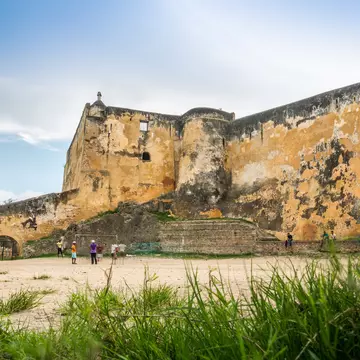
Mombasa's biggest tourist attraction, Fort Jesus dominates the harbour entrance at the end of Nkrumah Rd. The metre-thick coral walls make it an imposing edifice, despite being partially ruined. The fort was built by the Portuguese in 1593 to enforce their rule over the coastal Swahilis, but they rarely managed to hold onto it for long. It changed hands at least nine times in bloody sieges between 1631 and 1875, finally falling under British control. It houses a museum, built over the former barracks. The exhibits are mostly ceramics, reflecting the variety of cultures that traded along the coast, but include other interesting odds and ends donated from private…
reviewed