Things to do in Iran
-
Mohsen Hajisaeed
Young, highly organised Mohsen speaks excellent English, leads tours in Yazd, Kerman, Fars and Esfahan provinces (including Bavanat), and can arrange hotel discounts.
reviewed
-
Tour Guide, Arash Sadeghzadeh
Young, enthusiastic, knowledgeable and highly organised guide and fixer. Recommended.
reviewed
-
A
Taj Mahal
In the hotel of the same name, the Taj has a reputation for serving the best Indian food in Iran. The curries here are mouth-watering and there is a good range of vegetarian options. Pity about the location.
reviewed
-
B
Golestan Palace Complex
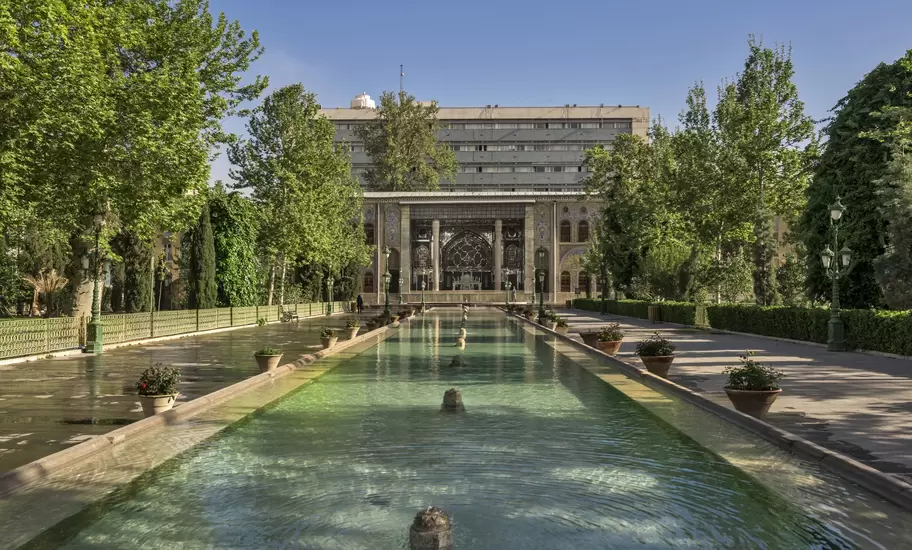
In what was once the heart of Tehran is this monument to the glories and excesses of the Qajar rulers. A short walk south from Imam Khomeini Sq, the Golestan Palace complex is made up of several grand buildings set around a carefully manicured garden. Admission isn’t expensive but, annoyingly, you must buy a separate ticket for each building, and all at the front gate.
reviewed
-
Yord Cultural Complex
In an enormous colourful yord (tent) about 8km northwest of town, this complex not only offers the chance to enjoy some fine Iranian-nomad food, but also to experience the Qashqa’i culture. The warm atmosphere, colourful costumes, live music and delicious food afford a dreamy escape from modern life into a Qashqa’i tented embrace. Yord is almost impossible to reach by public transport, so ask your hotel to write the name in Farsi and get a taxi (about IR25,000); it is also worth paying the taxi to wait for you (about IR70,000 total) as taxis out here are rare indeed.
reviewed
-
C
Gilac
The ambience, décor, music and food presentation at Gilac are more reminiscent of Europe than Iran. But the delicious food is wonderfully Caspian. It’s a favourite of vegetarians, with the mirza ghasemi (IR22,000), borani bademjan (IR25,000) and dokhtar-e luce (‘spoilt girl’, IR27,000) starters all delicious; in combination, they’d happily make a meal on their own. The fish and veal dishes are also excellent.
reviewed
-
D
Ananda Vegetarian Restaurant & Coffee Shop
Way up in north Tehran the Ananda is a gem if you’re a vegetarian, and delightful even if you’re not. Run in association with the Iranian Society of Vegetarians, there’s no chance of finding rogue bits of meat here and the food is both delicious and cheap. We can recommend the Ananda lasagne (IR35,000) and Ananda calzone (IR33,000), the freshly made salad (no plastic wrap!) and the service and setting.
reviewed
-
E
Tehran Bazar
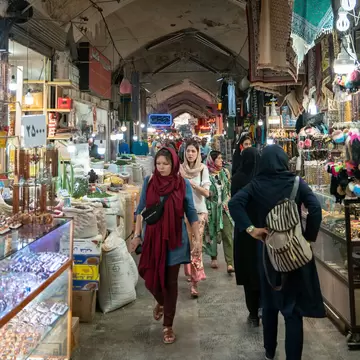
The maze of bustling alleys and the bazaris that fill them make Tehran Bazar a fascinating, if somewhat daunting, place to explore. Traders have been hawking their wares on this site for nearly a thousand years, but most of what you see today is less than 200 years old; it’s no architectural jewel. The bazaris are a conservative bunch and there will be far more chadors than bleached hair.
reviewed
-
Best of Iran
11 days (Tehran)
Journey through Iran and experience fascinating Persian culture.
Not LP reviewed
from USD$3,090 -
F
Akbar Mashti Bastani
Akbar Mashti became famous for his ice cream in the 1950s and today his son continues to sell what he modestly describes as ‘the most famous ice cream in Iran and the world’. Try the pistachio bastani (IR7000) and you’ll probably agree.
reviewed
Advertisement
-
The Peacock Throne
There has long been confusion about the origins of the Peacock (or Naderi) Throne that now sits in the National Jewels Museum. The real story is this: In 1798 Fath Ali Shah ordered a new throne to be built. His artists made quite a job of it, encrusting the vast throne that looks more like a bed with 26,733 gems.
Set into its top was a carved sun, studded with precious stones, so the throne became known as the Sun Throne. Later Fath Ali married Tavous Tajodoleh, nicknamed Tavous Khanoum or Lady Peacock, and the throne became known as the Peacock Throne in her honour.
Fath Ali certainly had a taste for gems, but one of his predecessors, Nader Shah, liked the finer things…
reviewed
-
G
Bazar-e Vakil
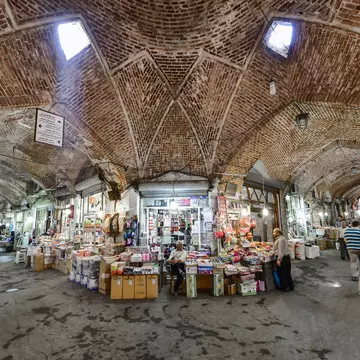
Shiraz’s ancient trading district is comprised of several bazaars dating from different periods. The finest and most famous is the Bazar-e Vakil, a cruciform structure commissioned by Karim Khan as part of his plan to make Shiraz into a great trading centre. The wide vaulted brick avenues are masterpieces of Zand architecture, with the design ensuring the interior remains cool in summer and warm in winter. Today, it’s home to almost 200 stores selling carpets, handicrafts, spices and clothes and is one of the most atmospheric bazaars in Iran, especially in the early evening when it is fantastically photogenic. As usual, it’s best explored by wandering without concern…
reviewed
-
Kuh-e Sangi
This small but abrupt rocky hill rises near Mashhad’s southern ring road (the ‘Kabul to Paris highway’). Sweeping views show just how huge Mashhad has become. Tastefully set rock steps lead up from a large ‘recreation complex’ featuring ponds, over-priced ice creams and lots of souvenir shops selling soapstone dizi pots and awful porcelain figurines. Horsecart rides do NOT take you up the mountain as they might imply but on a pointless eight-minute trot down some side streets. Within the park there’s a sweetly naive loop of pedal-car monorail for kids.
reviewed
-
H
Khayyam Traditional Restaurant
Opposite the Imamzadeh Seyyed Nasreddin Mosque (look for the dome), this beautifully decorated restaurant is an oasis amid the chaos of the bazaar area. Originally part of the mosque, the 300-year-old building was separated when Khayyam St intervened. It was restored in 2002. The typically Iranian food (mainly kabab, chicken and fish) is well prepared and plentiful. But on this visit we felt service had dropped and the 15% service charge on top of all the extras you have to pay for is irritating. Still, for tea, qalyan and sweets (IR25,000) after an outing in the bazaar, it’s hard to beat.
reviewed
-
I
Carpet Museum
That's an image you'll find repeated as both carpet and giant wood-inlay works in the separate Carpet Museum, where rugs range from beautiful classics through to garish coral gardens and a Tabriz-made carpet-portrait of WWI bogey-man Kaiser Wilhelm II. Tying the staggering 30 million knots for Seven Beloved Cities took 14 years. Upstairs, beside the shoe-deposit counter, is a two-room Calligraphy Gallery displaying priceless Korans, many dating back over a millennium.
reviewed
-
Dizin Resort
The largest field in Iran and home to Iranian skiing, Dizin Resort, The runs aren’t difficult. Still, with a vertical drop of about 900m it should appeal to anyone feeling the need for speed. With base camp at about 2700m and the upper slopes about 3500m, skiing is usually possible from December until April. From the base, you take an antique-looking gondola to the mid-station, and another to the top. A third gondola ferries you to the eastern slopes.
reviewed
-
J
Bazar-e Bozorg
Esfahan’s Bazar-e Bozorg links Imam Sq with the Jameh Mosque, 1.7km northeast. The bazaar’s arched passageways are topped by a series of small domes, each with an aperture at its apex spilling shafts of light onto the commerce below. While the oldest parts of the bazaar, around the Jameh Mosque, are more than a thousand years old, most of what you see today was built during Shah Abbas’ aggressive expansions in the early 1600s.
reviewed
-
Bastani Restaurant
In the shadow of the Imam Mosque, the Bastani is the best-located restaurant in Esfahan. That, however, is where the compliments end. In recent years the quality of the food has been less consistent. Which is a pity, as the menu is full of interesting-sounding dishes. If you do eat here, the billing can be confusing so check it carefully. It’s a pity, as the menu is full of interesting-sounding dishes and it used to be good. Hopefully it will pick up.
reviewed
-
K
Coffee Shop & Vegie Restaurant of Iranian Artists’ Forum
This dedicated vegetarian restaurant is excellent value and a good place to meet young, educated and artistic Tehranis. It’s in a brick building at the southern edge of Park-e Tehran, and has an informal, busy ambience with young people coming and going. Owner Aman promised there would be no mystery meat in the salads (less than IR10,000), sandwiches (IR20,000), pizzas (IR25,000) or khoresht (IR18,000), among others.
reviewed
-
L
National Jewels Museum
The National Jewels Museum which is owned by the Central Bank but actually housed underneath the central branch of Bank Melli, is probably the the biggest tourist drawcard in Tehran. If you’ve already visited the art gallery at the Golestan Palace, you will have seen the incredible jewellery with which the Safavid and Qajar monarchs adorned themselves. Come here to gawp at the real things.
reviewed
Advertisement
-
M
Park-e Laleh
Near the centre of Tehran, Park-e Laleh is one of those places that is more than the sum of its parts. Certainly, it is a well-designed green space, but its location amid so much traffic makes the park a real oasis. As you wander through, you’ll notice plenty of young Tehranis refining their flirting techniques over soft-serve ice creams. It’s a great place for people-watching.
reviewed
-
N
Aramgah-e Shah-e Cheragh
Sayyed Mir Ahmad, one of Imam Reza’s 17 brothers, was hunted down and killed by the caliphate on this site in AD 835. His remains are housed at the glittering Aramgah-e Shah-e Cheragh. A mausoleum was first erected over the grave during the 12th century but most of what you see dates from the late-Qajar period and the Islamic Republic; expansion is ongoing.
reviewed
-
O
Imam Mosque
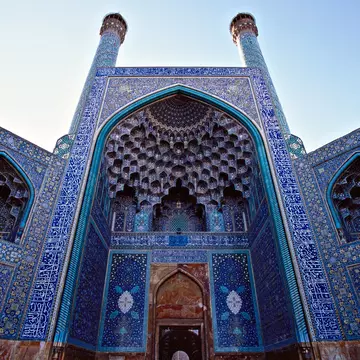
The Imam Mosque is one of the most beautiful mosques in the world. The richness of its blue-tiled mosaic designs and its perfectly proportioned Safavid-era architecture form a visually stunning monument to the imagination of Shah Abbas I and the ability of his architect. The sumptuous decoration of the mosque perfectly complements the architectural elegance.
reviewed
-
P
Azari Traditional Teahouse
This restored ‘coffeehouse’ in south Tehran is wonderfully atmospheric because it remains popular with locals, who use it as an unofficial community centre. The dizi and chicken kababs are rightly popular. A traditional band plays most evenings when the boisterous atmosphere is best enjoyed with a group, and bookings are recommended.
reviewed
-
Darvazeh-ye Quran
The Darvazeh-ye Quran, a modern and not desperately impressive structure built in 1949 to replace two earlier gateways. The gateway holds a Quran and travellers have traditionally passed underneath it before undertaking any journey. The fine original Quran, installed during the Zand period, was stolen from the Pars Museum in 2003.
reviewed