go to content go to search box go to global site navigation

Iran

Sights in Iran

‹ Prev

of 10

  1. A

    Golestan Palace Complex

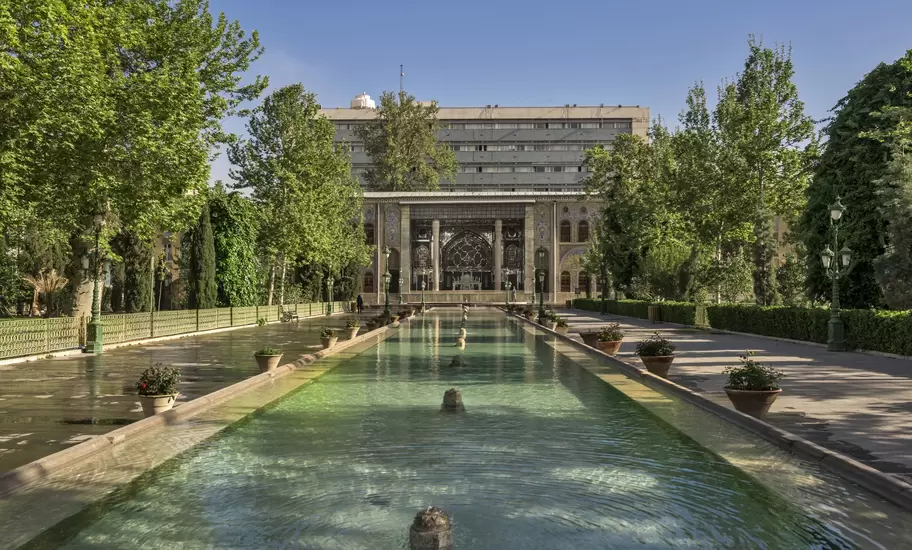
    In what was once the heart of Tehran is this monument to the glories and excesses of the Qajar rulers. A short walk south from Imam Khomeini Sq, the Golestan Palace complex is made up of several grand buildings set around a carefully manicured garden. Admission isn’t expensive but, annoyingly, you must buy a separate ticket for each building, and all at the front gate.

    reviewed

  2. The Peacock Throne

    There has long been confusion about the origins of the Peacock (or Naderi) Throne that now sits in the National Jewels Museum. The real story is this: In 1798 Fath Ali Shah ordered a new throne to be built. His artists made quite a job of it, encrusting the vast throne that looks more like a bed with 26,733 gems.

    Set into its top was a carved sun, studded with precious stones, so the throne became known as the Sun Throne. Later Fath Ali married Tavous Tajodoleh, nicknamed Tavous Khanoum or Lady Peacock, and the throne became known as the Peacock Throne in her honour.

    Fath Ali certainly had a taste for gems, but one of his predecessors, Nader Shah, liked the finer things…

    reviewed

  3. B

    Bazar-e Vakil

    Shiraz’s ancient trading district is comprised of several bazaars dating from different periods. The finest and most famous is the Bazar-e Vakil, a cruciform structure commissioned by Karim Khan as part of his plan to make Shiraz into a great trading centre. The wide vaulted brick avenues are masterpieces of Zand architecture, with the design ensuring the interior remains cool in summer and warm in winter. Today, it’s home to almost 200 stores selling carpets, handicrafts, spices and clothes and is one of the most atmospheric bazaars in Iran, especially in the early evening when it is fantastically photogenic. As usual, it’s best explored by wandering without concern…

    reviewed

  4. Kuh-e Sangi

    This small but abrupt rocky hill rises near Mashhad’s southern ring road (the ‘Kabul to Paris highway’). Sweeping views show just how huge Mashhad has become. Tastefully set rock steps lead up from a large ‘recreation complex’ featuring ponds, over-priced ice creams and lots of souvenir shops selling soapstone dizi pots and awful porcelain figurines. Horsecart rides do NOT take you up the mountain as they might imply but on a pointless eight-minute trot down some side streets. Within the park there’s a sweetly naive loop of pedal-car monorail for kids.

    reviewed

  5. C

    Carpet Museum

    That's an image you'll find repeated as both carpet and giant wood-inlay works in the separate Carpet Museum, where rugs range from beautiful classics through to garish coral gardens and a Tabriz-made carpet-portrait of WWI bogey-man Kaiser Wilhelm II. Tying the staggering 30 million knots for Seven Beloved Cities took 14 years. Upstairs, beside the shoe-deposit counter, is a two-room Calligraphy Gallery displaying priceless Korans, many dating back over a millennium.

    reviewed

  6. D

    Bazar-e Bozorg

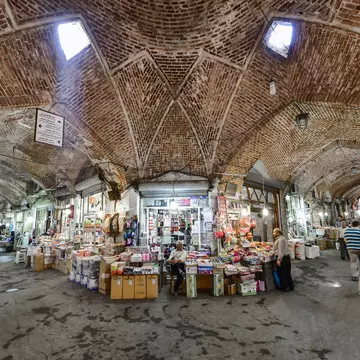
    Esfahan’s Bazar-e Bozorg links Imam Sq with the Jameh Mosque, 1.7km northeast. The bazaar’s arched passageways are topped by a series of small domes, each with an aperture at its apex spilling shafts of light onto the commerce below. While the oldest parts of the bazaar, around the Jameh Mosque, are more than a thousand years old, most of what you see today was built during Shah Abbas’ aggressive expansions in the early 1600s.

    reviewed

  7. E

    National Jewels Museum

    The National Jewels Museum which is owned by the Central Bank but actually housed underneath the central branch of Bank Melli, is probably the the biggest tourist drawcard in Tehran. If you’ve already visited the art gallery at the Golestan Palace, you will have seen the incredible jewellery with which the Safavid and Qajar monarchs adorned themselves. Come here to gawp at the real things.

    reviewed

  8. F

    Park-e Laleh

    Near the centre of Tehran, Park-e Laleh is one of those places that is more than the sum of its parts. Certainly, it is a well-designed green space, but its location amid so much traffic makes the park a real oasis. As you wander through, you’ll notice plenty of young Tehranis refining their flirting techniques over soft-serve ice creams. It’s a great place for people-watching.

    reviewed

  9. G

    Aramgah-e Shah-e Cheragh

    Sayyed Mir Ahmad, one of Imam Reza’s 17 brothers, was hunted down and killed by the caliphate on this site in AD 835. His remains are housed at the glittering Aramgah-e Shah-e Cheragh. A mausoleum was first erected over the grave during the 12th century but most of what you see dates from the late-Qajar period and the Islamic Republic; expansion is ongoing.

    reviewed

  10. H

    Imam Mosque

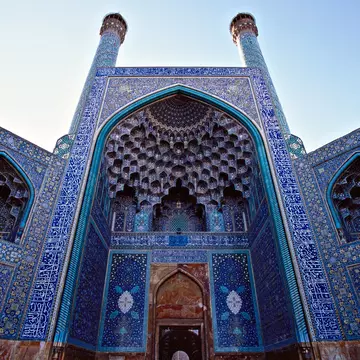
    The Imam Mosque is one of the most beautiful mosques in the world. The richness of its blue-tiled mosaic designs and its perfectly proportioned Safavid-era architecture form a visually stunning monument to the imagination of Shah Abbas I and the ability of his architect. The sumptuous decoration of the mosque perfectly complements the architectural elegance.

    reviewed

  11. Advertisement

  12. Darvazeh-ye Quran

    The Darvazeh-ye Quran, a modern and not desperately impressive structure built in 1949 to replace two earlier gateways. The gateway holds a Quran and travellers have traditionally passed underneath it before undertaking any journey. The fine original Quran, installed during the Zand period, was stolen from the Pars Museum in 2003.

    reviewed

  13. I

    Sarkis Cathedral

    In case you assume that Islam has a monopoly on Iranian life, visit Sarkis Cathedral. Built between 1964 and 1970, it’s interesting not so much for its beauty but because of what it is and where it is. Sarkis Cathedral is by far the most visible and important non-Islamic religious building in Tehran.

    reviewed

  14. National Museum of Iran

    The modest National Museum of Iran is no Louvre, but it is chock-full of Iran’s rich history and should be on every visitor’s list of things to see in Tehran.

    reviewed

  15. J

    Holy Shrine of Imam Reza (Haram-e Razavi)

    Imam Reza's Holy Shrine is enveloped in a series of sacred precincts collectively known as the Haram-e Razavi , or Haram for short. This magical city-within-a-city sprouts dazzling clusters of domes and minarets in blue and pure gold behind vast fountain-cooled courtyards and magnificent arched arcades. It's one of the marvels of the Islamic world whose moods and glories should be fully savoured more than once at varying times of day. Compare the orderly overload of dusk prayer-time to the fairy-tale calm of a floodlight nocturnal wander.

    No bags or cameras are allowed within the complex, though curiously snapping photos with mobile phones is accepted. There are…

    reviewed

  16. Grand Bazaar

    Stretching for 1200m from Tohid Sq northeast to Shohada Sq, Kerman's Grand Bazaar is one of the oldest trading centres in Iran. This main thoroughfare is made up of four smaller bazaars, and a further 20 or so branch off to the north and south. It is, however, easy enough to navigate and has a vivacity that should keep you interested, especially in the morning and late afternoon.

    Starting at Tohid Sq, the first section is the Bazar-e Ganj Ali Khan, built in the 17th century for Ganj Ali Khan (the governor of Kerman), which soon opens onto the pretty Ganj Ali Khan Square. Built in the Safavid period, this courtyard is home to what was once Kerman's most important hammam,…

    reviewed

  17. K

    Yazd Water Museum

    For at least 2000 years Iranians have been digging qanats (underground water channels) to irrigate crops and supply drinking water. To build a qanat you first need to find an underground water source. This source could be more than 100m deep, but as the whole system is reliant on gravity the source must be higher than the final destination. Then you dig a tunnel just wide and tall enough to crawl along, so the water can flow across an extremely shallow gradient to its destination.

    The mounds of soil you'll see in long lines across the desert are the top of wells, dug to dispose of excavated soil and allow ventilation.

    Because of the hazards and expense of constructing a

    reviewed

  18. L

    Main Museum

    Bequests and donations from the faithful fill the Haram’s fascinatingly eclectic museums. The Main Museum kicks off with chunks of now-superseded shrine-décor interspersed with contemporary sporting medals presented by pious athletes. The basement stamp collection includes a 1983 commemorative featuring the ‘Takeover of the US Spy Den’. The 1st-floor Visual Arts Gallery offers you the opportunity to shower money (or hats) down onto the top of the Holy Shrine’s fourth zarih tomb encasement (replaced in 2001). Amid seashells and naturalist landscape-paintings of Surrey, notice Mahmood Farshchian’s modern classic Afternoon of Ashura. It’s a grief-stricken…

    reviewed

  19. M

    Bazaar (covered bazaar)

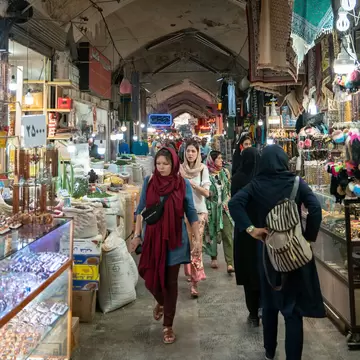
    The magnificent, labyrinthine covered bazaar covers some 7 sq km with 24 separate caravanserais and 22 impressive timches (domed halls). Construction began over a millennium ago, though much of the fine brick vaulting is 15th century. Upon entering one feels like a launched pinball, bouncing around through an extraordinary colourful maze, only emerging when chance or carelessness dictates.

    There are several carpet sections, according to knot-size and type. The spice bazaar has a few shops still selling herbal remedies and natural perfumes. A couple of hat shops (Bazaar Kolahdozan) sell traditional papakh (Azari hats, from around IR100,000,) made of tight-curled astrakhan…

    reviewed

  20. Shotorgalu-ye Safavi

    At the centre of Bagh-e Tarikhi-ye Fin (Fin Garden) is Shotorgalu-ye Safavi , a two-storey pavilion. At the rear is the Shotorgalu-ye Qajari, built by the Qajars, with ornately painted ceilings and walls. Nearby is a delightful teahouse, which sells cheap tea and kababs.

    But it is the bathhouse that is most historically significant as the place where Iranian nationalist hero Amir Kabir was murdered. Mirza Taqi Khan, known as Amir Kabir, served as prime minister under Nasir od-Din Shah from 1848. He was a moderniser who instituted significant change, especially in the fields of education and administration. But his popularity proved unpopular in the royal court and the…

    reviewed

  21. Old City

    With its badgirs (windtowers or wind catchers) poking out of a baked-brown labyrinth of lanes, the old city of Yazd emerges like a phoenix from the desert - a very old phoenix. Yazd's old city is one of the oldest towns on earth, according to Unesco, and is the perfect place to get a feel for the region's rich history. Just about everything in the old city is made from sun-dried mud bricks, and the resulting brown skyline is dominated by tall badgirs on almost every rooftop.

    The residential quarters appear almost deserted because of the high walls, which shield the houses from the narrow and labyrinthine kuches (lanes) crisscrossing the town.

    Wander around; you'll…

    reviewed

  22. Advertisement

  23. Unesco World Heritage Site

    Sitting in a high, lonely bowl of mountains ringed by 1500-year-old fortress walls, this Unesco World Heritage site is one of the most memorable sights of western Iran. In the 3rd century AD the state religion of Sassanian Persia was Zoroastrianism and Takht-e Soleiman (then called Azergoshnasb) was its spiritual centre. The site was perfect. Zoroastrianism had by this stage incorporated many Magi-inspired elements, including the veneration of earth, wind (plenty here), water and fire. Water (albeit undrinkably poisonous) was provided in abundance by the limpidly beautiful ‘bottomless’ crater lake that still forms the centre of the site. This pours forth 90L per…

    reviewed

  24. N

    Reza Abbasi Museum

    Named after one of the great artists of the Safavid period, the Reza Abbasi Museum showcases Iranian art from ancient times and the Safavid-era paintings of Abbasi himself. If you like Iranian art, it’s one of the best and most professionally run museums in the country. The museum is organised chronologically starting with the top-floor Pre-Islamic Gallery, where you’ll find Achaemenid gold bowls, drinking vessels, armlets and decorative pieces, often with exquisite carvings of bulls and rams. Here, too, you’ll find fine examples of Lorestan bronzes. The middle-floor Islamic Gallery exhibits ceramics, fabrics and brassware, while the ground-floor Painting Gallery…

    reviewed

  25. Boq'eh-ye Khajeh Rabi

    The beautifully proportioned, blue-domed mausoleum Boq'eh-ye Khajeh Rabi commemorates an apostle of the prophet Mohammad. Coming to pay respects here was said to have been Imam Reza's 'main consolation' in coming all the way out to Khorasan. The tower took its present form after a 1612 rebuild, which added a band of interior Kufic inscriptions by master-calligrapher Ali Reza Abbasi.

    The jolly floral motifs around it date from a Qajar redecoration. Surrounding the mausoleum is a large cemetery paved with thousands of tombstones. Burial here currently costs from around IR90,000. That gets you stacked four bodies deep for 30 years before you're dug up again; pay four times…

    reviewed

  26. Darakeh & Darband

    On a sunny day few things could be nicer than fleeing the traffic fumes for the foothills of the Alborz Mountains and the walking trails of Darakeh and Darband. Both the trails strike north, passing waterfalls and crossing streams. They are crowded on Thursday afternoon and Friday and make a great place to meet Tehranis in a relaxed, social atmosphere.

    The lower reaches of both trails are lined with teahouses and stalls selling food and drinks, which are hugely popular in the evenings - some close mid-week and in winter. A dish of dizi, a kabab or two, a cold drink or a huff and a puff on a qalyan by the stream will soon help you forget the Tehran traffic. Among other…

    reviewed

  27. Takieh Mo’aven ol-Molk

    Distinctively Shiite, Hosseiniehs are shrines where plays are acted out during the Islamic month of Moharram, commemorating the martyrdom of Imam Hossein at Karbala (AD 680). The finest in Kermanshah is the 1913 Takieh Mo’aven ol-Molk. Enter down stairs, through a courtyard and domed central chamber decorated with grizzly scenes from the great Karbala battle. The shrine remains very much active, pilgrims kissing the doors and looking genuinely moved by the ‘footprint of Ali’ on the wall of the second courtyard. This is set amid tiles depicting a wacky gamut of images from Quranic scenes, to pre-Islamic gods including Shahnameh kings, European villages and local notables…

    reviewed