go to content go to search box go to global site navigation

Hungary

Things to do in Hungary

‹ Prev

of 53

  1. A

    Menza

    This stylish Hungarian restaurant on Budapest’s most lively square takes its name from the Hungarian for a drab school canteen – something it is anything but. Book a table if you can; it’s always packed with diners who come for its simply but perfectly cooked Hungarian classics with a modern twist and chilled atmosphere. Weekday two-course set lunches are a mere 890Ft.

    reviewed

  2. B

    House of Terror

    This startling museum is housed in what was once the headquarters of the dreaded ÁVH secret police. The building has a ghastly history, for it was here that many activists of every political persuasion that was out of fashion before and after WWII were taken for interrogation and torture. The walls were apparently double thickness to mute the screams. A plaque on the outside of this house of shame reads in part: ‘We cannot forget the horror of terror, and the victims will always be remembered’.

    The museum focuses on the crimes and atrocities committed by both Hungary’s fascist and Stalinist regimes in a permanent exhibition called Double Occupation. But the years…

    reviewed

  3. C

    Spoon

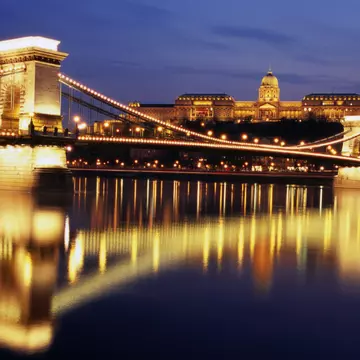
    If you like the idea of dining on the high waters but still remaining tethered to the bank (just in case), Spoon’s for you. It serves international fusion cuisine amid bright and breezy surrounds and the choices for vegetarians are great. You can’t beat the views of the castle and Chain Bridge.

    reviewed

  4. D

    Chefparade

    The best-known cookery school dealing with foreigners is Chefparade in Ferencváros. Course dates vary – consult the website – but they usually run from 10am to 1pm, including visiting a market and preparing a four-course lunch, and cost €50 per person. Courses at other times and of a longer duration can be organised in advance.

    reviewed

  5. E

    Auguszt Cukrászda

    Tucked away behind the Fény utca market and Mammut shopping mall, this is the original Auguszt cafe (there are newer branches) and only sells its own shop-made cakes (200Ft to 500Ft), pastries and biscuits. There’s limited seating on the 1st floor.

    reviewed

  6. F

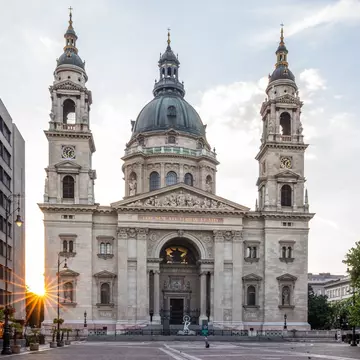
    Basilica of St Stephen

    Budapest’s neoclassical cathedral was built over the course of half a century and completed in 1905. Much of the interruption had to do with the fiasco in 1868 when the dome collapsed during a storm, and the structure had to be demolished and rebuilt from the ground up. The basilica is rather dark and gloomy inside, but take a trip to the top of the dome, which can be reached by lift and 146 steps and offers one of the best views in the city.

    To the right as you enter the basilica is a small treasury of ecclesiastical objects. Behind the main altar and to the left is the basilica’s major draw card: the Holy Right Chapel. It contains the Holy Right (also known as the…

    reviewed

  7. G

    Kárpátia

    A veritable palace of fin-de-siècle design dating back more than 130 years that has to be seen to be believed, the ‘Carpathia’ serves almost modern Hungarian and Transylvanian specialities in both a restaurant and less-expensive söröző (brasserie), and there is a lovely covered garden terrace. This is one place to hear authentic csárdás Gypsy music, played nightly from 6pm to 11pm.

    reviewed

  8. H

    Hospital in the Rock

    Part of the Castle Hill caves network, this newly opened attraction was used extensively during the siege of Budapest during WWII. It contains original medical equipment as well as some 70 wax figures and is visited on a guided half-hour tour. More interesting is the hour-long ‘full tour‘ (3000/1500/7000Ft), which includes a walk through a Cold War–era nuclear bunker.

    reviewed

  9. I

    Vittula

    Great (though tiny and very smoky) underground (both senses) bar just off the Big Ring Road, with international performances, cutting-edge DJs and some cheap Slovakian lager.

    reviewed

  10. J

    Szimpla

    This distressed-looking, very unflashy place remains one of the most popular drinking venues south of VI Liszt Ferenc tér, with live music Tuesday to Thursday evenings.

    reviewed

  11. Advertisement

  12. K

    Gellért

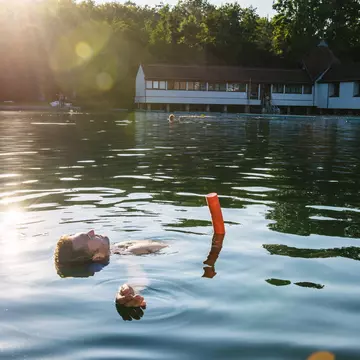
    Soaking in this art nouveau palace, open to men and women in separate sections, has been likened to taking a bath in a cathedral. The eight thermal pools range in temperature from 26°C to 38°C, and the water – high in calcium, magnesium and hydrogen carbonate – is good for pains in the joints, arthritis and blood circulation. The outdoor pools (open May to September) have a wave machine and nicely landscaped gardens. The cost of admission with a cabin is reduced to 2700Ft after 5pm from May to September; and from October to April after 5pm Monday to Friday, and after 2pm Saturday and Sunday. You get 400Ft back in you stay less than two hours on your daytime ticket.

    reviewed

  13. L

    Nyugati Train Station

    The large iron and glass structure on Nyugati tér (known as Marx tér until the early 1990s) is the Nyugati train station, built in 1877 by the Paris-based Eiffel Company. In the early 1970s a train actually crashed through the enormous glass screen on the main facade when its brakes failed, coming to rest at the 4 and 6 tram line. The old dining hall on the south side now houses one of the world’s most elegant McDonald’s.

    reviewed

  14. M

    Rudas

    These recently renovated baths are the most Turkish of all in Budapest, built in 1566, with an octagonal pool, domed cupola with coloured glass and massive columns. It’s a real zoo on mixed weekend nights, when bathing costumes are compulsory. Here you get 400Ft back if you leave within two hours after you arrive. If you're interested in just swimming, you can enter the renovated pool separately.

    reviewed

  15. N

    Új Sípos Halászkert

    This lovely, very traditional restaurant faces (and, in the warmer weather, has outside seating in) Óbuda’s most beautiful and historic square. Try the signature halászlé (fish soup; 1100Ft to 2200Ft), which comes in various guises. As the restaurant’s motto puts it so succinctly: Halászlében verhetetlen (You can’t beat fish soup).

    reviewed

  16. O

    Király

    The four pools here, with water temperatures of between 26°C and 40°C, are genuine Turkish baths erected in 1570 and have a wonderful skylit central dome (though the place is begging for a renovation). Here you get a whopping 1000/500Ft back from your admission deposit if you leave within two/three hours.

    reviewed

  17. P

    Pozsonyi Kisvendéglő

    Visit this neighbourhood restaurant on the corner of Pozsonyi út for the ultimate local Budapest experience: gargantuan portions of standard Hungarian favourites, rock-bottom prices and a cast of local characters. There's a bank of tables on the pavement in summer and simple set weekday menus for 650Ft

    reviewed

  18. Q

    Captain Cook Pub

    There’s not much to say about the CC except that it enjoys an enviable location diagonally opposite the basilica, the terrace is a delight in the warm weather, there are four beers on tap and the staff are welcoming and friendly. And for us, that’s sufficient.

    reviewed

  19. R

    Carpe Diem

    With its hammock seats, greenery and serene atmosphere, this small teahouse in Debrecen is an oasis on a pedestrian street dominated by concrete eyesores. It stocks teas from around the world for instant consumption or later enjoyment.

    reviewed

  20. S

    Castle Hill

    Castle Hill, a 1km-long limestone plateau towering 170m above the Danube, contains Budapest's most important medieval monuments and museums and is a Unesco World Heritage Site. It is the premier sight in the capital, and with its grand views and so many things to see, you should start here.

    Below is a 28km network of caves formed by thermal springs that were supposedly used by the Turks for military purposes, as air-raid shelters during WWII, and as a secret military installation during the Cold War.

    The walled area consists of two distinct parts: the Old Town to the north, where commoners lived in the Middle Ages (the current owners of the coveted burgher houses here are…

    reviewed

  21. Baradla Cave

    Baradla Cave has tours that depart year-round. The temperature at this level is usually about 10 degrees celcius with humidity over 95%, so be sure to bring a sweater along. Tours usually include a short organ recital or some other form of music in the Concert or Giants' Halls and, if the water is high enough, a boat ride on the Styx, an underground stream.

    Short tours lasting about one hour start at the Aggtelek entrance. A one-hour tour that covers a different section is available from the Jósvafő entrance near the Tengerszem.

    A two-hour 'middle tour' of the Jósvafő section departs from the Vörös-tó entrance; it ends at the one in Jósvafő. You can also buy…

    reviewed

  22. Advertisement

  23. Valley of the Women Wine Tasting

    Wine tasting is popular in the wine cellars of the evocatively named Valley of the Women Wine Tasting (Szépasszony-völgy). This is the place to sample Bull's Blood - one of very few reds produced in Eger - or any of the whites: Leányka, Olaszrizling and Hárslevelű from nearby Debrő. The choice of wine cellars can be a bit daunting and their characters can change, so walk around and have a look yourself.

    Cellar Nos 16, 17, 29 and 48 are always popular; for schmaltzy Gypsy music, try No 32 or 42. But if you're interested in good wine, visit cellar Nos 5, 18 and 31. Be careful, though; those glasses (about Ft50 to Ft80) go down easily. Hours are erratic, but a few…

    reviewed

  24. T

    Hungarian National Museum

    The National Museum (a neoclassical structure, purpose-built in 1847) houses Hungary’s most important collection of historical relics. Exhibits trace the history of the Carpathian Basin from earliest times to the end of the Avar period in the early 9th century (on the 1st floor); and the Magyar people and the nation from the conquest of the Carpathian basin to the fall of communism (on the 2nd floor). In the basement, a lapidarium has finds from Roman, medieval and early modern times. Look out for the enormous 3rd-century Roman mosaic from Balácapuszta, near Veszprém; the crimson silk royal coronation robe (or mantle) stitched by nuns in 1031; a reconstructed 3rd-century…

    reviewed

  25. U

    Great Synagogue

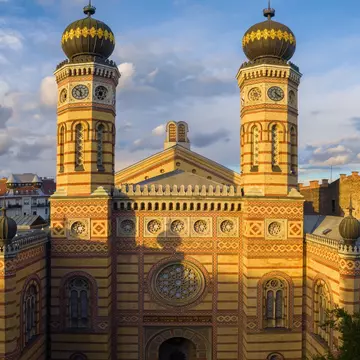
    The Great Synagogue is the largest Jewish house of worship in the world outside New York City and can seat 3000. Built in 1859 according to the designs of Frigyes Feszl, the synagogue contains both Romantic-style and Moorish architectural elements. It was renovated largely with private donations, including a cool US$5 million from fragrance and cosmetics baroness Estée Lauder, in the 1990s.On the synagogue’s north side, the Holocaust Memorial (opposite VII Wesselényi utca 6) stands over the mass graves of those murdered by the Nazis in 1944–45. On the leaves of the metal ‘tree of life’ are the family names of some of the hundreds of thousands of victims.

    reviewed

  26. V

    Ethnography Museum

    Visitors are offered an easy introduction to traditional Hungarian life at this sprawling museum opposite the parliament building with thousands of displays in 13 rooms on the 1st floor. The mock-ups of peasant houses from the Őrség and Sárköz regions of Western and Southern Transdanubia are well done, and there are also some priceless objects collected from Transdanubia. On the 2nd floor, most of the temporary exhibitions deal with other peoples of Europe and farther afield: Africa, Asia, Oceania and the Americas. The building itself was designed in 1893 to house the Supreme Court; note the ceiling fresco in the lobby of Justice by Károly Lotz.

    reviewed

  27. W

    Great Church

    Many of Debrecen's big sights are at the northern end of Piac utca, including the yellow neoclassical Great Church. Built in 1821, it has become so synonymous with Debrecen that mirages of its twin clock towers were reportedly seen on the Great Plain early last century.

    Accommodating some 3000 people, the Great Church is Hungary's largest Protestant church, and it was here that Lajos Kossuth read the Declaration of Independence from Austria on 14 April 1849. The nave is rather plain and austere aside from the magnificent organ in the loft behind the pulpit. Climb the 210 steps to the top of the west clock tower for grand views over the city.

    reviewed