Sights in Hungary
-
A
House of Terror
This startling museum is housed in what was once the headquarters of the dreaded ÁVH secret police. The building has a ghastly history, for it was here that many activists of every political persuasion that was out of fashion before and after WWII were taken for interrogation and torture. The walls were apparently double thickness to mute the screams. A plaque on the outside of this house of shame reads in part: ‘We cannot forget the horror of terror, and the victims will always be remembered’.
The museum focuses on the crimes and atrocities committed by both Hungary’s fascist and Stalinist regimes in a permanent exhibition called Double Occupation. But the years…
reviewed
-
B
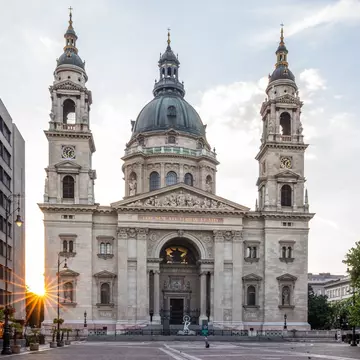
Basilica of St Stephen
Budapest’s neoclassical cathedral was built over the course of half a century and completed in 1905. Much of the interruption had to do with the fiasco in 1868 when the dome collapsed during a storm, and the structure had to be demolished and rebuilt from the ground up. The basilica is rather dark and gloomy inside, but take a trip to the top of the dome, which can be reached by lift and 146 steps and offers one of the best views in the city.
To the right as you enter the basilica is a small treasury of ecclesiastical objects. Behind the main altar and to the left is the basilica’s major draw card: the Holy Right Chapel. It contains the Holy Right (also known as the…
reviewed
-
C
Hospital in the Rock
Part of the Castle Hill caves network, this newly opened attraction was used extensively during the siege of Budapest during WWII. It contains original medical equipment as well as some 70 wax figures and is visited on a guided half-hour tour. More interesting is the hour-long ‘full tour‘ (3000/1500/7000Ft), which includes a walk through a Cold War–era nuclear bunker.
reviewed
-
D
Nyugati Train Station
The large iron and glass structure on Nyugati tér (known as Marx tér until the early 1990s) is the Nyugati train station, built in 1877 by the Paris-based Eiffel Company. In the early 1970s a train actually crashed through the enormous glass screen on the main facade when its brakes failed, coming to rest at the 4 and 6 tram line. The old dining hall on the south side now houses one of the world’s most elegant McDonald’s.
reviewed
-
E
Castle Hill
Castle Hill, a 1km-long limestone plateau towering 170m above the Danube, contains Budapest's most important medieval monuments and museums and is a Unesco World Heritage Site. It is the premier sight in the capital, and with its grand views and so many things to see, you should start here.
Below is a 28km network of caves formed by thermal springs that were supposedly used by the Turks for military purposes, as air-raid shelters during WWII, and as a secret military installation during the Cold War.
The walled area consists of two distinct parts: the Old Town to the north, where commoners lived in the Middle Ages (the current owners of the coveted burgher houses here are…
reviewed
-
Baradla Cave
Baradla Cave has tours that depart year-round. The temperature at this level is usually about 10 degrees celcius with humidity over 95%, so be sure to bring a sweater along. Tours usually include a short organ recital or some other form of music in the Concert or Giants' Halls and, if the water is high enough, a boat ride on the Styx, an underground stream.
Short tours lasting about one hour start at the Aggtelek entrance. A one-hour tour that covers a different section is available from the Jósvafő entrance near the Tengerszem.
A two-hour 'middle tour' of the Jósvafő section departs from the Vörös-tó entrance; it ends at the one in Jósvafő. You can also buy…
reviewed
-
F
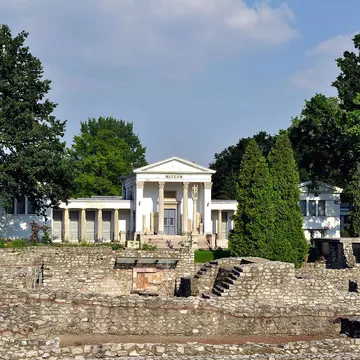
Hungarian National Museum
The National Museum (a neoclassical structure, purpose-built in 1847) houses Hungary’s most important collection of historical relics. Exhibits trace the history of the Carpathian Basin from earliest times to the end of the Avar period in the early 9th century (on the 1st floor); and the Magyar people and the nation from the conquest of the Carpathian basin to the fall of communism (on the 2nd floor). In the basement, a lapidarium has finds from Roman, medieval and early modern times. Look out for the enormous 3rd-century Roman mosaic from Balácapuszta, near Veszprém; the crimson silk royal coronation robe (or mantle) stitched by nuns in 1031; a reconstructed 3rd-century…
reviewed
-
G
Great Synagogue
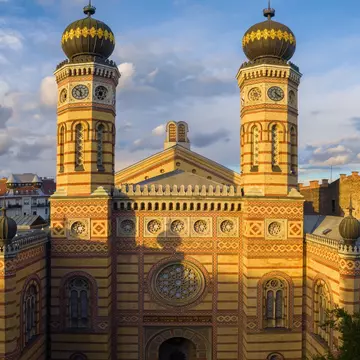
The Great Synagogue is the largest Jewish house of worship in the world outside New York City and can seat 3000. Built in 1859 according to the designs of Frigyes Feszl, the synagogue contains both Romantic-style and Moorish architectural elements. It was renovated largely with private donations, including a cool US$5 million from fragrance and cosmetics baroness Estée Lauder, in the 1990s.On the synagogue’s north side, the Holocaust Memorial (opposite VII Wesselényi utca 6) stands over the mass graves of those murdered by the Nazis in 1944–45. On the leaves of the metal ‘tree of life’ are the family names of some of the hundreds of thousands of victims.
reviewed
-
H
Ethnography Museum
Visitors are offered an easy introduction to traditional Hungarian life at this sprawling museum opposite the parliament building with thousands of displays in 13 rooms on the 1st floor. The mock-ups of peasant houses from the Őrség and Sárköz regions of Western and Southern Transdanubia are well done, and there are also some priceless objects collected from Transdanubia. On the 2nd floor, most of the temporary exhibitions deal with other peoples of Europe and farther afield: Africa, Asia, Oceania and the Americas. The building itself was designed in 1893 to house the Supreme Court; note the ceiling fresco in the lobby of Justice by Károly Lotz.
reviewed
-
I
Great Church
Many of Debrecen's big sights are at the northern end of Piac utca, including the yellow neoclassical Great Church. Built in 1821, it has become so synonymous with Debrecen that mirages of its twin clock towers were reportedly seen on the Great Plain early last century.
Accommodating some 3000 people, the Great Church is Hungary's largest Protestant church, and it was here that Lajos Kossuth read the Declaration of Independence from Austria on 14 April 1849. The nave is rather plain and austere aside from the magnificent organ in the loft behind the pulpit. Climb the 210 steps to the top of the west clock tower for grand views over the city.
reviewed
Advertisement
-
J
Ludwig Museum of Contemporary Art
Housed in the architecturally controversial Palace of Arts opposite the National Theatre, the Ludwig Museum is Hungary’s most important collector and exhibitor of international contemporary art. Works by American, Russian, German and French artists span the past 50 years, while Hungarian, Czech, Slovakian, Romanian, Polish and Slovenian works date from the 1990s onward. The museum also holds frequent, cutting edge, temporary exhibitions.
reviewed
-
K
Zwack Unicum Museum & Visitor Centre
If you really can’t get enough of Unicum – the thick, brown medicinal-tasting bitter aperitif made from 40 herbs, clocking in at 42% alcohol, supposedly named by Franz Joseph himself – visit this very commercial museum tracing the history of the product since it was first made in 1790 and inviting visitors to buy big at its sample store (mintabolt). Enter from Dandár utca.
reviewed
-
L
Bedő House
Just around the corner from Kossuth Lajos tér is this stunning art nouveau apartment block deigned by Emil Vidor and built in 1903. Now a shrine to Hungarian Secessionist interiors, its three floors are crammed with furniture, porcelain, ironwork, paintings and objets d’art. The lovely Art Nouveau Café is on the ground floor.
reviewed
-
M
Palace of Art
The Palace of Art is among the city’s largest exhibition spaces and now focuses on contemporary visual arts, with some five to six major exhibitions staged annually. Go for the scrumptious venue alone. Concerts are sometimes staged here as well.
reviewed
-
N
Gellért Baths
The city's most famous thermal spa is the Gellért Baths below Gellért Hill. Soaking in this Art Nouveau palace has been likened to taking a bath in a cathedral. The pools here maintain a constant temperature of 44°C (111°F).
reviewed
-
O
Church of St Anne
The 18th-century baroque Church of St Anne has one of the most eye-catching interiors of any church in Budapest.
reviewed
-
P
Buda Hills
With 'peaks' reaching over 500m, a comprehensive system of trails and no lack of unusual conveyances, the Buda Hills make up what is the city's playground, and they're a welcome respite from hot, dusty Pest in the warmer months. Indeed, some well-heeled Budapest families have summer homes here. If you're planning to ramble, take along a copy of Cartographia's 1: 30,000 A Budai-hegység map (No 6), available from bookshops and newsstands throughout the city.
Apart from the Béla Bartók Memorial House, there are very few sights per se, though you might want to poke your head into one of the Buda Hills' several caves.
With all the unusual transport options, heading for the…
reviewed
-
Q
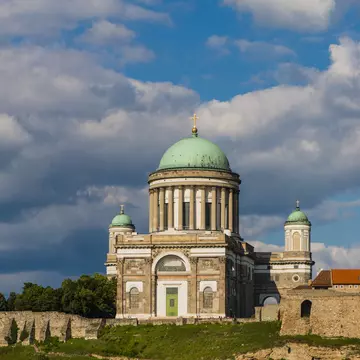
Esztergom Basilica
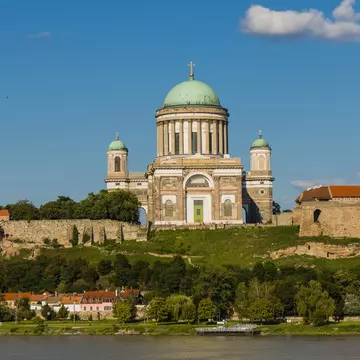
The Esztergom Basilica, the largest church in Hungary, is on Castle Hill, measuring 117m long and 47m wide. Its 72m-high central dome can be seen for many kilometres around. The building of the present neoclassical church was begun in 1822 on the site of a 12th-century one destroyed by the Turks. József Hild, who designed the cathedral at Eger, was involved in the final stages, and the basilica was consecrated in 1856 with a sung Mass composed by Franz Liszt.
The red-and-white marble Bakócz Chapel on the south side of the basilica is a splendid example of Italian Renaissance stone-carving and sculpture. It was commissioned by Archbishop Tamás Bakócz who, having failed in…
reviewed
-
R
Raoul Wallenberg Memorial
A statue called the Serpent Slayer in honour of Raoul Wallenberg by Pál Pátzay stands in XIII Szent István Park. Of all the 'righteous gentiles' honoured by Jews around the world, the most revered is Raoul Wallenberg, the Swedish diplomat and businessman who rescued as many as 35,000 Hungarian Jews during WWII.
Wallenberg, who came from a long line of bankers and diplomats, began working in 1936 for a trading firm whose president was a Hungarian Jew. In July 1944 the Swedish Foreign Ministry, at the request of Jewish and refugee organisations in the USA, sent the 32-year-old Wallenberg on a rescue mission to Budapest as an attaché to the embassy there. By that time,…
reviewed
-
S
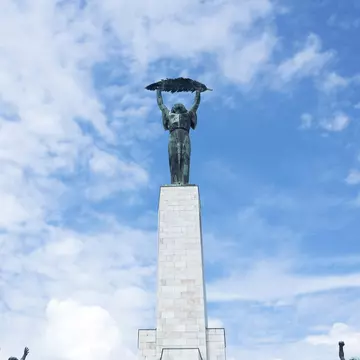
Gellért Hill & The Tabán
Gellért Hill, a rocky hill southeast of the Castle District, is crowned with a fortress and the Independence Monument. From Gellért Hill, you can't beat the views of the Royal Palace or the Danube and its fine bridges, and Jubilee Park on the south side is an ideal spot for a picnic. The Tabán, the leafy area between Gellért and Castle Hills, stretching northwest as far as Déli train station, is associated with the Serbs, who settled here after fleeing from the Turks in the early 18th century.
Plaques on I Döbrentei utca mark the water level of the Danube during two devastating floods in 1775 and 1838.
This neighbourhood later became known for its restaurants and…
reviewed
Advertisement
-
T
Fő Utca
Fő utca is the arrow-straight ‘Main St’ running from Clark Ádám tér through Víziváros; it dates from Roman times. At the former Capuchin church, used as a mosque during the Turkish occupation, you can see the remains of an Islamic-style ogee-arched door and window on the southern side. Around the corner there’s the seal of King Matthias Corvinus – a raven with a ring in its beak – and a little square with the delightful Lajos Fountain (Lajos kútja; 1904) called Corvin tér. The Eclectic building on the north side at No 8 is the Buda Concert Hall. To the north the Iron Stump is the odd-looking tree trunk into which itinerant artisans and merchants would drive a nail to mark…
reviewed
-
U
Memento Park
Home to almost four dozen statues, busts and plaques of Lenin, Marx, Béla Kun and ‘heroic’ workers such as have ended up on trash heaps in other former socialist countries, the recently renamed Memento Park, 10km southwest of the city centre, is a mind-blowing place to visit. Ogle the socialist realism and try to imagine that at least four of these monstrous relics were erected as recently as the late 1980s; a few, including the Béla Kun memorial of our ‘hero’ in a crowd by fence-sitting sculptor Imre Varga were still in place when this author moved to Budapest in early 1992. New attractions here are the replicated remains of Stalin’s boots, all that was left after a…
reviewed
-
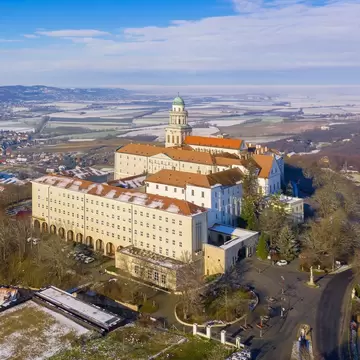
Abbey Church
This twin-spired, ochre-coloured Abbey Church was built in 1754 on the site of King Andrew's church and contains fantastic altars, pulpits and screens carved between 1753 and 1779 by an Austrian lay brother named Sebastian Stuhlhof. They are baroque-rococo masterpieces and all are richly symbolic.
With your back to the sumptuous main altar (the saint with the broken chalice and snake is Benedict, the founder of Western monasticism) and the Abbot's throne, look right to the side altar dedicated to Mary. The large angel kneeling on the right is said to represent Stuhlhof's fiancée, a fisherman's daughter who died in her youth. On the Altar of the Sacred Heart across the…
reviewed
-
V
Christian Museum
Just north of the Italianate Watertown Parish Church (Víziváros plébániatemplom; 1738), which is vaguely reminiscent of the glorious Minorite church in Eger, is the former Bishop's Palace. Today it houses the Christian Museum - the finest collection of medieval religious art in Hungary and one of the best museums in the country.
Established by Archbishop János Simor in 1875, it contains Hungarian Gothic triptychs and altarpieces; later works by German, Dutch and Italian masters; tapestries; and what is arguably the most beautiful object in the nation: the sublime Holy Sepulchre of Garamszentbenedek (1480), a sort of wheeled cart in the shape of a cathedral, with…
reviewed
-
W
Crown Of St Stephen
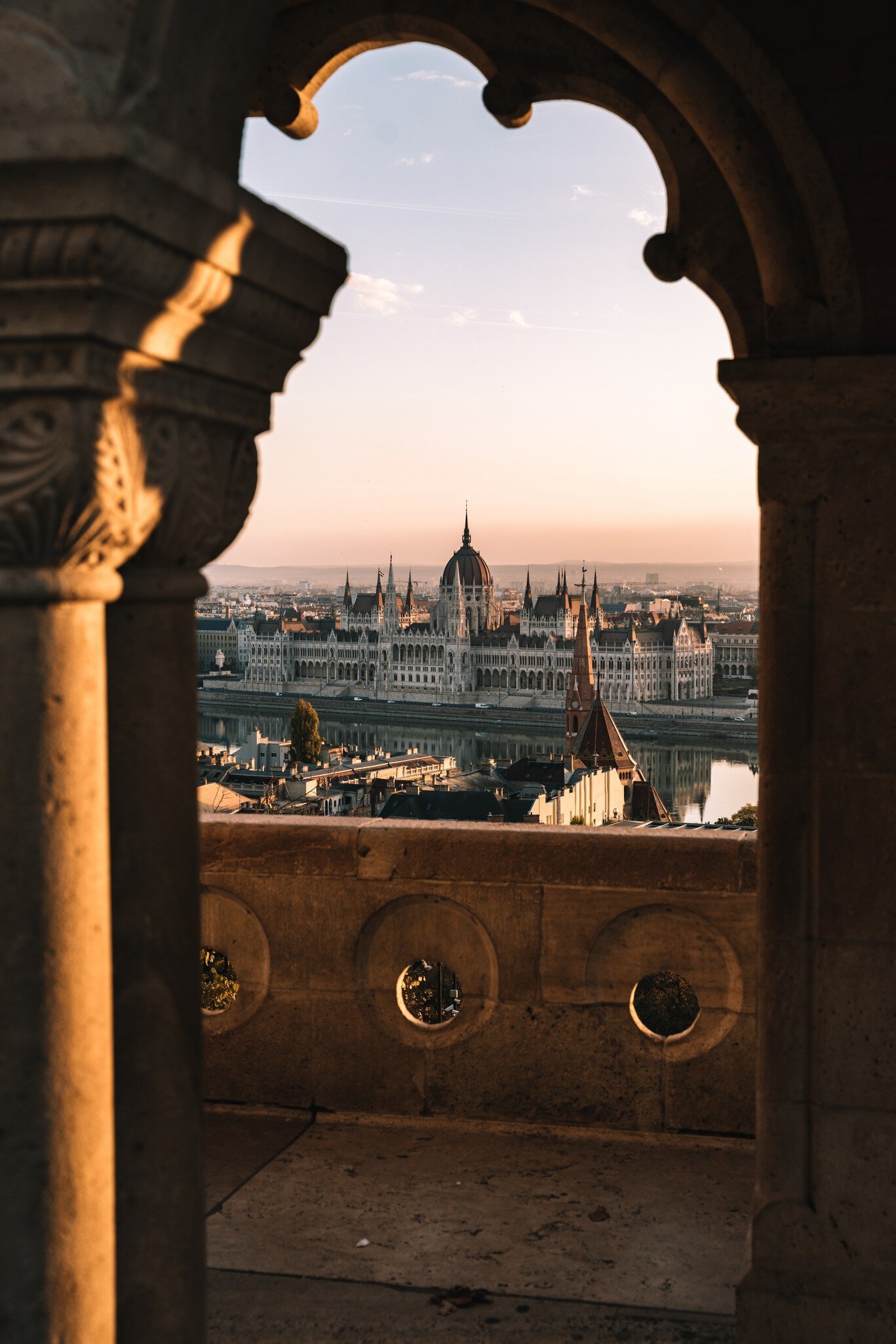
Legend tells us that it was Asztrik, the first abbot of the Benedictine monastery at Pannonhalma in Western Transdanubia, who presented a crown to Stephen as a gift from Pope Sylvester II around the year 1000, thus legitimising the new king's rule and assuring his loyalty to Rome over Constantinople. It's a nice story but has nothing to do with the object on display in the Parliament building.
That two-part crown, with its characteristic bent cross, pendants hanging on either side and enamelled plaques of the Apostles, dates from the 12th century. Regardless of its provenance, the Crown of St Stephen has become the very symbol of the Hungarian nation.
The crown has…
reviewed