Getting around
A thick book of timetables for all domestic buses and trains is published every year by Edita (www.turisti.fi), based in Helsinki. While all of this information is on the Internet, if you like having it at your fingertips, the tome costs €28.
A great journey planner for Finland's public transport network is online at www.matka.fi.
Contents
Boat
Lake & river crossings
Lake and river ferries operate during summer. Departures tend to be sporadic from May to mid-June and during August, but are very steady from mid-June to the end of July. These ferries are more than mere transport - a lake cruise, particularly from one town to another, is a bona fide Finnish experience.
Apart from two-hour cruises starting from towns such as Jyväskylä, Kuopio, Savonlinna, Tampere, Mikkeli, you can actually cover half of Finland on scheduled boat routes. The most popular routes are Tampere-Hämeenlinna, Savonlinna- Kuopio, Lahti-Jyväskylä and Joensuu- Koli-Nurmes.
Sea ferries
Several kinds of ferries operate between various islands and coastal towns, especially near Turku and in the province of Åland.
Several cruise companies run express boats to interesting islands off the coast, particularly along the south coast. From Helsinki the foremost tour is the short trip to Suomenlinna. Likewise, there are summer cruises aboard historic steamships to mainland towns that may be reached more by car, bus or train. Popular sea routes are Turku-Naantali and Helsinki-Porvoo.
For ferries, www.liikkujat.com is a useful timetable website.
Hitching
Relatively few Finns like picking up hitchhikers but the few friendly ones do it with enthusiasm. Drivers will ask, Minne matka? (Where are you going?), so you just tell them your destination. It's fairly common in remote areas where there may only be one bus a day.
Hitching between Lapland and Sweden or Norway is only really recommended from June to August. Carry waterproof gear and expect long waits. Being positive also helps; getting stranded on an Artic Sea fjord is a unique experience that you will probably never forget. There's the midnight sun, fresh winds and abundant birdlife to enjoy while you wait…and wait…and wait…
Bus & tram
Bus
Long-distance buses in Finland are efficient and run on schedule. They're comfortable, and the service is comprehensive, covering 90% of Finland's roads. Compared with Finnish trains, buses are better for travelling from village to village, while trains are more convenient and cheaper for fast travel between the big centres. There are two kinds of intercity bus services: vakiovuorot (regular buses) stopping frequently at towns and villages, and pikavuorot (express buses) travelling swiftly between cities. Because there are few motorways in Finland, even express buses aren't that fast, covering 100km in less than two hours and 400km in about six hours.
Long-distance and express bus travel ticketing is handled by Matkahuolto (0200-4000; www.matkahuolto.fi), whose excellent website has all timetables.
Each town and municipal centre has a linja-autoasema (bus terminal), with local timetables displayed (lähtevät is departures, saapuvat arrivals). Bus schedules change often so always double-check - particularly in rural areas where there may be only one weekly bus on some routes.
Most buses run hourly Monday to Friday between major towns. Restricted services operate on Saturday and public holidays. During summer, when school services are suspended, buses are dramatically reduced. The Matkahuolto offices work normal business hours, but you can always buy tickets on the buses.
Car & motorcycle
Driving around Finland is hassle-free. Finnish drivers are remarkably considerate and polite - rarely will you hear a horn blast in anger and 'road rage' is almost an unknown phenomenon. Finland's road network is excellent and well signposted between centres, although there are only a few motorways around major cities. When approaching a town or city, look for signs saying keskusta (town centre), where you can usually find parking. Only in remote forests and rural areas will you find unsurfaced roads or dirt tracks. There are no road tolls.
Petrol is much more expensive than in the USA and generally above average compared with other European countries.
Hire
Car rental in Finland is more expensive than elsewhere in Europe, but between a group of three or four it can work out at a reasonable cost. From the major rental companies a small car, such as a VW Polo or Renault Clio, costs from €60 per day with 100km free, and €0.35 per kilometre thereafter, or €75 to €90 with unlimited kilometres. As ever, there are much cheaper deals online. At the time of writing, www.webcarhire.com was a reliable operator offering excellent rates.
Car-rental companies with offices in many Finnish cities include Budget (09-686 6500; www.budget.fi), Hertz (0800 112 233; www.hertz.fi), Europcar (Helsinki 09-7515 5444; www.europcar.fi) and Avis (Helsinki 09-441 155; www.avis.fi). There are also local operators, especially in Helsinki.
Train
Trains of the State Railways of Finland (Valtion Rautatiet or VR) are clean, reliable and usually on schedule. They are fast, efficient and the best form of public transport for covering major routes such as Helsinki to Tampere, Kuopio, Oulu or Rovaniemi. On longer routes there are two- and three-bed sleepers and special car-carriers.
There are three main train lines: the Pohjanmaa (West) line runs between Helsinki and Oulu, and continues to Kemijärvi in Lapland; the Karelian route runs from Helsinki to Nurmes via Joensuu; and the Savonian route runs from Kouvola in the south to Kajaani, via Kuopio andIisalmi.
VR Ltd Finnish Railways (0600-41902; www.vr.fi) has its own travel bureau at main stations and can advise on all schedules and tickets. Prices, timetables and other information can be found on VR's website.
Classes
VR has passenger trains in two classes - 1st and 2nd. Most carriages are open 2nd-class carriages with soft chairs. Many trains have just one 1st-class carriage, containing small compartments, each seating six passengers. On longer routes there are night trains with single, two- and three-bed sleeping berths.
The main classes of trains are the high-speed Pendolino (the fastest and most expensive class), fast Intercity (IC), Express, and Regional trains. Regional trains are the cheapest and slowest services. They have only 2nd-class carriages, do not require seat reservations and stop frequently.
Train ticket costs
Different classes of trains are priced differently (Regional being the cheapest, Pendolino the most expensive), and a supplement is charged for travel on IC and Pendolino trains. A one-way ticket for a 100km express train journey costs approximately €13/19 in 2nd/1st class.
Children under 17 pay half fare and children aged under six travel free (but without a seat). A child travels free with every adult on long-distance trips, and there are also discounts for seniors, local students, and any group of three or more adults travelling together.
If you purchase your ticket from the conductor after boarding from a station where the ticket office was open, a €3 'penalty' is charged (€6 on Pendolino). The 1st-class fare is 1½ times the price of a 2nd-class ticket, and a return fare is about 10% less than two one-way tickets.
Travel documents
Reservations
Seat reservations are included in the ticket price on all trains except regional services. Advance reservations are mandatory on IC and the high-speed Pendolino trains, and are advised for travel on Express trains during summer.
Air
Airlines in Finland
Finnair is the principal domestic carrier, and runs a comprehensive network from Helsinki, and from a couple of regional hubs. Standard prices are fairly expensive, but Happy Hour rates, which can be booked up to a week in advance, offer significant savings. Also check the www.finnair.fi website for äkkilähdot (quick getaway) offers. Children under 12 and seniors receive a 70% discount. If you're between 17 and 24 the youth discount is 50%, but even better value is the youth stand-by fare. Available to those aged between 17 and 24, you need to arrive at the airport one hour before the flight of your choice and wait to see if there are any seats. Under this plan, any one-way direct flight costs €64 to €79 - a huge saving from, say, Helsinki to Rovaniemi (cheaper than the train). If you don't get on your desired flight, your money is refunded.
Special discounts are offered on some routes in summer, and 'snow fares' give discounts of 50% to 70% on selected flights between Helsinki and Lapland during nonholiday periods from January to May.
If you book in advance, the budget carrier Blue1 offers the sharpest rates on routes from Helsinki to a range of Finnish cities, with prices as low as €33 one way.
Airlines flying domestically:
Blue1 (06000 25831; www.blue1.com) Budget flights from Helsinki to Kuopio, Oulu, Rovaniemi and Vaasa.
European Executive Express (02 415 4957; www.european.se) Flights between Åland and Turku, as well as summer ones between Helsinki-Savonlinna/Mikkeli.
Finnair (81881; www.finnair.com) Extensive domestic network includes flights by subsidiaries FinnComm and Golden Air.
Local transport
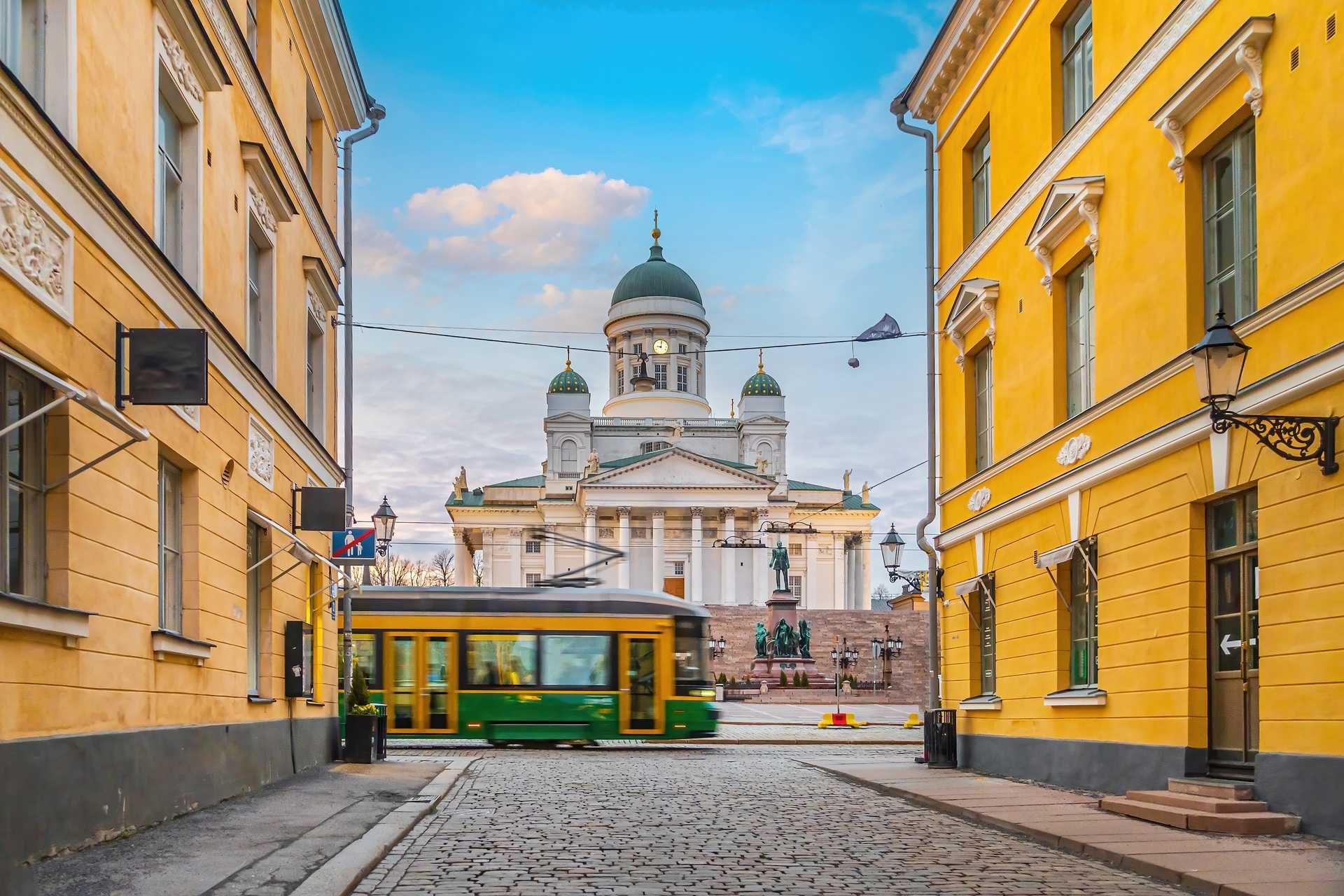
The only tram and metro networks are in Helsinki. There is a bus service in all Finnish cities and towns, with departures every 10 to 15 minutes in Helsinki and other large towns, and every 30 minutes in smaller towns. Fares are usually around €2.50, payable to the driver.
Bicycle
Finland is largely a flat country and as bicycle-friendly as any country you'll find, with plenty of bike paths that cyclists share with inline skaters in summer. The only drawback to an extensive tour is distance, but bikes can be taken on most trains, buses and ferries. Åland is particularly good for cycling. Helmets are required by law.
Finland
Things to do
- All things to do (1,219)
- Activities (180)
- Entertainment (207)
- Restaurants (325)
- Shopping (87)
- Sights (417)
- Tours (3)