go to content go to search box go to global site navigation

Czech Republic

Sights in Czech Republic

‹ Prev

of 14

  1. A

    Charles Bridge

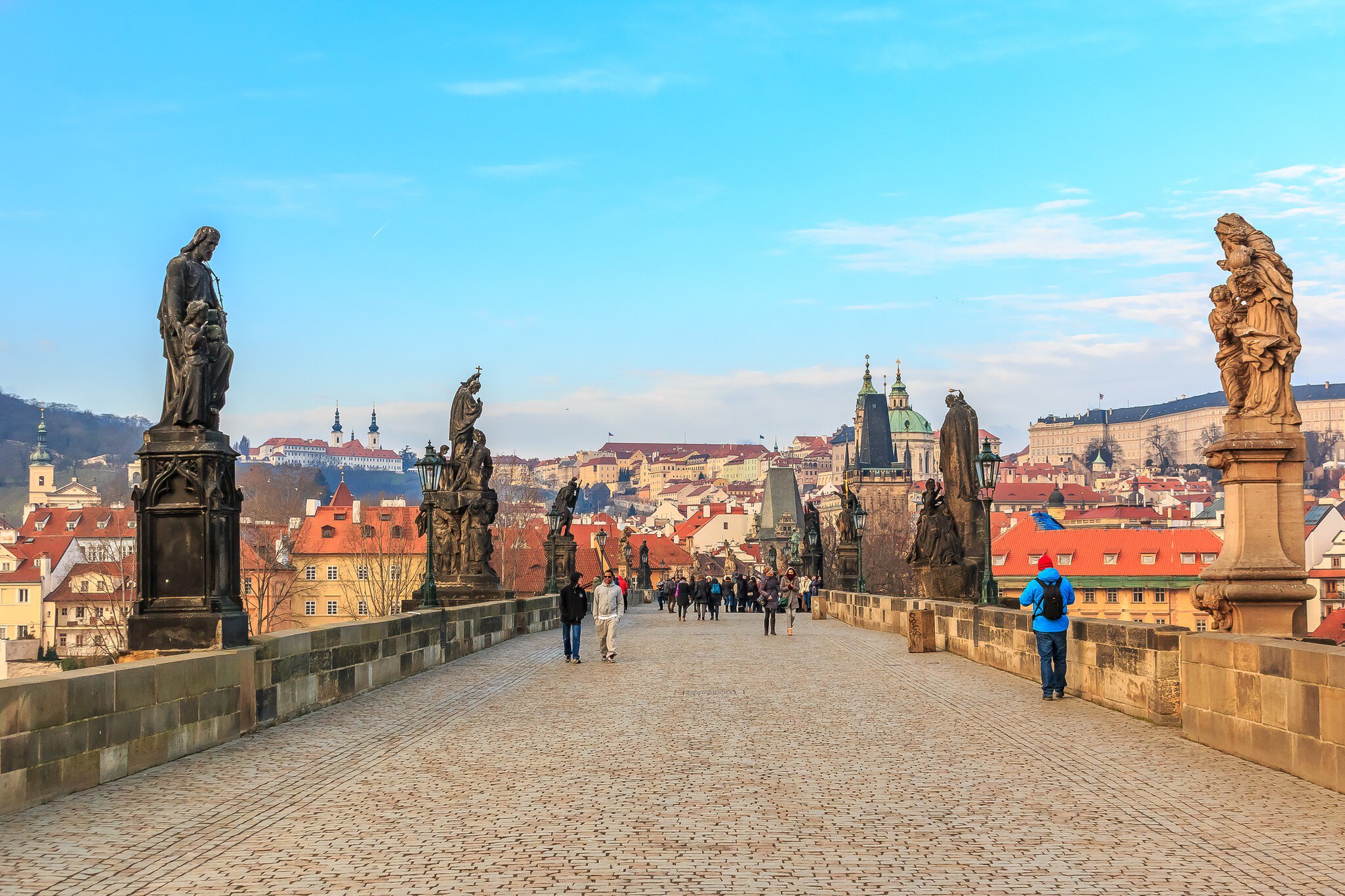
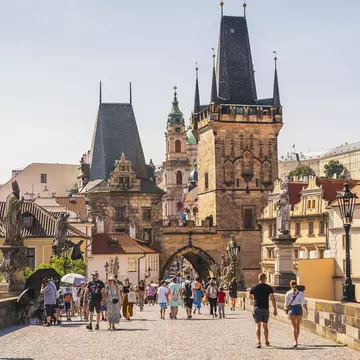
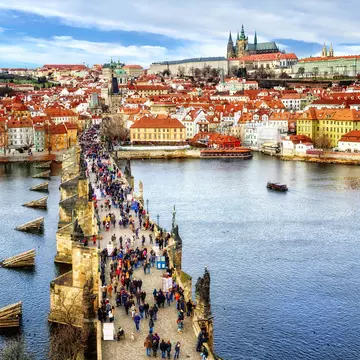
    Strolling across Charles Bridge is everybody’s favourite Prague activity. However, by 9am it’s a 500m-long fairground, with an army of tourists squeezing through a gauntlet of hawkers and buskers beneath the impassive gaze of the baroque statues that line the parapets. If you want to experience the bridge at its most atmospheric try to visit it at dawn.

    In 1357 Charles IV commissioned Peter Parler (the architect of St Vitus Cathedral) to replace the 12th-century Judith Bridge, which had been washed away by floods in 1342. (You can see the only surviving arch of the Judith Bridge by taking a boat trip with Prague Venice)

    The new bridge was completed in 1390, and took…

    reviewed

  2. B

    Astronomical Clock

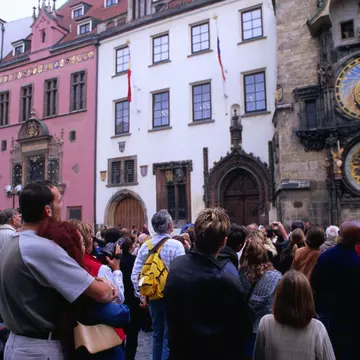
    Ironically, if you wish to tell the time in the Old Town Square, it's easier to look at the clock above this, because this 1490 mechanical marvel is tricky to decipher. The clock's creator, Master Hanuš, was allegedly blinded so he could not duplicate the clock elsewhere, although this is undoubtedly a myth.

    reviewed

  3. C

    Mucha Museum

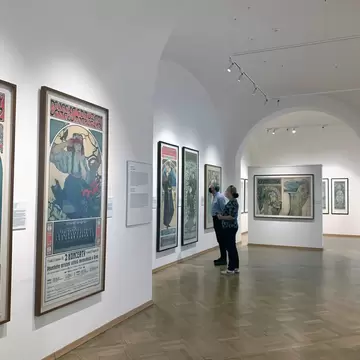
    This fascinating (and busy) museum features the sensuous art nouveau posters, paintings and decorative panels of Alfons Mucha (1860–1939), as well as many sketches, photographs and other memorabilia. The exhibits include countless artworks showing Mucha’s trademark Slavic maidens with flowing hair and piercing blue eyes, bearing symbolic garlands and linden boughs.

    There are also photos of the artist’s Paris studio, one of which shows a trouserless Gaugin playing the harmonium; a powerful canvas entitled Old Woman in Winter; and the original of the 1894 poster of actress Sarah Bernhardt as Giselda, which shot him to international fame. The fascinating 30-minute…

    reviewed

  4. D

    Cathedral of St Barbara

    Kutná Hora’s greatest monument is the Gothic Cathedral of St Barbara. Rivalling Prague’s St Vitus in size and magnificence, its soaring nave culminates in elegant, six-petalled ribbed vaulting. Work was started in 1380, interrupted during the Hussite Wars and abandoned in 1558 when the silver began to run out. It was finally completed in neogothic style at the end of the 19th century. The ambulatory chapels preserve some original 15th-century frescoes, some of them showing miners at work. Take a walk around the outside of the church, too; the terrace at the east end enjoys the finest view in town.

    reviewed

  5. E

    Vyšehrad Citadel

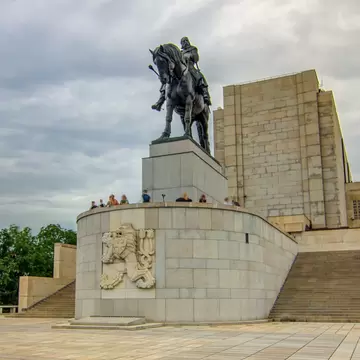
    The Vyšehrad Citadel refers to the complex of buildings and structures atop Vyšehrad Hill and that have played a role in Czech history for over 1,000 years. While most structures date from the 18th century, the citadel is still viewed as the city’s spiritual home. The sights are spread out over a wide area, with commanding views.

    reviewed

  6. F

    Golden Lane

    This picturesque alley runs along the northern wall of the castle. Its tiny, colourful cottages were built in the 16th century for the sharpshooters of the castle guard, but were later used by goldsmiths. In the 19th and early 20th centuries they were occupied by artists, including the writer Franz Kafka (who stayed at his sister’s house at No 22 from 1916 to 1917).

    The cottages have been restored to show a variety of former uses. One is a goldsmith's workshop, another a tavern, and one the home of celebrated Prague fortune teller Matylda Průšová who died at the hands of the Gestapo during WWII; Kafka's cottage is now a book and souvenir shop. The most evocative is No…

    reviewed

  7. G

    Letná Gardens & Terrace

    Letná is a vast open space between Milady Horáková and the river, with a parade ground to the north and a peaceful park, the Letná Gardens (Letenské sady), in the south, offering picture-postcard views over the city and its bridges. In summer you’ll find an open-air beer garden. In 1261 Přemysl Otakar II held his coronation celebrations here, and during communist times, Letná was the site of Moscow-style May Day military parades. In 1989 around 750,000 people gathered here in support of the Velvet Revolution. In 2008, the far northwestern corner of the park was torn up to build the enormous Blanka Tunnel, part of Prague’s future ring-road system. When completed…

    reviewed

  8. H

    New Jewish Cemetery

    Franz Kafka is buried in this cemetery, which opened around 1890 when the older Jewish cemetery – now at the foot of the TV Tower – was closed. To find Kafka’s grave, follow the main avenue east (signposted), turn right at row 21, then left at the wall; it’s at the end of the ‘block’. Fans make a pilgrimage on 3 June, the anniversary of his death.

    The entrance is beside Želivského metro station; men should cover their heads (yarmulkes are available at the gate). Last admission is 30 minutes before closing.

    reviewed

  9. I

    Horní Náměstí

    The splendid, polymorphous town hall (radnice) in the middle of Horní Náměstí was built in 1378, though its present architectural style and needlelike tower date from 1607. Note the oriel window of the 15th-century chapel on the south side and don't miss the astronomical clock on the north side, remodelled in communist style so that each hour is announced by ideologically pure workers instead of pious saints. The best display is at midday.

    The square is surrounded by a jaw-dropping roll call of historic façades and contains two of the city's six baroque fountains. The Hercules fountain (Herkulova kašna) dates from 1688 and features the muscular Greek hero standing…

    reviewed

  10. J

    Vyšehrad Cemetery

    Vyšehrad Cemetery is a main attraction for many visitors, being the final resting place for dozens of Czech luminaries, including Antonín Dvořák, Bedřich Smetana and Alfons Mucha. Many tombs and headstones are works of art – Dvořák’s is a sculpture by Ladislav Šaloun, the art nouveau sculptor who created the Jan Hus monument in Old Town Square.

    reviewed

  11. Advertisement

  12. K

    Church of Our Lady Before Týn

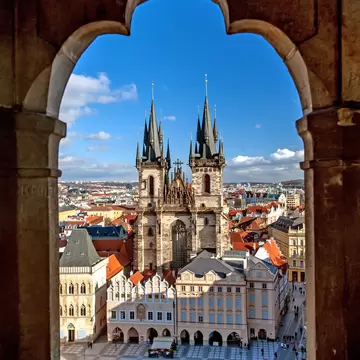
    Its distinctive twin Gothic spires make the Týn Church an unmistakable Old Town landmark. Like something out of a 15th-century - and probably slightly cruel - fairy tale, they loom over the Old Town Square, decorated with a golden image of the Virigin Mary made in the 1620s from the melted down Hussite chalice that previously adorned the church.

    It takes some imagination to visualise the original church in its entirety because it’s partly hidden behind the four-storey Týn School (not a Habsburg plot to obscure this former Hussite stronghold, but almost contemporaneous with it). The church’s name originates from the Týn Courtyard behind the church.

    Though…

    reviewed

  13. L

    John Lennon Wall

    After his murder on 8 December 1980 John Lennon became a pacifist hero for many young Czechs. An image of Lennon was painted on a wall in a secluded square opposite the French Embassy (there is a niche on the wall that looks like a tombstone), along with political graffiti and Beatles lyrics.

    Despite repeated coats of whitewash, the secret police never managed to keep it clean for long, and the Lennon Wall became a political focus for Prague youth (most Western pop music was banned by the communists, and some Czech musicians were even jailed for playing it).

    Post-1989 weathering and lightweight graffiti ate away at the political messages and images, until little remained…

    reviewed

  14. M

    Sedlec Ossuary

    When the Schwarzenberg family purchased Sedlec monastery in 1870 they allowed a local woodcarver to get creative with the bones that had been piled in the crypt for centuries. But this was no piddling little heap of bones: it was the remains of no fewer than 40, 000 people. The result was the remarkable ‘bone church’ of Sedlec Ossuary.

    Garlands of skulls and femurs are strung from the vaulted ceiling like Addams Family Christmas decorations, while in the centre dangles a vast chandelier containing at least one of each bone in the human body. Four giant pyramids of stacked bones squat in each of the corner chapels, and crosses, chalices and monstrances of bone adorn…

    reviewed

  15. N

    Estates Theatre

    Prague’s oldest theatre and finest neoclassical building, the Estates Theatre is where the premiere of Mozart’s Don Giovanni was performed on 29 October 1787, with the maestro himself conducting. Opened in 1783 as the Nostitz Theatre (after its founder, Count Anton von Nostitz-Rieneck), it was patronised by upper-class German citizens and thus came to be called the Estates Theatre – the Estates being the traditional nobility.

    After WWII it was renamed the Tylovo divadlo (Tyl Theatre) in honour of the 19th-century Czech playwright Josef Kajetán Tyl. One of his claims to fame is the Czech national anthem, Kde domov můj? (Where is My Home?), which came from one of…

    reviewed

  16. O

    Wallenstein Palace

    Valdštejnské náměstí, a small square northeast of Malostranské náměstí, is dominated by the monumental 1630 palace of Albrecht of Wallenstein, general of the Habsburg armies, who financed its construction with properties confiscated from Protestant nobles he defeated at the Battle of Bílá Hora in 1620. It now houses the Senate of the Czech Republic, but you can visit some rooms on weekends.

    The ceiling fresco in the Baroque Hall shows Wallenstein as a warrior at the reins of a chariot, while the unusual oval Audience Hall has a fresco of Vulcan at work in his forge.

    reviewed

  17. P

    Krumlov Chateau

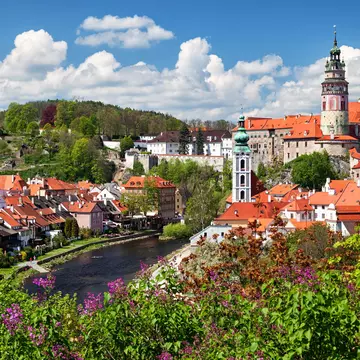
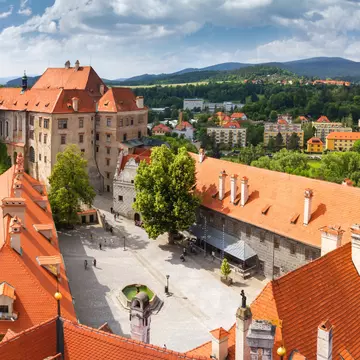
    Perched atop a soaring cliff, and capped by its proto-psychedelic Round tower, Krumlov Chateau is one of the most audaciously located sights in South Bohemia.

    Český Krumlov was first documented in 1253, when the local ruling barons, the Vítkovecs, built their castle here. In 1302 it was acquired by the lords of Rožmberks, the biggest land owners in Bohemia, and in the late 16th century Vilém Rožmberk ordered a Renaissance-style makeover. When their line expired it was handed to the Eggenbergs in 1622. The Schwarzenbergs took the castle over in 1719, and owned it until 1945.

    reviewed

  18. Q

    Star Summer Palace

    The Letohrádek hvězda is a Renaissance summer palace in the shape of a six-pointed star, built in 1556 for Archduke Ferdinand of Tyrol. It sits at the end of a long avenue through the lovely wooded park of Obora hvězda, a hunting reserve established by Ferdinand I in 1530. The palace houses a small museum about its history and an exhibit on the battle of White Mountain. From the Vypich tram stop, bear right across open parkland to the white archway in the wall; the avenue on the far side leads to the palace (a 1.5km walk from the tram).

    reviewed

  19. R

    Holy Trinity Column

    The town's pride and joy is this 35m-high (115ft) baroque sculpture that dominates the square and is a popular meeting spot for local residents. The trinity column was built between 1716 and 1754 and is allegedly the biggest single baroque sculpture in Central Europe. In 2000, the column was awarded an inscription on Unesco's World Heritage list.

    The individual statues depict a bewildering array of Catholic religious motifs, including the Holy Trinity, the twelve apostles, the assumption of Mary, and some of the best-known saints. There's a small chapel at the base of the column that’s sometimes open during the day for you to poke your nose in.

    reviewed

  20. S

    Dancing Building

    The Dancing Building was built in 1996 by architects Vlado Milunić and Frank Gehry. The curved lines of the narrow-waisted glass tower clutched against its more upright and formal partner led to it being christened the ‘Fred & Ginger’ building, after legendary dancing duo Fred Astaire and Ginger Rogers. It’s surprising how well it fits in with its ageing neighbours.

    reviewed

  21. T

    Church Of Our Lady Victorious

    When a miracle-working 'Bambino di Praga' statue appears in classic Czech novel I served the King of England, it sounds purely fictional. Yet this church really does contain a 400-year-old, wax 'Baby Jesus of Prague', said to have protected the city for centuries. The tradition of dressing the 47cm-tall figure from a wardrobe of 70 costumes continues today, with nuns changing his robes according to a religious calendar.

    reviewed

  22. Advertisement

  23. U

    Mořský Svět

    The Czech ‘Sea World’ has the largest water tank in the country, with a capacity of around 100,000L. Some 4500 living species of fish and sea creatures are on display, with a good (and suitably scary) set of sharks. The cramped interior will be disappointing if you’re used to larger ‘Sea World’-type amusement parks around the world.

    reviewed

  24. V

    Prague Castle

    Prague Castle – Pražský hrad, or just hrad to Czechs – is Prague’s most popular attraction. According to the Guinness World Records, it’s the largest ancient castle in the world: 570m long, an average of 128m wide and covering a total area bigger than seven football fields. Its history begins in the 9th century when Prince Bořivoj founded a fortified settlement here. It grew haphazardly as rulers made their own additions, creating an eclectic mixture of architectural styles. The castle has always been the seat of Czech rulers as well as the official residence of the head of state, although the Czech Republic’s first president, Václav Havel, chose to live in his own…

    reviewed

  25. W

    Prague Jewish Museum

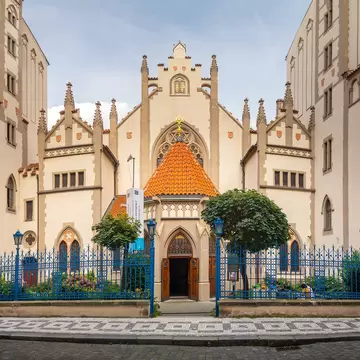
    This museum consists of six Jewish monuments clustered together in Josefov: the Maisel Synagogue; the Pinkas Synagogue; the Spanish Synagogue; the Klaus Synagogue; the Ceremonial Hall; and the Old Jewish Cemetery. There is also the Old-New Synagogue, which is still used for religious services, and requires a separate ticket or additional fee. If you are pressed for time, the highlights are the Old-New Synagogue and the Old Jewish Cemetery.

    In one of the most grotesquely ironic acts of WWII, the Nazis took over the management of the Prague Jewish Museum – first established in 1906 to preserve artefacts from synagogues that were demolished during the slum clearances in…

    reviewed

  26. X

    St Vitus Cathedral

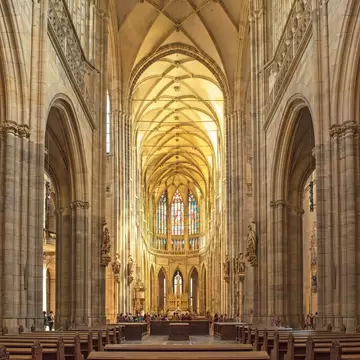
    It might appear ancient, but much of Prague's principal cathedral was completed just in time for its belated consecration in 1929. Its many treasures include the 14th-century mosaic of the Last Judgement above the Golden Gate, the baroque silver tomb of St John of Nepomuck, the ornate Chapel of St Wenceslas, and art nouveau stained glass by Alfons Mucha.

    At first glance the cathedral's western facade, which looms above the entrance to the Third Courtyard, looks impressively Gothic, but in fact the triple doorway dates only from 1953, one of the last parts of the church to be completed. The foundation stone was laid in 1344 by Emperor Charles IV, on the site of a…

    reviewed

  27. Y

    Národní Třída

    Národní třída (National Ave) is central Prague’s ‘high street’, a stately row of midrange shops and grand public buildings, notably the National Theatre at the Vltava River end.

    Fronting Jungmannovo náměstí, at the eastern end, is an imitation Venetian palace known as the Adria Palace. Its distinctive, chunky architectural style, dating from the 1920s, is known as ‘rondocubism’. Note how the alternating angular and rounded window pediments echo similar features in neoclassical baroque buildings such as the Černin Palace.

    Beneath it is the Adria Theatre, birthplace of Laterna Magika and meeting place of Civic Forum in the heady days of the Velvet…

    reviewed