CartagenaThings to do

Things to do in Cartagena

‹ Prev

of 4

  1. Old Town

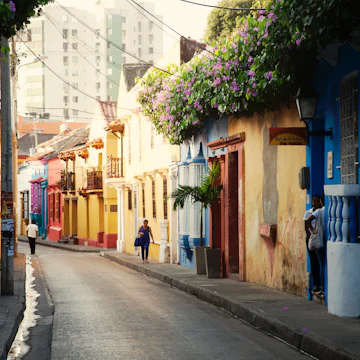
    Without doubt, Cartagena's old city is its principal attraction, particularly the inner walled town, consisting of the historical districts of El Centro and San Diego. It is a real gem of colonial architecture, packed with churches, monasteries, plazas, palaces and mansions with their overhanging balconies and shady patios.

    The old town is surrounded by Las Murallas, the thick walls built to protect it against enemies. Construction began towards the end of the 16th century, after the attack by Francis Drake; until that time Cartagena was almost completely unprotected. The project took two centuries to complete due to repeated damage from both storms and pirate attacks. On…

    reviewed

  2. A

    La Casa de Socorro

    This is a good little spot to try comida costeña, the typical food of the coast. It’s a casual spot with nice design touches like paintings on recycled walking planks, and the menu features staples like robalo (sea bass) smothered in cheese and garlic, along with more adventurous fare such as snail or turtle soup.

    reviewed

  3. Snack Bars

    Plenty of snack bars all across the old town serve typical local snacks such as arepas de huevo (fried maize dough with an egg inside), dedos de queso (deep-fried cheese sticks), empanadas and buñuelos (deep-fried maize and cheese balls).

    reviewed

  4. B

    Tu Candela

    The narrow, shotgun-style layout of this bar/club makes liberal use of exposed brick – it feels a bit like partying in a wine cave – and is decorated with tribal masks, old transistor radios and brass instruments. The cover charge is recoupable in drinks.

    reviewed

  5. C

    El Burlador de Sevilla

    Giant bulls' heads mounted to the wall stare down at you as you dine on some excellent Spanish treats, including paellas, tapas and jamónes (hams).

    reviewed

  6. D

    La Bodeguita del Medio

    Eat and drink under the watchful eyes of Che Guevara and Fidel Castro in this hard-core Cuban café de la revolución.

    reviewed

  7. Night Tour

    You can also go on a Night Tour aboard a chiva, a typical Colombian bus, with a band playing vallenato. Chivas depart around 20:00 from Av San Martín between Calles 4 and 5 in Bocagrande for a three- to four-hour trip, and leave you at the end of the tour in a discotheque - a good point to continue your party for the rest of the night.

    Vallenato is a typical musical genre of the coast. A classical vallenato ensemble includes the accordion, guacharaca and caja. The guacharaca is a percussion instrument of indigenous origins. It consists of a sticklike wooden body with a row of cuts, and a metal fork. The sound is produced by rubbing the stick with the fork. The caja is a …

    reviewed

  8. E

    Palacio de la Inquisición

    The Palacio de la Inquisición is one of the finest buildings in the town. Although the site was the seat of the Punishment Tribunal of the Holy Office from 1610, the palace wasn't completed until 1776. It is a good example of late colonial architecture, noted particularly for its magnificent baroque stone gateway topped by the Spanish coat of arms, and the long balconies on the facade.

    On the side wall, just around the corner from the entrance, you'll find a small window with a cross on top. Heretics were denounced here, and the Holy Office would then instigate proceedings. The principal 'crimes' were magic, witchcraft and blasphemy. When culprits were found guilty they …

    reviewed

  9. F

    Convento de San Pedro Claver

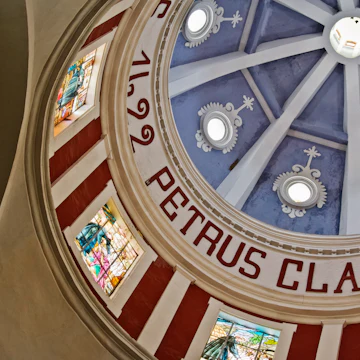
    This convent was founded by Jesuits in the first half of the 17th century, originally as San Ignacio de Loyola. The name was later changed in honor of Spanish-born monk Pedro Claver (1580-1654), who lived and died in the convent. Called the 'Apostle of the Blacks' or the 'Slave of the Slaves,' he spent all his life ministering to the slaves brought from Africa. He was the first person to be canonized in the New World (in 1888).

    The convent is a monumental three-story building surrounding a tree-filled courtyard, and part of it is open as a museum. Exhibits include religious art and pre-Columbian ceramics. You can visit the cell where San Pedro Claver lived and died, and a…

    reviewed

  10. City Tours

    City Tours, in a chiva (a colorful, traditional bus) depart daily at 14:00 from Av San Martín between Calles 4 and 5 in Bocagrande. The four-hour tour includes rides around Bocagrande, Castillo Grande and the walled city, plus visits to the Convento de la Popa and Castillo de San Felipe.

    You can also take a city tour in a horse-drawn carriage, which gives a glance of Bocagrande and the walled city. The carriages depart from the corner of Av San Martín and Calle 4 in Bocagrande and go along the waterfront to the old town. After a run around the main streets of the walled city they return via either Av San Martín or the waterfront, whichever you prefer. They operate daily …

    reviewed

  11. Advertisement

  12. G

    Iglesia de Santo Domingo

    The Iglesia de Santo Domingo, built towards the end of the 16th century, is reputedly the oldest in the city. Its builders gave it a particularly wide central nave and covered it with a heavy roof, but it seems they were not too good at their calculations and the vault began to crack. Massive buttresses had to be added to the walls to support the structure and prevent it from collapsing.

    The builders also had problems with the bell tower, which is distinctly crooked. However, legend has it that it was the work of a devil who knocked the tower. The interior is spacious and lofty. The legendary figure of Christ carved in wood is set in the baroque altar at the head of the r…

    reviewed

  13. H

    Catedral

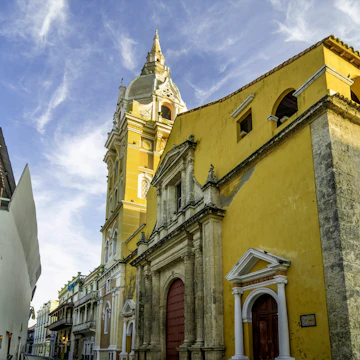
    Cartagena's Catedral was begun in 1575, but in 1586, while still under construction, it was partially destroyed by the cannons of Francis Drake, and not completed until 1612. Considerable alterations were made between 1912 and 1923 by the first archbishop of Cartagena, who covered the church with stucco and painted it to look like marble. He also commissioned the dome on the tower.

    Recent restoration has uncovered the lovely limestone on the building's exterior. Apart from the tower's top, the church has basically preserved its original form. It has a fortlike appearance and a simply decorated interior with three naves and semicircular archways supported on high stone col…

    reviewed

  14. I

    Catedral

    Work on the Cathedral began in 1575, but in 1586, while still under construction, it was partially destroyed by the cannons of Francis Drake, and not completed until 1612. Alterations were made between 1912 and 1923 by the first archbishop of Cartagena, who covered the church with stucco and painted it to look like marble. He commissioned the dome on the tower. Restoration work has uncovered the lovely limestone on the building’s exterior. Apart from the tower’s top, the church has basically preserved its original form. It has a fortlike appearance and a simply decorated interior with three naves and massive semicircular archways supported on high, stone columns. The main…

    reviewed

  15. Experience Colombia

    Experience Colombia

    9 days (ex Bogota)

    by Intrepid

    Take a guided walk through Bogota's colonial heart, Enjoy the mild weather in magical Medellin, Wander beneath floral balconies in Cartagena, Bliss out beachsid…

    Not LP reviewed

    from USD$1,530
  16. J

    Las Bóvedas

    These are 23 dungeons built between 1792 and 1796 in the city walls, which are more than 15m thick in this part. These dungeons were the last major construction carried out in colonial times and were destined for military purposes.

    The vaults were used by the Spaniards as storerooms for munitions and provisions. Later, during the republican era, they were turned into a jail. The dungeons are now a little museum which, unusually, has explanatory signs in English - although unless you bring your own light you won't be able to read them since it's so badly lit!

    reviewed

  17. K

    Convento de la Popa

    On a 150m-high hill, the highest point in the city, about 2km beyond Castillo de San Felipe de Barajas is this convent. Its name literally means the Convent of the Stern, after the hill’s apparent similarity to a ship’s back end, but it’s actually the Convento de Nuestra Señora de la Candelaria, founded by the Augustine fathers in 1607. Initially it was just a small wooden chapel, which was replaced by a stouter construction when the hill was fortified two centuries later, just before Pablo Morillo’s siege.

    reviewed

  18. Cartagena To Quito

    Cartagena To Quito

    19 days (ex Cartagena)

    by Intrepid

    Wander through the fairytale city of Cartagena, Relax by the calm lake waters that lap at the town of Guatape, Travel to Medellin and learn about Colombia's che…

    Not LP reviewed

    from USD$1,160
  19. L

    Museo del Oro y Arqueología

    The Cartagena Gold Museum is like a miniature version of Bogotá’s world-class gold museum. Though small, it offers a fascinating collection of gold and pottery of the Sinú (also known as Zenú) people, who inhabited the region of the present-day departments of Bolívar, Córdoba, Sucre and northern Antioquia before the Spanish Conquest. The detail of some pieces are exquisite and should you be heading towards Bogotá, offers just a taste of the bigger and grander museum there.

    reviewed

  20. M

    Castillo de San Felipe de Barajas

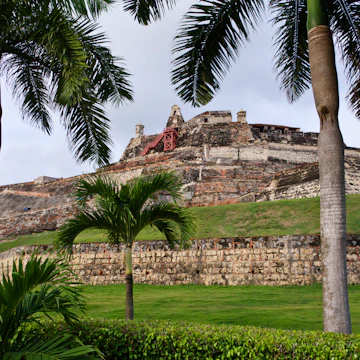
    The castillo is the greatest and strongest fortress ever built by the Spaniards in any of their colonies. The original fort was commissioned in 1630 and was quite small. Construction began in 1657 on top of the 40m-high San Lázaro hill. In 1762, an extensive enlargement was undertaken, which resulted in the entire hill being covered over with this powerful bastion. It was truly impregnable and was never taken, despite numerous attempts to storm it.

    reviewed

  21. N

    Manga Island

    While Cartagena is principally noted for its Spanish colonial architecture, other styles have also left their mark. Walk around the residential sector on Manga Island to see some interesting houses dating mainly from the late-19th to early-20th centuries - a real hotchpotch of styles. The most noticeable feature is the Islamic influence brought by immigrants from the Middle East. You can also visit Manga's Cementerio de la Cruz, noted for many ornate old graves.

    reviewed

  22. Advertisement

  23. O

    Casa de Rafael Núñez

    This mansion, just outside the walls of Las Bóvedas, was the home of the former president, lawyer and poet. He wrote the words of Colombia's national anthem and was one of the authors of the constitution of 1886, which was in force (with some later changes) until 1991. The wooden mansion is now a museum featuring some of Núñez' documents and personal possessions. The chapel opposite the house, known as the Ermita del Cabrero, holds his ashes.

    reviewed

  24. P

    Museum of Modern Art

    The Museum of Modern Art is the perfect sized museum (not too huge to overwhelm), housed in a part of the 17th century former Royal Customs House. It presents temporary exhibitions from its own collection, including works by Alejandro Obregón, one of Colombia’s most remarkable painters, who was born in Cartagena. There’s also sculpture and abstract art – all well worth a look. The second floor houses temporary exhibitions.

    reviewed

  25. Q

    Monumento a la India Catalina

    The Monumento a la India Catalina at the main entrance to the old town from the mainland is a tribute to the Carib Indians, the group that inhabited this land before the Spanish Conquest. The lovely bronze statue depicts Catalina, a beautiful Carib Indian woman who served as interpreter to Pedro de Heredia upon the arrival of the Spaniards. The statue was forged in 1974 by Eladio Gil, a Spanish sculptor living in Cartagena.

    reviewed

  26. R

    Plaza de los Coches

    Previously known as Plaza de la Yerba, the triangular Plaza de los Coches just behind Puerta del Reloj was once used as a slave market. It is lined with old balconied houses with colonial arches at ground level. The arcaded walkway, known as El Portal de los Dulces, is today lined with confectionery stands selling local sweets. The statue of the city's founder, Pedro de Heredia, is in the middle of the plaza.

    reviewed

  27. S

    Fuerte de San Sebastián del Pastelillo

    The Fuerte de San Sebastián del Pastelillo, on the western end of Manga Island, was constructed in the middle of the 16th century as one of the town's first defense posts. It's quite small and not particularly inspiring, but it's quite close to the old town - just across the bridge from Getsemaní. Today the fort is home to the Club de Pesca which has a marina where local and foreign boats anchor.

    reviewed