go to content go to search box go to global site navigation

Chile

Getting around

Traveling from head to tail in Chile is child's play, with a constant procession of flights and buses connecting cities up and down the country. What is less convenient is the service widthwise and south of Puerto Montt, where the country turns into a labyrinth of fjords, glaciers and mountains. However, a few choice routes are being improved, new roads built (some contentious) and the railways revamped.

Boat

Chile's preposterously long coastline is strung with a necklace of ports and harbors, but opportunities for travelers to get about by boat are concentrated in the south.

^ Back to top

Bus & tram

Bus

Long-distance buses in Chile have an enviable reputation for punctuality, efficiency and comfort, although prices and classes vary significantly between companies. Most Chilean cities have a central bus terminal but in some the companies have separate offices, usually within a few blocks of each other. The bus stations are well organized with destinations, schedules and fares prominently displayed. Major highways and some others are paved (except for large parts of the Carretera Austral south of Puerto Montt), but many secondary roads are gravel or dirt. Long-distance buses generally have toilet facilities and often serve coffee, tea and even meals on board; if not, they make regular stops. By European or North American standards, fares are a bargain. Transportation is slower on back roads and buses (micros), are less frequent, older and more basic.

The nerve center of the country, Santiago has four main bus terminals, from which buses leave to northern, central and southern destinations.

Chile's biggest bus company is Tur Bus (600-660-6600; www.turbus.cl in Spanish), with an all-embracing network of services around the country. It is known for being extremely punctual. Frequent travelers can become card-carrying members of the Tur Bus club, which provides a 10% discount on one-way fares, a phone or Internet reservation system, and a points collection system that adds up to free trips. You can join at any Tur Bus office.

Its main competitor is Pullman (600-320-3200; www.pullman.cl in Spanish), which also has extensive routes throughout the country. The Pullman Pass loyalty card offers much the same benefits as that of Tur Bus.

A bus service specifically aimed at backpackers is Pachamama by Bus (02-688-8018; www.pachamamabybus.com; Agustinas 2113, Barrio Brasil). It's a hop-on hop-off service with two long routes exploring the north and south respectively. It's not cheap (for example, it costs US$176/257 for a seven-/10-day pass in the south/north of Chile), but the advantage is that the bus goes to many out-of-the-way national parks and other attractions that are not accessible by public transport. It also offers pick-up and drop-off at your chosen hostel, and camping equipment at isolated overnight stops.

Costs

Fares vary dramatically among companies and classes, so shop around. Promotions (ofertas) outside the high summer season can reduce normal fares by half and student fares by 25%.

Bus

Even small towns usually have a chaotic jumble of bus routes that can be intimidating to the novice rider. Prices are extremely cheap (around US$0.35 for a short trip). Buses (micros) are clearly numbered and usually carry a placard indicating their final destination. Since many identically numbered buses serve slightly different routes, pay attention to these placards. On boarding, mention your final destination and the driver will tell you the fare and give you a ticket. Do not lose this ticket, which may be checked en route. Buses are often crammed with jostling people, so keep an eye on your pockets and bags.

The bus system in Santiago is currently being overhauled and increasingly swapping its dirty exhaust-belching micros for smoother, cleaner buses that will be fitted with automatic fare machines.

^ Back to top

Car & motorcycle

Having your own wheels is not only liberating but often necessary to get to remote national parks and most places off the beaten track. This is especially true in areas such as the Atacama Desert and the Carretera Austral. Hiring a car is easily the best way to scoot around on Easter Island. Security problems are minor, but always lock your vehicle and leave valuables out of sight. Note that, because of smog problems, there are frequent restrictions on private vehicle use in Santiago and the surrounding region.

The annual Turistel guides are a great source on recent changes, particularly with regard to newly paved roads, as well as maps of most significant cities, towns and even villages.

Hire

Major international rental agencies like Hertz (02-496-1111; www.hertz.com), Avis (600-601-9966; www.avischile.com) and Budget (02-362-3200; www.budget.com) have offices in Santiago, as well as in major cities and tourist areas. The Automóvil Club also rents cars at some of its offices. To rent a car you must have a valid international driver's license, be at least 25 years of age (some younger readers have managed to rent cars, however) and have either a major credit card (such as Master- Card or Visa) or a large cash deposit. Travelers from the USA, Canada, Germany and Australia are not required to have an international driver's license to rent a car but, to avoid confusion, it is best to carry one.

Even at smaller agencies, rental charges are high, with the smallest vehicles going for about US$38 to US$65 per day with 150km to 200km included, or sometimes with unlimited mileage. Adding the cost of any extra insurance, petrol and the crippling 19% IVA (impuesto de valor agregado), the value-added tax (VAT), it becomes very pricey to operate a rental vehicle. Weekend or weekly rates, with unlimited mileage, are a better bargain. Small vehicles with unlimited mileage cost about US$240 to US$450 per week, while 4WD vehicles cost around US$100 per day, or US$560 per week.

One-way rentals can be awkward or impossible to arrange. Some companies, most notably Hertz, will arrange such rentals but with a substantial drop-off charge (for example US$29/225 for distances under 150km/1500km from the point of origin). With smaller local agencies this is next to impossible. Some of these smaller agencies will, however, usually arrange paperwork for taking cars into Argentina, so long as the car is returned to the original office. There may be a substantial charge for taking a car into Argentina; Chilean insurance is not valid in Argentina.

When traveling in remote areas, where fuel may not be readily available, carry extra fuel. Rental agencies often provide a spare bidón (fuel container) for this purpose.

Insurance

All vehicles must carry so-called seguro obligatorio (minimum insurance) and additional liability insurance is highly desirable. Car-hire companies offer the necessary insurance. Check if there are any limitations to your policy. Traveling on a dirt road is usually fine (indeed necessary in many parts of the country), but off-roading is strictly off limits.

Purchase

For a trip of several months, purchasing a car merits consideration; reselling the car afterwards can potentially save you a packet on rentals. However, any used car is a risk, especially on Chile's axle-breaking back roads. Imported vehicles (the vast majority in Chile) also tend to cost more than in Europe or the USA.

Once purchased, you must change the vehicle's title within 30 days or risk a hefty fine; you can do this through any notary by requesting a compraventa for about US$10. You'll need a RUT (Rol Unico Tributario) tax identification number, available through Impuestos Internos (www.sii.cl in Spanish), the Chilean tax office; issuance takes about 10 days. Since Chilean policies are not valid in Argentina, but Argentine policies are valid in Chile and other neighboring countries, it is worth buying a reasonably priced Argentine policy across the border if you plan to visit several countries.

Note that, while many inexpensive vehicles are for sale in the duty-free zones of Regionés I and XII (Tarapacá and Magallanes), only legal permanent residents of those regions may take a vehicle outside of those regions, for a maximum of 90 days per calendar year.

^ Back to top

Train

Chile's railroads blossomed in the late 19th century courtesy of the country's rich mines. In the early 20th century thousands of hectares of native forest were felled to make way for lines running from Santiago to Puerto Montt. Yet, despite the early investment and sacrifices, Chile's train system went into decline for a century and most tracks now lie neglected or abandoned.

Railway enthusiasts can take heart in recent developments near Santiago, however; a newly modernized system of southbound trains runs frequently from Santiago through Talca and Chillán to Temuco. Check the website of Empresa de Ferrocarriles del Estado (www.efe.cl in Spanish) for more information. Slower services also crawl to Talcahuano near Concepción and to Talco, stopping at Curicó and Parral. Furthermore, there is a metrotren service that goes from Santiago as far as San Fernando to the south.

With the exception of the long Calama-Ollagüe line between Chile and Bolivia, there are no long-distance passenger services north of Santiago. It's difficult but not impossible to travel by freight from Baquedano (on the Panamericana northeast of Antofagasta) to the border town of Socompa, and on to Salta, in Argentina.

^ Back to top

Travel documents

Reservations

Except during the holiday season (Christmas, January, February, Easter and mid-September's patriotic holidays), it is rarely necessary to book more than a few hours in advance. On very long trips, like Arica to Santiago, or rural routes with limited services (along the Carretera Austral, for instance), advance booking is a good idea.

^ Back to top

Tours

Adventure tour operators have mushroomed throughout Chile; most have offices in Santiago and seasonal offices in the location of their trips.

Altué Active Travel (02-233-2964; www.altue.com) One of Chile's pioneer adventure tourism agencies: it covers almost any outdoor activity but specialties include sea kayaking and cultural trips in Chiloé.

Austral Adventures (065-625-977; www.austral-adventures.com) Specializes in cruises around the Pumalín fjords, fishing, kayaking and customized cultural trips around Chiloé.

Azimut 360 (02-235-1519; www.azimut.cl) Offers volcano climbing, mountain biking and sightseeing in the northern altiplano, and multiactivity trips in Patagonia.

Cascada Expediciones (02-217-5061; www.cascada-expediciones.com) One of the largest adventure outfits, which has trips throughout the mainland and Easter Island.

Cruceros Australis (02-442-3110; www.australis.com) Runs large luxury cruises between Punta Arenas and Ushuaia - a trip that lasts five days.

Cruceros Skorpios (065-252-996; www.skorpioscruises.com; Av Angelmó 1660, Puerto Montt) Arranges slick luxury cruises from Puerto Montt and Puerto Chacabuco to Laguna San Rafael, stopping in its own private reserve with hot springs.

Explora (02-206-6060; www.explora.com) Has top-notch resorts in Parque Nacional Torres del Paine and San Pedro de Atacama that offer all-inclusive packages with swish accommodations and excursions.

Patagonia Connection (02-225-6489; www.patagonia-connection.com) Tempts with luxury spa packages in north Patagonia, including trips along the Carretera Austral or to Laguna San Rafael in a catamaran.

Pared Sur (02-207-3525; www.paredsur.cl) This is all about the mountain biking, with a wide variety of challenges throughout Chile.

Yak Expediciones (227-0427; www.yakexpediciones.cl) Takes small groups sea kayaking and white-water rafting.

^ Back to top

Local transport

Metro

Santiago is blessed with a super efficient subway, the Metro. It is clean, cheap and fast expanding.

Taxi

Most Chilean cabs are metered, but fares vary. In Santiago, it costs Ch$300 (about US$0.50) to bajar la bandera ('lower the flag'), plus Ch$100 (US$0.20) per 200m. Each cab carries a placard indicating its authorized fare.

In some towns, such as Viña del Mar, cabs may cost twice as much. In others, such as Coquimbo, meters are less common, so it is wise to agree upon a fare in advance. Tipping is not necessary, but you may tell the driver to keep small change.

^ Back to top

Water

Ferry

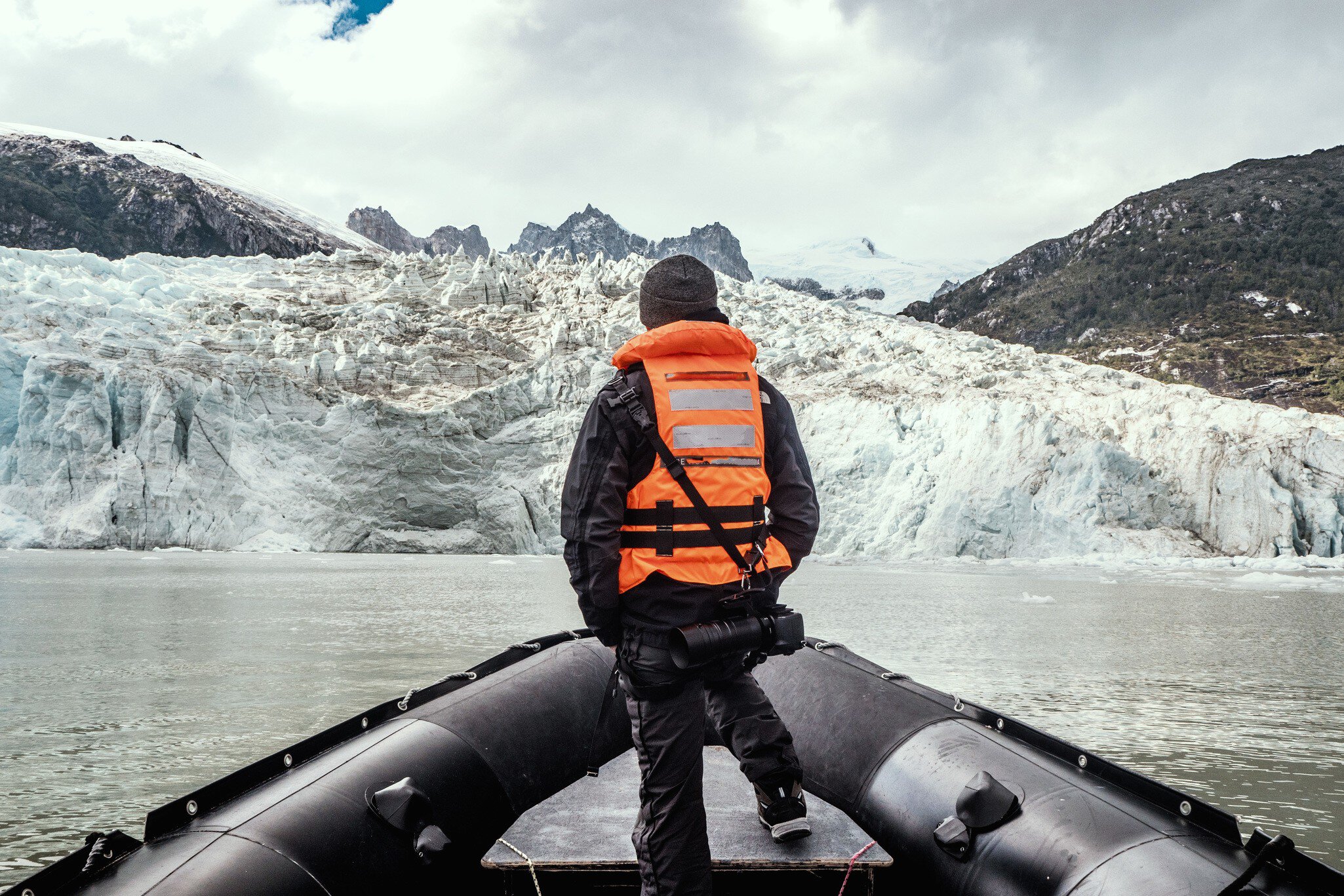
Navigating southern Chile's jigsaw-puzzle coast by ferry is about more than just getting from A to B - it's an essential part of the travel experience. From Puerto Montt south, Chilean Patagonia and Tierra del Fuego is accessed by a web of ferry lines through an intricate maze of islands and fjords. So, while bus services south between Puerto Montt and Coyhaique must pass through Argentina, the ferries sidle down past spectacular coastal scenery.

It's important to note, however, that the end of the high season also marks limited ferry service.

Navimag's ferry service from Puerto Montt to Puerto Natales is one of the continent's great travel experiences. The following information lists only the principal passenger ferry services. Also on offer are a few exclusive tour operators that run their own cruises.

Catamaranes del Sur (02-231-1902; www.catamaranesdelsur.cl; Av Pedro de Valdivia Norte 0210, Providencia)

Mar del Sur (067-231-255; Av General Baquedano 146-A, Coyhaique)

Naviera Sotramin (067-233-515, 234-240; Simón Bolívar 254, Coyhaique)

Navimag (02-442-3120; www.navimag.com; Av El Bosque Norte 0440, 11th fl, Las Condes)

Transbordador Austral Broom (061-218-100; www.tabsa.cl; Av Bulnes 05075, Punta Arenas)

Transmarchilay (065-270-430; www.transmarchilay.cl in Spanish; Angelmó 2187, Puerto Montt)

Common routes include:

Chiloé to Chaitén Transmarchilay and Navimag run between Quellón, on Chiloé, and Chaitén in summer. There are also summer services from Castro to Chaitén.

Hornopirén to Caleta Gonzalo In the summer, Transmarchilay ferries loop around from one side of Parque Pumalín to the other at Caleta Gonzalo, about 60km north of Chaitén.

La Arena to Puelche Ferries shuttle back and forth across the gap, about 45km southeast of Puerto Montt, to connect two northerly segments of the Carretera Austral.

Mainland to Chiloé Regular ferries plug the gap between Pargua and Chacao, at the northern tip of Chiloé.

Puerto Chacabuco to Puerto Natales Navimag stops in Puerto Chacabuco before continuing on to Puerto Natales.

Puerto Ibáñez to Chile Chico Naviera Sotramin and Mar del Sur operate automobile/passenger ferries across Lago General Carrera, south of Coyhaique. There are shuttles from Chile Chico to the Argentine town of Los Antiguos.

Puerto Montt to Chaitén Transmarchilay run car-passenger ferries from Puerto Montt to Chaitén. Catamaranes del Sur runs a high-speed passenger catamaran three times a week.

Puerto Montt to Laguna San Rafael Expensive cruises with Catamaranes del Sur and Cruceros Skorpios go direct to take a twirl about the stunning Laguna San Rafael.

Puerto Montt to Puerto Chacabuco Navimag goes from Puerto Montt to Puerto Chacabuco, with bus service continuing on to Coyhaique and Parque Nacional Laguna San Rafael.

Puerto Montt to Puerto Natales Navimag departs Puerto Montt weekly, taking about four days to puddle-jump to Puerto Natales. Erratic Patagonian weather can play havoc with schedules.

Puerto Williams to Ushuaia This most necessary connection still has no regular ferry.

Punta Arenas to Tierra del Fuego Transbordador Austral Broom runs ferries from Punta Arenas' ferry terminal Tres Puentes to Porvenir; from Punta Delgada, east of Punta Arenas, to Bahía Azul; and from Tres Puentes to Puerto Williams, on Isla Navarino.

^ Back to top

Air

Flights don't come cheap in Chile, but they do save tiresome and time-consuming backtracking up and down Chile's spindly length. For instance, a flight from Arica back to Santiago takes a few short hours, compared to a crippling 28 hours on board a bus. Other than taking leisurely ferries, flights are often the only option to reach isolated regions of the south. Always ask the difference between round-trip fares and one-way trips, because you'll often find the former is even cheaper than the latter.

Airlines in Chile

There are three principal domestic airlines within Chile.

Aerolineas del Sur (800-710-300; Roger de Flor 2915, Las Condes) A subsidiary of Aerolíneas Argentinas, created in 2005.

Lan (600-526-2000; www.lan.com) Centro (Paseo Huérfanos 926 B); Las Condes (Av El Bosque Norte 0194); Providencia (Providencia 2006) The biggest and longest-established national carrier, with the most extensive system of connecting cities both north and south of Santiago; Lan also flies to Easter Island.

Sky (600-600-2828; www.skyairline.cl in Spanish; Paseo Huérfanos 815, Centro) Lan's main competitor, also with an impressive list of routes.

A handful of regional airlines and air-taxi services also operate, especially connecting isolated regions in the south and shuttling to the Juan Fernández archipelago.

Most Chilean cities are within striking distance of domestic airports with commercial air service. Santiago's Aeropuerto Internacional Arturo Merino Benítez has a separate domestic terminal; Santiago also has smaller airfields for air-taxi services to the Juan Fernández archipelago.

For domestic flights, there is a departure tax of about US$6 to US$8, depending on the distance. It is usually included in the ticket price.

^ Back to top

Bicycle

Who's afraid of a little saddle soreness? Certainly not the growing numbers of cyclists peddling their way through Chile. If you're thinking of joining them a todo terreno (mountain bike) or a touring bike with beefy tires is essential. The climate can be a real challenge: from Temuco south, it is changeable and you must be prepared for rain and occasional snow; from Santiago north, especially in the vast expanses of the Atacama Desert, water sources are infrequent and towns are separated by alarmingly long distances. In some areas the wind can slow your progress to a crawl; north to south is generally easier than south to north, but some readers report strong headwinds southbound in summer. Roads leading into the mountains are predict- ably challenging even for a vehicle. Chilean motorists are usually courteous, but on narrow, two-lane highways without shoulders, passing cars can be a real hazard.

Car ferries in Patagonia often charge a fee to carry a bike on, but not if it's in the back of someone's pickup; ask kindly if you see an empty back. Throughout Chile, towns have bike-repair shops.

Long-distance bus companies are usually amenable to stashing a bike in the luggage hold, although become less sympathetic around Christmas when holds are packed with parcels. Bikes are allowed on domestic airlines and account for the one allotted piece of checked luggage if disassembled and boxed. If assembled, they are considered 1½ pieces of luggage. If you have something else to check, the bike will be considered extra luggage and will be charged by weight.

Hire

Hiring your own two wheels to bomb around on is easy as pie in many of Chile's more touristy towns, although the quality of bikes on offer varies wildly. There are relatively few bike rental shops, but hospedajes and tour agencies often have a few handy. Expect to pay between US$6 and US$12 per day. A quality mountain bike with front suspension and decent brakes can cost US$20 per day or more, but you're only likely to find them in outdoor activity destinations such as the Lakes District and San Pedro de Atacama.

It's common to leave some form of deposit or guarantee: a copy of your passport will often suffice.

Purchase

Bikes are not especially cheap in Chile. A decent mountain bike with suspension will set you back anything from US$175 to US$300. If you're looking to sell your wheels at the end of your trip, try approaching tour agencies that rent bikes.

^ Back to top

Things to do