go to content go to search box go to global site navigation

Santiago

Sights in Santiago

‹ Prev

of 3

  1. A

    Palacio de la Moneda

    Chile's presidential offices are in the Palacio de la Moneda. The ornate neoclassical building was designed by Italian architect Joaquín Toesca in the late 18th century, and was originally the official mint – its name means 'the coin.' The north facade was badly damaged by air-force missile attacks during the 1973 military coup when President Salvador Allende – who refused to leave – was overthrown here. A monument honoring Allende now stands opposite in Plaza de la Constitución.

    reviewed

  2. B

    La Chascona

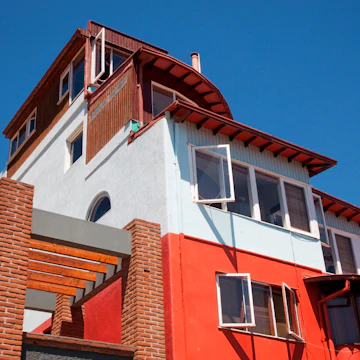
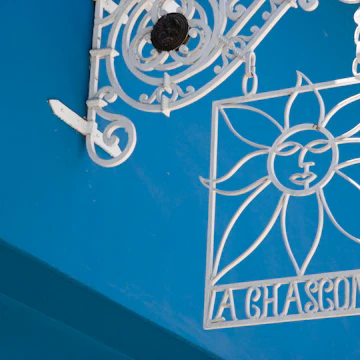
    When poet Pablo Neruda needed a secret hideaway to spend time with his mistress Matilde Urrutia, he built La Chascona (loosely translated as 'messy hair'), the name inspired by her unruly curls. Neruda, of course, was a great lover of the sea, so the dining room is modeled on a ship's cabin and the living room on a lighthouse. Guided tours take you through the history of the building and the collection of colored glass, shells, furniture and artworks by famous friends that fills it – sadly much more was lost when the house was ransacked during the dictatorship. The Fundación Neruda, which maintains Neruda's houses, has its headquarters here and runs a lovely cafe and gift…

    reviewed

  3. C

    Iglesia de San Francisco

    The first stone of the austere Iglesia de San Francisco was laid in 1586, making it Santiago's oldest surviving colonial building. Its sturdy walls have weathered some powerful earthquakes, although the current clock tower, finished in 1857, is the fourth. On the main altar look for the carving of the Virgen del Socorro (Our Lady of Perpetual Help), which Santiago's founder Pedro de Valdivia brought to Chile on his 1540 conquistador mission to protect him from attacks.

    reviewed

  4. D

    Museo Nacional de Historia Natural

    If your kids have a taste for the bizarre, check out the dusty stuffed animals (we’re talking taxidermy, not teddies) in the Museo Nacional de Historia Natural, where displays look almost as old as the fossils they contain.

    reviewed

  5. E

    La Vega Central

    Raspberries, quinces, figs, peaches, persimmons, custard apples… if it grows in Chile, you’ll find it at La Vega Central. Go early to see the hollering vendors in full swing.

    reviewed

  6. F

    Cerro San Cristóbal

    Bellavista entrance (Pío Nono 450, Barrio Bellavista; Baquedano); Providencia entrance (Av Pedro de Valdivia & El Cerro, Providencia; Pedro de Valdivia) The best sweeping views over Santiago are from the peaks and viewpoints of the Parque Metropolitano, better known as Cerro San Cristóbal. At 722 hectares, the park is Santiago's largest green space, but it's still decidedly urban: a funicular carries you between different landscaped sections, and roads through it are aimed at cars rather than hikers. The park lies north of Bellavista and Providencia and has entrances in both neighborhoods.

    A snowy white 14m-high statue of the Virgen de la Inmaculada Concepción towers…

    reviewed

  7. G

    Museo de la Solidaridad Salvador Allende

    Picasso, Miró, Tápies and Matta are some of the artistic heavyweights who gave works to the Museo de la Solidaridad Salvador Allende. Begun as a populist art initiative during Allende's presidency – and named in his honor – the incredible collection was taken abroad during the dictatorship, where it became a symbol of Chilean resistance. The 2000 works finally found a home in 2006, when the Fundación Allende bought and remodeled this grand old townhouse. The permanent collection sometimes goes on tour and is replaced by temporary exhibitions, and there's a darkened room with an eerie display of Allende's personal effects. Guided tours (email ahead) visit the basement,…

    reviewed

  8. H

    Parque por la Paz

    During Chile’s last dictatorship some 4500 political prisoners were tortured and 266 were exe­cuted at Villa Grimaldi by the now-disbanded DINA (National Intelligence Directorate). The compound was razed to conceal evidence in the last days of Pinochet’s dictatorship, but since the return of democracy it has been turned into a powerful memorial park known as Parque por la Paz. Each element of the park symbolizes one aspect of the atrocities that went on there and visits here are fascinating but harrowing – be sensitive about taking pictures as other visitors may be former detainees or family members. Take Transantiago bus D09 or 513 (you need a Bip! card) from right…

    reviewed

  9. I

    Museo de Artes Visuales

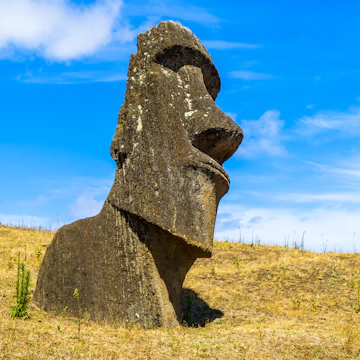
    Exposed concrete, stripped wood and glass are the materials local architect Cristián Undurraga chose for the stunningly simple Museo de Artes Visuales. The contents of the four open-plan galleries are as winsome as the building: top-notch modern engravings, sculptures, paintings and photography form the regularly changing temporary exhibitions. Admission includes the Museo Arqueológico de Santiago (MAS; Santiago Archeological Museum), tucked away on the top floor. The low-lighted room with dark stone walls and floors makes an atmospheric backdrop for a small but quality collection of Diaguita, San Pedro and Molle ceramics, Mapuche jewelry and Easter Island carvings.

    reviewed

  10. J

    Cerro Santa Lucía

    Rising out of the eastern side of the Centro is Cerro Santa Lucía. It was a rocky hill until 19th-century city mayor Benjamín Vicuña Mackenna had it transformed into a beautifully landscaped park where the grassy verges are still a favorite with canoodling local couples. A web of trails and steep stone stairs leads you up through terraces to the Torre Mirador at the top. Charles Darwin proclaimed the view from here 'certainly most striking' in 1833 – it's still well worth the climb.

    reviewed

  11. Advertisement

  12. K

    Museo Histórico Nacional

    Colonial furniture, weapons, paintings, historical objects and models chart Chile's colonial and republican history at the Museo Histórico Nacional. After a perfunctory nod to pre-Columbian culture, the ground floor covers the conquest and colony. Upstairs goes from independence through Chile's industrial revolution right up to the 1973 military coup but no further – Allende's broken glasses are the chilling final exhibit.

    reviewed

  13. L

    Cementerio General

    More than just a graveyard, Santiago’s Cemen­terio General is a veritable city of tombs, many adorned with works by famous local sculptors. The names above the crypts read like a who’s who of Chilean history: its most tumultuous moments are attested to by Salvador Allende’s tomb and the Memorial del Detenido Desaparecido y del Ejecutado Político, a memorial to the ‘disappeared’ of Pinochet’s dictatorship. To reach the memorial from the main entrance, walk down Av Lima, turning right into Horvitz for another 200m; it’s over the bridge to the right.

    reviewed

  14. M

    Palacio Cousiño

    'Flaunt it' seems to have been the main idea behind the shockingly lavish Palacio Cousiño. It was built between 1870 and 1878 by the prominent Cousiño- Goyenechea family after they'd amassed a huge fortune from wine-making and coal and silver mining, and it's a fascinating glimpse of how Chile's 19th-century elite lived. Carrara marble columns, a half-tonne Bohemian crystal chandelier, Chinese cherrywood furniture, solid gold cutlery, and the first electrical fittings in Chile are just some of the ways they found to fritter away their fortune.

    reviewed

  15. N

    Centro Cultural Palacio La Moneda

    Underground art takes on a new meaning in one of Santiago's newer cultural spaces: the Centro Cultural Palacio La Moneda is beneath Plaza de la Ciudadanía. A glass-slab roof floods the vaultlike space with natural light, and ramps wind down through the central atrium past the Cineteca Nacional, a state-run art-house movie theater, to two large temporary exhibition spaces. The uppermost level contains a fair-trade crafts shop, a few cafes and a gallery celebrating Chilean folk singer, artist and activist Violeta Parra.

    reviewed

  16. O

    Plaza de Armas

    Since the city's founding in 1541, the Plaza de Armas has been its symbolic heart. In colonial times a gallows was the square's grisly centerpiece; today it's a fountain celebrating libertador (liberator) Simón Bolívar, shaded by more than a hundred Chilean palm trees. Parallel pedestrian precincts Paseo Ahumada and Paseo Estado disgorge scores of strolling Santiaguinos onto the square on weekends and sunny weekday afternoons: clowns, helium-balloon sellers and snack stands keep them entertained.

    reviewed

  17. P

    Museo Chileno de Arte Precolombino

    Exquisite pottery from most major pre-Columbian cultures is the backbone of Santiago's best museum, the Museo Chileno de Arte Precolombino. As well as dozens of intricately molded anthropomorphic vessels, star exhibits include hefty Mayan stone stele and a fascinating Andean textile display. More unusual are the wooden vomit spatulas used by Amazonian shamans before taking psychoactive powders. At the time of writing, the museum was closed while it was undergoing a major expansion; it is set to reopen in 2013. Check the museum's website for updates.

    reviewed

  18. Q

    Museo Colonial de San Francisco

    Alongside Iglesia de San Francisco is the Museo Colonial de San Francisco. The dark and dusty rooms contain 17th-century colonial ecclesiastical art, as well as a creepy collection of whips and scourges used for penitential self-flagellation. A small room is rather randomly dedicated to poet Gabriela Mistral and includes correspondence and a replica of her Nobel medal. What the staff are most proud of, however, is their pet chicken, Martín, who patrols the palm- and creeper-filled courtyard.

    reviewed

  19. R

    Centro Cultural Matucana 100

    Halfway between Parque Quinta Normal and the Alameda lies one of Santiago's hippest alternative arts venues. The huge red-brick Centro Cultural Matucana 100 gets its gritty industrial look from its previous incarnation as government warehouses. Renovated as part of Chile's bicentennial project, it now contains a hangarlike gallery and a theater for art-house film cycles, concerts and fringe productions.

    reviewed

  20. S

    Museo de Ciencia y Tecnología

    In the middle of Parque Quinta Normal there's an artificial lagoon where you can rent rowboats. Beyond the lagoon is the Museo de Ciencia y Tecnología, which has interactive exhibits on astronomy, geology and other aspects of science and technology.

    Other museums in the park include the Museo Infantil and the open-air Parque Museo Ferroviario, which displays lovingly maintained steam locomotives.

    reviewed

  21. T

    Estación Mapocho

    Rail services north once left from Estación Mapocho. Earthquake damage and the decay of the rail system led to its closure, but it's been reincarnated as a cultural center which hosts art exhibitions, major concerts and trade expos. The soaring cast-iron structure of the main hall was built in France then assembled in Santiago behind its golden beaux arts–style stone facade.

    reviewed

  22. Advertisement

  23. U

    Templo Votivo de Maipú

    Set on the site of the battle where Chile finally repelled the Spanish in 1818, this impressive modern templo votivo de maipú is a replacement for the earthquake-felled original, the ruins of which you can still see today. Completed in 1974, the temple looks stark from the outside, but the huge arched ceilings and tranquility are awe-inspiring within.

    reviewed

  24. V

    Museo de Arte Contemporáneo

    Temporary exhibitions showcasing contemporary photography, design, sculpture, installations and web art are often held at the Museo de Arte Contemporáneo, also located inside the Palacio de Bellas Artes. Its pristine galleries are the result of extensive restoration work to reverse fire and earthquake damage. Twentieth century Chilean painting forms the bulk of the permanent collection.

    reviewed

  25. W

    Casa Colorada

    Few colonial houses are still standing in Santiago, but the simple, oxblood-colored Casa Colorada is a happy exception, although only the front half of the original 18th-century building has survived.

    reviewed

  26. X

    Museo Nacional de Bellas Artes

    In the park's center is the stately neoclassical Palacio de Bellas Artes, built as part of Chile's centenary celebrations in 1910. Two of Santiago's art museums, the Museo Nacional de Bellas Artes and the Museo de Arte Contemporáneo, share the premises. The National Museum of Fine Art features an excellent permanent collection of Chilean art; look out for works by Luis Vargas Rosas, erstwhile director of the museum and a member of the Abstraction Creation group, along with fellow Chilean Roberto Matta, whose work is also well represented.

    reviewed

  27. Y

    Museo Arqueológico de Santiago

    Admission to the Museo de Artes Visuales includes the Museo Arqueológico de Santiago, tucked away on the top floor. The low-lighted room with dark stone walls and floors makes an atmospheric backdrop for a small but quality collection of Diaguita, San Pedro and Molle ceramics, Mapuche jewelry and Easter Island carvings.

    reviewed