Things to do in Bulgaria
-
Free Sofia Tour
This free walking tour led by a local tourism volunteer NGO sets off twice daily from in front of the Palace of Justice (diagonally across the road from McDonalds). Led by friendly, English-speaking volunteers, the two-hour brings you by the city’s main sites, with lots of interesting background presented in a fun and engaging way. The tour is a hit with travellers from backpackers to businesspeople, serves as a great introduction to Sofia and often makes new friends among other travellers and locals in the process.
reviewed
-
A
Borisova Gradina
Sofia's most attractive expanse of greenery is home to the Vasil Levski Stadium, CSKA Stadium and Maria Luisa Pool, as well as bike tracks and tennis courts. It's laid out with countless statues and flowerbeds, and is a relaxing place to take a leisurely stroll on a sunny Sunday afternoon.
The eastern end of the park is dominated by a gigantic communist monument built in 1956 and known as the Mound of Brotherhood, featuring a 42m-high obelisk and socialist-realist icons including a pair of partisan fighters, dramatically gesturing comrades clutching Kalashnikovs, and smiling, stoic workers. It has long been neglected by the authorities, and several of the socialist heroes…
reviewed
-
Birdwatching Bulgaria
Birdwatching Bulgaria runs numerous birding trips throughout the year, headed by professional, English-speaking guides. For those with minimal time, the one-day trip around Sofia (€80) takes in Vitosha Nature Park and/or Dragoman Marsh, some 35km west of the capital, where possible sightings include ferruginous ducks, sedge warblers and black woodpeckers. More dedicated bird-watchers can book onto longer tours, such as the eight-day Southern Bulgaria tour (€680 per person full board, for a group of two) where you’ll have the chance to spot rarer species including the Squacco heron and Imperial eagle. The company also offers bear-watching tours and specialised excursions c…
reviewed
-
B
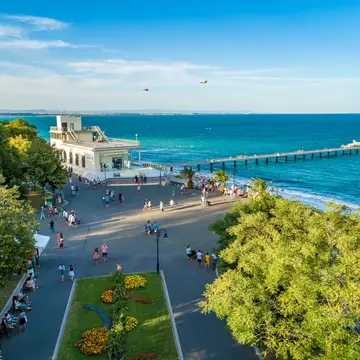
Burgas Beach
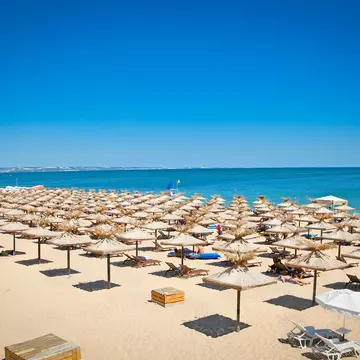
Although it can't compare with the far superior beaches at the nearby resorts, or even with Varna's urban stretch of sand, Burgas Beach still attracts plenty of locals on a hot summer day. It's a bit grubby at the southern end, with its long concrete pier, used as a diving platform by teenage boys and a fishing station by old men, but further on there are some smart beach bars and a couple of restaurants, and, in summer, the beach is kept clean by regular sweepers and watched over by lifeguards.
There are often high winds and high waves along this coast: not great for swimming, but OK for windsurfers. Boards may be rented from the Morski Klub at the northern end of the be…
reviewed
-
C
Roman Fortress of Sexaginta Prista
Defensive walls, a tower, some barracks and a storage area are what remain of this once great fortress, completed in AD 70. Around 600 soldiers once stood guard here, guaranteeing safe passage for river traders from their high bluff over the river. Stone inscriptions, decorative sculptures and tombstones are also displayed, and background information is posted in English. The friendly staff will show you around, and, if you’re interested, to the somewhat more recent German Bunker, hewn out of bricks in WWII and still marvellously intact. Other ancient finds are kept in the cool confines of the underground bunker.
reviewed
-
D
Church of Sveta Troitsa
Behind the magnificent opera house is the Russian-style Church of Sveta Troitsa, Ruse’s oldest surviving Ottoman-era building, built in 1632. The Turkish stipulation that no church should stand higher than a mosque led builders here, as elsewhere, to build partially underground. Large, well-preserved murals and 16th-century crosses and icons are the standouts here, as are the tower’s stained-glass windows. The bell tower was a post-Ottoman addition from the late 19th century.
reviewed
-
E
Banya Bashi Mosque
Sofia's only working mosque was built in 1576 by the celebrated Ottoman architect Kodja Mimar Sinan, who also designed the Selim II Mosque in Edirne, Turkey. It's certainly an eye-catching edifice and the red brick minaret makes a convenient landmark. At the rear of the building is a small, recently excavated section of the bathhouse that once joined onto the mosque and a hot-water drinking fountain. Visitors are welcome outside prayer times if modestly dressed.
reviewed
-
F
Happy Bar & Grill
Varna’s home-grown, and now nationwide, chain restaurant has four branches around the city, including at this central location. The uncomplicated menu of grills, steaks and salads pulls in customers throughout the day, and the friendly waitstaff, who occasionally launch into spontaneous dance routines, certainly add to the atmosphere. There’s another branch on bul Slivnitsa.
reviewed
-
G
Dream House
Although not the easiest place to find – look for the door on the left inside the small shopping arcade and climb the stairs – this vegetarian restaurant is well worth seeking out. The menu includes dishes such as grilled tofu, algae soup and various stir-fries. There’s an all-you-can-eat buffet on Sundays (5 lv) and beer and wine are available.
reviewed
-
H
Mehana Chiflika
[ourpick] Mehana Chiflika The enormous Chiflika is an excellent mehana with traditional furnishings, live music and a wide range of grilled meats. It’s a place for hearty eaters, and the rustic charm is only enhanced by the sight of some dishes being served up on what are essentially chipped-off tree stumps.
reviewed
Advertisement
-
I
Pri Monahinite
[ourpick] Pri Monahinite Set in the courtyard of a little church, Pri Monahinite (‘At the Nuns’ Place’) is a classy place for roast lamb, grilled pork and other meaty offerings. It also does good salads and has an extensive wine list.
reviewed
-
J
Egur-Egur
Hearty Armenian cuisine is served up at this convivial restaurant, with plenty of kebabs, steaks, stews and other meaty offerings available (though there’s also a decent range of vegetarian dishes).
reviewed
-
K
Bally
This new club playing hip-hop and techno has both its supporters and detractors. With its large central dance floor, it can seem empty unless there’s a weekend crowd.
reviewed
-
L
Dom na Architekta
This wood-and-stone traditional tavern has great Bulgarian specialities, served in a balmy back garden in summer, moving indoors in front of a crackling fire in winter.
reviewed
-
Snow Shack
Pamporovo is ideal for snowboarding; visit the popular British-run Snow Shack in the Hotel Markony complex for snowboarding gear and/or training courses.
reviewed
-
Smolyan Art Gallery
Opposite the museum, the Smolyan Art Gallery boasts some 1800 paintings, sketches and sculptures by local, national and foreign artists.
reviewed
-
M
Tsarevets Fortress
The inescapable symbol of this proud medieval town, this reconstructed fortress dominates the skyline, and is one of Bulgaria's most beloved monuments. The Tsarevets Museum-Reserve is located on Tsarevets Hill, which has been settled since time immemorial due to its strategic location. Thracians and Romans used it as a defensive position, but the Byzantines built the first significant fortress here between the 5th and 7th centuries.
The fortress was rebuilt and fortified by the Slavs and Bulgars between the 8th and 10th centuries, and again by the Byzantines in the early 12th century. When Târnovgrad became the Second Bulgarian Empire's capital, the fortress was truly mag…
reviewed
-
Leb i Vino
If you've been hunting for a place that allows you to dive into traditional Bulgarian culture, then look no further than Melnik. Run by the husband-and-wife team of Yane Kamenarov and Elena Georgieva-Kamenarova, Leb i Vino ('Bread and Wine') is a cultural organisation that aims to celebrate the musical and cultural heritage of the Pirin region.
Through visiting local villages and interacting with sagacious elders, Yane and Elena have collected the knowledge and artistry of everything from singing and wool dying to instrument making and carpet weavingWhile their primary goal is to keep traditional Pirin culture alive and to transmit it to future generations, they also prov…
reviewed
-
Church of Rozhdestvo Bogorodichno
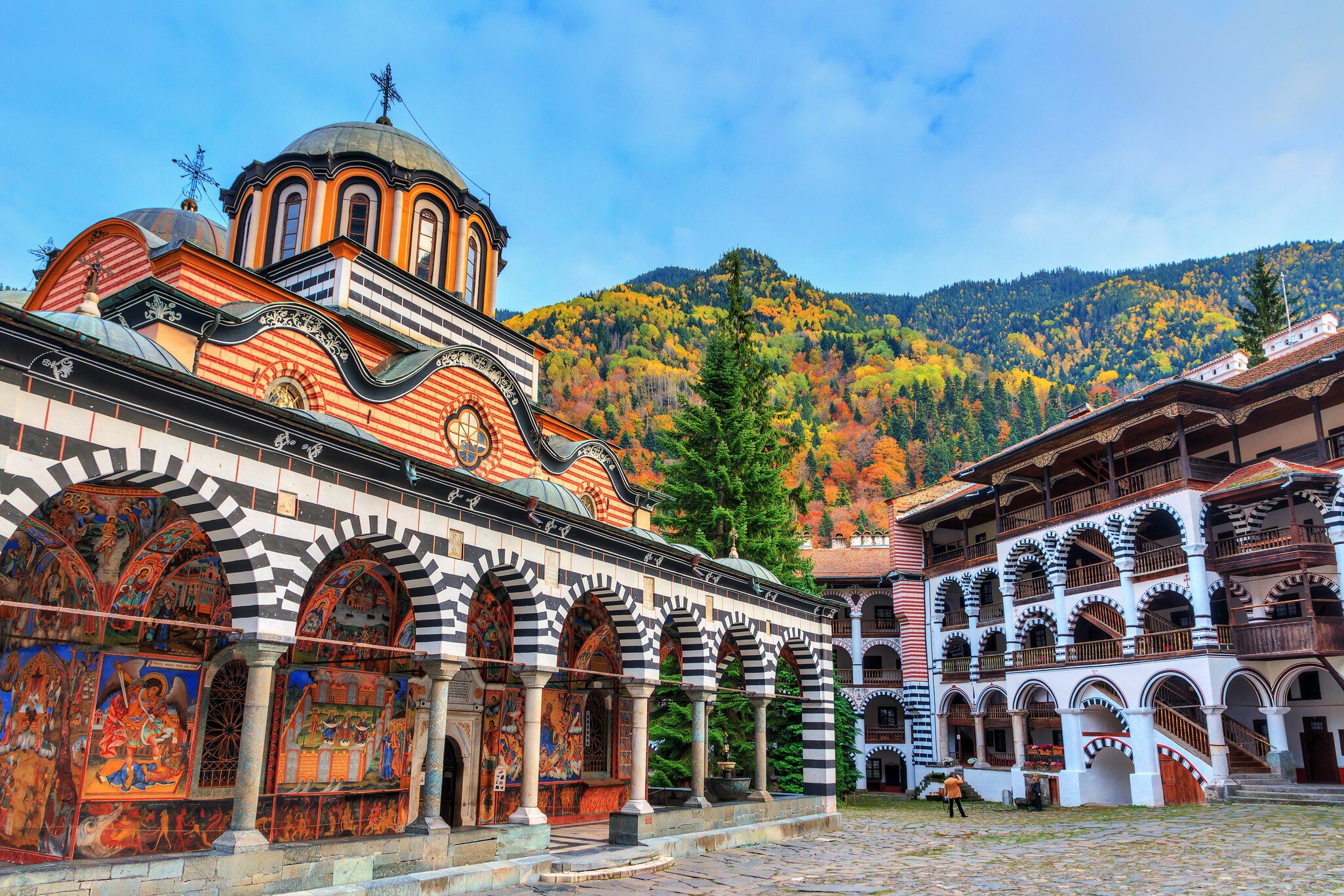
Within the monastery's walls, four levels of colourful balconies - with monastic cells, storerooms, a refectory and kitchen - surround the large courtyard, where stands the magnificent Church of Rozhdestvo Bogorodichno, Bulgaria's grandest monastery church. Built between 1834 and 1837, the structure is crowned by three great domes.
Its outside walls are covered with frescoes both vivid and harrowing (or humorous, depending on your disposition), depicting hell, where demons with whips, chains and pitchforks torture sinners in various states of woe and undress. The happier paintings, depicting the virtuous accompanied by angels and saints, indicate the moral lesson that ste…
reviewed
-
N
National Museum of Military History
Don’t be put off by the rusting army trucks in the overgrown front yard – this museum is among the most interesting and best presented in Sofia. Displays over three floors tell the story of warfare in Bulgaria from the time of the Thracians onwards, with extensive labelling and information boards in English. Most space goes to the period from the 1876 April Uprising through to WWI, with cases filled with weaponry, rebel flags and a seemingly endless parade of uniforms and personal belongings of soldiers. Among the more striking are the shaggy-fur flying costume, resembling a traditional Kuker outfit, worn by a Lt Simeon Petrov during the First Balkan War, and the pint…
reviewed
Advertisement
-
O
Archaeological Museum
The Buyuk Djami (Great Mosque) since 1899 has housed Sofia’s fascinating Archaeological Museum. Thracian and Roman tombstones fill up much of the ground floor, along with weaponry and jewellery. Among the more eye-catching artefacts are a 3rd-century AD bronze head of the Emperor Gordianus; a stone plaque showing gladiatorial fights in the circus, now under the Arena di Serdica hotel; and the original 4th-century AD mosaic floor from the apse of the Church of Sveta Sofia. On show upstairs are the remarkable finds unearthed near Shipka in 2004, including the 4th-century BC gold burial mask of a Thracian king, and a magnificent bronze head with coloured glass eyes and fin…
reviewed
-
Nativity Memorial Church
Even before arriving in Shipka, you’ll see the splendid, onion-shaped golden domes of the Nativity Memorial Church glittering from amidst thick woods above the village, framed against the mountain. Part of the Shipka Monastery, and also known as the Church of St Nikolai, the magnificent structure was built in 1902 as a dedication to soldiers who died at the Shipka Pass during the Russo-Turkish War (1877–78). The design is heavily influenced by Russian architecture, and features five golden domes and 17 church bells that can be heard for several kilometres when rung. Inside the crypt Russian soldiers who perished are interred, and there are some wonderful frescoes depict…
reviewed
-
Preobrazhenski Monastir
Preobrazhenski Monastir, or the Monastery of the Transfiguration, is located high in a forest about 7km north of Veliko Târnovo. Originally built in 1360, it’s Bulgaria’s fourth largest monastery and offers fantastic views. Despite being destroyed by the Turks in the late 14th century, it was rebuilt in 1825, about 500m from the original site, but later damaged by landslides. To the sides of the main church you will see massive rocks that tumbled down the hill and miraculously just missed the building. The monastery’s churches boast murals painted between 1849 and 1851 by the renowned Zahari Zograf. While the best are now in Veliko Târnovo’s Archaeological Museum, a resto…
reviewed
-
P
National Art Gallery
Occupying the east wing of the royal palace, the National Art Gallery holds one of the country’s most comprehensive collections of Bulgarian art, with several galleries full of mainly 19th and 20th century paintings and sculptures. All the big names are represented, including the ubiquitous Vladimir Dimitrov, whose orange, Madonna-like Harvester hangs in the former royal music room. Other standouts include Goshka Datsov’s The Dream of Mary Magdalene and Georgi Mashev’s creepy Outcast. Anton Mitov’s paintings of early-20th-century Sofia, such as Vegetable Market at Sofia, offer a fascinating insight into local history. On the floor above, a warren of corridors and …
reviewed
-
Tsarevets Museum-Reserve
The inescapable symbol of this proud medieval town, this reconstructed fortress dominates the skyline, and is one of Bulgaria’s most beloved monuments. The Tsarevets Museum-Reserve is located on Tsarevets Hill, which has been settled since time immemorial due to its strategic location. Thracians and Romans used it as a defensive position, but the Byzantines built the first significant fortress here between the 5th and 7th centuries. The fortress was rebuilt and fortified by the Slavs and Bulgars between the 8th and 10th centuries, and again by the Byzantines in the early 12th century. When Târnovgrad became the Second Bulgarian Empire’s capital, the fortress was truly m…
reviewed