Oct 9, 20268 min read
9 of the Best Places to Visit in BoliviaOct 22, 2025
14 MIN READ

Writer
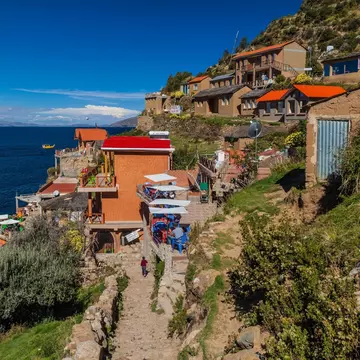
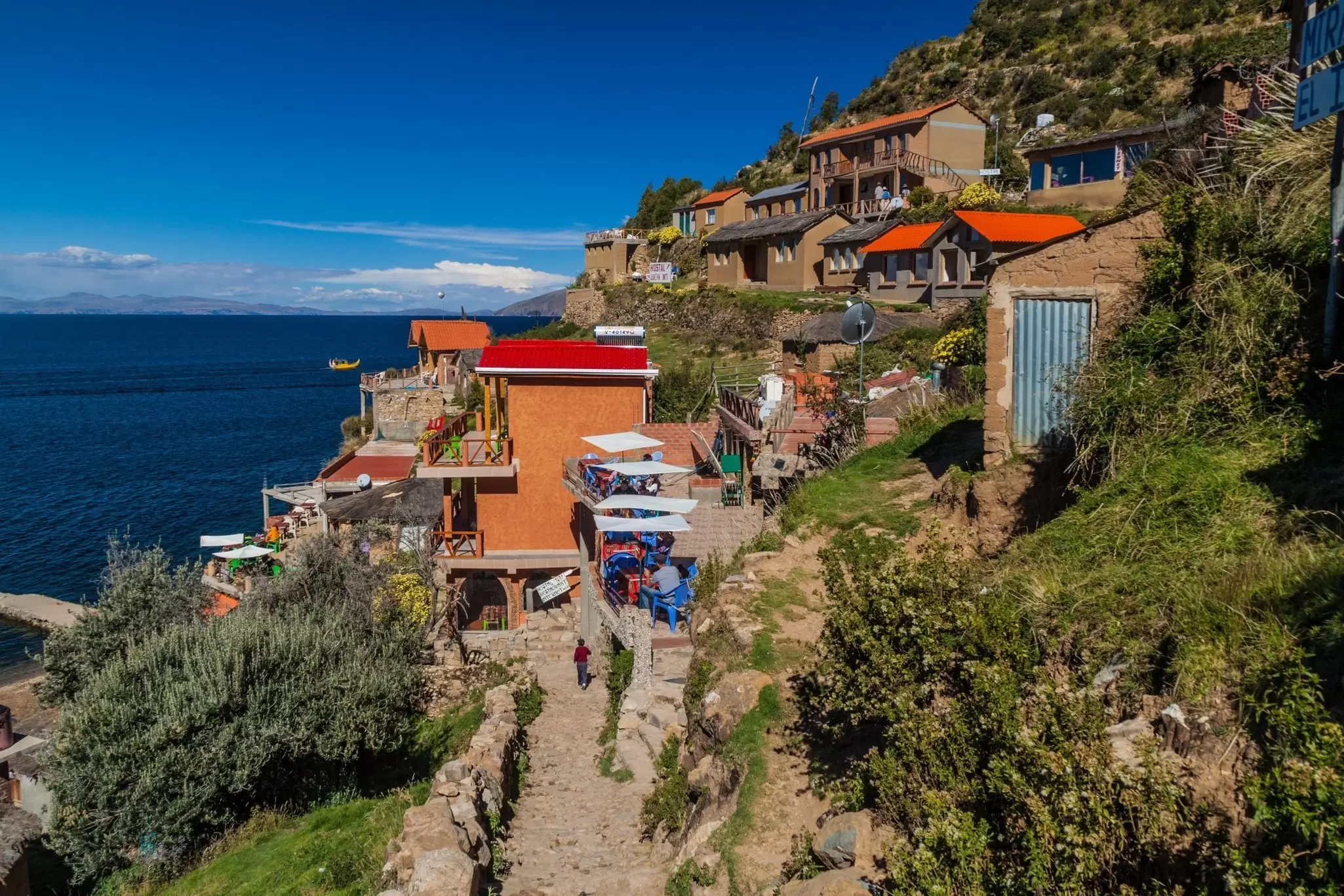
A cliffside on Isla del Sol, Bolivia. Matyas Rehak/Shutterstock
Writer
Lonely Planet may earn a commission from affiliate links on our site. All recommendations and reviews reflect our own independent opinions.
Landlocked Bolivia is an exciting country with unmatched travel experiences. While it can be overwhelming, such variety is a gift to travelers seeking adventure.
Long overshadowed by its tourism juggernaut neighbors, local initiatives are driving Bolivia to the top of the list of global destinations. Here is our list of 17 amazing things to do while you're there.
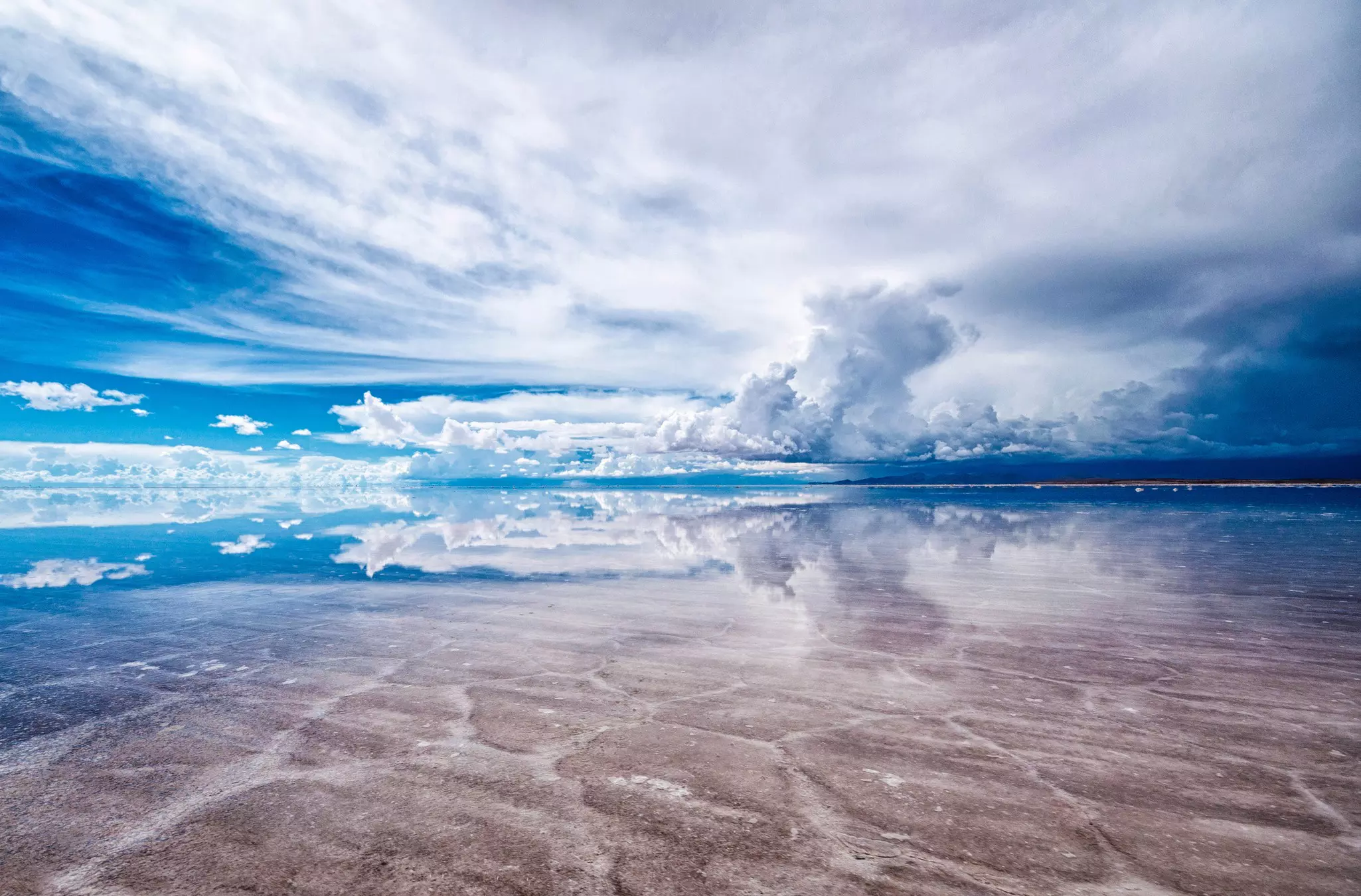
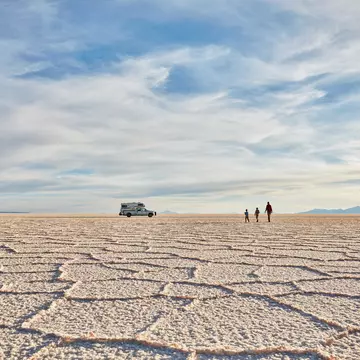
Arguably Bolivia’s biggest tourist attraction, the Salar de Uyuni’s white expanse confounds the senses as the sky and earth blend and erase the horizon.
Visit just after the rains in March or April, and the effect is amplified by water reflecting the sky at your feet – a photo op like no other on the planet.
The journey becomes truly otherworldly at night, and you will never forget the way the stars and the Milky Way are mirrored on the ground, creating an astonishing floating effect.
Planning tip: Many visitors jump into early morning tours that leave from the center of Uyuni. Alternatively, consider multi-day tours with stops at Isla Incahuasi and the many hot springs and colored lakes nearby.
La Paz’s “Cholita Wrestlers” will stop (and steal) your heart during their haywire afternoon brawls. Dramatic fights, spurred by soap opera-like storylines, place these indigenous athletes in the spotlight, showing off their traditional bowler caps and famously wide, cape-like skirts.
They grapple, slam, kick and fly their way to victory against crooked heels, often unconscionable men and chauvinistic referees hell-bent on keeping these women down.
Cholitas Luchadoras is the best show in town, performing two to three times per week. The main event is held on Sundays at a colosseum in El Alto’s Villa Dolores neighborhood. Pickups with tour companies are available from La Paz, but a short, six-block walk from the Faro Murillo Mi Teleférico cable car gets you to the door.
Planning tip: Tickets get you a ringside seat for a family-friendly show of thrills and spills. It also includes a bag of popcorn, perfect for throwing at that nasty referee.
The jungle town of Rurrenabaque is the starting point for any Bolivian adventure through the Amazon. This is the doorway to Madidi National Park, an expansive reserve that just happens to be the world’s most biodiverse protected area.
Pink river dolphins, portly capybaras, elusive jaguars and more bird and insect species than in any other national park accompany daring visitors as they explore the untamed wilderness.
Agencies host wildlife-filled, three-day tours of the pampas (plains) or the selva (jungle). The magic here lies in the tour agencies owned and operated by indigenous communities.
Planning tip: Both Madidi Jungle and Chalalán ecolodges, located 3- and 6-hours by boat from Rurrenabaque respectively, are the best places for bushwhacking, community-driven adventures. Both are run and guided by Uchupiamona peoples, who have called these lands their home for centuries. Anyone looking for world-class flyfishing excursions, cast your lines out for golden dorado with the team from Tsimane Lodge.
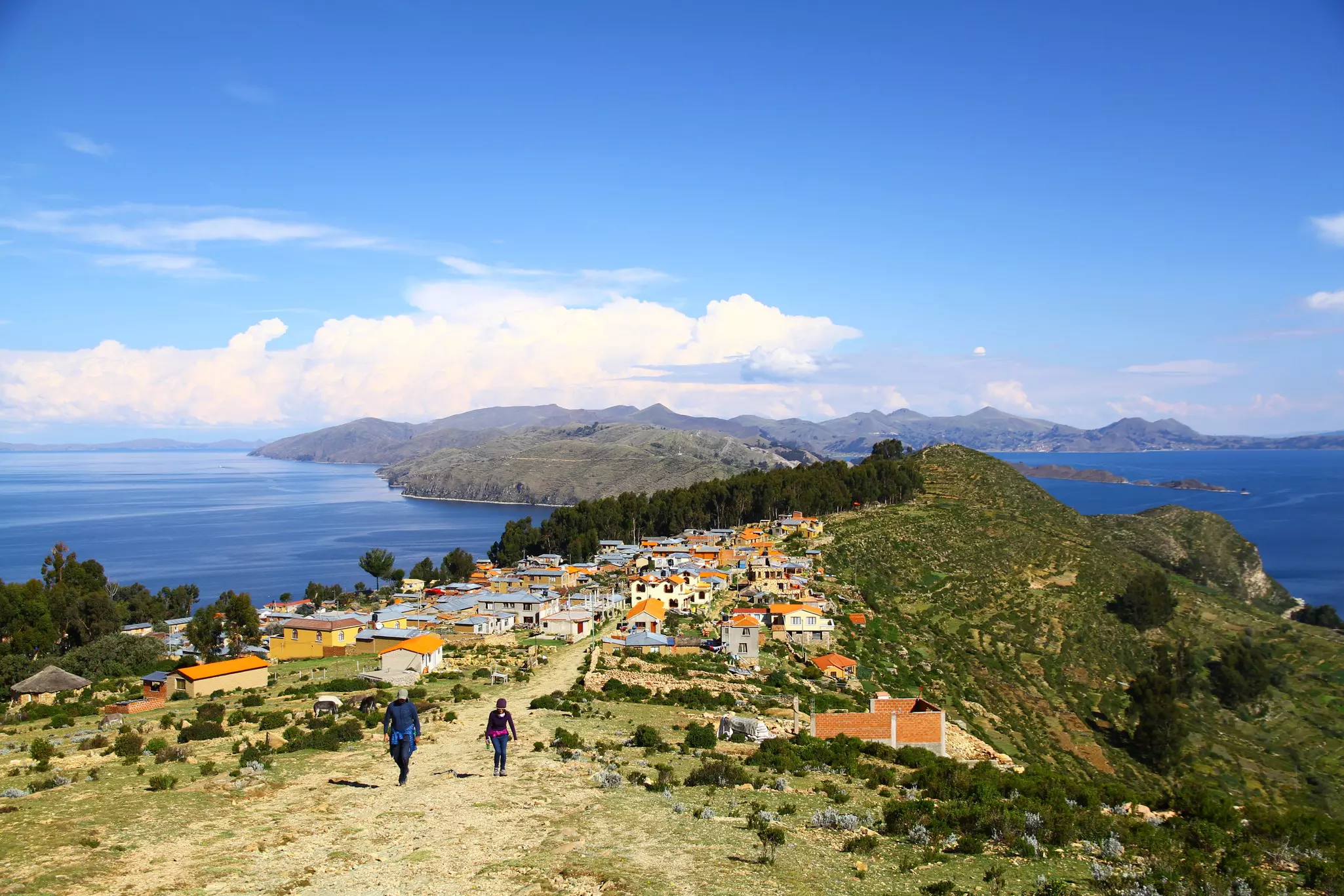
Any trip to Bolivia is incomplete without a visit to sacred Lake Titicaca. The highest navigable lake in the world at 3812m (12,506ft), Titicaca’s waves kiss picturesque farming villages and envelop legends of ancient civilizations lost in the water’s depths.
Take the less-traveled Huarina-Achacachi-Taquina highway to the beachside tourist town of Copacabana to see the best of the slow life here.
And the rustic ferry ride at the Strait of Tiquina on the way to Copacabana’s peninsula is one of Bolivia’s unforgettable experiences.
Copacabana itself is a pulsing town, and a stay in the whimsical domes and spires of Hostal Las Olas means a hammock-swinging, birds-eye view of boats moored in the bay.
But don’t swing too long – the mysteries of Isla del Sol, Incan birthplace of the sun god, are calling. You can still feel ancient spirits haunting the footpaths and stone ruins of this serene, roadless island.
Many locals believe the Andes are haunted by mountain gods called “apus”. Mountaineers come from all over the world to Bolivia to test their mettle against these spirits and have some of the most breathtaking adventures along the way.
A relatively easy-to-reach peak and reasonably comfortable refuges make Huayna Potosí a favorite, often serving as a training ground for some of Bolivia’s more difficult climbs.
The majestic Mt Illimani is the sentinel overlooking La Paz, and its south face leads to the highest peak in the Cordillera Real, full of steep climbs and technical challenges. Meanwhile, Condoriri, Janko Kota, Illampu, Volcán Sajama and many others are standing by.
Planning tip: Of course, it is important to only go with internationally certified guides. For those looking for some intense rock climbing, the tall peaks and wide granite walls at the Cordillera de Quimsa Cruz, seven hours south of La Paz, are the place to be.
The best tour guides in La Paz are its lustrabotas, or shoe-shiners. These young workers, with their iconic face-covering knitted masks, know where to go to see streets of a bygone era, where old tradesfolk – fishmongers, seamstresses, milliners and, of course, lustrabotas themselves – hawk their work in the streets.
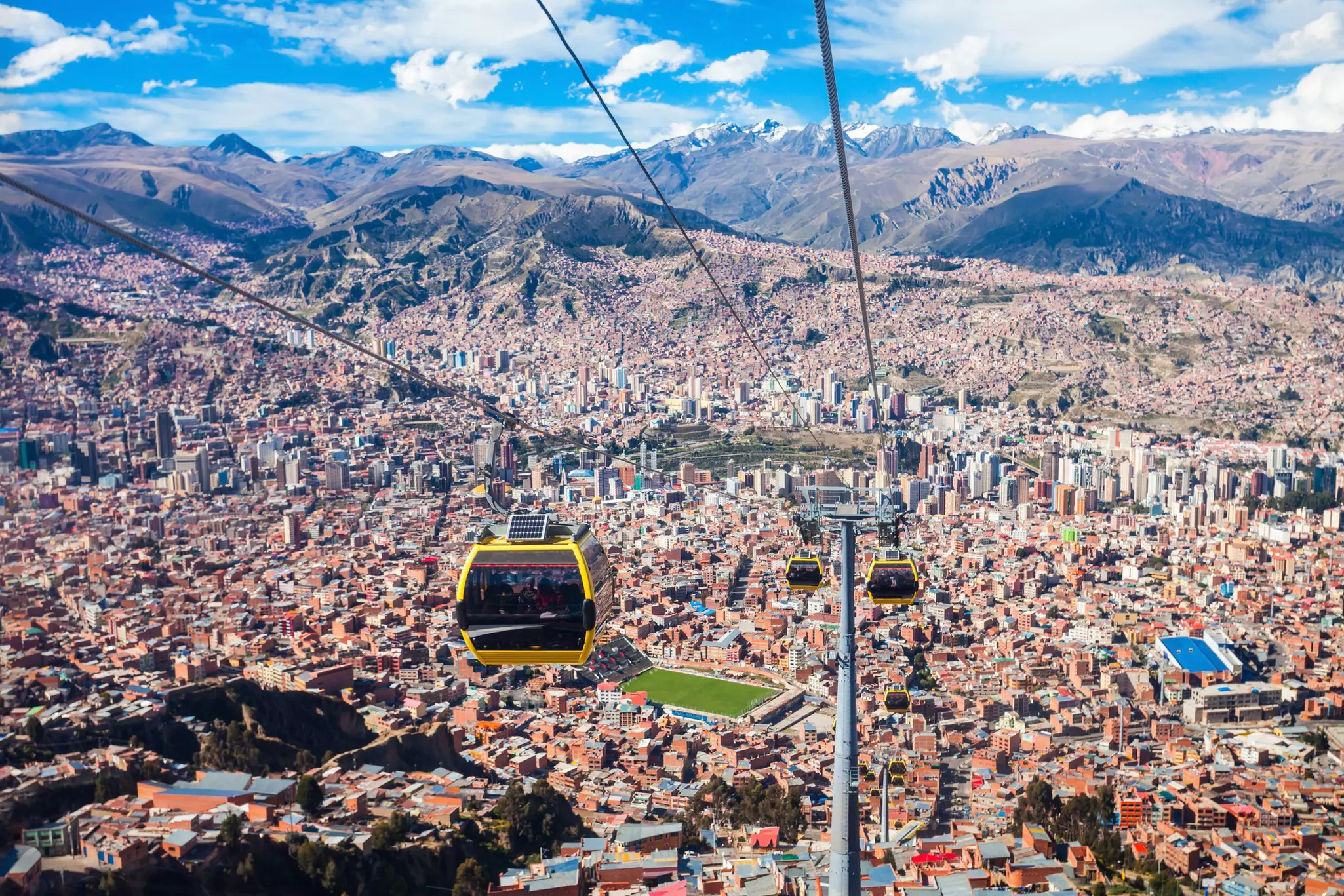
Alternatively, take in the city from above, gliding along in Mi Teleférico, the world’s longest urban cable car network.
Stretching 32km (20 miles) across two cities, this mass transit wonder began in 2014 as an efficient way to move commuters across La Paz and El Alto, cities notorious for unbelievable traffic jams.
At just 3 bolivianos (B$3) per line, the system flies from the swish south side of La Paz up to the far end of El Alto in minutes. The glass cabins are shared, so you just might make some new friends along the way.
Inspired by the opening of Danish superstar chef Claus Meyer’s Gustu in the south of La Paz in 2012, energetic chefs across Bolivia seem to be opening restaurants on a weekly basis.
Look to La Paz’s city center for the crème-de-la-crème of Bolivia’s culinary renaissance, where lunch menus show off the best the city has to offer.
From the second floor of a former colonial home near the Mercado de las Brujas, the cooks in the steamy kitchen at Popular Cocina Boliviana have taken a festive approach, creating wild spins on traditional Bolivian dishes that are as colorful as the cumbia music rattling its tables.
For the most elegant lunch available, head across downtown to the trendy Hb Bronze Coffeebar, where a selection of Bolivia’s finest coffees, wines and chocolates accompany your sandwich or charcuterie plate.
For a more avant-garde dining experience, culinary deconstructionist Marco Quelca and his band of kitchen outcasts at Sabor Clandestino dish out experimental plates during immersive outdoor dining experiences that explore the cultures and spiritual beliefs of local indigenous people. This isn’t just a meal, this is an event for both stomach and soul.
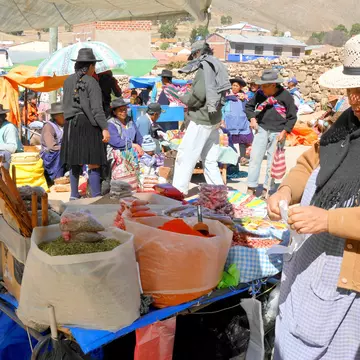
Above La Paz in the neighboring sister city of El Alto, the sprawling neighborhoods surrounding the Plaza 16 de Julio come to life bright and early every Thursday and Sunday. Shop doors swing open and street stalls stretch out their umbrellas and tarps to create the largest open-air market on the continent. Fresh produce. Sporting equipment. Handmade furniture. Used books. Half a helicopter. If you want it, you can find it here.
Getting to the market from central La Paz is a comfortable 10-minute ride uphill on the city’s red Mi Teleférico cable car line – it's worth the short trip for the panoramic views alone.
Planning tip: Let yourself get lost among the madness but watch out for pickpockets.
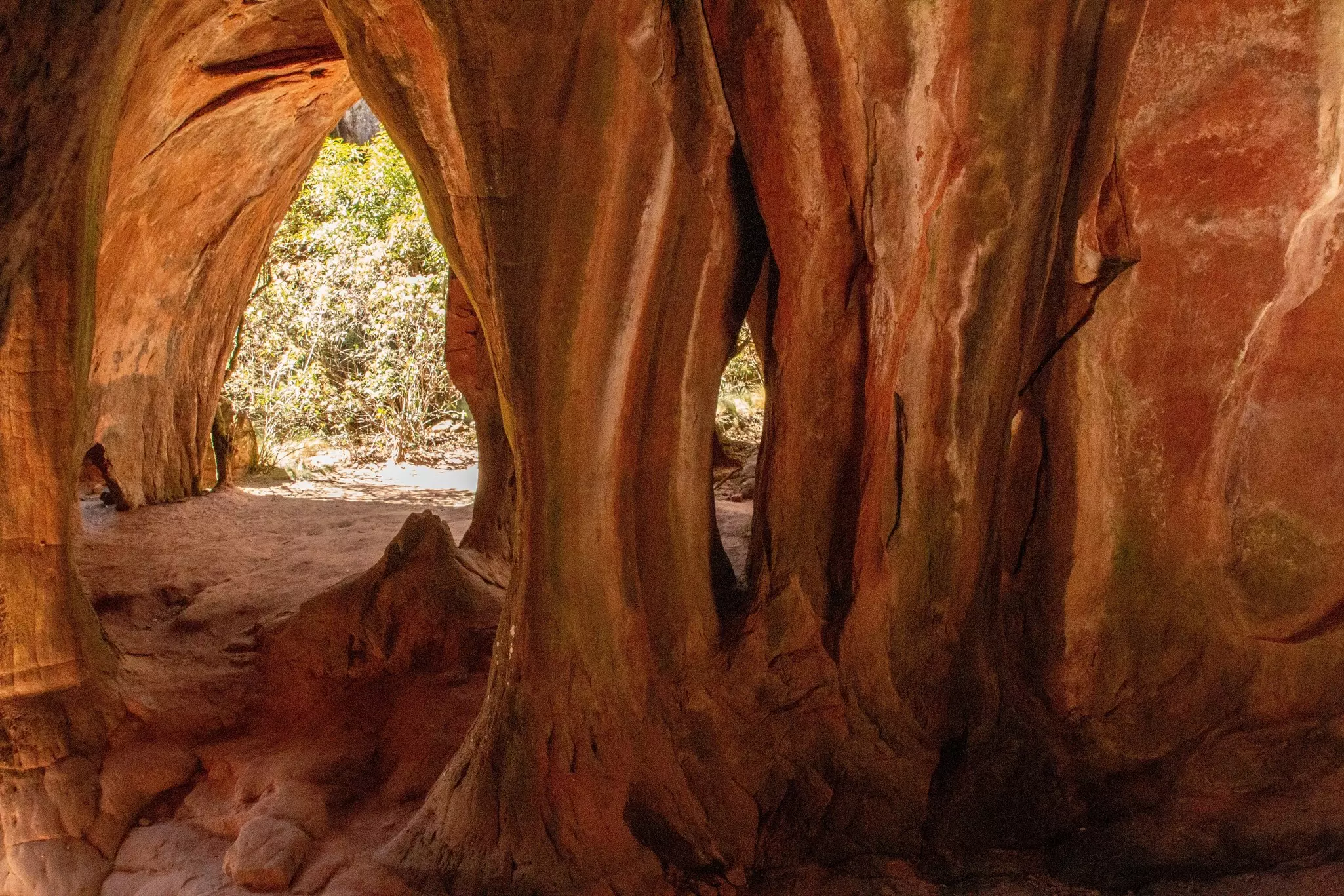
Parque Nacional Torotoro is a compact 64 sq km (25 sq miles) but manages to pack in massive thrills.
This was the stomping ground for the great dinosaurs of the Cretaceous period, dating back 145 million years, and you can touch the tracks that prove it. The town of Torotoro is completely dinosaur-crazy, and residents themselves offer treks to the biggest footprint sites in the park, easily accessible to dinosaur lovers of any age.
While in the park, take advantage of the prehistoric landscape and do some additional exploring, from the lofty views and sunlight-drenched rock cathedral at Ciudad de Itas to the dizzying mirador above the depths of Cañon de Torotoro.
Detour: Travel to nearby Huayra K'asa and explore the very deep and very wet Caverna de Umajalanta. But be warned, this intense cave tour is not for the faint of heart.
Under the shadow of snowcapped mountain Illampu, Sorata is home to the Jacha Avalancha Internacional (Big Avalanche International), an annual downhill bike race that brings fearless cyclists from around the world to this quiet, leafy valley town every October for an intense weekend of gravity-defying, mud-covered adrenaline.
Come experience the rush yourself by taking on Bolivia’s best off-road biking trails.
The Loma Loma, Eden and Chilquani trails await more advanced cyclists, while the road-heavy Camino Millipaya is gaining popularity as a more novice – some might say sensible – way to catch a rush while taking in the scenery.
The gem of Sorata is the Gruta de San Pedro, a cave located at the bottom of a route by the same name, where you can explore the depths of this mysterious cave and take a leisurely paddleboat around its subterranean lagoon.
Planning tip: With so many trails to choose from to match all skill levels, companies like Gravity Bolivia and M Jordan can help you fulfill your adrenaline-fueled dreams.
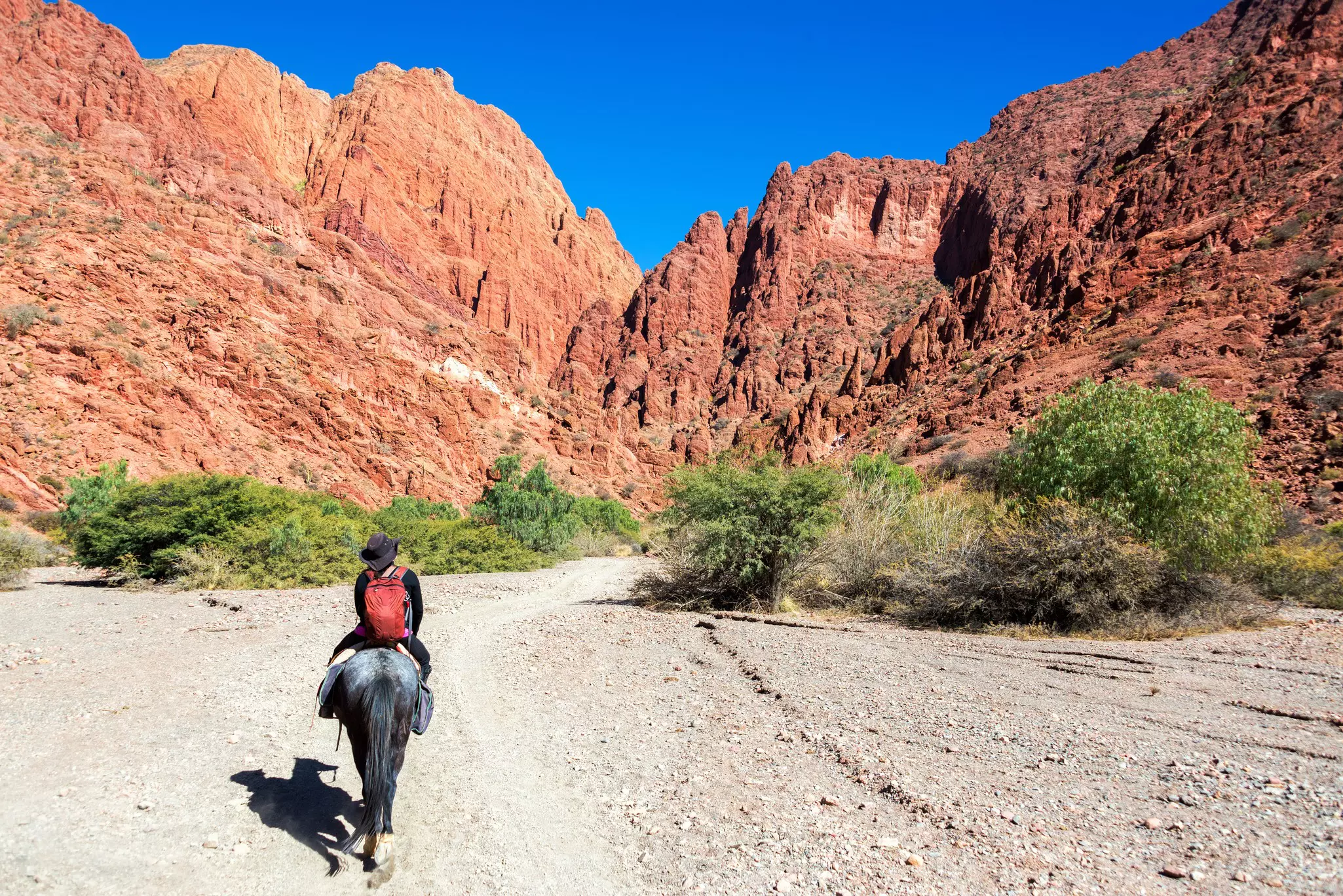
Tupiza was once flooded with wily prospectors and international mining companies, drawn here by gold in the riverbeds promising unspoken riches.
Rampant gold fever fed local banks, attracting American outlaws Butch Cassidy and the Sundance Kid on their continent-crossing escape from the famous Pinkerton Agency.
Relive these wild times on a guided horseback tour, galloping your way through deep, red canyons and along the same riverbeds where gold prospectors placed their hopes for fortunes.
You can ride through glorious Cañón del Inca and Cañón del Duende, or canter along the Río San Juan de Oro where miners today still look for slivers of the shiny stuff.
Club Ecuestre Amazonas provides full immersive tours, including visits to functioning mining towns that will take you back to the days of Butch and Sundance.
Detour: From Tupiza, a 3-hour drive west takes you to San Vincente to pay your respects to the duo of bandits at the reported site of their final, fatal run-in with the law.
Santa Cruz de la Sierra is the country's economic engine, and though cruceños work hard, they also play hard. With its Miami mood and Bolivian prices, Santa Cruz has party culture locked in.
For a night at the clubs, the very center of town near the Basílica Menor de San Lorenzo is the place to be. Bartenders at Duda Pop Pub shake up fresh cocktails, and nearby clubs bump electronica, reggaeton and other styles.
More party options await along nearby Avenida San Martín, while the drinks and DJ sets at Simon Speakeasy are not to be missed.
For the beer-drinking set, Santa Cruz’s always-warm weather is tailor-made for the ever-growing number of beer gardens serving up craft brews of every style.
Santa Cruz Beer Company’s massive outdoor bar on Avenida Los Cusis is well worth the short taxi ride from the center.
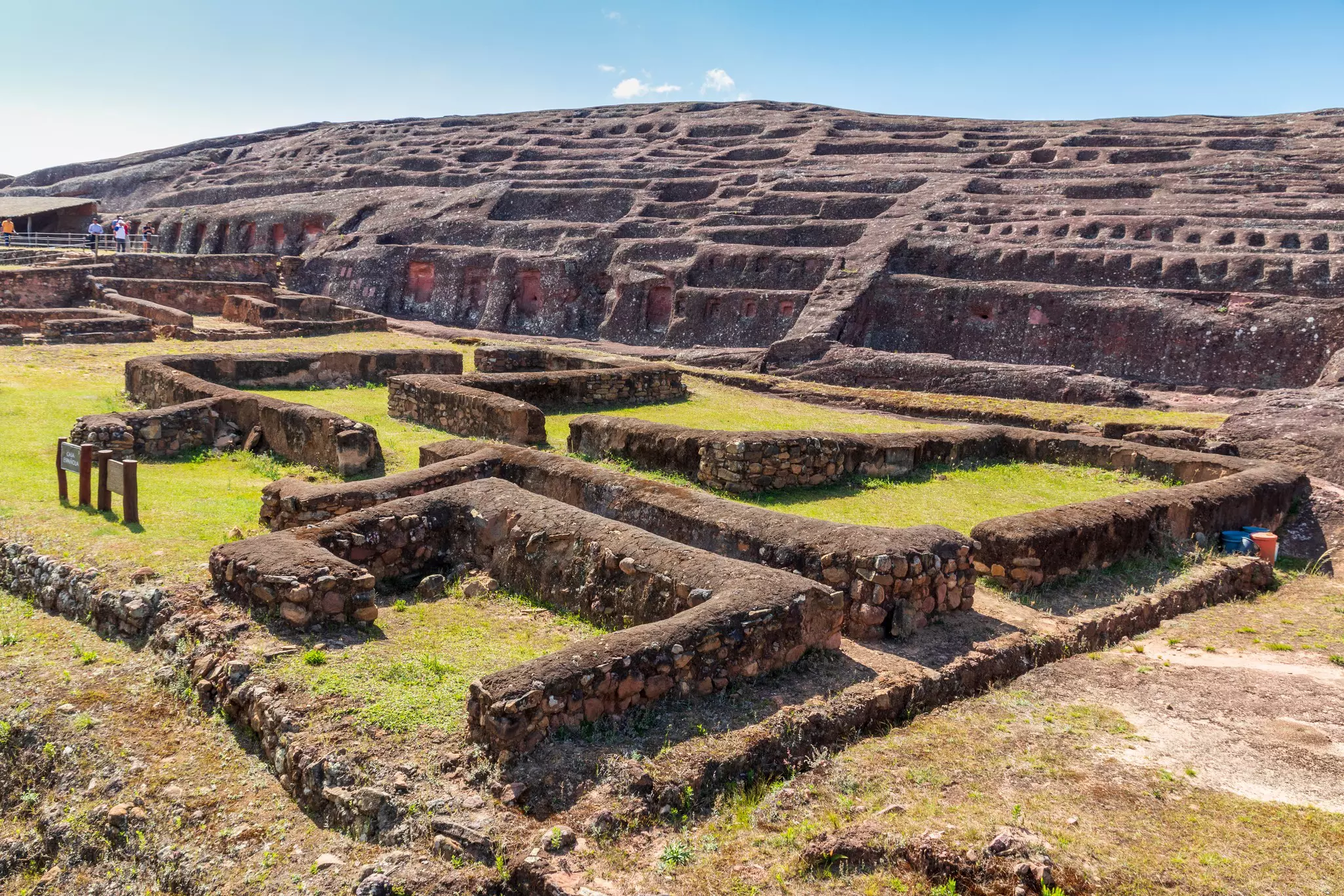
Three hours' southwest of Santa Cruz de Sierra rests Samaipata, a town of cool breezes and laid-back lifestyles that attracts people from afar to plant roots here.
More than a few expats now call this place home, and many have opened excellent restaurants. Check out local favorite La Boheme to enjoy a cold beer and swap travel stories.
Samiapata’s big attraction is El Fuerte de Samaipata, a 20-hectare archaeological site originally built by the Chané people, a pre-Incan society that claimed territory reaching into Argentina, Paraguay and Brazil.
Both the Incas and the Spanish later built on this site, so unraveling the mystery of everything here is no easy task.
What do the animal-shaped carvings mean? And were those eerie niches in the walls intended as rooms for priests to prepare for ceremonies or food storage closets?
Pass the afternoon with a picnic, keeping an eye out for the majestic condors flying in from Amboró National Park just to the north.
In any history of the Spanish Empire, ample pages must be written about Potosí and its iconic, tragic symbol, Cerro Rico.
This former mining town, founded in 1545, is home to this “Mountain That Eats Men”, so named due to the thousands of miners who lost their lives within its tunnels over centuries.
This silver mine was once the colossal engine that brought countless riches across the world to Europe.
Among the narrow, colonial streets of the old town, Plaza 10 de Noviembre contains some of the city’s most important landmarks, including La Catedral and El Cabildo. The Casa Nacional de la Moneda is one of the finest museums in the country.
Finished in 1773, this former mint was built like a fortress and even served as one for a time.
Looming above it all, the working mine at Cerro Rico is mostly depleted and its cone peak threatens to collapse, serving as a grim reminder of the colonial impact on Latin America.
Bolivia’s colonial history comes alive in Chiquitania, where Jesuit missions still call visitors to their altars to admire elaborate woodcarvings.
Large and small towns along this route through tropical savanna keep historic churches built in the Baroque Spanish tradition.
You can spend days here hopping between missions, taking in the buildings’ craftsmanship and warm golden colors.
Larger, well-known churches like the one in Concepción, built by Jesuits in the 18th century, are often adorned with sacred art created by indigenous locals and are not to be missed.
But churches in smaller villages are just as important to visit. These include San Miguel, San Raphael and the church in Santa Ana, constructed by indigenous locals after the Jesuits fled.
Local chamber orchestras frequently give concerts in these houses of worship. Do not miss out on this living history.

Caranavi is a small town with a big city feel, the beating heart of Bolivian coffee country. The constant heat and humidity of the surrounding cloud forest mean life is lived on doorsteps here, and the plaza is always alive with family adventures.
Travelers take advantage of the area’s best outdoor activities, including hiking, swimming, zip lining and rafting.
But even with all that, coffee is king. Small, family-owned cafetales crawl up the hillsides, and the smells of roasting and brewing coffee pour out of the open entrances to the town’s many coffee shops.
Farmers work hard to produce some of the highest-altitude coffee in the world, and these are your guides along Bolivia’s Ruta de Café. Café Aventura, a coffee shop in the quiet southwest corner of the plaza, organizes one of the most authentic tours to be found anywhere.
Visit rustic farms and try a hand at harvesting and processing the beans. And the best part? Drinking a cup of coffee with the very farmers who grew it.
The roots of Bolivian viniculture run deep, reaching 3 hours' north of Tarija to the red, dusty soils of Valle Cinti, in Sucre. Here are some of the continent’s oldest vineyards, dating back to the 1550s.
Moscatel de Alejandría and negra criolla are grown here, joined by the hybrid vischoqueña, an endemic grape variety producing a unique, light-bodied wine that will delight any oenophile.
Vines here climb up 6m-tall (20ft) trees, and vignerons from Jardin Oculto and other bodegas climb ladders to care for the crop.
This is also the birthplace of singani, Bolivia’s national spirit, and local makers can show you how distilling has been done here for generations. Camargo is the hub of the region, with places to stay and plenty of market shopping.
Detour: For something special, take in the vineyard views from the terrace of the Hotel Parador Viña de Pereira in nearby, rustic Villa Abecia.
Book your Bolivia trip with Lonely Planet Journeys
See Bolivia how it's meant to be seen
Accommodations, activities and ground transportation all taken care of, so you can focus on the fun part. Tell us what your dream trip to Bolivia looks like, and our local experts will build it from scratch. Or start with one of our itineraries and make it your own.

Explore related stories