go to content go to search box go to global site navigation

Bhutan

Things to do in Bhutan

‹ Prev

of 11

  1. Paro (Rinpung) Dzong

    The Paro Dzong is one of Bhutan's most impressive and well-known dzongs, and perhaps the finest example of Bhutanese architecture you'll see. The massive buttressed walls that tower over the town are visible throughout the valley.

    The dzong's correct name, Rinchen Pung Dzong (usually shortened to Rinpung Dzong), means 'fortress on a heap of jewels'. In 1644 Zhabdrung Ngawang Namgyal ordered the construction of the dzong on the foundation of a monastery built by Guru Rinpoche. The fort was used on numerous occasions to defend the Paro valley from invasions by Tibet. The British political officer John Claude White reported that in 1905 there were old catapults for throwing…

    reviewed

  2. Swiss Farm

    The Swiss Farm is a development project established by Fritz Maurer, one of the first Swiss to work in Bhutan, and now run by his son. The project introduced brewing, farming machinery and fuel-efficient, smokeless wood stoves to the valley, as well as its first tourist guesthouse. The milk from large Jersey cattle is used in Bhutan's only commercial cheese factory and Bhutan's only native beer, Red Panda, is brewed here.

    It's possible to visit the farm but your guide needs to arrange this in advance. Yoser Lham Shop is the main outlet for the Swiss Farm.

    reviewed

  3. A

    National Institute for Zorig Chusum

    This institute, commonly known as 'the painting school', operates four- to six-year courses that provide instruction in Bhutan's 13 traditional arts. Students specialise in painting (furniture, thangkas – painted religious pictures, usually on canvas), woodcarving (masks, statues, bowls), embroidery (hangings, boots, clothes) or statue-making (clay).

    Most tour operators include a visit to the school in their sightseeing program. Though large groups of visitors can disrupt the classes, the craft demonstrations are a photographers' dream and it's hard not to be impressed at the skill and discipline of the young students.

    There are several handicraft shops nearby.

    reviewed

  4. Lamey Goemba

    High on a hill sits Lamey Goemba, a large palace and monastery built in the 1800s as a residence for King Ugyen Wangchuck. Its design is in the palace style of the time and is similar to Wangdichholing. It is now being used by the Integrated Forest Development Project and isn't formally open to visitors.

    reviewed

  5. B

    Gagyel Lhundrup Weaving Centre

    This private centre at the south end of Thimphu produces hand-woven textiles on site and has a selection of cloth and ready-made garments for sale. This is one of the few places where you can watch weavers at work. A finely embroidered kira can take a year to make and cost over US$1000; cheaper ones start at US$40.

    reviewed

  6. Himalayan Pizza

    At the south end of town, this place produces decent pizza as well as spaghetti and roesti. There is no menu and the owner speaks fluent Swiss-German but no English. Give your order an hour or more in advance if possible.

    reviewed

  7. C

    Trashi Chhoe Dzong

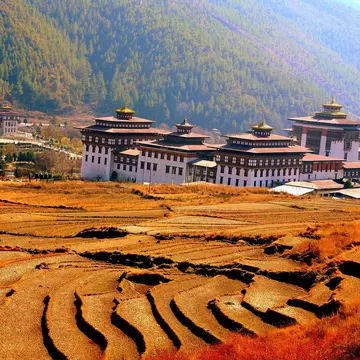
    This splendid dzong, north of the city on the west bank of the Wang Chhu, seems to fit seamlessly into the valley, lending the city both regal splendour and monastic weight. The dzong was the site of the lavish formal coronation of the fifth king in 2008 and hosts the city's biggest annual bash, the colourful tsechu festivities.

    The building you see is actually not the original Thimphu dzong. In 1216 Lama Gyalwa Lhanangpa built Dho-Ngen Dzong (Blue Stone Dzong) on the hill above Thimphu where Dechen Phodrang now stands. A few years later Lama Phajo Drukgom Shigpo, who brought the Drukpa Kagyu lineage to Bhutan, took over the dzong. In 1641 the Zhabdrung acquired the dzong…

    reviewed

  8. Walking the Bumthang Valley

    There are plenty of opportunities for day hikes in the Bumthang region, many involving visits to remote goembas. If you are on a tourist visa, take advantage of the vehicle at your disposal and arrange for the driver to pick you up at the end of a walk.

    From Swiss Guest House to Pelseling Goemba is a favourite half-day walk, descending a different route to Thamshing Goemba in a total of about four hours' walking. The first half is all uphill (2½ hours) but is more varied than the hike to Tharpaling, through a mix of forest, meadows and villages, and you are rewarded with great views. The monastery is a great place for a packed lunch or flask of tea.

    You can also walk from…

    reviewed

  9. D

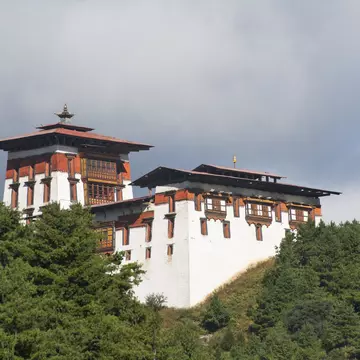
    Jakar Dzong

    According to legend, when the lamas assembled in about 1549 to select a site for a monastery, a big white bird rose suddenly in the air and settled on a spur of a hill. This was interpreted as an important omen, and the hill was chosen as the site for a monastery and for Jakar Dzong, which roughly translates as 'castle of the white bird'. The Zhabdrung's great-grandfather, Ngagi Wangchuck, founded the monastery.

    Jakar Dzong is in a picturesque location overlooking the Chokhor valley. The current structure was built in 1667 and has a circumference of more than 1500m. Its official name is Yuelay Namgyal Dzong, in honour of the victory over the troops of Tibetan ruler…

    reviewed

  10. E

    Weekend Market

    The weekend market is crammed into a set of stalls on both banks of the Wang Chhu, just north of Changlimithang Stadium. Vendors from throughout the region arrive on Thursday and Friday, setting up evening stalls in Norzin Lam, and remain until Sunday night. The most interesting selection is upstairs.

    Wander around and you'll find a pungent collection of dried fish, strips of fatty pork and balls of datse (home-made soft cheese). During the winter you can even pick up a leg of yak (with the hoof still attached). The incense area is one of the most interesting sections, full of deliciously pungent raw ingredients, as well as pink cubes of saffron that look like dice but are…

    reviewed

  11. Advertisement

  12. Trashigang Dzong

    The dzong is on a high promontory that overlooks the confluence of the Drangme Chhu and the Gamri Chhu. It was built in 1667 by Mingyur Tenpa, Bhutan's third desi. The entire eastern region was governed from this dzong from the late 17th century until the beginning of the 20th century.

    This dzong is unusual in that both the administrative and monastic bodies face onto a single dochey (courtyard). As always, the gorikha (porch) has paintings of the Four Guardian Kings. Inside are several lhakhangs. One lhakhang holds the statue of the deity of Gasin-re or Yama, the wrathful aspect of Chenrisig. He is a protector of the faith, the god of death and the king of law, and the…

    reviewed

  13. F

    Wangdichholing Palace

    The extensive palace of Wangdichholing was built in 1857 on the site of a battle camp of the penlop of Trongsa, Jigme Namgyal. It was the first palace in Bhutan that was not designed as a fortress. Namgyal's son, King Ugyen Wangchuck, the first King of Bhutan, chose it as his principal residence. The entire court moved from Wangdichholing to Kuenga Rabten each winter in a procession that took three days. Wangdichholing was also for a time the home of the third king, before he moved the court to Punakha in 1952.

    Wangdichholing was inherited by Ashi Choeki Wangchuck, an aunt of the fourth king, and the grand but rather neglected building is now used as a lobdra (monastic…

    reviewed

  14. G

    Motithang Takin Preserve

    A short distance up the road to the telecom tower is a trail leading to a large fenced area that was originally established as a minizoo. Some years ago the king decided that such a facility was not in keeping with Bhutan's environmental and religious convictions, and it was disbanded. The animals were released into the wild, but the takins, Bhutan's national animal, were so tame that they wandered around the streets of Thimphu looking for food, and the only solution was to put them back into captivity. It's worthwhile taking the time to see these oddball mammals, which look a bit like a cross between a gnu and a bison. The best time to see them is early morning when they…

    reviewed

  15. Kuenphen Hotel

    The eastern side of the pass is much rockier; the road switchbacks down through a fir forest past a road sign that says ‘Life is a journey, complete it’. At about 3000m, 20km from the pass, the route emerges from the trees and enters the pastures of the Sengor valley. The settlement at Sengor has a few houses near the road, although the main part of the village, about 20 houses, is in the centre of the valley. If you’re carrying a picnic lunch and have not already eaten it, this is an excellent place to do so – there is no good place to stop for the next two hours. A sign in Dzongkha adorns the rustic Kuenphen Hotel where you can get a simple local-style meal. A…

    reviewed

  16. H

    Black-Necked Crane Information Centre

    Your first stop should be the Royal So­ciety for Protection of Nature’s (RSPN) Black-Necked Crane Information Centre, which has informative displays about the cranes and the valley environment. You can use the centre’s powerful spotting scopes and check what you see against its pamphlet ‘Field Guide to Crane Behaviour’. If the weather’s iffy you can browse the library and handicraft shop, and watch videos at 10am and 3pm (Nu 200). This is also the centre of the valley’s fledgling ecotourism initiative and they can arrange mountain-bike hire (Nu 700 per day), a local guide (Nu 300), an overnight stay in a local farmhouse (Nu 500) or lectures on the local…

    reviewed

  17. I

    Voluntary Artists Studio Thimphu

    The impressive Voluntary Artists Studio Thimphu in Clocktower Sq is the capital's main centre for artists. The goal of the studio is to promote both traditional and contemporary works of Bhutanese art, to provide vocational training for young artists and to act as a creative meeting place for artists. It's a great place to plug into the Thimphu art scene and chat with artists. Art by the students and instructors is sold here. The studio location may well change, so check the website.

    reviewed

  18. J

    Dechen Phodrang

    At the end of Gaden Lam is Dechen Phodrang, the site of Thimphu's original 12th-century dzong. Since 1971 it has housed the state monastic school, where a team of 15 teachers provides an eight-year course to more than 450 students. The 12th-century paintings in the goemba's Guru Lhakhang have been restored, and the upper floor features a large figure of Zhabdrung Ngawang Namgyal as well as a goenkhang (chapel dedicated to protective deities).

    reviewed

  19. K

    SAARC Building

    The large traditional Bhutanese-style building across the river from Trashi Chhoe Dzong was built in the early 1990s to provide a venue for a meeting of the heads of state and government from the South Asia Association for Regional Co-operation (SAARC). That meeting was never held in Bhutan but plans are in the pipeline now that Bhutan boasts several hotels that meet the five-star needs of the SAARC officials.

    The impressive structure now houses the planning and foreign ministries, and the National Assembly was relocated to this building in 1993. Long 'corridors of power' lead to the elaborately decorated National Assembly (held twice a year), while nearby is the Royal…

    reviewed

  20. L

    Paro Sunday Market

    Paro's weekly vegetable market isn't very large but it has a more traditional feel than Thimphu's weekend market and is a fine introduction to some of Bhutan's unique local products. You'll see strings of chugo (dried yak cheese), either white (boiled in milk and dried in the sun) or brown (smoked). The fruit that looks like an orange egg is actually fresh husky betel nut, imported from India. The jars of pink paste contain lime, which is ingested with the betel nut. There are also exotic-looking ferns, powdered juniper incense, squares of dried jellied cow skin known as khoo (a local snack!) and slabs of datse, the cheese used in almost every Bhutanese dish. The market…

    reviewed

  21. Institute

    This red-roofed institute was opened in June 1997 to provide opportunities in vocational training for those who do not continue in the system of higher education. The school strives to produce technically proficient craftspeople, while providing them with a basic educational foundation. Six of the Zorig Chusum (13 arts and crafts) are studied here, including thangka painting, sculpture, metalwork and woodcarving. You can visit the school, watch the 96 students at work and take photographs, though the selection of crafts for sale was disappointing during our recent visit. The students are on holiday from December to March and for two weeks in July.

    reviewed

  22. Advertisement

  23. Taktshang Goemba

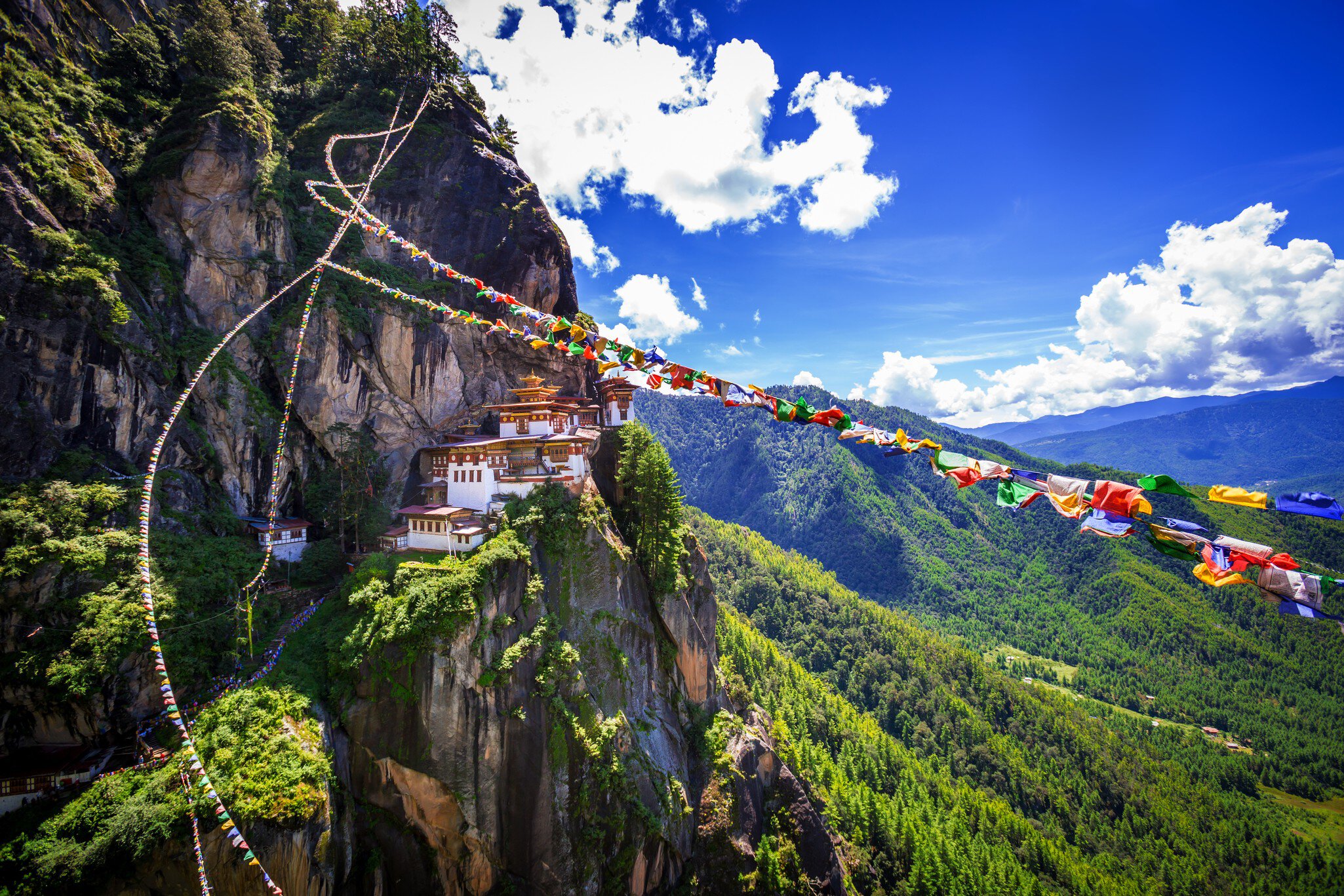
    Taktshang is the most famous of Bhutan's monasteries, perched on the side of a cliff 900m (2952ft) above the floor of Paro valley, where the only sounds are the murmurs of wind and water and the chanting of monks. The name means 'tiger's nest'; Guru Rinpoche is said to have flown to the site of the monastery on the back of a tigress.

    On 19 April 1998 a fire (which some say was arson) destroyed the main structure of Taktshang and all its contents. It had already suffered a previous fire and was repaired in 1951. Reconstruction started on an auspicious day in April 2000 at a great cost and the rebuilt site was reconsecrated in the presence of the king in 2005.

    reviewed

  24. Ogyen Chholing Museum

    The family that owns Ogyen (or Ugyen) Chholing has turned the complex into a museum to preserve its legacy and provide a place for religious studies, research and solitude. The fascinating and well-captioned exhibits offer real insights into the lifestyle of a Bhutanese noble family. Highlights include a book of divination, a dakini dance costume made of bone and the revelation that petrified yak dung was one of the ingredients for Bhutanese gunpowder. Bring a torch. The complex is supported through the Ogyen Chholing Trust, which produces an excellent museum booklet (Nu 180).

    reviewed

  25. M

    Ugyen Pelri Thang

    The secluded wooded compound of the Ugyen Pelri Palace was built by the Paro penlop, Tshering Penjor, in the early 1900s and is now a residence of the queen mother, thus closed to the public. It is designed after Guru Rinpoche's celestial paradise, Zangto Pelri, and is a beautiful example of Bhutanese architecture. For views from the palace from above, head to the dzong.

    On the road beside Ugyen Pelri Palace are five square chortens that were built in memory of the first king of Bhutan, Ugyen Wangchuck.

    reviewed

  26. N

    Telecom Tower

    There's a wonderful view of Thimphu valley from the hillside below the telecommunications tower (2685m), high above the town at the end of a road that branches off from the approach to the youth centre. The complex also houses the broadcasting studios of Bhutan TV and is festooned with prayer flags. Don't photograph the telecommunications installation, but the valley is worth a few snaps particularly in the afternoon.

    The area is known as Sangaygang and the access road attracts fitness fanatics after work and becomes a lover's lane after dark.

    reviewed

  27. O

    National Textile Museum

    Thimphu’s National Textile Museum is worth a visit to get to know the living national art of weaving. Exhibitions introduce the major weaving techniques, styles of local dress and textiles made by women and men. There is usually a small group of weavers working their looms inside the shop, which features work from the renowned weaving centres in Lhuentse Dzongkhag, the ancestral home of the royal family in northeastern Bhutan. Each item is labelled with the name of the weaver, at prices ranging from Nu 1500 to 25,000.

    reviewed