Getting around
Boat
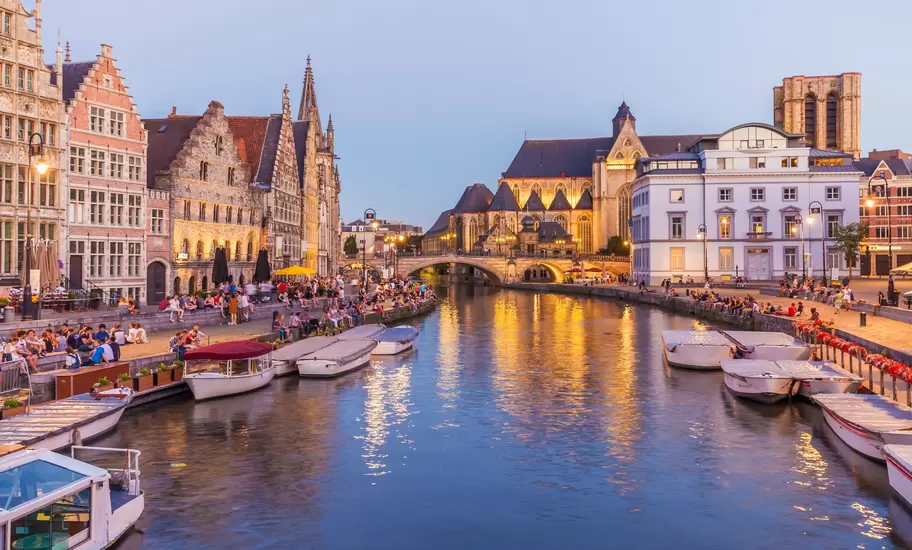
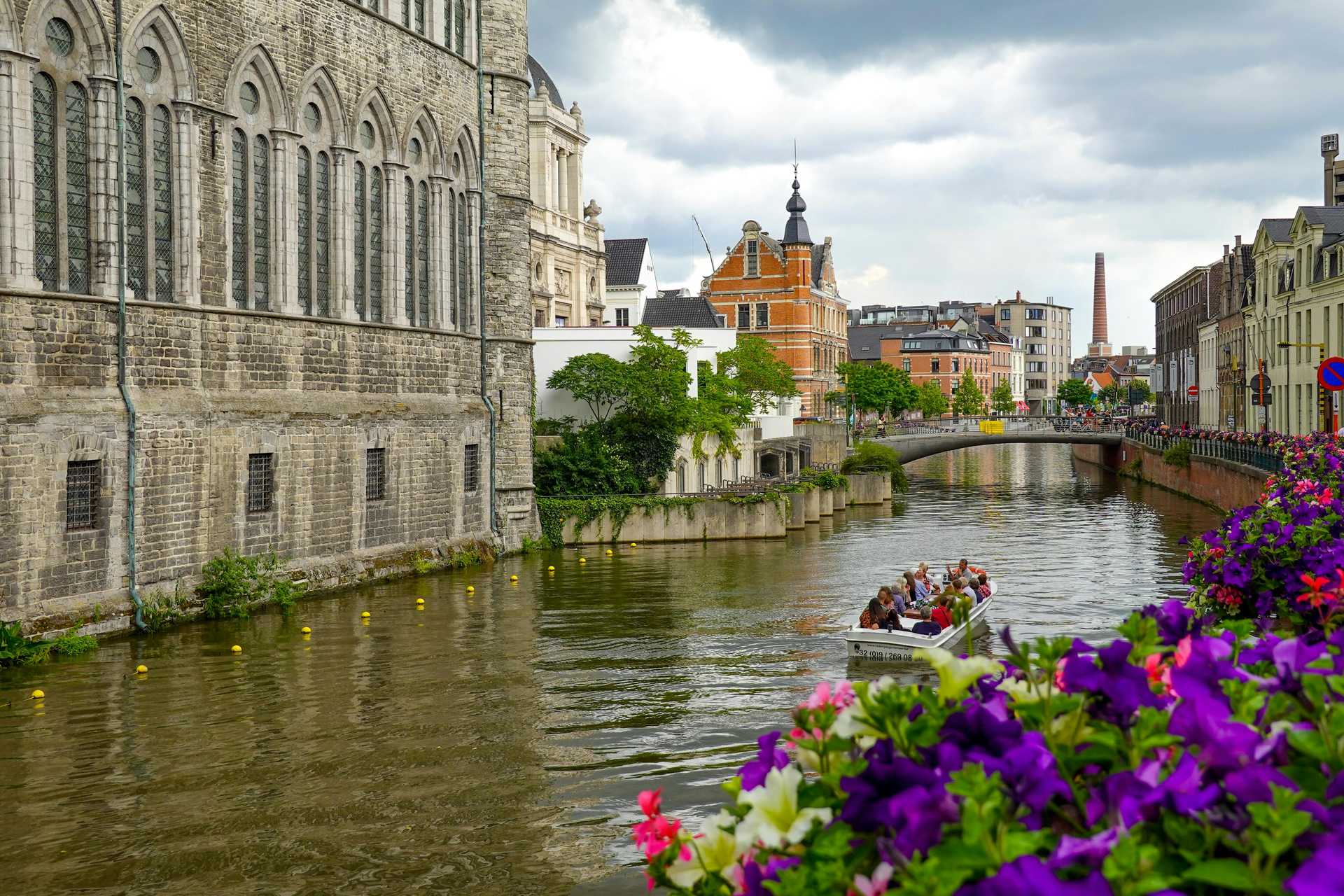
Getting around by boat is not big in Belgium, but there are possibilities. Try the following companies:
easyCruise Two (UK 01895-651 191; www.easycruise.com)This 52-cabin ship cruises along the rivers and canals of Belgium and the Netherlands, stopping in Antwerp, Brussels, Rotterdam and Amsterdam. You must spend a minimum of two nights on board. A four/two-bunk cabin costs £35/45 per person per night, a twin cabin starts at £58.
Hoseasons Holidays Abroad (UK 01502-502 588; www.hoseasons.co.uk) UK travel company arranging one- or two-week cruises around the fields of Flanders starting from Nieuwpoort and taking in towns along the way such as Veurne, Ypres, Bruges, Kortrijk and Ghent. Prices range from £550 to £825 per week (for two adults and a child) for the cheapest boat. Prices are seasonal, with July to August being the most expensive time.
Hitching
Hitching is never entirely safe in any country in the world, and we don’t recommend it. Travellers who decide to hitch should understand that they are taking a small but potentially serious risk. People who do choose to hitch will be safer if they travel in pairs and let someone know where they are planning to go. It’s illegal to hitch on motorways in Belgium and Luxembourg.
TaxiStop is an agency that will match long-distance travellers with drivers headed for the same destination for a reasonable fee.
A similar agency in Luxembourg is Luxstop (www.luxstop.8m.com) but it arranges travel only via its website. The basic charge is €0.05 per kilometre, which means you’ll be looking at about €9 to Brussels and €25 to London.
Bus & tram
Bus
Buses tend to be a secondary means of getting around in Belgium as the rail network is so efficient and widespread. The exception to this rule is the Ardennes. Here train lines run to some bigger settlements but many smaller places are connected only by bus. Without a vehicle, you’ll find relatively short distances can involve long waits as bus routes are often sparsely serviced.
In Luxembourg, buses are a vital element of the country’s public transport network.
The various companies:
De Lijn (070 220 200; www.delijn.be in Flemish) Flanders’ public transport company, operating buses, trams and, in some cities, a premetro (trams that run underground for part of their journey).
Société des Transports Intercommunaux de Bruxelles (STIB; 0900 10 310; www.stib.irisnet.be in French & Flemish) Operates buses, trams, the metro and premetro in and around Brussels and Brabant-Wallon province.
Société Nationale des Chemins de Fer Luxembourgeois (CFL; 24 89 24 89; www.cfl.lu) Operates all buses and trains in Luxembourg.
Transport en Commun (TEC; 081 32 17 11; www.infotec.be) Buses in Wallonia.
Belgium
The Ardennes is the only place you’re quite likely to get around by bus, and if you intend to do a bit of travelling on local TEC buses, consider buying a ‘Cartes Inter’ available from bus drivers or a TEC office. You control how much money you credit this card with (minimum €6) and using it works out considerably cheaper than buying a string of single tickets (€1.30) or purchasing a book of 10 tickets (€6.50).
Keep in mind that TEC services to many destinations are more frequent on weekdays during the school term; however, to some touristy places, services improve marginally during school vacations and on weekends. When reading TEC timetables, ‘EC’ means the bus operates on les jours d’école (school days) and ‘VAC’ means services run during vacances scolaires (school holidays).
If using De Lijn buses in Flanders, remember that tickets are slightly cheaper when bought before travelling, either from a De Lijn information/ticket kiosk, or from a supermarket or newsagency.
Luxembourg
The fare system, valid for both bus and train travel, is simple: €2.25/1.50 in 1st-/2nd-class for a ‘short’ trip of about 10km or less (this ticket is valid for one hour) or €7.50/5 for a 1st-/2nd-class unlimited day ticket (known as a billet réseau). The latter is good for travelling on buses and trains anywhere in the country and is valid from the first time you use it until 8am the next day.
Many visitors opt for the Luxembourg Card, which gives free bus and train travel plus discounted admissions to various sights. Another possibility available is the Benelux Tourrail pass.
Unfortunately the comprehensive bus network is not always matched by abundant services. Buses in some villages are geared mainly to meeting the needs of school kids and commuters, thus some towns and villages will have only a couple of bus services per day. Services on Sundays are scant to nonexistent.
Car & motorcycle
Belgium’s motorway system is excellent with, in general, an easy flow of traffic from one side of the country to the other. There are exceptions of course: peak-hour traffic grinds to a halt on the ring roads around Brussels and Antwerp, and the E40 to the coast is usually crammed on fine weekends in summer.
Driving in Luxembourg is more relaxed – drivers here are simply much less pugnacious and the country is not so congested. Motorways are mainly confined to the south, though a new motorway connecting Luxembourg City with the country’s north is progressively being built.
On the road in Belgium, place names can cause considerable confusion due to the different spellings used in Flanders and Wallonia. This isn’t a problem in and around Brussels where most signs are bilingual; however, once you get into the countryside, where signs are in either Flemish or French, you’ll have to be familiar with both versions of a town’s name. All this becomes pertinent when the sign to ‘Bergen’ (in Flanders) suddenly disappears, to be replaced by a pointer to ‘Mons’ (in Wallonia).
Insurance
Motor-vehicle insurance with at least third-party cover is compulsory throughout the EU. Your home policy may or may not be extendable to Belgium and Luxembourg; it’s a good idea to get a Green Card from your home insurer before you leave home. This confirms that you have the correct coverage.
If you’re hiring a car in either country, rental companies will provide insurance as a standard part of the rental package.
Train
Trains are the best way to get around in Belgium. Belgium built continental Europe’s first railway line (between Brussels and Mechelen) in the 1830s and has since developed an extremely dense network. Trains are run by the Belgische Spoorwegen/Société National des Chemins de Fer Belges (Belgian Railways; 02 528 28 28; www.b-rail.be), whose logo is a ‘B’ in an oval. Major train stations have information offices, open until about 7pm (later in large cities).
There are four levels of service: InterCity (IC) trains (which are the fastest), Inter-Regional (IR), local (L) and peak-hour (P) commuter trains (the latter stop at specific stations only). Depending on the line, there will be an IC and an IR train every half-hour or hour.
Luxembourg’s rather sparse rail network radiates out from Luxembourg City, the principal hub. Trains in Luxembourg work largely in partnership with buses – both are operated by the same company and have the same fare system. The main north–south train line slices straight through the middle of the country, with a couple of side shoots branching off. From Luxembourg City, lines run east into Germany, south into France and west and north to Belgium.
Trains have 1st- and 2nd-class compartments; both are completely nonsmoking.
Costs
Second-class tickets are 50% cheaper than 1st-class tickets. At weekends, return tickets to anywhere within Belgium are 50% cheaper than on weekdays. Children under 12 travel for free when accompanied by an adult, provided the journey starts after 9am. Seniors over 65 (including visitors) pay only €4 for a return 2nd-class trip anywhere in Belgium (except on weekends from mid-May to mid-September).
Local transport
The major cities in both countries have efficient and reliable bus networks. Trams are also used in some Belgian cities, and Brussels and Antwerp also have metro systems and a premetro (trams that run underground for part of their journey). Public transport services generally run until about 11pm or midnight in major cities, or until 9pm or 10pm in towns.
Taxis are metered and expensive – you’ll find them waiting outside train stations and close to major city hubs.
Air
Belgium is so small that there are very few internal flights: Brussels–Antwerp is the only connection and it’s rarely used as it’s quicker and much cheaper to go by train. Luxembourg is even smaller and has no domestic services.
Bicycle
Belgium and Luxembourg are fab destinations to explore by bike. Bikes can easily be hired or bought.
Belgium
Things to do
- All things to do (1,053)
- Activities (75)
- Entertainment (236)
- Restaurants (235)
- Shopping (206)
- Sights (300)
- Tours (1)