Apr 14, 202514 min read
The 19 best things to do in Yerevan, ArmeniaApr 14, 2025
14 MIN READ

Writer
Writer
A visit to Yerevan takes you to the heart of an ancient culture where monasteries commemorating the world’s first Christian kingdom peer over picturesque landscapes and locals proudly share their welcoming traditions over a feast.
Plan to spend at least a few days in Armenia's up-and-coming capital, with its welcoming cafes, wine bars and restaurants and wealth of art galleries and museums, plus incredible architecture and magnificent churches.
In summer, locals take to the streets, claiming tables at the city's many outdoor cafes, sauntering along its tree-filled boulevards and congregating at the beloved musical fountain in Republic Square. Experience Armenia’s unique culture and inspiring history with our guide to the top things to do in Yerevan.
From dawn until late, Yerevan's Republic Square – actually more of a circle – attracts thousands of busy commuters and visitors crowding around its famous musical fountains, which spout to Armenian, classical and rock music every night from 8: 30pm to 11pm.
Designed by architect Alexander Tumanian as part of his 1924 urban plan and named after Vladimir Lenin until 1991, the square is enclosed by marvellous neoclassical pink volcanic tuff stone buildings that house current and former government offices, the Armenia Marriott Hotel and the History Museum of Armenia and National Gallery.
Planning tip: Underneath the square is a large bunker constructed during the Cold War to protect high-ranking officials in the event of a nuclear attack. It's closed to the public, but it's fascinating to think it's under your feet as you walk around.
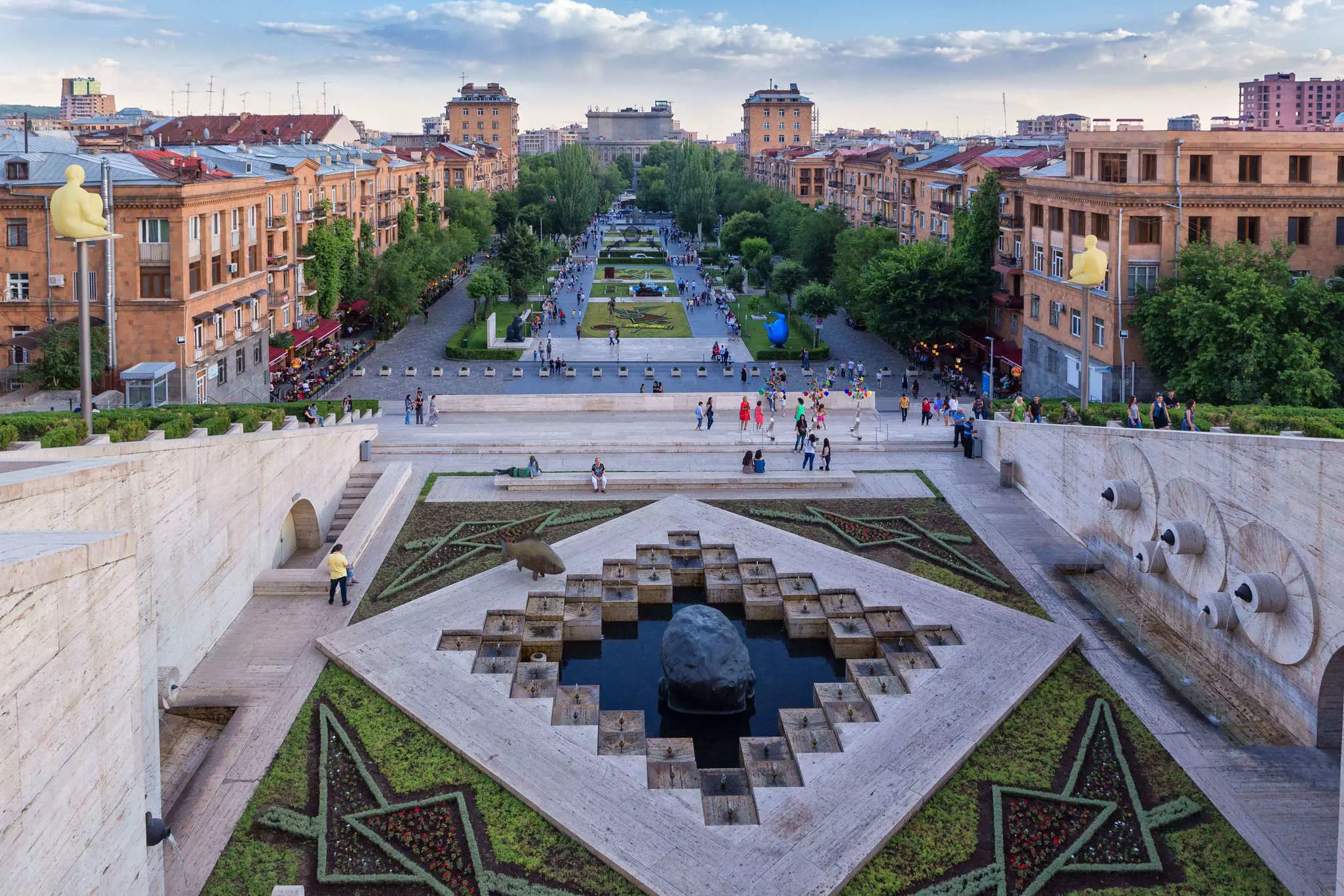
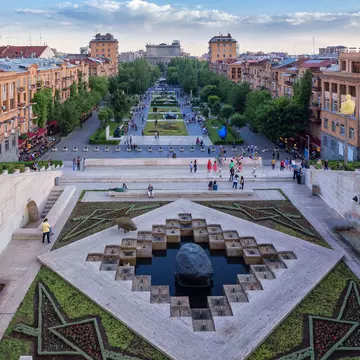
The Cafesjian Center for the Arts, aka the Cascade, is undoubtedly Yerevan's most iconic postcard. The monument's 572 stone steps were originally drawn up by architect Alexander Tamanyan as part of his 1924 urban plan, but work didn't begin until the 1980s. Unfortunately, construction stalled after the 1988 Spitak earthquake and the fall of communism, leaving the top level unfinished.
Eventually, Armenian-American philanthropist Gerard Cafesjian came to the rescue by transforming the finished parts of the Cascade into a gallery and filling it with his extravagant art collection. The 15 small fountains jutting out of the Cascade's base were initially meant to symbolise the republics of the USSR, but after independence in 1991, this was switched to signify Armenia’s 15 ancient provinces.
Planning tip: The steps are a popular place to watch the sunset, and afterward, you can grab a drink or meal on Tamanyan St.
Yerevan boasts a vibrant cafe culture with everything from traditional cafes to artisanal coffee shops such as Ground Zero – a busy and laptop-friendly (if you can get a seat) spot with excellent coffee and cheesecakes. Alternatively, admire the intricate woodwork on the ceiling between sips of quality coffee at Lumen Coffee 1936.
Close to Opera Square, you can join Armenians enjoying soorch coffee and a loaded crepe at Gemini – a Yerevan classic – close to Opera Square. Twelve Tables is cute as a button with whimsical decor reminiscent of a grandmother's living room; try their homemade lemonade!
Artbridge Bookstore Café combines literature with dining. It’s nothing fancy – just good French-press coffee, books to read (there's a decent English selection) and a tranquil atmosphere. Meanwhile Menu at the Mirzoyan Library is part cultural hub and part cafe/bar. Enjoy a drink on Mirzoyan's picturesque 19th-century wooden balcony and you might catch DJs playing in the courtyard below.
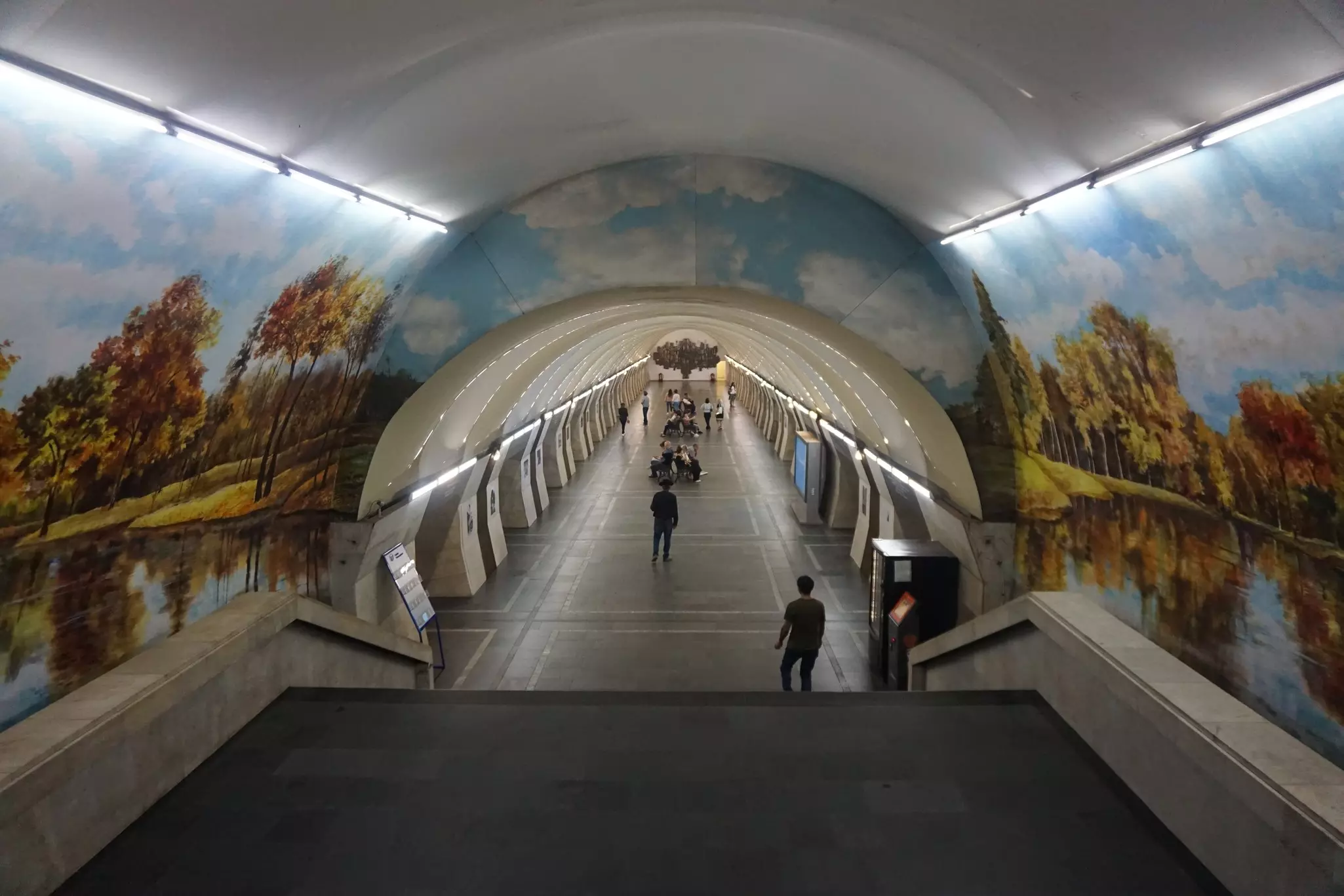
For a slice of Soviet history, hop aboard Yerevan's metro. Inaugurated in 1981, it features a single 13.4km (8.3-mile) line with 10 stations. It's an inexpensive way to tour the city, and with its orange decor (and extremely loud trains), it's an interesting portal back in time.
The metro is clean, safe and efficient, running north–south through the city and stopping at strikingly designed underground stations such as Barekamutyun, Marshall Baghramyan, Yeritasardakan, Republic Square (Hanrapetutyan Hraparak) and Zoravar Andranik near the Surp Grigor Lusavorich Cathedral and Rossiya Mall.
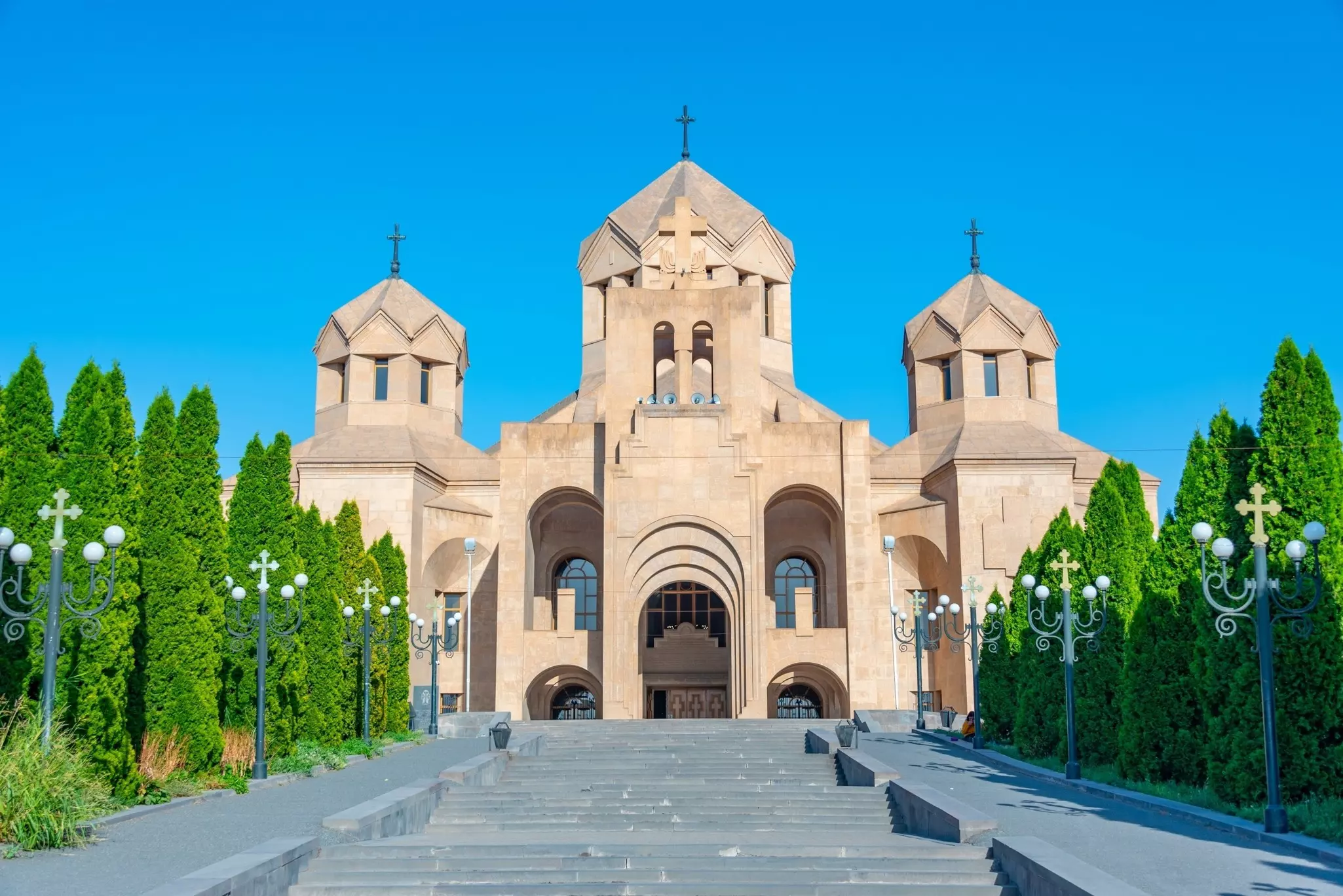
A gigantic stone church consecrated in 2001 to mark 1700 years of Christianity in Armenia, Surp Girgor Lusavorich Cathedral is the largest cathedral of the Armenian Apostolic Church. The complex, which has a prominent location atop a hill on the eastern edge of the city center, consists of three churches – the cathedral itself, the Chapel of St Tiridates the King, and the Chapel of St Ashkhen the Queen.
These two royal figures supported St Gregory in converting Armenia to Christianity. You can uncover more of Armenia's religious heritage at the tiny medieval chapel at Kathoghike Surp Church, which miraculously survived the 1679 earthquake, beside the much newer Surp Anna Church (an Armenian Apostolic Church that opened in 2015). Zoravor Surp Astvatsatsin Church is a cute 17th-century church and mausoleum accessed through a dalan (archway) on Parpetsi Street.
Finally, Yerevan’s Blue Mosque has been at the same site since 1765 but was closed in Soviet times (as were other mosques in the city). It was reconstructed in the 1990s with backing from Iran and is now the only functioning mosque in the city. Decorated with eye-catching exterior tiles, it has a modest interior, a graceful tiled dome, a small minaret, and a shady garden with fountains and flowerbeds.
No event has shaped Armenian identity more than the ethnic cleansing, forced conversions and mass killings of between 800,000 and 1.5 million Armenians in the Ottoman Empire between 1915 and 1922. While the tragedy is officially recognized as a genocide by a growing swath of historians – along with more than 30 countries, including the US and France – there are still some who deny that the genocide was a planned murder campaign, most notably Türkiye.
The Armenian Genocide Memorial and Museum on Tsitsernakaberd Hill (Fortress of Swallows) makes a strong case for why the word genocide is appropriate. The free-to-enter museum lays out the details like a presentation at the UN, with numbered exhibits accompanied by photographs, documents, reports and films to deliver a heart-wrenching experience similar to Israel’s Yad Vashem (Holocaust Museum).
Planning tip: The museum is closed Mondays and official public holidays, but there are extended hours of operation on April 24th – Armenian Genocide Remembrance Day.
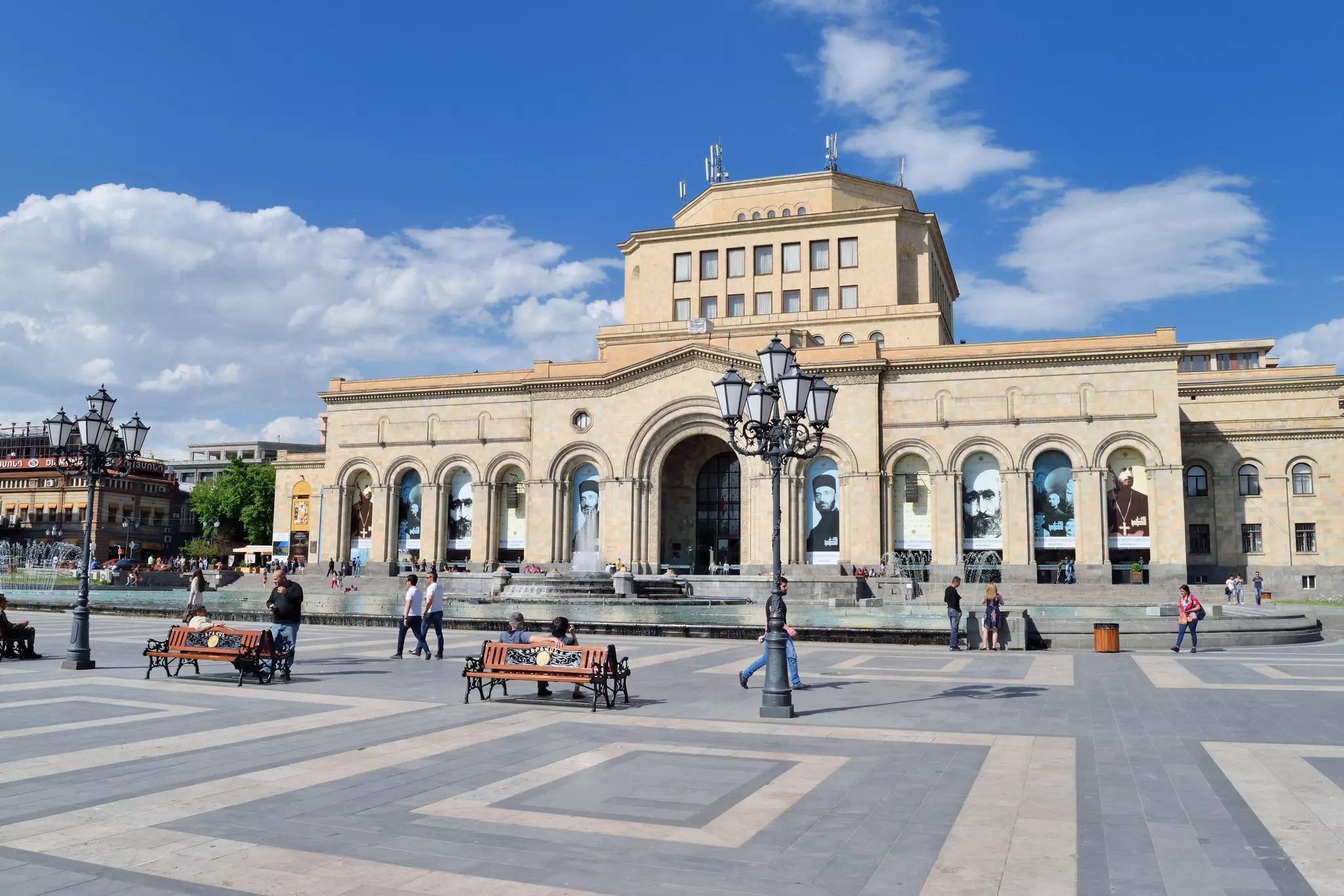
An extraordinary collection of Bronze Age artifacts makes the History Museum of Armenia the country's preeminent cultural institution. Many of the items were excavated at the Necropolis of Lchashen near Lake Sevan in the 1950s.
Other exhibits of note include medieval khachkars (cross-stones), 18th- and 19th-century Armenian costumes, a 5500-year-old leather shoe discovered in a cave in the Vayots Dzor region in 2008, and carpets and embroidered amices (liturgical vestments).
On the top floors of the History Museum, Armenia's foremost art gallery hosts a large collection of European and Russian art. Its major draw is the collection of Armenian art displayed on the 4th and 5th floors. Highlights include works by Hakob Hovnatanian (1806–81), Martiros Sarian (1880–1972) and Vardges Surenyants (1860–1921). Paintings by Surenyants are the most impressive, depicting scenes from Armenian fairy tales and various historical events in intricate detail.
Planning tip: Both museums are closed on Mondays, public holidays and memorial days․
When it opened in 1972, this was the first specialized museum of contemporary and modern art in the Soviet Union, and a source of enormous pride for the Armenian avant-garde. Many prominent local artists of the time donated works, and these form the core of the collection, supplemented by further art donations from the 1980s. Recent acquisitions include impressive works by Karen Petrosyan, Armen Gevorgyan and Laura Avetisyan.
Planning tip: The museum is accessed via a narrow lane running off Movses Khorenatsi St, parallel to Mesrop Mashtots Ave; it's closed on Mondays.
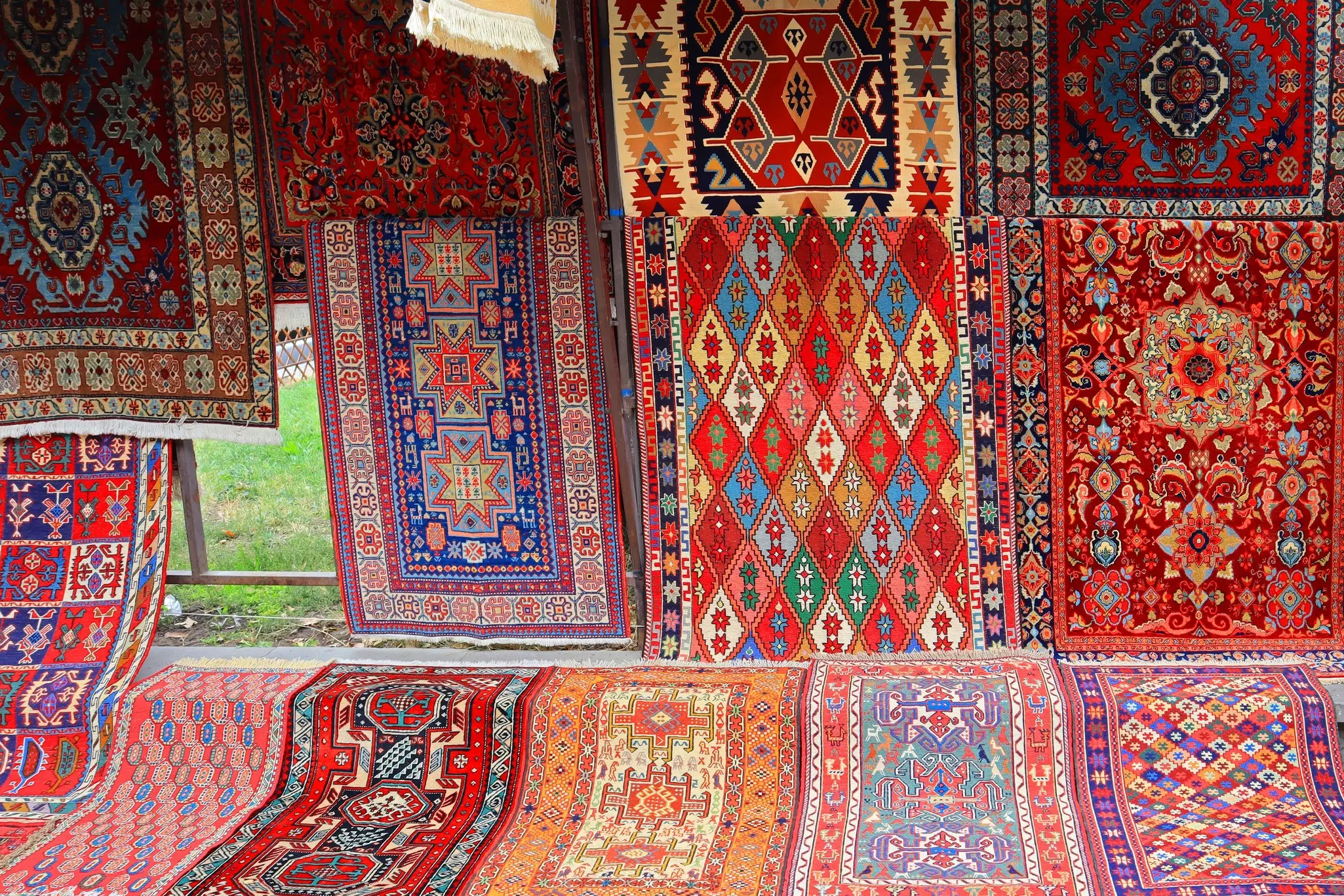
A bustling open-air market, the Vernissage is a great place to source locally produced handicrafts, including traditional carpets, dolls, brass pots, ceramics, wooden chess boards and handcrafted necklaces and bracelets with wildflowers clamped inside. Yes, the quality varies, and bargaining is only occasionally successful, but it's a must-visit if you want to pick up authentic Armenian mementos.
Detour: If you don’t find what you’re looking for, try Dalan Art Gallery – its souvenirs and paintings are packed beneath a dalan archway.
From carpets to woodwork, this hugely worthwhile museum on Khachatur Abovyan Square showcases the finest Armenian folk arts. The center serves as a hub for artisans, musicians, and performers who are dedicated to preserving Armenia’s rich cultural heritage. You’ll find exhibitions, workshops and performances here that highlight traditional crafts such as carpet weaving, wood carving, and embroidery.
Planning tip: As with many Yerevan museums, the folk art center is closed on Mondays.
Yerevan's live music scene is vibrant and diverse. Jazz enthusiasts will enjoy performances at Ulikhanyan Club, an intimate red-lit venue with live jazz seven nights a week, plus cocktails and snacks. Kami Club, which has been in business for more than 15 years, showcases local talent, with a resident band that always has audiences up and dancing.
Named after the French word for “peace pipe, ” Calumet is a great place to hang out on cushions and chat over a Kilikia beer, while enjoying an eclectic program of live gigs. Go to The Club for French-Armenian fusion food and relaxing live music. A cavernous cocktail bar and terrace in a mansion formerly owned by a Soviet oligarch, Kond House, has occasional live music plus a lively dance floor.
Head to Bird Cage for creative cocktails along with chilled out DJ music above Bar Phoenix (which is also very cool). For something more highbrow, the Armenian National Opera and Ballet Theatre has affordable opera and ballet performances in a commanding 1930s building.
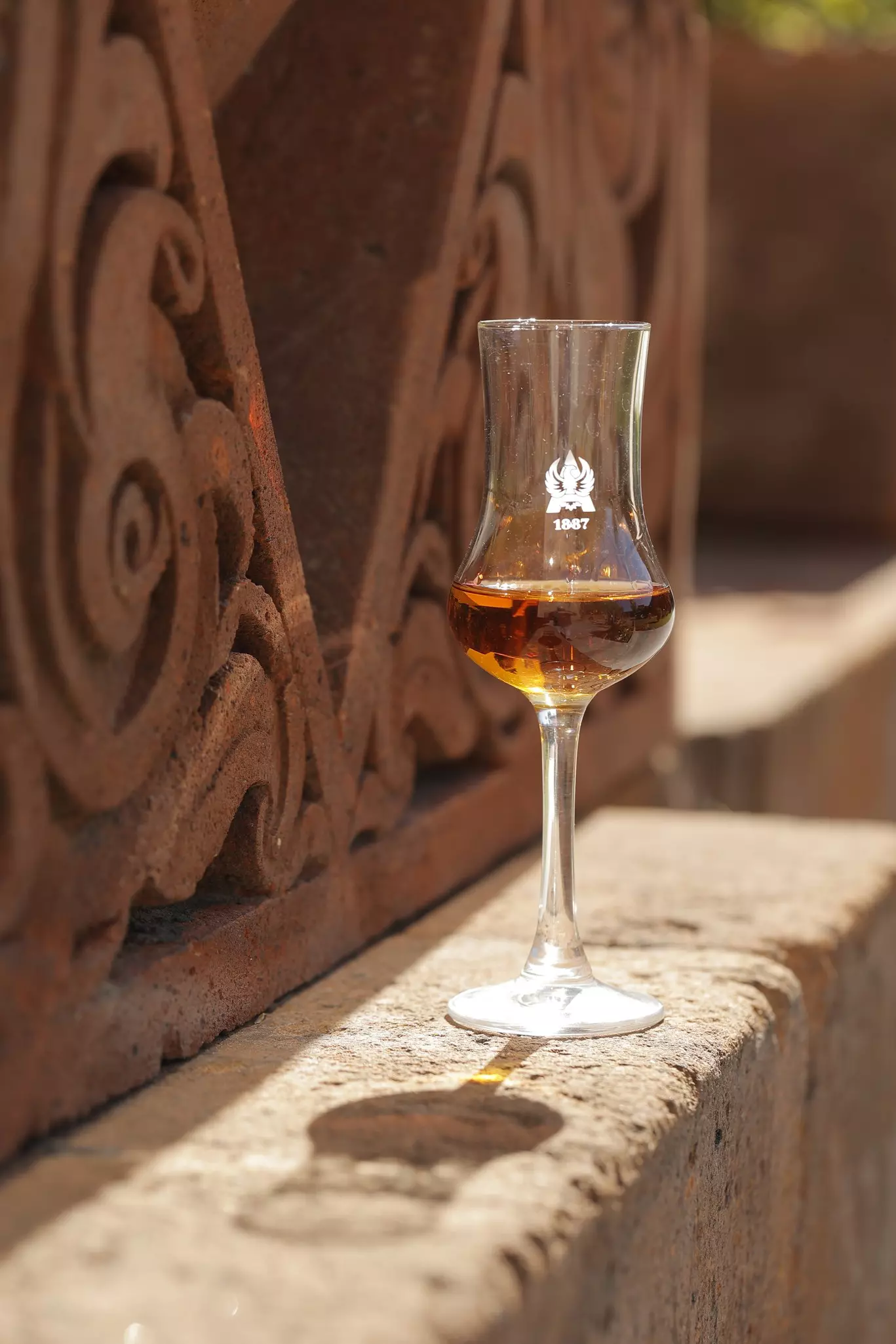
Yerevan is renowned for its konyak (cognac) – a smooth, intense liquor produced from wine grapes that has a smoky aroma similar to whisky. Armenian cousins Nerses Tairyan and Vasily Tairov first brought French cognac-making to Armenia in 1887, leading to the founding of the ARARAT Brandy Company (brandy is the official name since appellation rules dictate that cognac can only be made in France). ARARAT hosts tours of its museum and distillery, which include tastings of bottles more than 20 years old.
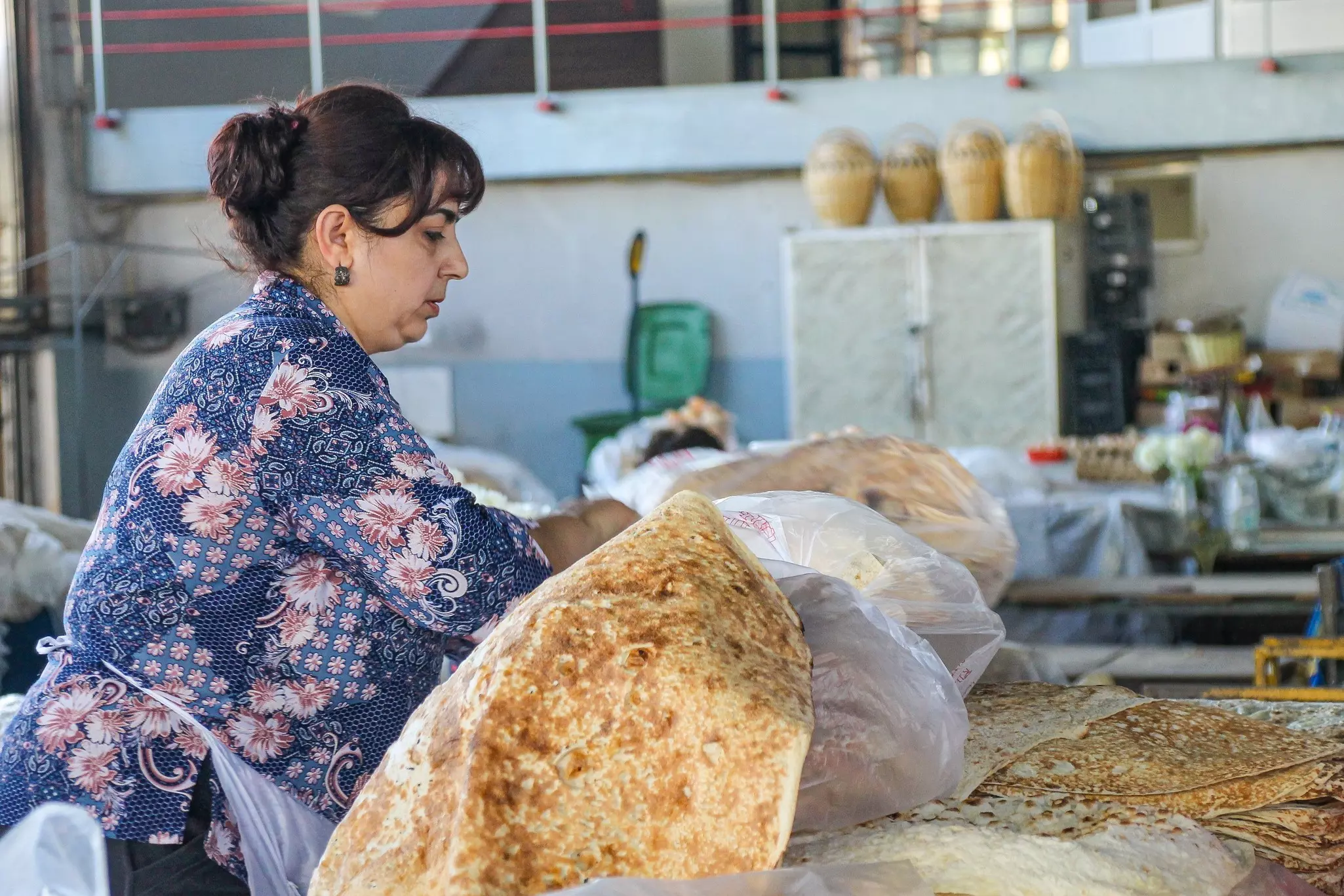
Yerevan is a great place to sample typical Armenian food. Local menus focus on khorovats (grilled meats such as pork, lamb, chicken) served with lavash (flatbread made in a cylindrical tonir oven) and other sides served family-style where everyone shares from the same plates (solo travelers take note).
Other traditional dishes include Ottoman-influenced dishes such as tolma (grape or cabbage leaves stuffed with meat or veggies), harissa (porridge with shredded chicken) and lahmajo (or lahmaken) – a meaty, pizza-like dish with origins in Türkiye.
Also look out for spas (yoghurt soup with hulled wheat and parsley served hot or cold), ghapama (pumpkin stuffed with meat and/or rice, nuts and dried fruit), jingalov hats (a lavash wrap stuffed with herbs), basturma (cured beef), manti (roasted or fried dumplings served with yogurt and garlic) and khash (sheep head soup served in winter).
For those with a sweet tooth, try gata (pastry stuffed with nut or buttery paste), ponchik (filled or drizzled doughnut) and candied sujukh (candy-coated nut links that look like sausages).
Planning tip: Armenians love to feast, as evidenced by Yerevan's many, constantly-full traditional pandoks (taverns) and restaurants. When heading out for dinner, it pays to make a reservation.
Often described as the founder of the national style of painting, Sarian (also spelled Saryan) was born in Russia in 1880 and studied art at the Moscow School of Painting, Sculpture and Architecture. He travelled to Armenia in 1901 and completed many paintings of the local landscape on that trip.
After returning in 1915 to help refugees fleeing from massacres in the Ottoman Empire, he relocated to Armenia permanently in 1928, after a two-year stint painting in Paris. Strongly influenced by the work of Henri Matisse and Paul Gauguin, Sarian soon became known for his vibrantly coloured landscapes and portraits. Visit the Martiros Sarian Museum to view his studio and some of his art.
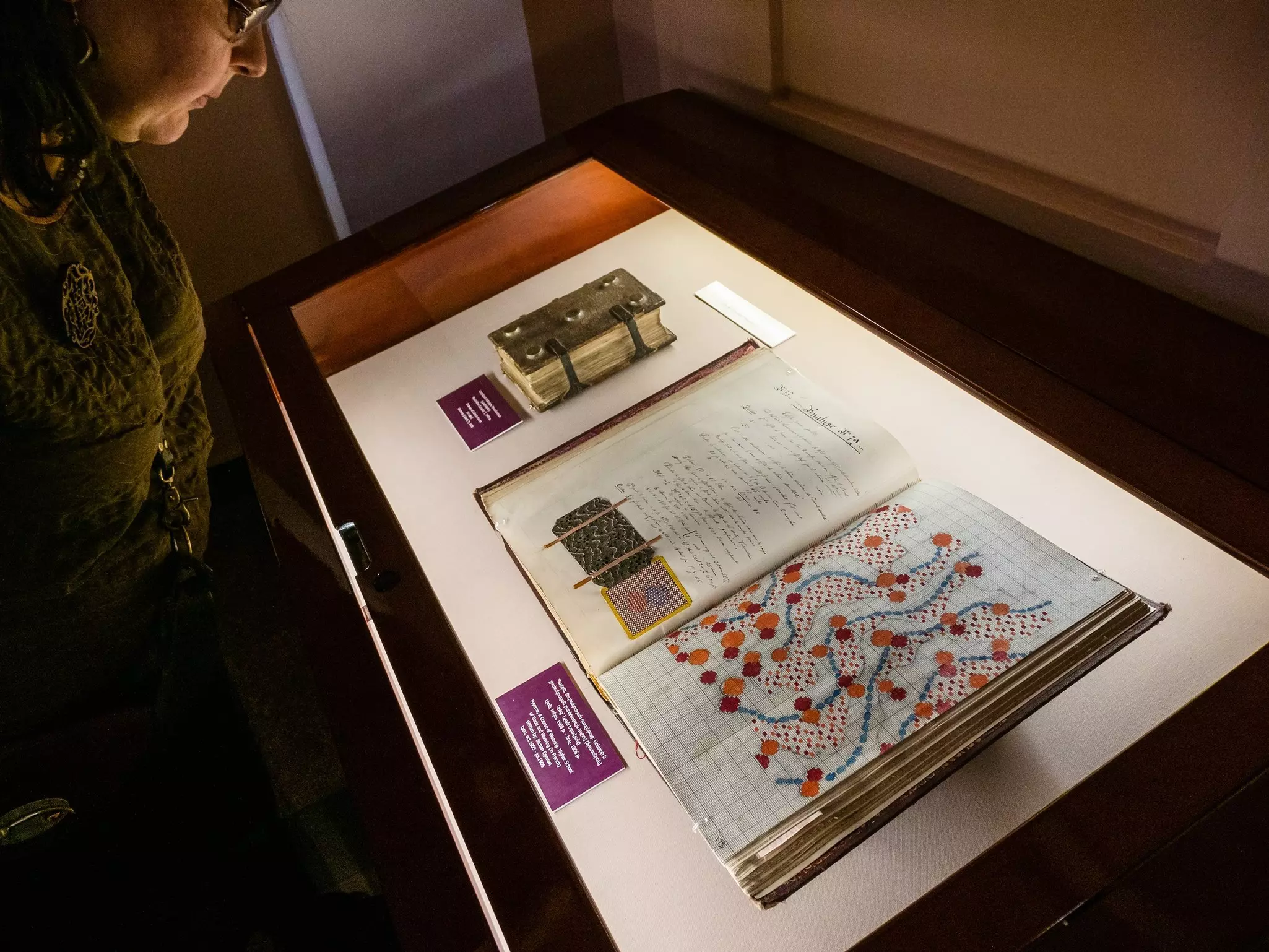
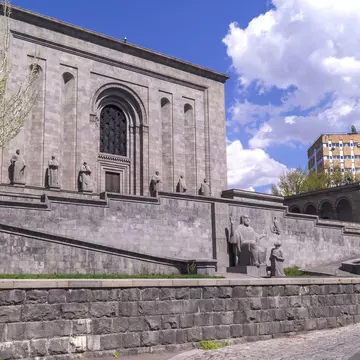
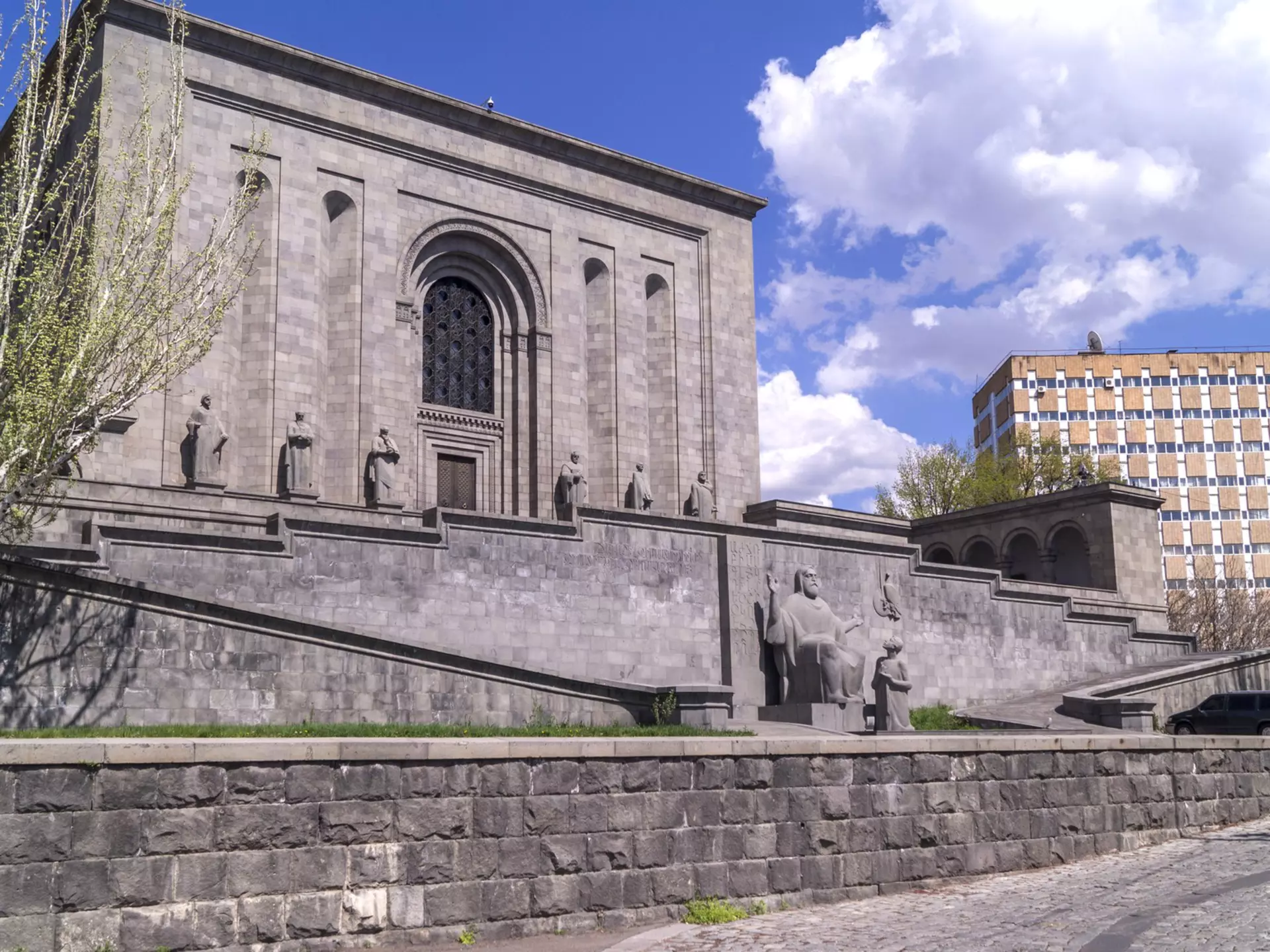
At the top of Yerevan’s grandest avenue, this fortress-like manuscript library is a source of enormous pride to all Armenians. The first matenadaran (book depository) for Armenian texts was built by Mesrop Mashtots, the inventor of the Armenian alphabet, at Etchmiadzin in the 5th century and it held thousands of manuscripts.
Invasions over the centuries led to enormous losses through looting and burning, but around 1800 exquisitely illustrated and bound manuscripts survived. These form the basis of the stunning collection of more than 23,000 manuscripts, fragments, documents and maps at the Matenadaran (although only a fraction are on display).
Planning tip: The Matenadaran is closed on Sunday and Monday. Even if it's closed, it's worth swinging by to admire the building.
Though small, the fascinating Yervand Kochar Museum does a great job of documenting the life and work of the prolific Armenian painter and sculptor, Yervand Kochar (1899–1979). The museum showcases works created throughout Kochar’s career, including Lonely Woman (1913), painted when he was only 13. Labels are in English and there's a short film about his most famous piece, the Guernica-like Disaster of War (1962).
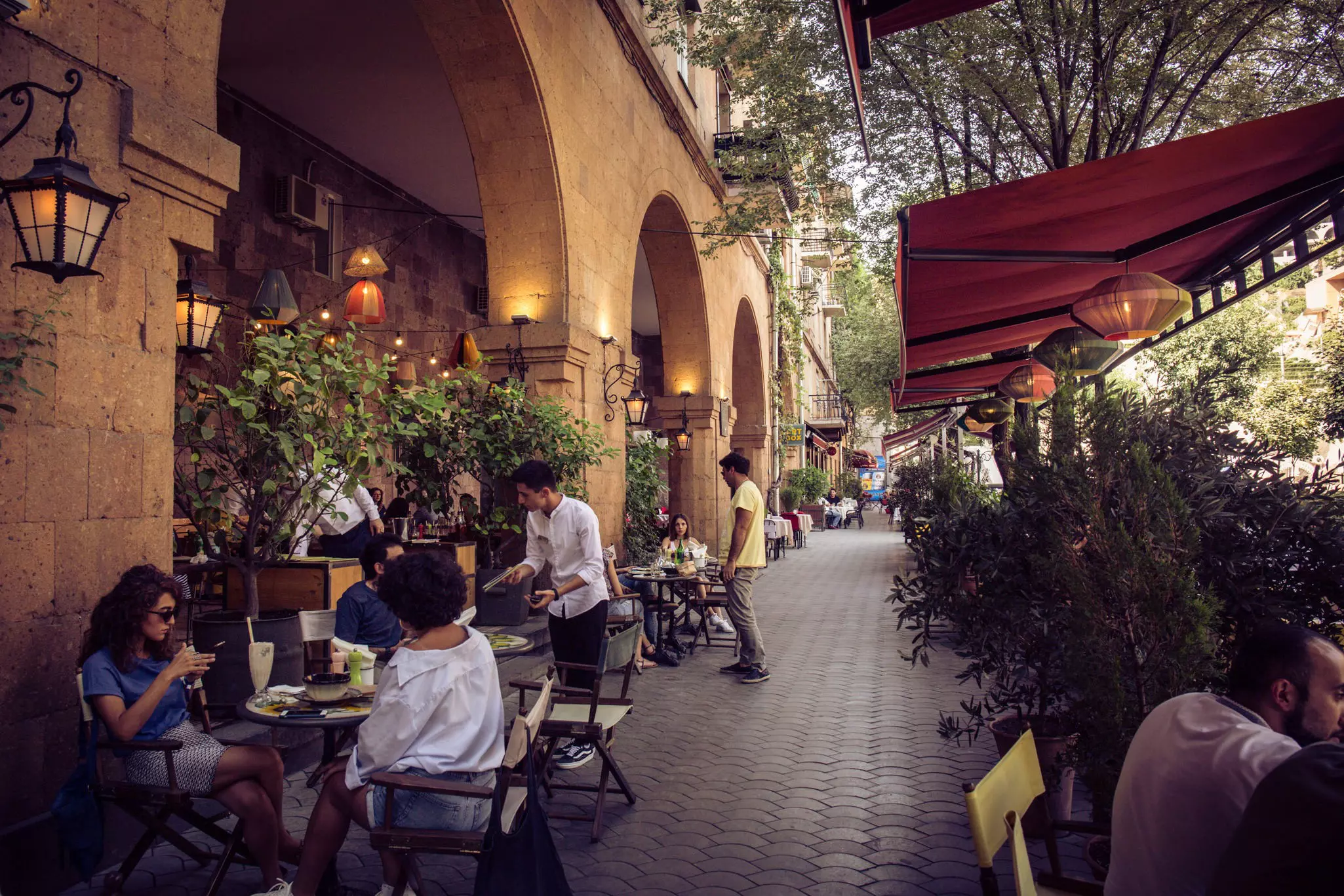
Armenia has been going through something of a wine revolution since the discovery of the world's oldest winery in a Vayots Dzor cave in 2008. Yerevan's Saryan Street is lined with bars and restaurants serving wine mostly made by local producers.
In Vino is a classic wine bar for a sit-in drink. If you're just looking to pick up a bottle, Decant has a great selection, but note that some restaurants charge a corkage fee for BYO drinks. Pairing international flavors with local and imported wines, Wine Republic’s menu and wine list straddles Asia and Europe. True to its name, the waiters know their wines and will guide you through the huge selection (though there's no physical wine menu).
Forget what you expect to see at an art gallery and head up to the Sergei Parajanov Museum near Hrazdan Gorge. Crammed with drawings, photographs and curious collages such as an egg or shampoo bottle glued inside a frame, the museum showcases artwork by the experimental filmmaker best known for his bizarre 1969 film Sayat Nova (aka The Colour of Pomegranates).
Housed in an attractive 19th-century timber home selected by Parajanov before his death in 1990, this museum is a wild ride, somehow sharing the prodigious talent, laugh-out-loud humour and humanity of the artist while at the same time illustrating the difficulties faced by artists in the Soviet Union.
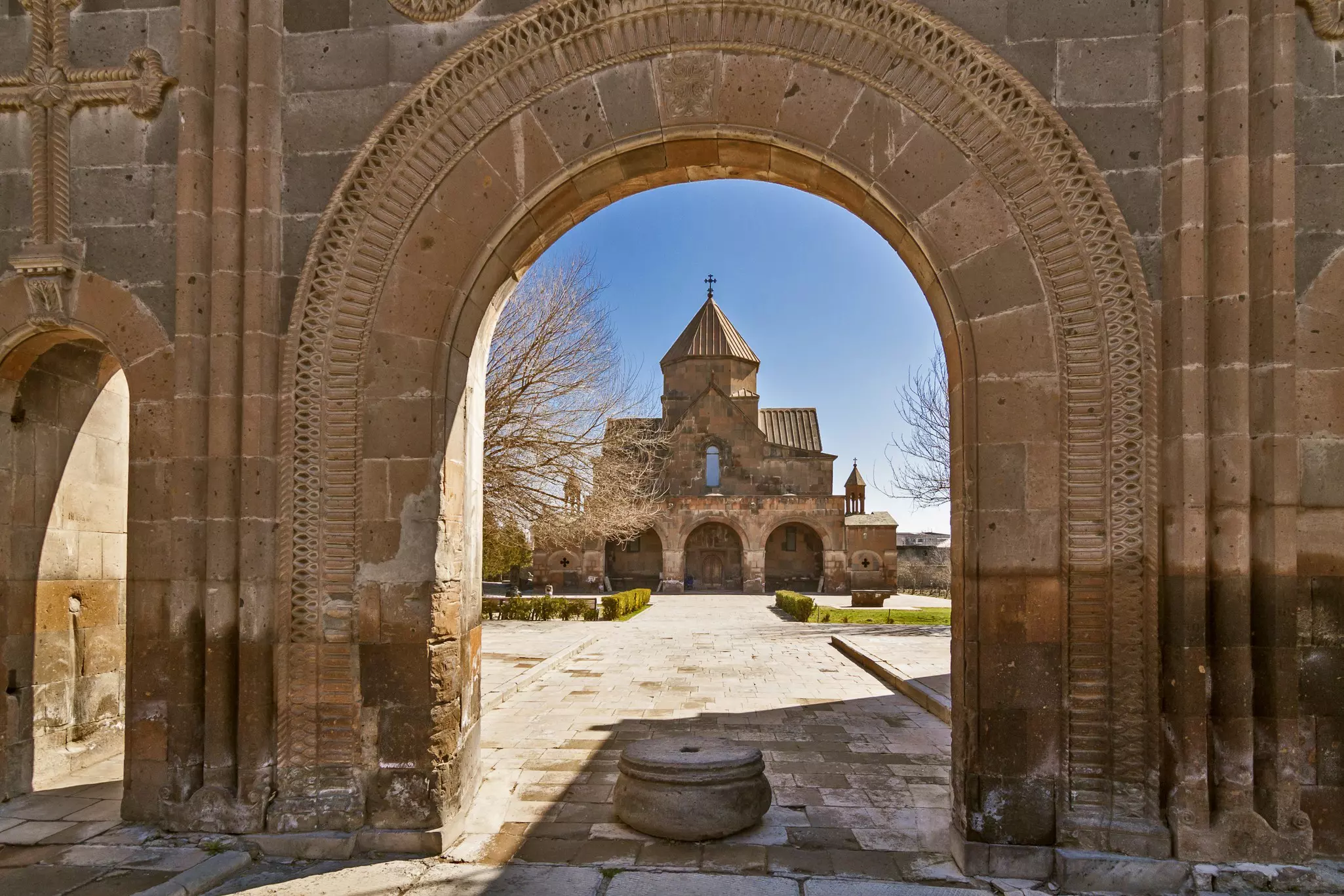
About 18km (11 miles) west of Yerevan, in the city of Vagharshapat, is Armenia's version of the Vatican, the Mother See of Holy Etchmiadzin. This is the place where Surp Grigor Lusavorich saw a beam of light in a divine vision, and where he built the first Mayr Tachar (Mother Church of Armenia).
Etchmiadzin's main museum houses precious objects and relics, including the Holy Lance (Surp Geghard) – the weapon allegedly used by a Roman soldier to pierce the side of Christ while he was nailed to the cross. There are also clerical vestments and crowns, illuminated manuscripts, processional crosses, a reliquary of St John the Baptist, and a beautiful beaten-gold reliquary from 1300 that is said to contain a relic of the True Cross.
Planning tip: Get to Etchmiadzin by taxi or by local bus from Yerevan's Kilikia bus station.
This article was adapted from Lonely Planet’s Georgia, Armenia & Azerbaijan guidebook, published in July 2024.
Explore related stories