
Advertisement
Castilla-La Mancha
Castilla-La Mancha not only has Spain’s lowest population density, but sees fewer tourists than any region outside Navarra. Located on a windswept fertile plateau, the landscape is richly patterned, with undulating plains of rich henna-coloured earth, neatly striped and stippled with olive groves and grape vines, stretching to a horizon you never seem to reach. This is the land where Cervantes set the fictional journeys of Don Quijote with quixotic reminders everywhere; from the solitary windmills to the abundant (mostly ruined) castles.

Getty Images

Trusted Partner
Stay connected in Castilla-La Mancha
Holafly eSIM provides unlimited mobile data with no hidden fees, giving you peace of mind wherever you travel. Stay connected even after your plan ends with Always On. Use code LONELYPLANET for an exclusive discount.
Take your Spain trip with Lonely Planet Journeys
Time to book that trip to Spain
Lonely Planet Journeys takes you there with fully customizable trips to top destinations – all crafted by our local experts.


Top places to visit in Castilla-La Mancha
Discover the best attractions in Castilla-La Mancha from must-see sights to unexpected hidden gems.
-
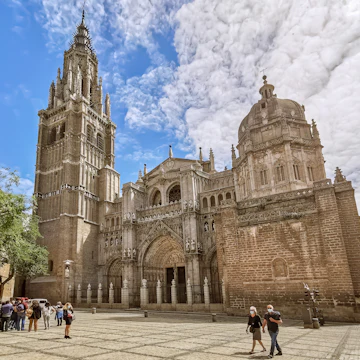 Attraction in ToledoCatedral de Toledo
 -
 Attraction in Castilla-La ManchaCatedral de Santa María de Sigüenza
 -
 Attraction in ToledoSinagoga del Tránsito
 -
-
 Attraction in ToledoMuseo de Santa Cruz
 -
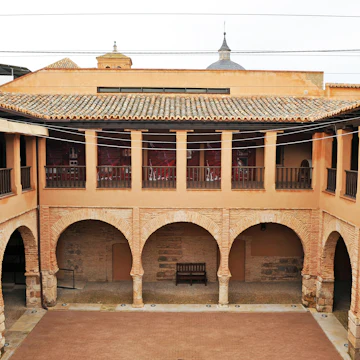 Attraction in Castilla-La ManchaMuseo Nacional de Teatro
 -
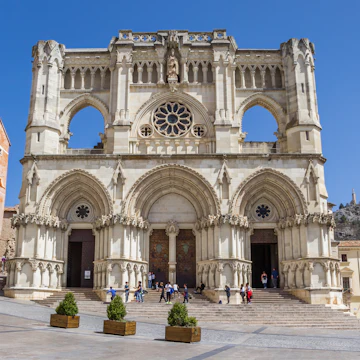 Attraction in CuencaCatedral de Cuenca
 -
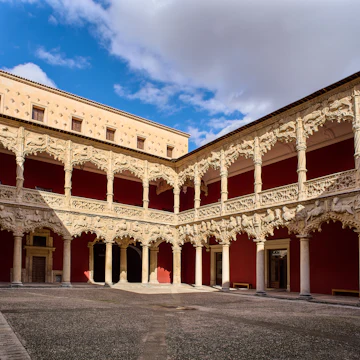 Attraction in Castilla-La ManchaPalacio de los Duques del Infantado
Advertisement
Advertisement
Get a book. Get inspired. Get exploring.


in partnership with getyourguide
Book popular activities in Castilla-La Mancha
Castilla-La Mancha and beyond


Advertisement