Oct 1, 2010 3:58:51 AM
6 common photography mistakes (and how to avoid them)
Note: Javascript is disabled in your browser.
To see the gallery in all its glory, you'll need to enable Javascript.
Whether you’re on the other side of the world or wandering your own neighbourhood, you’ll soon realise that the sights that have you reaching for your camera are fleeting photo opportunities.
With this in mind, you really need to be prepared to capture such moments. Here are the six most common mistakes that can leave you with an ordinary image – instead of the masterpiece it should have been.
1. Not having a strong point of interest
The very first thing to consider is the subject – what is it and why are you taking a photo of it? Successful images have a point of interest: the key element around which the composition is based. It’s probably the thing that caught your eye in the first place and should be able to draw and holds the viewer’s attention.

Young monk peering out from group at Tengboche Monastery. Richard I'Anson.
2. Not getting close enough to the subject
Good compositions leave no doubt as to the subject of the photograph. How do you make sure this is clear? A good way to start is to fill the frame with your subject. This helps to eliminate unnecessary or unwanted elements and overcomes the common mistake of making the subject too small and insignificant, which leaves the viewer wondering what the photo is supposed to be of. Often just taking a few steps towards your subject or zooming in slightly will make an enormous difference.

Herd of African Elephants (Loxodonta africana) at Harpoor Waterhole. Richard I'Anson.
3. Focusing on the wrong part of the composition
The sharpest part of the image should be the point of interest, so take care when focusing. If something other than the main subject is the sharpest part of the composition the viewer’s eye will rest in the wrong place.
Most compact cameras and all SLRs have a focus-lock facility, activated by depressing the shutter release button halfway, which you should be confident using. It allows you to produce more creative and technically better pictures by locking the focus on the main subject then recomposing without the camera automatically refocusing.

Woman in traditional hat looking through textiles and fabric of stall, Peru. Richard I'Anson.
4. Placing the subject in the middle of the frame
Centering the subject often contributes to a static composition so you should aim to place the point of interest away from the centre of the frame. As you’re thinking about where to place the point of interest, keep in mind the ‘rule of thirds’ that has traditionally been the starting point for successful composition. As you look through your viewfinder or study the LCD screen, imagine two vertical and two horizontal lines spaced evenly, creating a grid of nine rectangular boxes.
Try placing the point of interest, or other important elements, on or near the points where the lines intersect. For example, if you’re taking a portrait, the subject is the person’s face and the point of interest would be their eyes. In a landscape the point of interest may be a boat floating on a lake; place the boat on one of the intersections and also position the horizon near one of the horizontal lines.

Gentoo penguin walking over snow on Danco Island. Richard I'Anson
5. Including elements that conflict with the subject
Avoid including other elements that conflict with the main subject. Look at the space around and behind your subject and make sure nothing overpowers it in colour, shape or size. What you leave out of the frame is just as important as what you leave in.
Do you really want power lines running across the facade of the most beautiful building in the city? It’s fine if you do, but not if you didn’t notice them in the first place! Scan the frame before pressing the shutter release, looking for distractions and unnecessary elements.

Elephant Festival preparation, Jaipur. Richard I'Anson.
6. Not thinking about the direction of the light
The direction of the light and how it is illuminating your subject, whether it’s the natural light of the sun, incandescent lighting indoors or at night or flashlight, can make or break a photograph. That’s why it’s vital to observe the light. If you are aware that it’s striking your subject in the wrong place – for example, if the facade of a beautiful monument is in shade, or if someone’s hat is casting a shadow over half their face – then you can take action.
Either move the subject, move yourself or, if the subject isn’t going to disappear, wait a while or return at the appropriate time of day. Once you’re in the habit of considering how the light is falling on your subject you can select a viewpoint and time of day so that the light enhances your subject, rather than detracts from it.

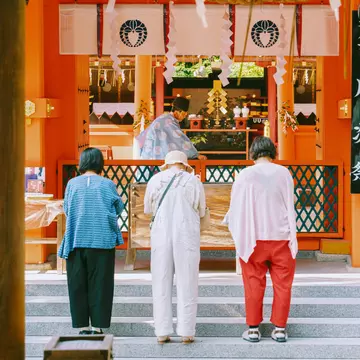
Nun at Stone Gate Shrine. Richard I'Anson.
Happy photographing!
Award-winning travel photographer Richard I’Anson helped establish Lonely Planet Images and wrote the Lonely Planet Guide to Travel Photography.
Comments
-
2 October 2010 5:06AM
drewmakeanimpact
Report this comment
number 1 should be ALWAYS ALWAYS ALWAYS ask your subject if you can take their picture! 98% of my pictures have the subject's permission. It makes for a better image too.
-Drew
www.drewmastromartino.com
-
2 October 2010 5:33AM
garethsear
Report this comment
Nice little post - I like the fact you mention the rule of thirds -once you conquer that you are just about there...add in the confidence to ask people to take their photo and that's about it. Cheers for an interesting article Richard.
-
2 October 2010 2:17PM
losang
Report this comment
Great article, Richard! Thanks for posting it.
Losang from Tibet
http://kekexili.typepad.com/
-
2 October 2010 3:14PM
swa
Report this comment
Wondered if you had any help/advice from pro's along the way, and do you personally believe it helps.?
-
2 October 2010 4:41PM
nisha55
Report this comment
wonderful thank you
-
3 October 2010 1:08AM
wineye
Report this comment
Great Tips.. how hope to make it work !!
-
3 October 2010 1:42AM
ansh_jain_97
Report this comment
yea, good article...
-
3 October 2010 8:03AM
annedk
Report this comment
remeber to always keep horizontal lines straight. There's nothing worse than a tilting sunset...
-
3 October 2010 10:13PM
kinostar1
Report this comment
When I travel, I'd like a photo of myself at the place I'm visiting. So I ask someone. Many times they take a photo of my feet instead of my upper body with the background. I get a nice photo of the pavement instead of showing where I've been. Why, I don't know. But I've noticed many people point a camera down not up.
-
4 October 2010 8:44AM
merry1
Report this comment
Thanks Richard! I believe travel and photography go hand in hand but how does one stop taking too many photos to get that perfect shot - you have helped a lot with the tips.
-
4 October 2010 10:22AM
boon
Report this comment
Thanks Richard!Love your tips and hope to read more of your tips in future.
-
12 October 2010 3:37PM
loveisaroundtheworld
Report this comment
Thanks for sharing!
-
12 October 2010 3:47PM
jesshaskittenleo
Report this comment
Even when you've been taught these things, once upon a time - always good to be reminded! Awesome photos too.
-
12 October 2010 3:48PM
vagabondsandcarryons
Report this comment
Excellent tips. Getting close up to the action brings life to the image.
-
12 October 2010 4:52PM
kaalo
Report this comment
Look at 100 snapshots of your neighbours cruise. You know, 80 shots of ocean, 15 of sunset and 5 god knows what. Then look at 100 shots from a travel magazine, Richards book, coffee table books. You will get 100 tips for sure!
www.durrasnorthpark.com.au
-
12 October 2010 5:28PM
alann
Report this comment
I am pleased to know that I alreayd applied all of these rules, I am a selftaught amateur photographer, but I have an eye for compositon as I am a painter too. My flaws are how to deal with the technical details of depth of field and how to calculate it manually, also working wiht a flash is a nightmare, so I avoid that, only using the light available.
Here some examples of mine:
http://www.flickr.com/photos/wayrainti/
-
13 October 2010 12:38AM
studio_fileccia
Report this comment
Very good tips, thank you. I do not agree with drewmastromartino. I mean I like reportage and I always try to take photos of my subjects without asking his permission. That's becouse, when you ask permission, the subject changes his/her expression and this is no more real. Reportage should be showing the truth, not fake smiling expressions. So I shoot with my camera on my lap, and these are my best photos. http://www.vincenzofileccia.it/
-
13 October 2010 1:05AM
coolsl
Report this comment
Thank you for the tips, really important.
-
13 October 2010 1:11AM
francetravel
Report this comment
This is a great article -- also relieved to know that I am doing most of what you suggests but as a pure amateur I know I have lots of room for improvement!
-
13 October 2010 1:54AM
deanosc
Report this comment
Yeah I would not agree with asking for people permission. Sometimes it necessary but not always!
http://deanosouthcoast.blogspot.com/
-
13 October 2010 5:37AM
hecfoto
Report this comment
Important not to forget that once you master the rules, try to keep in mind that they are meant to be broken...Feel free to do it consciously.
-
13 October 2010 7:05AM
kingsize4bears
Report this comment
While your photos are astounding, the tips are very run-of-the-mill. Us amateurs should not fool ourselves into believing we can take pics like pros. I don't know how professionals work but I suspect one of their pictures is worth a whole day of study of the subject for inclination of the light, framing, etc. etc. When we mere mortals travel, we have a schedule, have to move on, and the cute kid that goes peekaboo amongst the monks will not do that when we are there, the little elephant wasn't there when I photographed them at Kruger, the sharp focus on only on the head of the Peruana - I defy any camera to blur everything except that head. And I was in Jaipur and got on one of those elephants. It wasn't, obviously, the time for elephant decorating. My point is: to avoid self-deception and frustration, travellers photographers have to content themselves with what they get, and leave taking Salgado pictures to Salgado.
-
13 October 2010 6:55PM
joanferrer
Report this comment
I couldn't agree more with kingsize4bears. Sometimes you feel frustrated when you see the pro pictures and you are never able to get them, you must remember that you are travelling and not often come across the perfect photo.
-
13 October 2010 10:47PM
crosscourt
Report this comment
I disagree with the two comments above. Anybody is capable of capturing amazing photos. It certainly helps if you understand the basic principles of photography and are prepared to experiment, but you don't need to be a pro. It helps if you learn to see away from the obvious - start noticing the little things you might otherwise choose to overlook eg. the slightly rotting brown banana in the bunch of perfect bananas. Train your eye to look for these types of things and then focus on these types of things with your camera and its amazing how quickly your photos will improve straight away... see part 2...
-
13 October 2010 10:50PM
crosscourt
Report this comment
...Buy a cheap older model digital SLR and a basic good quality lens. There is no need to purchase the latest and greatest. Buy second hand if you have too... many bargains to be had now with the amount of cameras in production and frequent upgrades. Even a cheap SLR with a decent lens is easily capable of capturing that "the sharp focus on only on the head of the Peruana". Learn and understand the aperture on the SLR and that type of shot will become a piece of cake. You'll be blurring out all kinds of unwanted subject matter with only your camera and lens. Sure you wont get every shot being a winner, in fact the success ratio may initially be small, but if you are seriously prepared to give it a good try you will get good results and they will get better and better the more you shoot...
-
13 October 2010 10:50PM
crosscourt
Report this comment
...Amazing photo opportunities present themselves all the time to everyone every hour of the day. Just takes a little bit of patience, a willingness, an understanding, ability to look beyond the obvious and not a "I cant do that" attitude! If you don't want to take introductory classes then get some simple tips off friends or anybody you may know who understands the principles of SLR photography (or principles of light) and then experiment. Your surrounds may seem boring to you but they could be unbelievable to somebody else and you just need to tune into this fact and make the most out of it. Get an SLR and enjoy the amazing world of opportunity that awaits you!
-
14 October 2010 5:36AM
bernitl
Report this comment
Thanks richard for those important tips. I did learn them slowly. to start one should use the horizontal picture frame for all pictures, not the vertical pictures like tilting your camera(unless absolutely required). Its the beginning of your journey to take good pictures.
bernitl@flickr.com
-
14 October 2010 12:22PM
chris44107
Report this comment
Getting the closeup shot is one of the most important tips for an amateur. Another tip is to practice BEFORE you travel. Get a cheap digital camera and carry it with you. It develops your eye. And don't forget - there is virtually no professional shot published that has not been carefully cropped and enhanced to some degree. It's like assuming that great literature is created in one sitting with no editing. This will probably be considered sacrilege to some (just to calm you down, I did learn on an old SLR), but Photoshop is there for a reason, folks. It's not cheating. The original photograph can be a just a springboard for the final result.
-
14 October 2010 1:11PM
karopot
Report this comment
A tip about getting the subject permission: I usually ask a person if I can take a picture "around and with them while they do what they do" and I do not get the smileys. I think it is important to ask for people's permission... I would appreciate it. That being said, I am not a professional journalist doing Reportage.
-
16 October 2010 6:22PM
kingsize4bears
Report this comment
Here is the best of about 10,000 pictures I took in South Africa last year at: http://picasaweb.google.com/RenzoPin/Landscapes47?feat=email# (landscapes), http://picasaweb.google.com/RenzoPin/Animals96?feat=email# (animals)and http://picasaweb.google.com/RenzoPin/Trip70?feat=email# (moments of the trip). All improved with some Photoshop magic. Is using Photoshop lying? Well, yes, the colors weren't THAT saturated, or there was an electric wire that I erased from the sky, or a guardrail that I had to crop out of the final picture. But a picture is not about reality per sé, it's about capturing some magic, about conveying a meaning, a picture is basically about poetry. So, the result justifies the means, especially in this time when our eyes have grown accostumed to the ultra-bright world of our magazines, full of perfect, completely fake pictures.
-
16 October 2010 6:25PM
kingsize4bears
Report this comment
About equipment, while on the road I'm always burdened by the 4kg of 3 cameras: a jack-of-all-trades 17-85mm, the 70-300mm tele, a bag of Cokin filters and a compact able to take movies. I haven’t spared myself no efforts. All that weight makes me feel like I was sent to work, not go fancy free to enjoy the trip. After 20 years of that, only an old-school orthopaedic managed to get my left shoulder back in some order. And what for? I thought about buying that Canon cannon that does everything, thus being able to travel with just one camera, but it seems very awkward to point and balance that for every single picture.... Finally, there is the poetry, or the committment, that one is capable of. These three elements together create the wide gap between the quality of my pictures - and those of any traveller photographer - and the quality of the above pictures by Mr. L'Anson. Photography is an art, thus it requires a full-time committment. We amateurs can but look and gape.
-
22 October 2010 7:22PM
docgorio
Report this comment
I can't help but quote my photography teacher:
It's better to have Class C equipment with a Class AAA eye than Class AAA equipment with Class C eye...
-
1 November 2010 1:30PM
chris1953
Report this comment
One tip that no-one has mentioned yet: the best travel photos of landscapes, cities and buildings are generally taken at sunrise or sunset. The shadows add texture to what could otherwise be a bland midday photo. OK, difficult if your'e on a packaged tour where you can't set your own schedules but otherwise wake up early and "catch the worm".
-
12 April 2011 9:16PM
tamosher
Report this comment
My best advice is patience. I wait for that moment when I know it's time to take the photograph. I also believe that a "good eye" has a lot to do with it. I hear that often when we travel with friends that take the same shot at the same moment and they didn't get it quite right.
-
13 April 2011 3:10AM
bikebloke
Report this comment
Digital photography makes it easy to experiment - and you can see the results right away. Plus, memory is cheap. Back when I was travelling with a film camera (and my funds were tight), I was frugal with shooting. A little exercise I do without my camera at hand, is to imagine how I'd compose a shot of whatever I happen to be looking at.
-
13 April 2011 3:59AM
treeets
Report this comment
This is great stuff. I know that as long as you have a good camera and follow some basic rules, photography is easy. It is nt like the old days when you actually had to learn how to use a film camera. Digital does everything for u!
-
13 April 2011 4:52AM
rockrug
Report this comment
Just a comment about kingsize4bears and joanferrer's posts: Pros are on a schedule too...often we have to shoot what we see, even if the conditions, lighting, etc are not perfect. I think the mark of a professional is being able to make the extrodinary out of the ordinary. I am convinced that people who are great photographers are able to "see" great images that others do not notice. When I am traveling with my camera, I see the world in a very different way. There are great images everywhere...you just need to see them.


Brian www.briancruickshank.com
-
13 April 2011 1:19PM
leahmaria
Report this comment
kingsize4bears - you defy any camera to focus on the lady's face and nothing else? My camera can do that (with a little messing around) and I don't even have an SLR. You just need to know how. You are right that sometimes pro photographers have the luxury of sitting around all day waiting for the sunlight to be just right for a specific photo. But they often have schedules too. And they go on holiday too, and take holiday photos. You need to learn to be observant too. Perhaps the cute little boy did poke his head out among the monks but you were too busy trying to photograph something else or having a conversation. It happens, it's ok. We cannot all take the same photos, that gets boring.
Add a comment
India
Things to do
- All things to do (3,593)
- Activities (453)
- Entertainment (289)
- Restaurants (1,170)
- Shopping (470)
- Sights (1,126)
- Tours (85)