Aug 20, 202511 min read
How to Take a Day Trip to Oxford from LondonApr 5, 2025
16 MIN READ

Writer
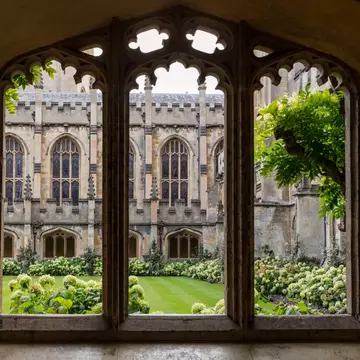
It won't take long to stumble upon a univeristy campus after arriving in Oxford, like Magdalen College. John and Tina Reid/Getty Images

Writer
Highlights
Writer Tasmin Waby rounds up 20 Oxford essentials from colleges to riverside pubs.
Christ Church doubled as Hogwarts; nearby Radcliffe Camera is Oxford's most photographed landmark.
Book lovers should browse Blackwell's 3.5km of shelves or book a Bodleian Library guided tour.
Punt from Magdalen Bridge and, later, raise a pint at The Perch's thatched beer garden.
Lonely Planet may earn a commission from affiliate links on our site. All recommendations and reviews reflect our own independent opinions.
It’s hard to think of Oxford without conjuring up images of academics in billowing black gowns breezing through honey-colored cloisters and crowds of starry-eyed students crammed into cavernous theaters.
It may be true that Oxford’s prestigious university is the city’s defining feature, but stray a little beyond the educational institution’s hallowed grounds, and you’ll stumble upon intriguing museums, labyrinthine bookstores and excellent historic pubs to while away an afternoon. There's a lot more to this golden-hued city than austere and solemn academia. Here are the top things to do in Oxford, a centuries-old city full of modern inspiration.
Oxford University can be traced back to the 11th century. Within 200 years, it had taken shape as a loose association of independent colleges, still housed (for the most part) in their original historic buildings scattered around the city. Depending on your interests, pick a couple of colleges to visit and get inspired by this institution's intellectual heritage. Most Oxford colleges welcome visitors, allowing you to explore their architectural beauty and history and learn about their famous alumni.
Merton College is where Lord of the Rings author JRR Tolkien worked as a professor of English language and literature. Trinity College boasts a beautifully restored Baroque chapel, and Lincoln College alumni include Dr Seuss (Theodore Geisel) as a Rhodes scholar. However, the more popular colleges with visitors are Magdalen College (pronounced “Maudlin”), where C S Lewis was a fellow, for its 15th-century tower and cloisters; All Souls College, founded in 1438, for its eye-catching Gothic towers; and Christ Church college, which doubled as Hogwarts during multiple scenes in the cinema adaption of the Harry Potter books. Balliol College, founded in 1263, is the oldest college building and features stunning medieval architecture.
Planning tip: Many colleges may have restricted hours or entry fees, so check ahead.
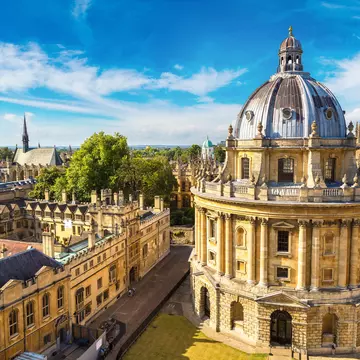
No doubt Oxford’s most photographed landmark is Radcliffe Camera, a dome-topped sandy-gold edifice built between 1737 and 1749 in grand Palladian style, then known as Radcliffe Library. It was demoted to a “camera” (room) in 1860, when it became the reading room of the neighboring Bodleian Library. The only way for non-members to see the interior is on the extended 1.5-hour tour of the Bodleian.
Be sure to visit the Sheldonian Theatre, a vision of the renowned Christopher Wren, the famous 17th-century architect and astronomer. The structure was built between 1664 and 1669. While Wren’s vision of a Roman open-air theater wasn’t possible due to the temperate English climate, artist Robert Streater created the illusion of looking at the heavens in his ceiling fresco.
Near the Sheldonian Theatre, you’ll also see people milling about to snap a picture of the iconic Bridge of Sighs (a skyway joining two parts of Hertford College over New College Lane). Completed in 1914, it's sometimes erroneously described as a copy of the famous namesake bridge in Venice, but it looks more like Venice’s Rialto Bridge.
At least five kings, dozens of prime ministers and Nobel laureates and luminaries such as Oscar Wilde, CS Lewis and JRR Tolkien have studied in Oxford's Bodleian Library, a magnificent survivor from the Middle Ages. Wander into its central 17th-century quadrangle, and you can admire the buildings for free. The neighboring Weston Library displays a revolving selection of “Bodleian Treasures” – ranging from manuscripts by the likes of Mary Shelley to the original Magna Carta – that are also free to visit.
However, if you’re a proper library fan you’ll probably want to get on one of the guided tours of the Bodleian. Starting in the ornate medieval Divinity School, the university's earliest teaching room, tours visit Convocation House, which hosted the English Parliament three times, plus the Chancellor’s Court, in which Oscar Wilde and Romantic poet Percy Bysshe Shelley went on trial (for debt and promoting atheism, respectively).
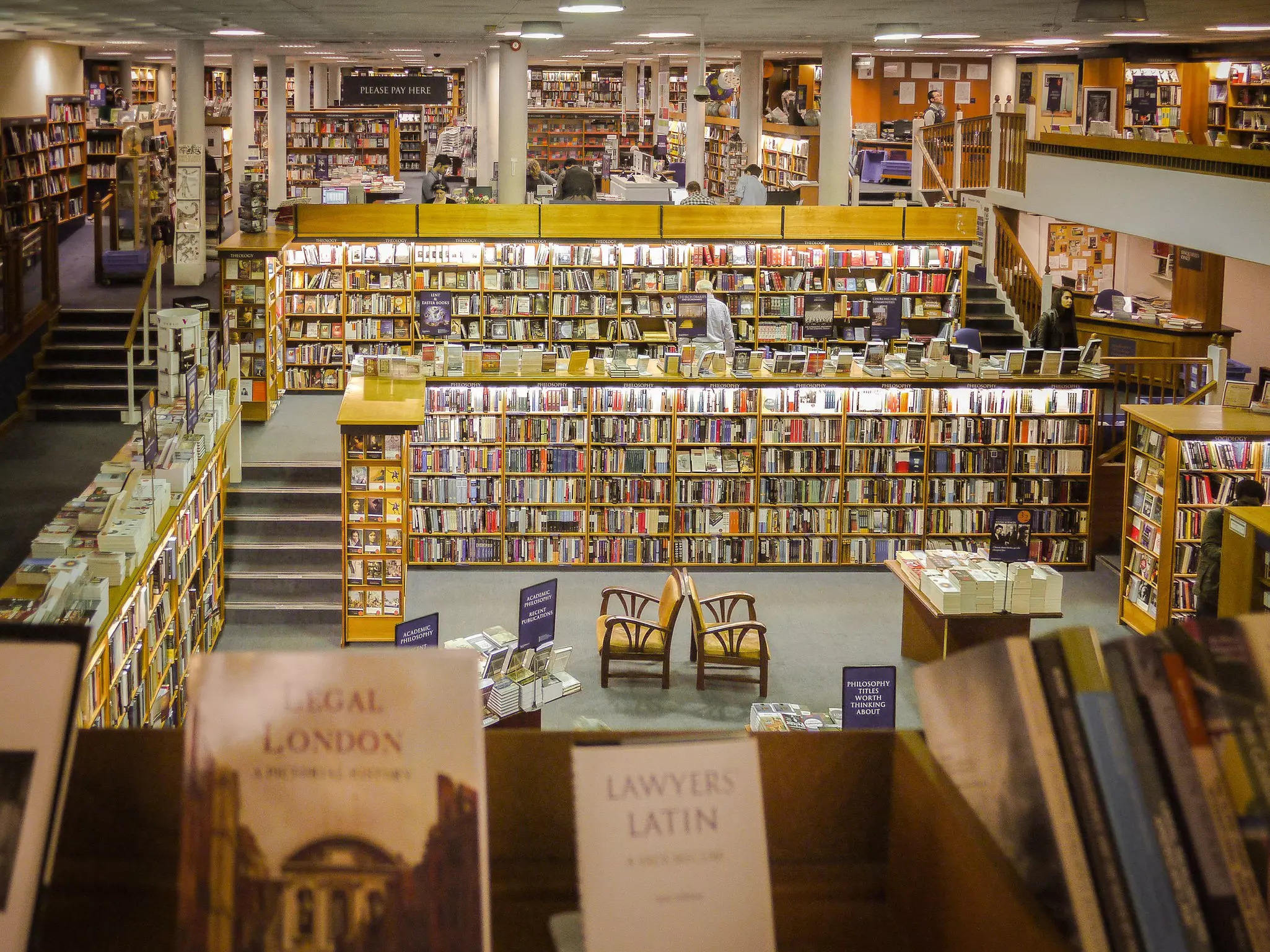
After that book-lovers' pilgrimage to the Bodleian Library, you can continue your literary love affair at the many bookshops of Oxford. Next door to Weston Library is a Blackwell’s with its basement lined with 3.5km (2.1 mi) of shelves. Popular children's murder mystery writer Robin Stevens worked as a bookseller here.
Along Broad Street, you’ll find a branch of Waterstones, and up in Summertown, Daunt Books has a footprint in Oxford. For secondhand books, there is the Oxfam bookshop in St John, while Jericho, the museum center of Oxford, is famous for the Last Bookshop. Here, you can find discounted stock on everything from poetry to psychology to politics, largely from academic publishers.
Britain’s oldest public museum, Oxford’s wonderful Ashmolean Museum, is surpassed only by the British Museum in London for size and volume of world treasures. You could easily spend a day exploring this magnificent neoclassical building and its collection. Family-friendly pamphlets draw kids into select exhibits. To the museum’s credit, the curators are engaging with how displays are presented in the age of postcolonial understandings of museum collections. For example, a past exhibition focused on the links between the British custom of drinking tea and the exploitation of enslaved people producing sugar in the West Indies.
The rooftop restaurant is also great. It’s run by the Benugo chain, and a proper English afternoon tea is a specialty here, including a vegan menu. Floor-to-ceiling glass windows open out onto a large terrace with deckchairs on the fake-grass “lawn” in the summer months – head up to enjoy views of the picturesque spires of Oxford.
If exploring an enormous room full of eccentric and unexpected artifacts sounds like your idea of the perfect afternoon, welcome to the amulets-to-zithers extravaganza that is the Pitt Rivers Museum.
Tucked behind Oxford’s Natural History Museum and dimly lit to protect its myriad treasures, it’s centered on an anthropological collection amassed by a Victorian general and revels in exploring how differing cultures have tackled topics like “Smoking and Stimulants” and “Treatment of Dead Enemies.” Wandering its three balconied floors, you may come across anything from Mesopotamian temple receipts to Japanese Noh-theater masks or a warrior’s helmet made from the skin of a porcupine fish.
Christ Church Cathedral doubles as Christ Church college’s chapel and the city’s cathedral. It was the site of an Anglo-Saxon shrine of St Frideswide, Oxford’s patron saint, since the 8th century. Later the 12th-century priory church became part of Cardinal Wolsey’s new Cardinal College in 1525. And Henry VIII made the church a cathedral when he renamed it Christ Church in 1546.
Christ Church Cathedral is also famous for its incredible choirs – four in total, each with its own distinctive identity. Described as "one of the finest choirs on Earth," the Cathedral Choir can be heard on some award-winning recordings with international orchestras and soloists, as well as the TV themes for The Vicar of Dibley and Mr Bean (you’re going to look those up now aren’t you?).
Planning tip: As a working Anglican cathedral, there’s no charge to visit for private prayer or to attend a service. Evensong, a 470-year-old meditative service of sublime music and readings, is celebrated at 6pm most days.
As a visitor site, Oxford Castle and Prison provides an interesting overview of the city’s extraordinary history, especially on a guided tour. Little now remains of Oxford Castle, which was built for William the Conqueror in 1071 and largely destroyed after the English Civil War. But entertaining theatrical tours led by costumed guides lead through the parts that survive.
St George's Tower, where the tours begin, is Oxford’s oldest building, erected to keep the Vikings out around 1009, as one of four towers on the city walls. Tours continue to the 11th-century crypt of St George's Chapel and the 18th-century Debtors' Tower, where you’ll learn about the grisly lives, daring escapes and cruel punishments of various Victorian inmates.
Today, you can also opt to sleep in the former prison for a night at Malmaison Oxford Castle. Centering on a turreted tower of Oxford’s castle, this is, in fact, a sophisticated contemporary hotel with plush interiors, sultry lighting and polished service. Accessed via classic prison catwalks, each of its 95 slick rooms occupies three former cells (generous, we know) and contains a proper bed (no hard prison cot for you).
Founded in 1621, Oxford's small, peaceful botanic garden is the oldest of its kind in England, celebrating its 400-year birthday in 2021. With over 5000 plant species, it remains a university department and is run more for research than pleasing the public. However, it’s a lovely spot beside the River Cherwell to escape the city streets, especially in peak tourism season. There is an admission fee (except for university staff and students), and pre-booking is strongly encouraged.
Greenhouses and open beds hold displays like “Plants That Changed The World,” which includes potatoes, pineapples, and cannabis. At its southern end, you’ll find the bench that Lyra and her extra-universal lover Will vow to visit once a year in Exeter College alumnus Phillip Pullman's His Dark Materials.
When you want to take a break from all the historic tours, try a little retail therapy at the Oxford Covered Market. The market has been a part of the city since 1774. Originally built to bring all the street vendors into one organized space, it was designed by John Gwynn, the same architect behind the Magdalen Bridge. His Georgian-style structure features high ceilings, iron trusses, and cast iron beams.
Wandering through, you’ll find a little bit of everything: flower sellers, warm Cornish pasties, freshly baked bread, Ben’s Cookies (a popular English chain), and sandwiches made by local butchers and fishmongers. It’s also a great place to pick up unique Oxford souvenirs, like handmade jewelry and locally-designed clothing.
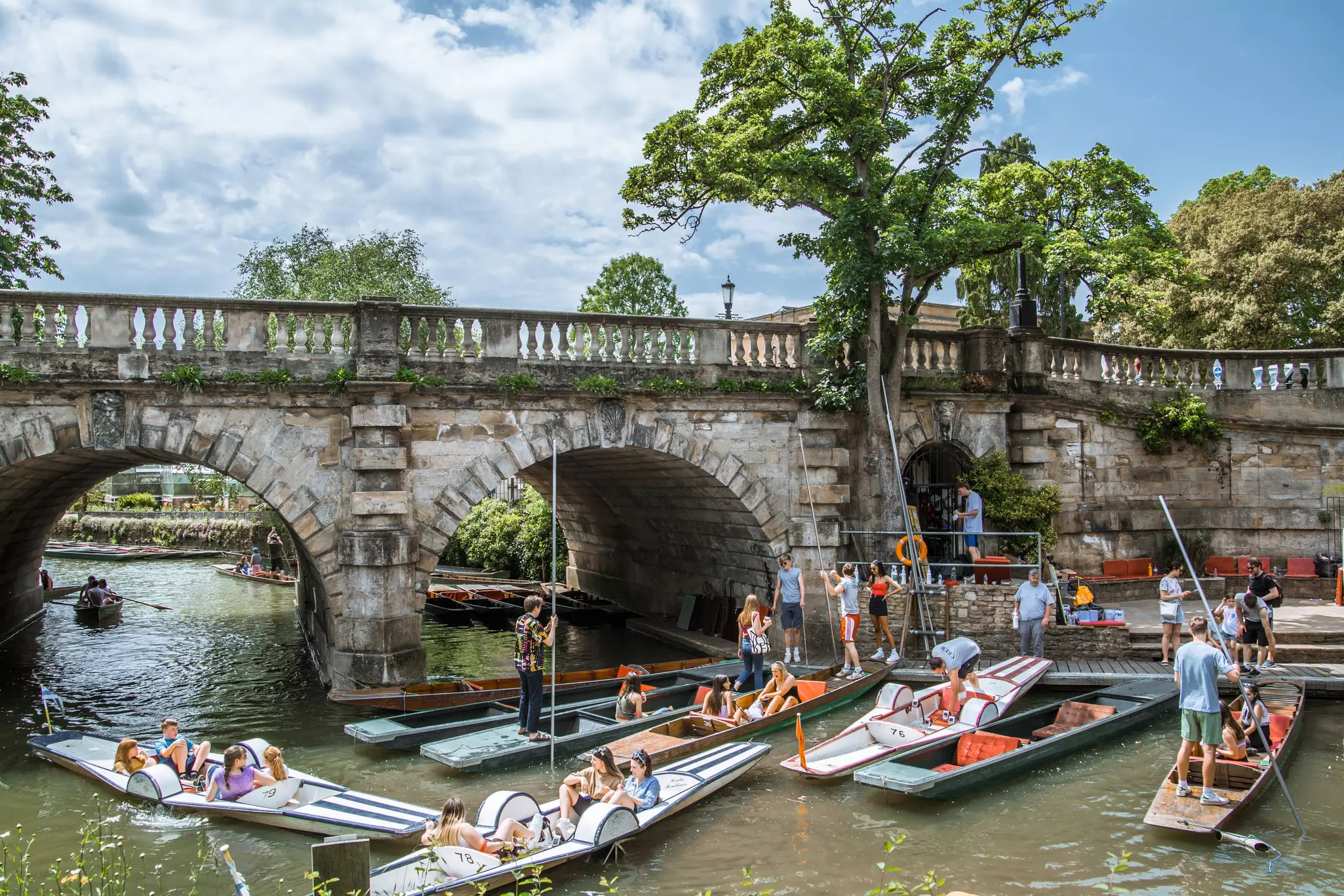
Outdoor activities are best during spring (March to May) and autumn (September to November), as the weather is generally mild. One of the more popular outdoor attractions is located directly across the road from the Botanic Gardens. You’ll spot Magdalen Bridge, where you can go punting from the boathouse. An iconic Oxford experience, punting is all about lounging back in a flat-bottomed boat and sipping Pimms (a classic English summer beverage) as you watch the city’s glorious architecture drift by.
To achieve that blissful state, you must first master punting’s greatest skill – persuading someone else to do all the hard work. The actual act of punting, propelling a boat along a river by repeatedly poking a long pole into the muddy bottom, is far more difficult than it appears. If you just want to relax, consider renting a professional to take you on a tour. Most punts hold five people, four of them sprawled on cushions and the punter standing at the back.
Oxford has many links to Lewis Carroll’s Alice in Wonderland stories, but this tiny 500-year-old shop on St Aldate’s is one of the most tangible that remains. It operated as a grocery and sweets shop when the real Alice, Alice Liddle (the inspiration for the storybook character), used to shop here 150 years ago.
The fabled shop was transmuted into the “Old Sheep Shop” in the 1871 novel Through the Looking-Glass. On leaving the shop at the end of the chapter, Alice says: "Well, this is the very queerest shop I ever saw!" Today, it’s a treasure trove of gifts, souvenirs and memorabilia, from jigsaws to jewelry commemorating this beloved character. Even the biggest Wonderland fan will not be disappointed.
In July, the city commemorates the anniversary of the Liddle family and Charles Lutwidge Dodgson’s Thames rowing trip, where the story that became Alice in Wonderland began with Alice’s Day. Another Alice sight still standing is the “Treacle Well” (referenced during the Mad Hatter’s tea party) near the 12th-century Church of St Margaret of Antioch, half a mile west of the Thames in Binsey.
At the gated Wolvercote Cemetery, 2.5 miles north of Oxford city center, is the final resting place of John Ronald Reuel (JRR) Tolkien (1892–1973) and his wife, Edith Mary Tolkien, who passed away two years before him. Their gravestone bears the names Beren (for him) and Lúthien (for her), referencing the love between a mortal man and an elf maiden who gave up her immortality to be with him.
When you enter the main gates, a series of small signs point visitors to the grave, which is usually covered in offerings of flowers, plants, and sometimes jewelry. We assume these offerings are a way to say thank you to fans of the writer’s contribution to the world.
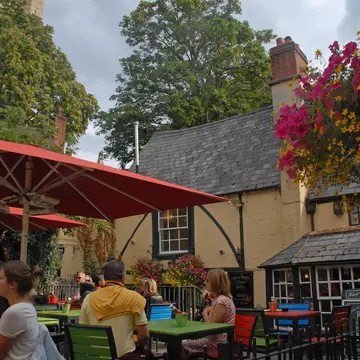
Oxford is also renowned for its excellent pubs, several with delightful river views that perfectly complement a lovely afternoon pint. The Perch is a thatched-roof village pub with a sprawling beer garden tucked down a magical footpath just off the Thames.
The Trout sits next to a cascading mill stream on the river – a favorite spot of Lewis Carroll and C S Lewis during their years at Oxford University. And with boats moored on the towpath outside and rowers passing up and downstream, Isis River Farmhouse has excellent river views from its beer garden as well as live music. Closer to Oxford city center, Head of the River offers a good selection of beers and great views.
Housed in the lovely 17th-century building that held the original Ashmolean Museum, this wee museum is not just for science fans. Learn more about the development of scientific inquiry and the instruments that facilitated that quest. It is stuffed with astrolabes, orreries and early electrical apparatus.
Displays include cameras that belonged to Lawrence of Arabia and a radio receiver invented by Guglielmo Marconi in 1896. Plus, a blackboard that was covered with equations by Einstein in 1931, when he was invited to give lectures on relativity. Einstein's scientific legacy of innovation continues with a recent addition to these displays – a glass sculpture of a nanoparticle of the Oxford AstraZeneca vaccine. The museum is understandably proud of the key role Oxford-based scientists played in the development of this life-saving drug – thankfully, the sculpture is one million times the size of an actual nanoparticle, so you can see it in all its glory.
This child-friendly museum celebrates a thousand years of Oxford’s storytelling history, from ancient myths and legends to classics of children’s literature. Explore Britain's storytelling heritage as you move through the sprawling complex.
Rooms honor the likes of Lewis Carroll, Phillip Pullman and Wallace and Gromit, and the Whispering Wood is a man-made forest where every tree has a secret to reveal.
Planning tip: The museum also hosts an ever-changing program of storytelling sessions and live shows. Check the website for details.
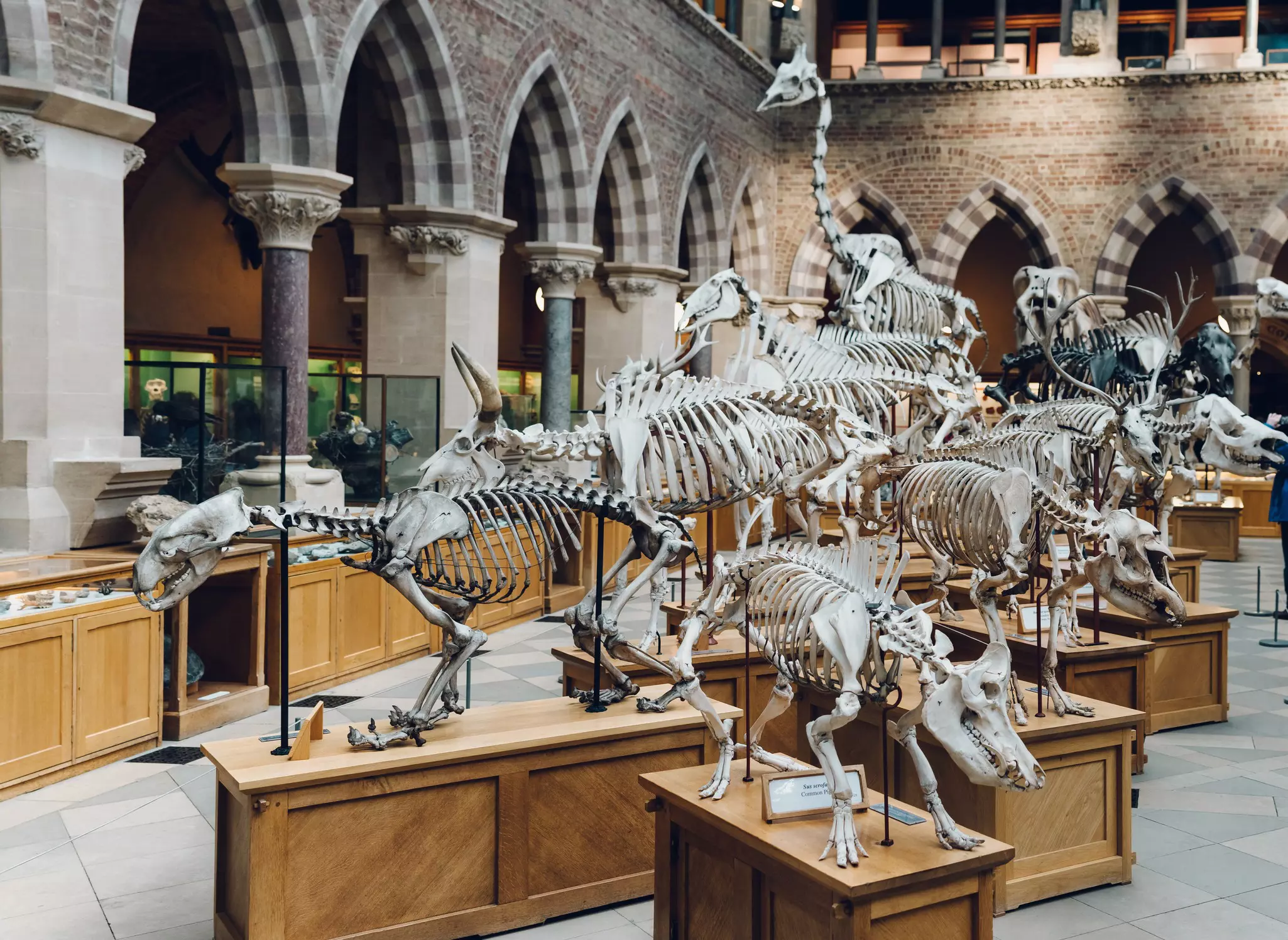
It’s worth visiting this charming museum just to admire its light-filled, glass-roofed Victorian Gothic home. The cast-iron columns, flower-carved capitals and a soaring glass roof make a superb showcase for some extraordinary exhibits. Specimens from all over the world include a 150-year-old Japanese spider crab.
However, it’s the dinosaurs that really wow the kids. As well as a towering T-rex skeleton – ‘Stan, ’ the second most complete ever found – you’ll see pieces of Megalosaurus, which was the first dinosaur ever mentioned in a written text in 1677. Another visitor favorite is the (stuffed) dodo that Lewis Carroll immortalized in Alice in Wonderland.
Cowley Road, just southeast of the city center, weaves the city's best independent shopping and food culture. At Truck Store, crate-diggers flip through rare and new vinyl collections, while local bands perform intimate gigs. G&D's Ice Cream – founded by two Oxford students in 1992 – has become a local institution, churning out housemade flavors like butter pecan and blueberry lemonade sorbet. By evening, Kazbar's candlelit corners are filled with diners sharing Spanish and Moroccan small plates, while the Coconut Tree serves fiery Sri Lankan street food and punchy cocktails. If you’re looking for something casual, at classic student hangout, Big Society, vintage arcade games and craft beers accompany American comfort food like cheeseburgers and fried chicken.
Just a 10-minute drive from Oxford lies Blenheim Palace, one of Britain’s grandest stately homes and the birthplace of Winston Churchill in 1874. The palace, now a UNESCO World Heritage site, showcases a distinctive architectural style that influenced the late 18th-century Romantic movement. Its origins trace back to Queen Anne’s gratitude to John Churchhill, Duke of Marlborough, for his victory at the 1704 Battle of Blenheim in Germany. The baroque masterpiece, designed by Sir John Vanbrugh and Nicholas Hawksmoor, took shape between 1705 and 1722. Today, the palace continues its Churchill legacy as home to the 12th Duke.
Beyond its majestic oak doors, the palace is stuffed with statues, tapestries, sumptuous furniture, priceless china, and giant oil paintings in elaborate gilt frames. The palace is featured in several films, from Harry Potter to James Bond. If you’ve watched the 2021 Cinderella film starring Camila Cabello, James Corben, and Pierce Brosnan, you might recognize those floor-to-ceiling shelves in the Long Library.
Planning tip: For a full experience, make sure you allow enough time to enjoy an indulgent afternoon tea in the Orangery and then head for a postprandial walk of the lavish gardens and parklands. They’re not to be missed.
Oxford’s cobblestone streets, shadowy alleyways and ancient colleges have served as the backdrop for some of Britain’s most famous film and TV productions.
Harry Potter fans may recognize Christ Church College, which became the Hogwarts’ dining hall in the Harry Potter movies where they filmed the Hogwarts dining hall. The Bodleian Library’s Duke Humfrey’s Reading Room was transformed into the Hogwarts’ library in Harry Potter and the Philosopher’s Stone. Oxford is also home to several famous detective dramas, such as Inspector Morse and its spinoffs Lewis and Endeavour. You can visit spots like the Randolph Hotel, a regular location for Morse, or take a stroll through the University Parks, often seen in the show.
Planning tip: For a comprehensive experience, take one of the many guided tours focusing on film and television.
Explore related stories