HavanaThings to do

Things to do in Havana

‹ Prev

of 17

  1. A

    Decameron

    Ugly from the outside, but far prettier within, the Decameron is an intimate Italian-influenced restaurant where you can order from the varied menu with abandon. Veggie pizza, lasagna bolognese, steak au poivre and a divine calabaza soup: it’s all good. On top of that, there’s a decent wine selection and the kitchen is sympathetic to vegetarians.

    reviewed

  2. B

    Paladar La Guarida

    Located on the top floor of a spectacularly dilapidated Havana tenement, La Guarida’s lofty reputation rests on its movie-location setting ( Fresa y Chocolate was filmed in this building) and a clutch of swashbuckling newspaper reviews (including the New York Times and the Guardian ). The food, as might be expected, is up there with Havana’s best, shoehorning its captivating blend of Nueva Cocina Cubana into dishes such as sea bass in a coconut reduction, and chicken with honey and lemon sauce. Reservations required.

    reviewed

  3. C

    Los Nardos

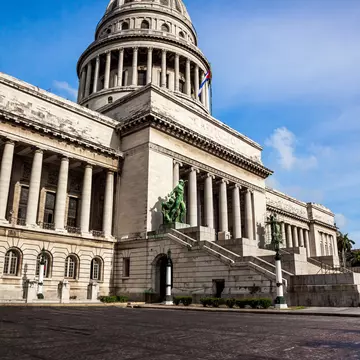
    Directly opposite the Capitolio but easy to miss, Los Nardos is one of a handful of semi-private Havana restaurants operated by the Spanish Asturianas society. Touted in some quarters as one of the best eateries in the city, this unprepossessing place is decked out in mahogany and leather and serves up such astoundingly delicious dishes as lobster in a Catalan sauce, garlic prawns with sautéed vegetables and an authentic Spanish paella. Portions are huge and the prices, which start at around CUC$4 for chicken and pork dishes, are unbelievably cheap.

    reviewed

  4. D

    Paladar La Fontana

    Havana discovers the barbecue or, more to the point, the full-on charcoal grill. Huge portions of meat and fish are served up in this amiable villa-cum-paladar, so go easy on the starters which include crab mixed with eggplant, quail eggs and fried chickpeas. La Fontana specializes in just about everything you’ll never see elsewhere in Cuba, from lasagna to huge steaks. Big-shot reviews from the Cigar Aficionado and the Chicago Tribune testify the burgeoning legend.

    reviewed

  5. Café Literario del ‘G’

    If Havana has a proverbial Left Bank, this is it, a laid-back student hangout full of arty wall scribblings and coffee-quaffing intellectuals discussing the merits of Guillén over Lorca. Kick back in the airy front patio among the green plants and dusty books and magazines (available to read, lend and buy), and keep an ear out for one of the regular trova (traditional music), jazz and poetry presentations.

    reviewed

  6. Club Habana

    This fabulously eclectic mansion in Flores dating from 1928 once housed the Havana Biltmore Yacht & Country Club. In the 1950s the establishment gained brief notoriety when it famously denied entry to Cuban president Fulgencio Batista on the grounds that he was ‘black’ (Batista was in fact of mixed blood with a black mother and a part-Chinese father). Castro had better luck when he dropped by for dinner some 30 years later and the club remains one of the few places where he has dined in public. These days the history of the establishment seems to have swung full circle and it is again a popular hangout for foreign correspondents and diplomats. The club has its own beach, …

    reviewed

  7. E

    Real Fábrica de Tabacos Partagás

    One of Havana’s oldest and most famous cigar factories, the landmark neoclassical Real Fábrica de Tabacos Partagás was founded in 1845 by a Spaniard named Jaime Partagás. Today some 400 workers toil for up to 12 hours a day in here rolling such famous cigars as Montecristos and Cohibas. As far as tours go, Partagás is the most popular and reliable factory to visit. Tour groups check out the ground floor first, where the leaves are unbundled and sorted, before proceeding to the upper floors to watch the tobacco get rolled, pressed, adorned with a band and boxed. Though interesting in an educational sense, the tours here are often rushed and a little robotic and some vi…

    reviewed

  8. F

    Parque Almendares

    Running along the banks of the Río Almendares below the bridge on Calle 23 (La Rampa), this wonderful oasis of greenery and negative-air ions in the heart of chaotic Habana is sometimes referred to as the lungs of the city. The park was restored in 2003 and a beautiful job has been done: benches line the river promenade, plants grow profusely in the shade and there are many facilities here, including an antiquated miniature golf course, the Anfiteatro Parque Almendares and a children’s playground. There are also several good places to eat. Take a 20-minute stroll through old-growth trees in the Bosque de la Habana and you’ll feel transported (take a friend, though: thi…

    reviewed

  9. G

    El Floridita

    Promoting itself as the ‘cradle of the daiquirí,’ El Floridita was a favorite of expat Americans long before Ernest Hemingway dropped by in the 1930s (hence the name, which means ‘little Florida’). A bartender named Constante Ribalaigua invented the daiquirí soon after WWI, but it was Hemingway who popularized it and ultimately the bar christened a drink in his honor: the Papa Hemingway Special (basically, a daiquirí made with grapefruit juice). His record – legends ha it – was 13 doubles in one sitting. Any attempt to equal it at the current prices (CUC$6 a single shot) will cost you a small fortune – and a huge hangover.

    reviewed

  10. H

    Museo del Chocolate

    Chocolate addicts beware. This quirky ‘museum’ in the heart of Habana Vieja offers a lethal dose of chocolate, chocolate and yet more chocolate. (And it’s all made on the premises too.) Situated – with no irony intended – on the corner of narrow Calle Amargura (Bitterness St), this venerable sweet-toothed establishment is actually more a café than a museum, with a small cluster of marble tables set among an interesting assortment of chocolate paraphernalia. Not surprisingly everything on the delicious menu contains one all-pervading ingredient – have it hot, cold, white, dark, rich, or smooth, the stuff is divine whatever way you choose.

    reviewed

  11. Advertisement

  12. I

    Fortaleza de San Carlos de la Cabaña

    An 18th-century colossus, the FortalezadeSan Carlosde la Cabaña was built between 1763 and 1774 on a long, exposed ridge on the east side of Havana harbor to fill a weakness in the city’s defenses. In 1762 the British had taken Havana by gaining control of this strategically important ridge and it was from here that they shelled the city mercilessly into submission. In order to prevent a repeat performance, the Spanish King Carlos III ordered the construction of a massive fort that would repel future invaders. Measuring 700m from end to end and covering a whopping 10 hectares, it is the largest Spanish colonial fortress in the Americas.

    reviewed

  13. J

    El Templete

    This upscale restaurant is situated less than 100m from its namesake temple, where the city of Habana was founded in 1519. Overlooking the harbor, the eating space is split into two halves: an outdoor alfresco area accommodated under a large awning, and a pleasant indoor dining room with starched tablecloths and expensive-looking wine glasses. For once the food quality lives up to the pretensions of the fancy decor, with seafood specialties spearheaded by shrimps and lobster. Count on forking out CUC$15 minimum for a main course here.

    reviewed

  14. K

    Restaurante la Torre

    One of Habana’s tallest and most talked about restaurants is perched high above downtown Vedado atop the 36-story Edificio Focsa. A colossus of modernist architecture and French-Cuban haute cuisine, this lofty fine-dining extravaganza combines sweeping city views with a progressive French-inspired menu that serves everything from artichokes to foie gras to almond tart. The prices at CUC$30 a pop are as distinctly un-Cuban as the ingredients, but with this level of service, it’s probably worth it.

    reviewed

  15. L

    Rancho Coquito

    At last, a decent restaurant on the Malecón. Run by the local Spanish Asturianas society, this is an inconspicuous food joint with a balcony that overlooks Havana’s dreamy 8km sea drive (look for the waiter posted outside) and is frequented mainly by Cubans. Upstairs, the food is tasty and unbelievably cheap. Paella goes for CUC$7, garbanzos fritos (fried chickpeas) CUC$5, tortilla CUC$3 and a decent portion of lobster pan-fried in butter for a giveaway CUC$8.

    reviewed

  16. M

    El Aljibe

    On paper a humble Palmares restaurant, but in reality a rip-roaring culinary extravaganza, El Aljibe has been delighting both Cuban and foreign diplomatic taste buds for years. The furor surrounds the gastronomic mysteries of just one dish, the obligatory pollo asado (roast pork), which is served up with as-much-as-you-can-eat helpings of white rice, black beans, fried plantain, French fries and salad. The accompanying bitter orange sauce is said to be a state secret.

    reviewed

  17. N

    La Casa de la Música Centro Habana

    One of Cuba’s best and most popular (check the queues) nightclubs and live-music venues; all the big names play here, from Bamboleo to Los Van Van – and you’ll pay peanuts to see them. Of the city’s two Casas de la Música, this Centro Habana version is a little edgier than its Miramar counterpart (some have complained it’s too edgy), with big salsa bands and little space. Price varies depending on the band.

    reviewed

  18. O

    Café de las Infusiones

    Wedged into Calle Mercaderes, this recently restored Habaguanex coffee house is a caffeine addict’s heaven; it boasts a wonderful resident pianist, too. Fancier than your average Cuban coffee bar and more comprehensive than the Escorial, you can order more than a dozen different cuppas here, including Irish coffee (CUC$3.50), punch coffee (CUC$5), mocha (CUC$1), cappuccino (CUC$1.75) and so on.

    reviewed

  19. P

    Restaurante Europa

    Fine fin de siècle furnishings lure you into this former Havana sweet shop that recently got a restaurant makeover by the City’s Historian’s office and Habaguanex. They obviously forgot to makeover the chef. Despite a menu that boasts of prize-winning cuisine (what prize?), the plate doesn’t quite live up to the billing, though the ambience is pleasant and the service eager.

    reviewed

  20. Q

    La Julia

    It’s been around long enough to be called an institution and outlasted almost all the opposition – except, perhaps, Fidel. La Julia is an unfussy family-run paladar in Calle O’Reilly that serves Cuban comfort food – comida criolla – with patience and panache.

    reviewed

  21. R

    Restaurante Las Orishas

    This Santería-themed place in Guanabacoa has a very pleasant garden bar in a courtyard with colorful Afro-Cuban sculptures. The menu is reasonable and varied, with everything from a CUC$1 microwaved cheese pizza to a CUC$20-plus lobster. There’s good rumba music here at weekends.

    reviewed

  22. Advertisement

  23. S

    El Chevere

    One of Habana’s most popular discos, this alfresco place in a lush park gets local tongues wagging, and hosts a good mix of Cubans and tourists.

    reviewed

  24. T

    Al Medina

    Tucked into a beautiful patio off Calle Oficios, Al Medina is where you can dine like a Moroccan sheik on lamb couscous (CUC$10), chicken tagine (CUC$5) and Lebanese sumac (CUC$8) with a spicy twist. It’s especially recommended for its voluminous veggie platter that comes with hummus, tabouleh, dolma, pilaf and falafel.

    reviewed

  25. Señora Amelia Goyri

    After entering the neo-Romanesque northern gateway (1870), there’s the tomb of independence leader General Máximo Gómez (1905) on the right (look for the bronze face in a circular medallion). Further along past the first circle, and also on the right, are the monument to the firefighters (1890) and the neo-Romanesque Capilla Central (1886) in the center of the cemetery. Just northeast of this chapel is the graveyard’s most celebrated (and visited) tomb, that of Señora Amelia Goyri, better known as La Milagrosa (the miraculous one), who died while giving birth on May 3, 1901. The marble figure of a woman with a large cross and a baby in her arms is easy to find, due…

    reviewed

  26. U

    Universidad de la Habana

    Founded by Dominican monks in 1728 and secularized in 1842, Habana University began life in Habana Vieja before moving to its present site in 1902. The existing neoclassical complex dates from the second quarter of the 20th century, and today some 30,000 students (2000 of them foreigners), taught by 1700 professors, follow courses in the social sciences, humanities, natural sciences, mathematics and economics here. Perched on a hill at the top of the famous stairway, the university’s central quadrangle, the Plaza Ignacio Agramonte, displays a tank captured by Castro’s rebels in 1958. Directly in front is the biblioteca (library) and to the left the Edificio Felipe Poe…

    reviewed

  27. V

    Museo de la Revolución

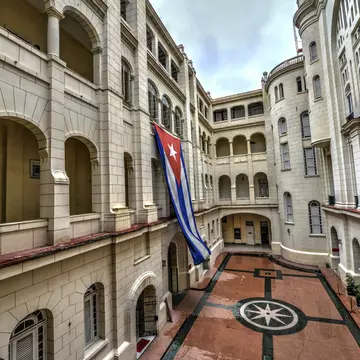
    The Museo de la Revolución is housed in the former Presidential Palace, constructed between 1913 and 1920 and used by a string of cash-embezzling Cuban presidents, culminating in Fulgencio Batista. The world-famous Tiffany’s of New York decorated the interior, and the shimmering Salón de los Espejos (Room of Mirrors) was designed to resemble the room of the same name at the Palace of Versailles. In March 1957 the palace was the target of an unsuccessful assassination attempt against Batista led by revolutionary student leader José Antonio Echeverría. The museum itself descends chronologically from the top floor starting with Cuba’s pre-Columbian culture and extending to …

    reviewed