Jun 26, 20266 min read
Best Museums in Kyoto for Contemporary Art, Traditional Sake and Popular MangaMay 7, 2026
12 MIN READ

Writer
Kinkaku-ji, Kyoto. marcociannarel/Shutterstock

Writer
Highlights
Editors round up 11 Kyoto temples and shrines across the city's major neighborhoods.
Visit Kiyomizu-dera for its 13m wooden veranda and Kinkaku-ji for its golden pavilion.
Walk Fushimi Inari-Taisha's hypnotic vermilion torii early in the morning before crowds arrive.
For serene gardens, head to Nanzen-ji in Northern Higashiyama or Tenryū-ji in Arashiyama.
Lonely Planet may earn a commission from affiliate links on our site. All recommendations and reviews reflect our own independent opinions.
Visiting Kyoto, the exquisite former capital of Japan, is a highlight of any trip to the country. The city’s astonishing collection of temples and shrines helps explain why: these symbolic structures offer architectural beauty and harmony with nature, uplifting and inspiring anyone who visits them, regardless of spiritual background.
With over 1600 Buddhist temples (“ji” in Japanese) and 400 Shintō shrines packed into a relatively compact area, there are enough sanctuaries in Kyoto to fill a lifetime of visits. Where you do you begin? By adding our list of the best temples and shrines in Kyoto to your itinerary.
Best known for its wooden veranda
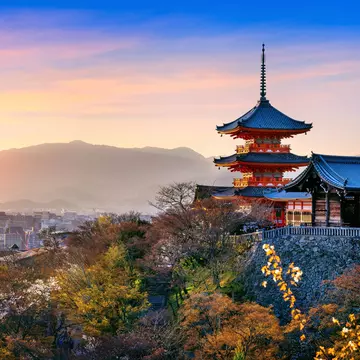
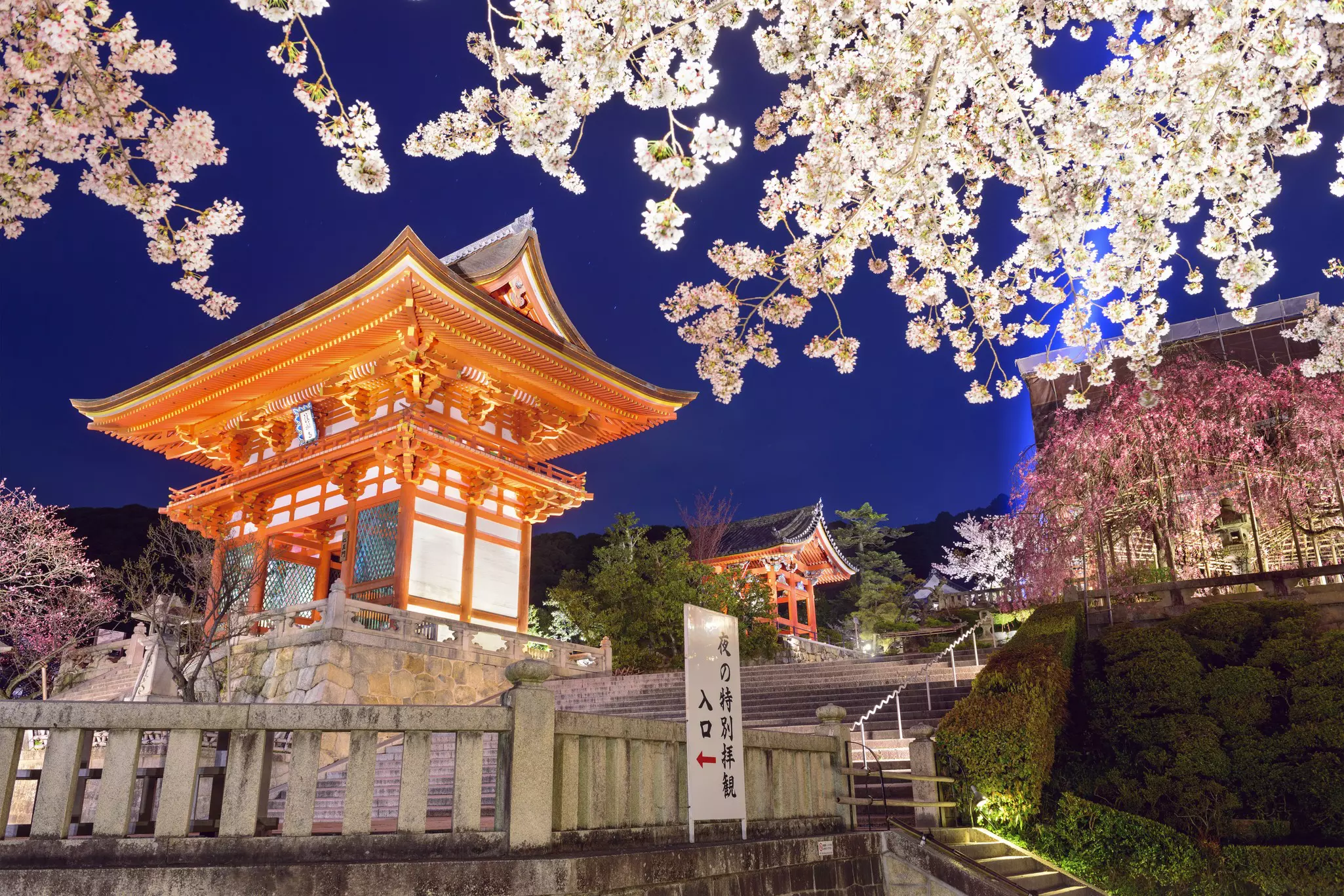
One of the city’s most revered World Heritage sites, Kiyomizu-dera is a temple with over 1200 years of history. Erected at the site of a holy spring, the temple has long been a place of pilgrimage, and remains famous for its impressive 13m-high wooden veranda, Buddhist art collections and a shrine for those seeking luck in love.
Most visitors arrive at the temple at the foot of the Niō-mon, a stunning two-story vermilion gate crammed with intricate artisanship, which towers at the top of some stone steps. Since this is an iconic and popular spot, you’ll need to visit very early or late in the day to experience it without the crowds.
Location: Gion and Southern Higashiyama
Opening hours: 6am-6pm (these times change seasonally and during special events)
Admission: Adults: 400 yen, students: ¥200
Accessibility: This main hall and wooden veranda can be accessed by wheelchair and have ramps. The website has a map for wheelchair users.
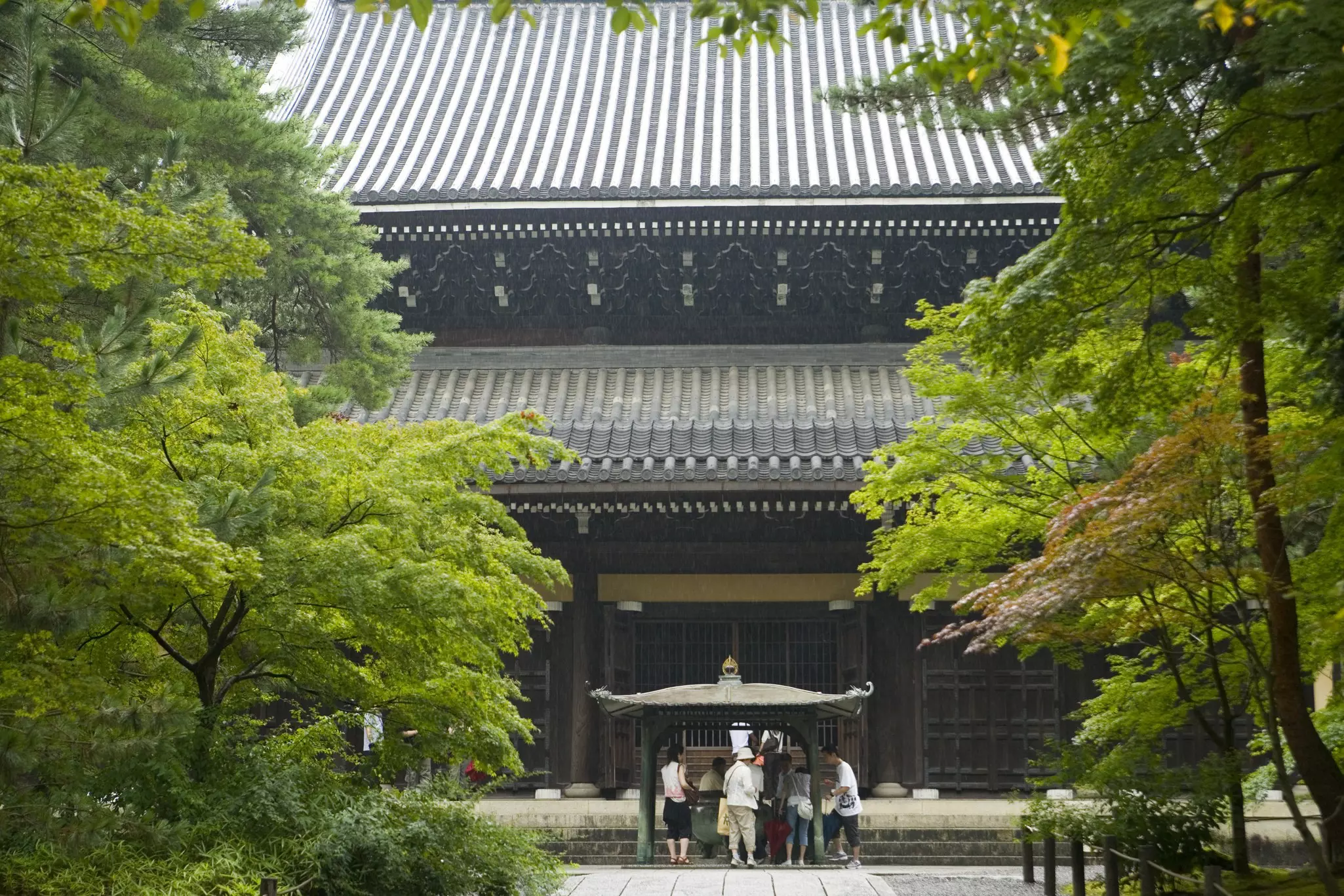
Best known for its expansive grounds and Leaping Tiger Garden
Emperor Kameyama built this temple as a retirement villa in the late 1200s – before, that is, he became a monk and donated it to Buddhism. Nanzen-ji later developed into a sprawling Zen complex with multiple sub-temples. Today, it remains home to some of some of the finest landscaped gardens and traditional works of art in the Kyoto district of Northern Higashiyama.
Location: Northern Higashiyama
Opening hours: 8:40am-4:30pm (closed December 28–31)
Admission: Adults: ¥600, students: ¥500, children: ¥400
Accessibility: Wheelchair access is limited to the Hojo Garden and precinct. There are many stairs and slopes within the temple grounds.
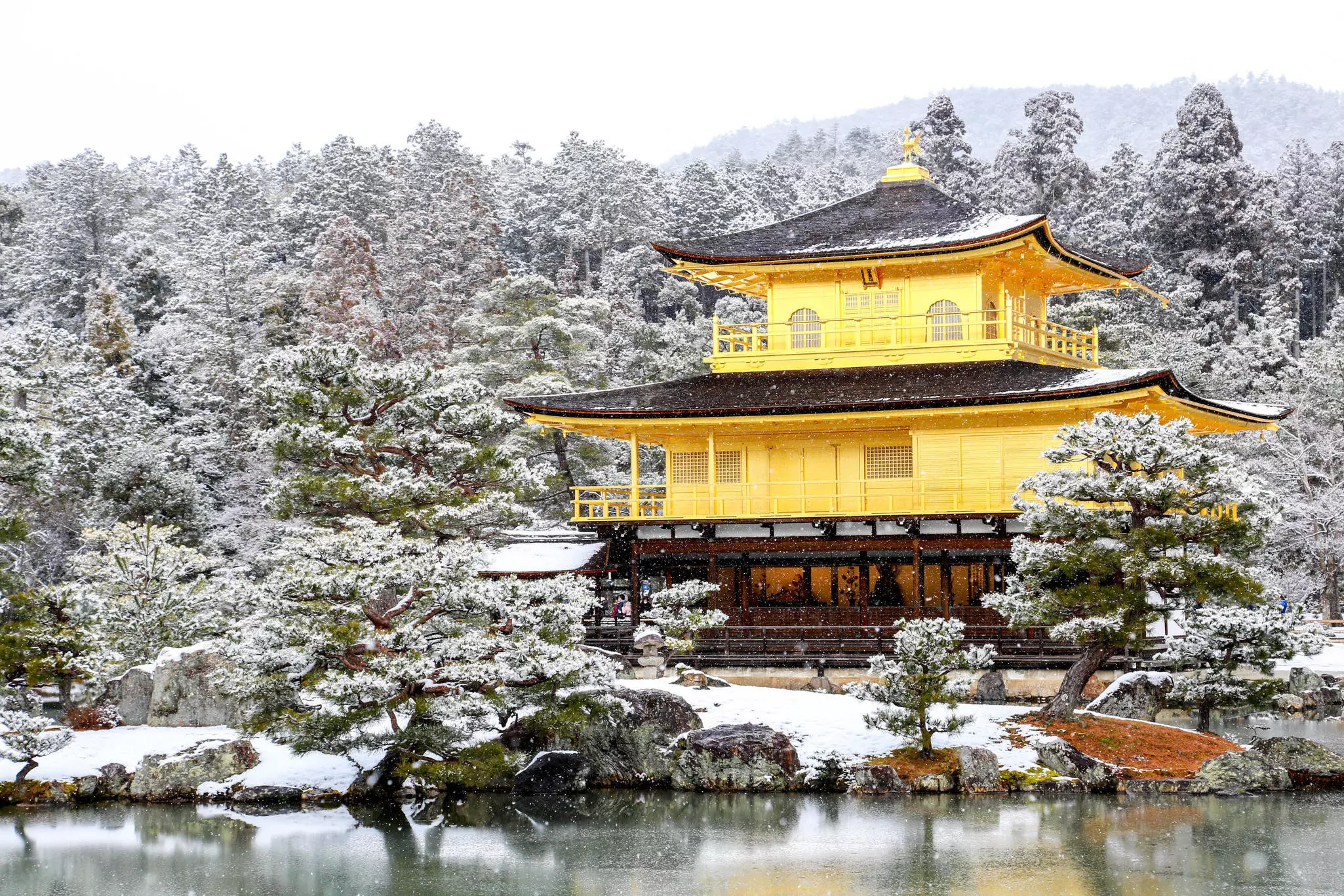
Best known for its Golden Pavilion and as an icon of Kyoto
It doesn’t take long for Kinkaku-ji to amaze. A minute after heading through the entrance, the gravel pathway opens up to one of the defining images of Kyoto: a golden pavilion seen across a pond that’s designed to catch the pavilion’s reflection.
Though there is nothing else quite like Kinkaku-ji in Japan, the temple’s creation does follow a familiar story. Originally, it was part of the villa of 14th-century shōgun Ashikaga Yoshimitsu, who requested its conversion into a Zen temple upon his death. Its official name, Rokuon-ji, was taken from part of Yoshimitsu’s posthumous Buddhist name. Kinkaku refers only to the golden pavilion itself, with -ji (temple) added to create the temple’s familiar name: the Temple of the Golden Pavilion.
Opening hours: Open year-round, 9am-5pm
Admission: Adults: ¥500, students: ¥300
Accessibility: While the path to the Golden Pavilion is wheelchair accessible, the garden is not barrier-free. If using a wheelchair or stroller you will need to return to the entrance to exit the grounds.
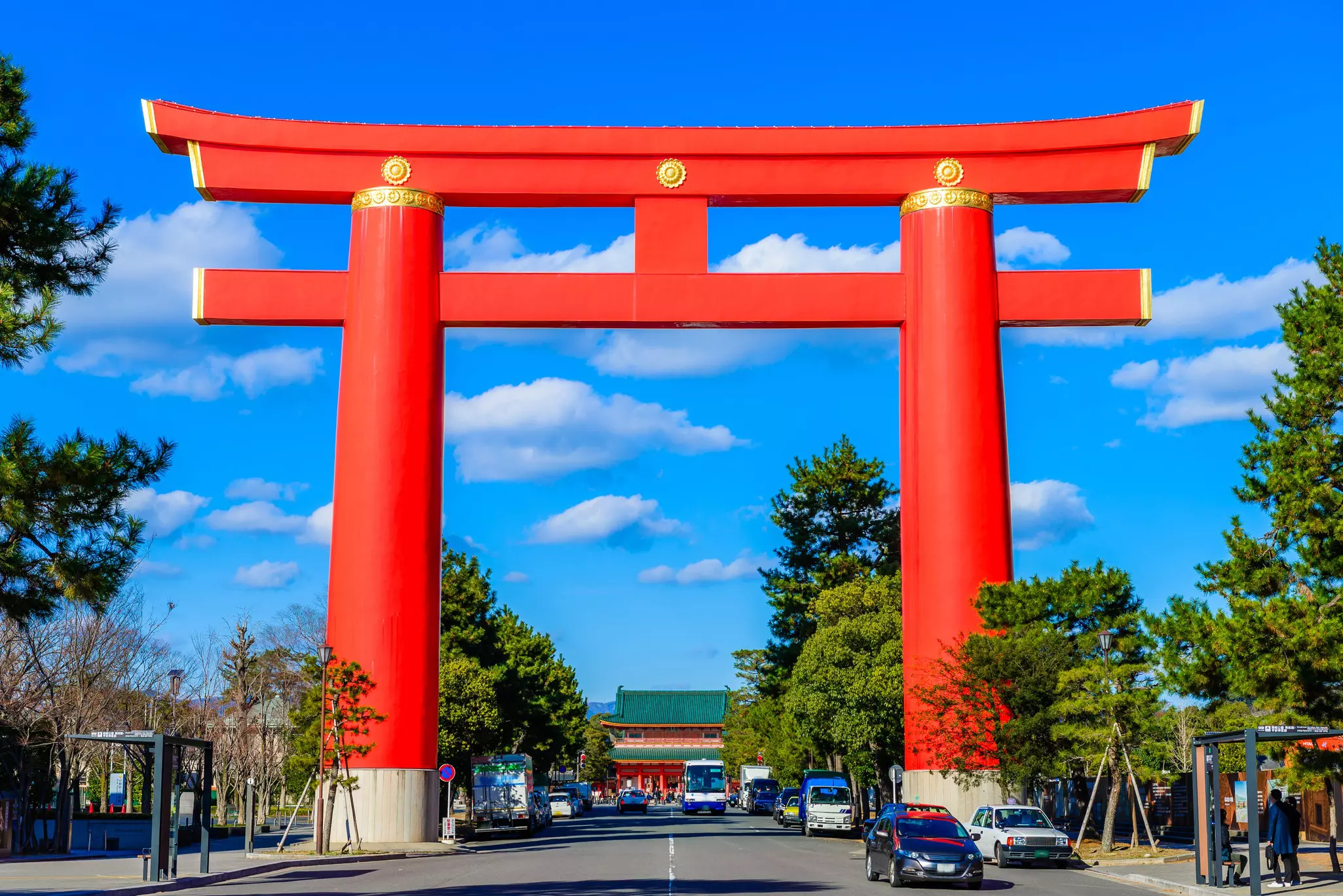
Best known for its red shrine featuring one of the biggest torii in Japan
Compared to most of Kyoto’s temples and shrines, Heian-jingū is a fresh-faced newcomer, built in Okazaki Park in 1895 to commemorate the 1100th anniversary of Kyoto’s establishment as Japan’s capital. From anywhere in the Okazaki Park area, you’ll see Heian-jingū’s Grand Torii, the tallest in the country when it was built. You can pop inside the admission-ticket-free main compound to see a collection of vermilion-colored buildings arranged around a vast courtyard – a smaller-scale replica of Kyoto’s original Imperial Palace.
If you are interested in traditional landscaping, you can pay ¥600 for a walk around the shrine’s gardens. Covering 2.4 acres, the gardens are split into four distinct sections that together reflect the varied garden designs developed since Kyoto’s establishment. They begin with the Minami Shin-en (South Garden), a stroll garden based on Heian era (794–1185) landscaping that’s best known for weeping cherry blossoms that bloom pink in spring.
Location: Northern Higashiyama
Opening hours: Open year-round; times vary depending on the season
Admission: Free; garden admission ¥600
Accessibility: The left side entrance has a set of ramps for wheelchair access.
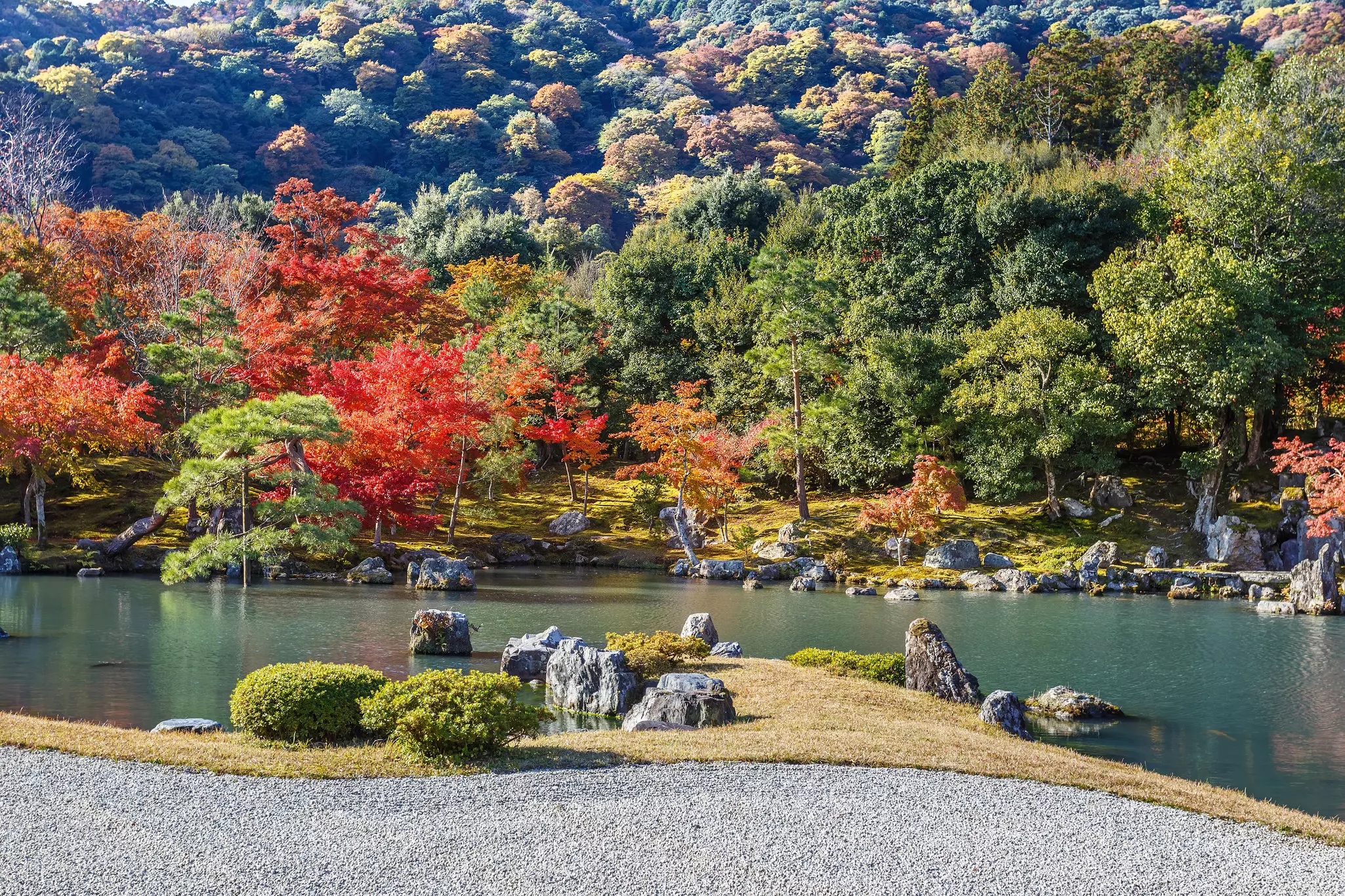
Best known for its 14th-century Zen garden
A fitting centerpiece for the beautiful neighborhood of Arashiyama, the Zen temple complex of Tenryū-ji has one of the city’s oldest and most celebrated landscape gardens. A morning stroll here, whether amid spring peach blossoms or ruby-red autumn maples, is an experience anyone will cherish.
Established in 1339 and belonging to the Rinzai sect of Zen Buddhism, Tenryū-ji is one of Kyoto’s leading Zen temples. Sprawling across a great swath of Arashiyama, the precinct boasted 150 sub-temples at its peak, though most of its lands were lost during the religious reforms of the Meiji period.
Location: Arashiyama
Opening hours: 8:30am-5pm
Admission: Adults: ¥500, students: ¥300, young children: free
Accessibility: Many parts of the temple grounds are wheelchair accessible.
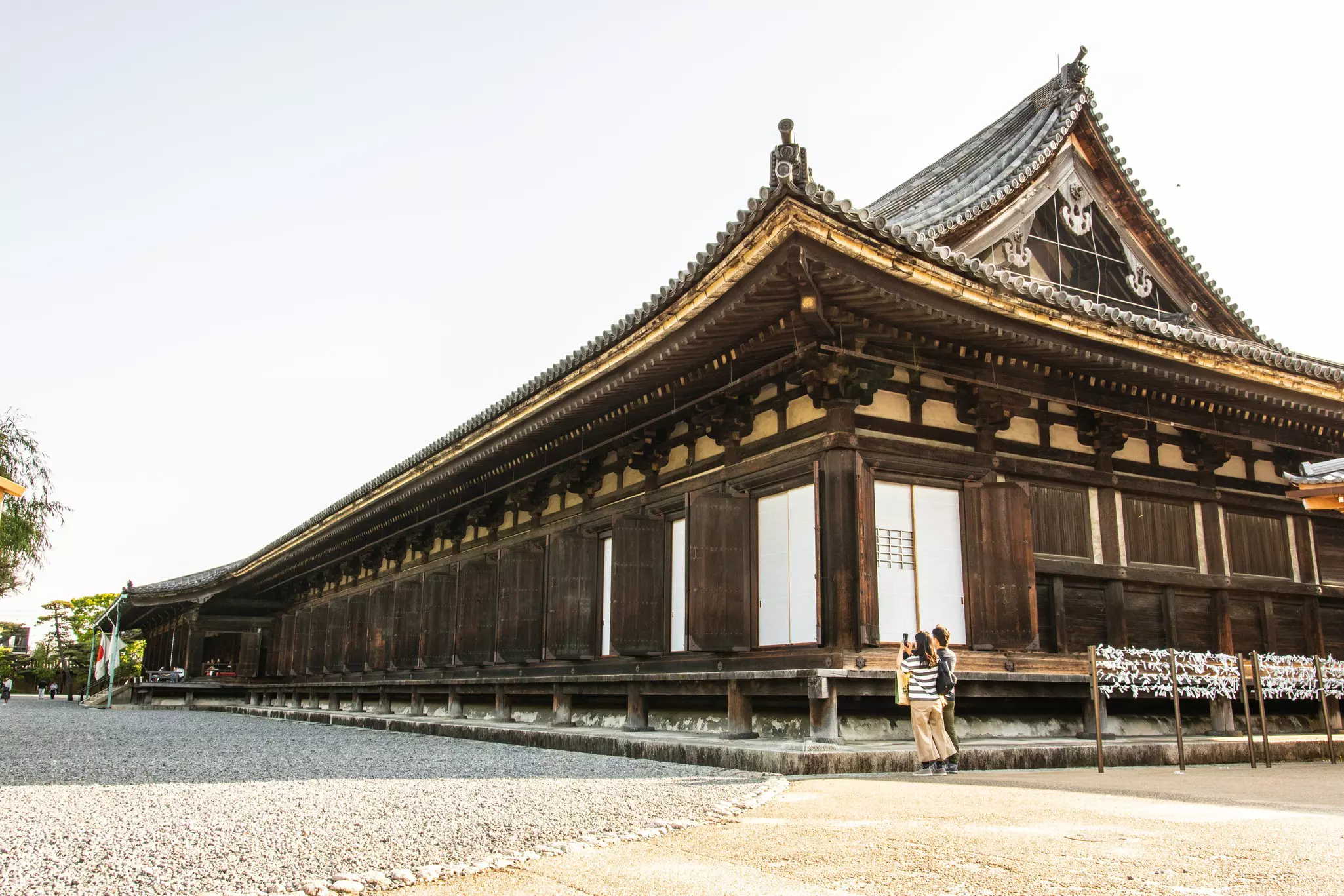
Best known for its 1001 statues of Kannon
One of Kyoto’s most remarkable sights and a definite must-see, Sanjūsangen-dō is a temple founded in 1164. The 120m-long temple hall, said to be the longest wooden structure in Japan, immediately impresses visitors. The temple’s interior is even more mesmerizing, however, as 1001 statues of Kannon (the Buddhist goddess of mercy) line up to face you.
In the center of the hall sits a large, wooden 1000-armed statue of Senju-Kannon, carved in 1254; flanking her on either side are 500 smaller but still human-sized statues. All in all, it makes for an awe-inspiring sight.
Location: Gion and Southern Higashiyama
Opening hours: 8:30am-5pm (April 1 to November 15), 9am-4pm (November 16 to March 31)
Admission: Adults: ¥600, students ¥400, children: ¥300
Accessibility: Wheelchairs are available for rent. Wheelchair-accessible toilets are also available.
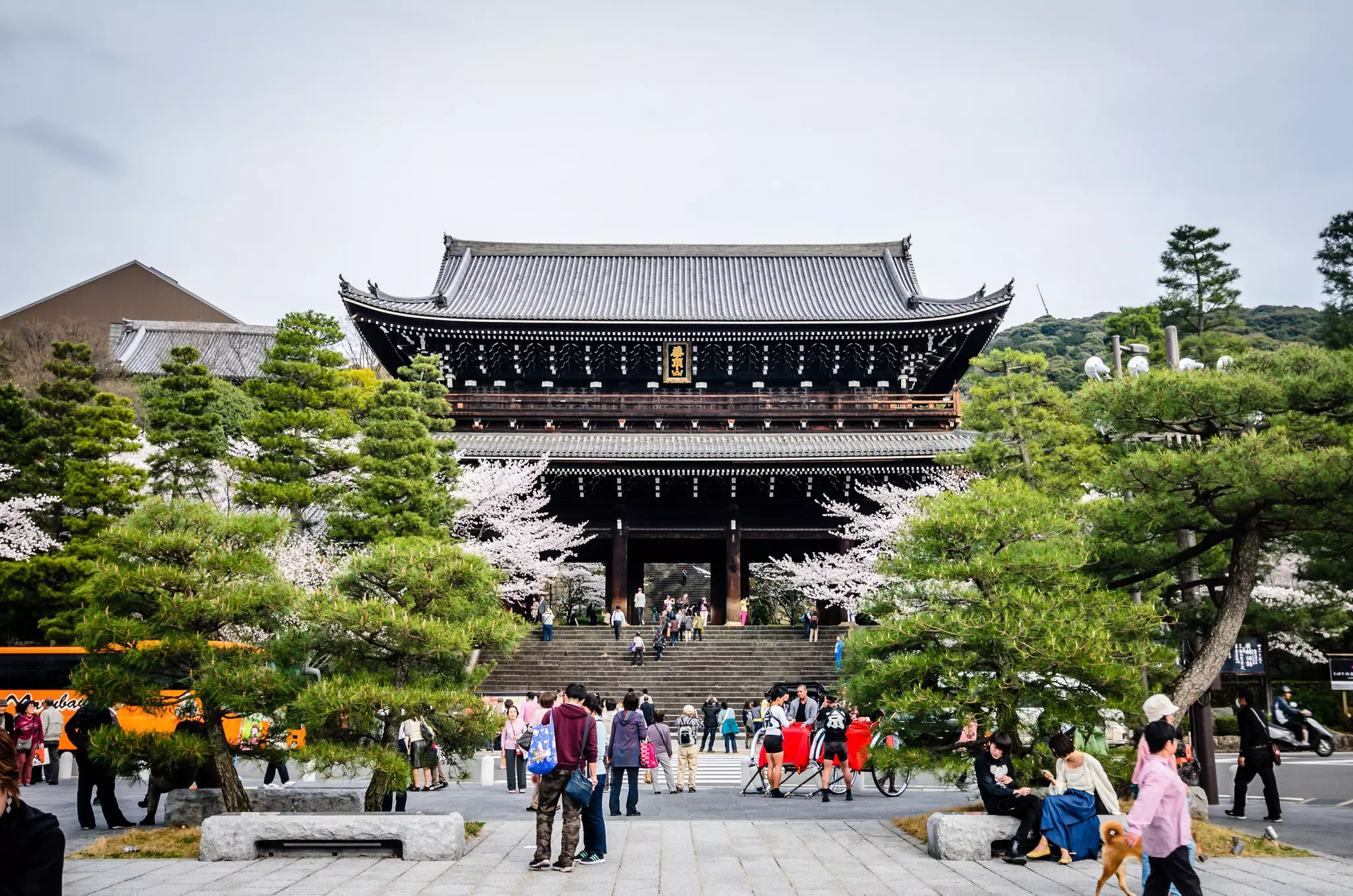
Best known for its secluded location and magnificent architecture
A sprawling hillside site of grand and imposing buildings and attractive courtyards, Chion-in is the head temple of the Jōdo school of Buddhism, the largest Buddhist sect in Japan. Always bustling with activity, Chion-in is a perfect place to get a glimpse of Kyoto’s spiritual life – or to simply marvel at fabulous architecture and rare cultural treasures.
Chion-in dates back centuries. Sanmon gate was established in 1234 at a spot where the monk Hōnen, the founder of Jōdo Buddhism, taught and eventually fasted to death. Jōdo (“pure land”) Buddhism is based on the premise that salvation can be had by anyone with faith in the Buddhist deity Amida; until this movement, Buddhism had been reserved for only literate monks and aristocrats. Understandably, Jōdo became very popular with the masses, and has millions of adherents to this day.
Location: Gion and Southern Higashiyama
Opening hours: 9am-3:50pm
Admission: adults: ¥500, children: ¥250
Accessibility: The temple is wheelchair accessible, with wheelchairs available upon request.
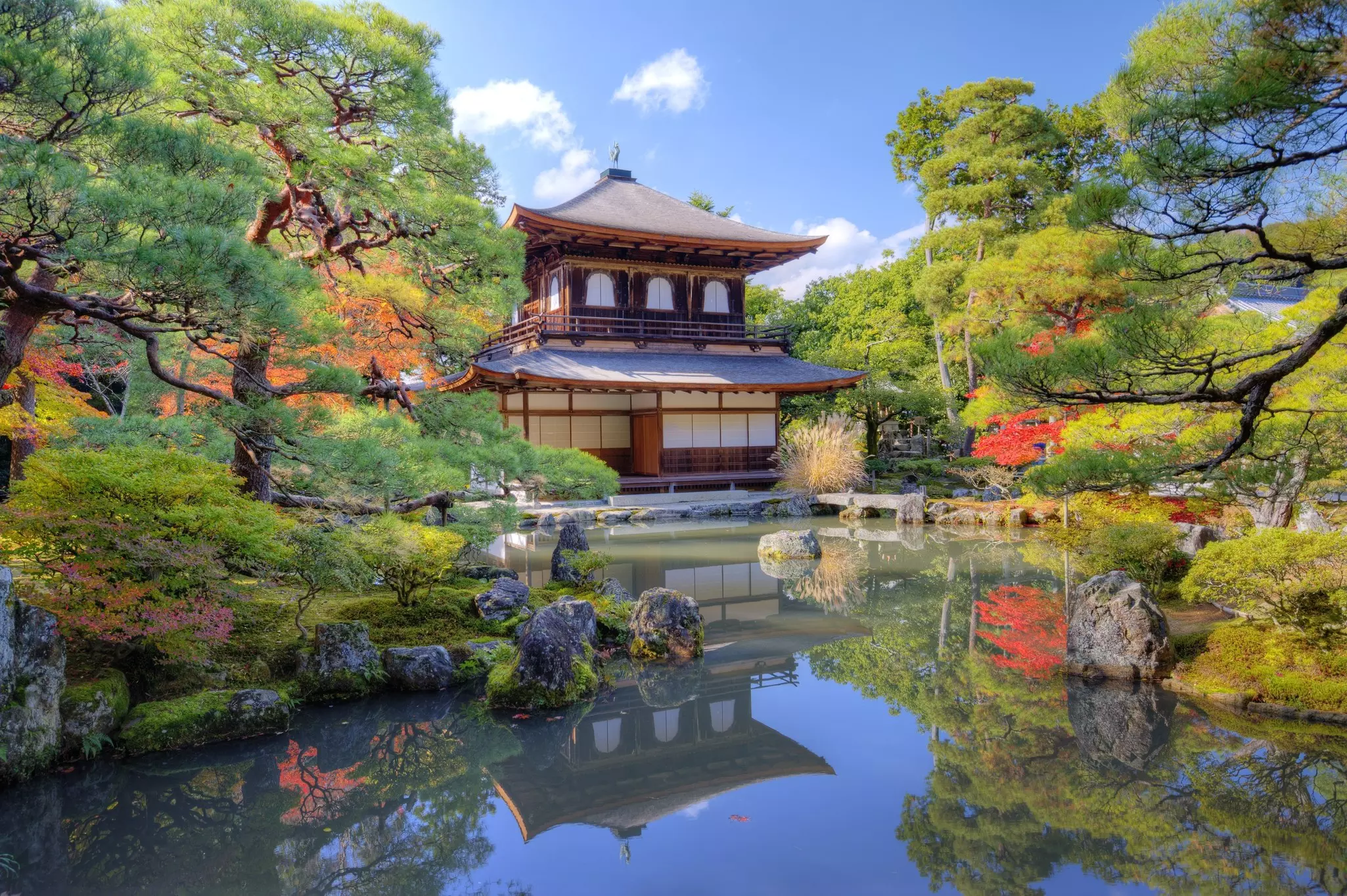
Best known for the Silver Pavilion and picturesque views
Ginkaku-ji translates as the “Temple of the Silver Pavilion” – an unusual name for a place that has never been decorated with even a gram of silver. Nevertheless, with its raked sea of sand, mossy pond garden and classic architecture, silver-less Ginkaku-ji is one of Northern Higashiyama’s shining lights.
Originally built by shōgun Ashikaga Yoshimasa in the late 15th century, the building was later converted into a Zen temple. As well as serving as a residence for the shōgun, it functioned as a hub from where Yoshimasa’s patronage helped to develop traditional arts and crafts – a movement that become known as Higashiyama Culture.
Location: Northern Higashiyama
Opening hours: Open 8: 30am-5pm (March 1 to November 30), 9am-4.30pm (December 1 to the end of February)
Admission: Adults: ¥500, students: ¥300
Accessibility: Some areas cannot be visited by people using wheelchairs or strollers. There are stairs at the Observation Deck, Benzaiten, Ruins of Sosen-tei and Ochano.
Best known for its excellent Zen gardens
A secluded Zen sanctuary in the heart of the city and the head temple of the Rinzai sect’s Daitoku-ji school of Japanese Zen Buddhism, Daitoku-ji is a joy for those willing to walk and explore a little. For this sprawling, walled temple complex is a haven of peaceful sculpted landscapes and rock gardens, as well as exquisite Zen architecture. Less known to visitors, Daitoku-ji is rarely overrun with crowds.
The impressive main buildings are not usually open to the public (although they can be glimpsed through the pines), though a number of the surrounding sub-temples are. These are all quite distinct from one another, making the district well worth a thorough exploration. Note that separate entry fees are required for each temple.
Location: Near the Imperial Palace
Opening hours: Open year-round, 9am-5pm (until 4:30pm December to February)
Admission: ¥500
Accessibility: The temple is mostly barrier-free and easily accessible for wheelchair users.
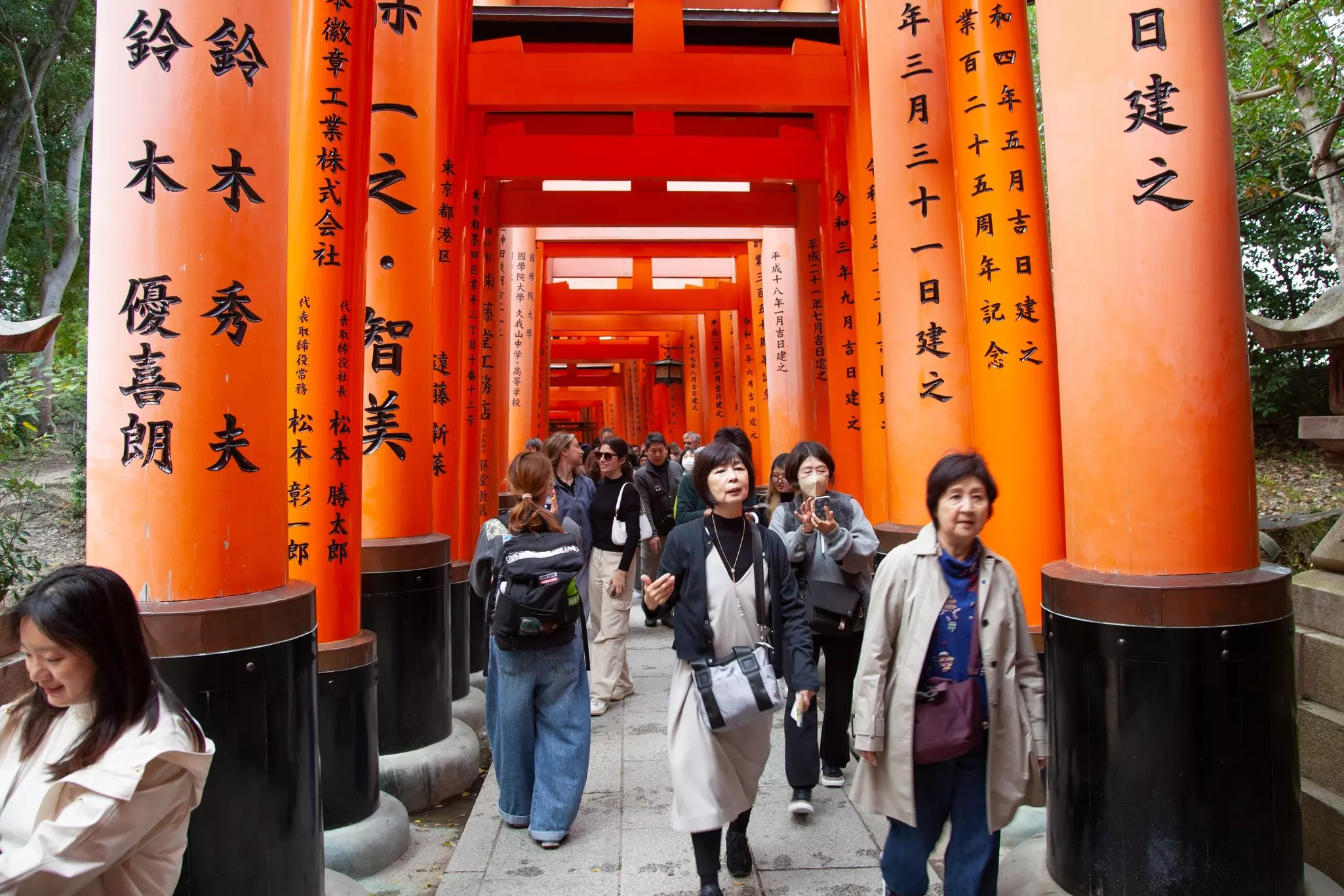
Best known for its thousands of bright red gates
Chances are you’ve seen photos of the flame-hued tunnel of torii (Shintō gates) at this shrine to Inari, the god of rice and prosperity. But Fushimi Inari-Taisha is more than just a selfie op or a movie location – it’s a world unto itself, populated by fox guardians and woven together by wooded trails. There’s magic in these hills.
Fushimi Inari-Taisha is older even than Kyoto itself. Historical records date the shrine’s founding to the early 700s CE, though it is believed that Inari, a Shintō kami (god or spirit) whose name means “carrying rice, ” was worshipped in Japan before the arrival of Buddhism in the 6th century. In the 10th century, Fushimi Inari-Taisha was promoted to the highest rank afforded to shrines, receiving imperial patronage. Today it serves as the most important of the over 30,000 Inari shrines found nationwide.
The approach to the shrine is a press of crowds, souvenirs and snacks – and that’s before you’ve reached the palatial Rōmon (tower gate), which leads to the Honden, the main shrine hall. Most visitors head directly to the Senbon Torii, the shrine’s spectacular avenue of vermilion gates, planted shoulder to shoulder to form passageways on the slope. Torii are said to mark the boundary between the physical and spiritual, symbolizing the passing of prayers from people to gods, so walking through hundreds of them in a row is a serious spiritual trip. As sunlight glints fleetingly between torii as you climb, the effect is hypnotic.
Location: Kyoto Station and South Kyoto
Opening hours: 24hrs, 7 days a week, all year
Admission: Free
Accessibility: Visiting Fushimi Inari-Taisha is essentially hiking up a small mountain with some stairs.
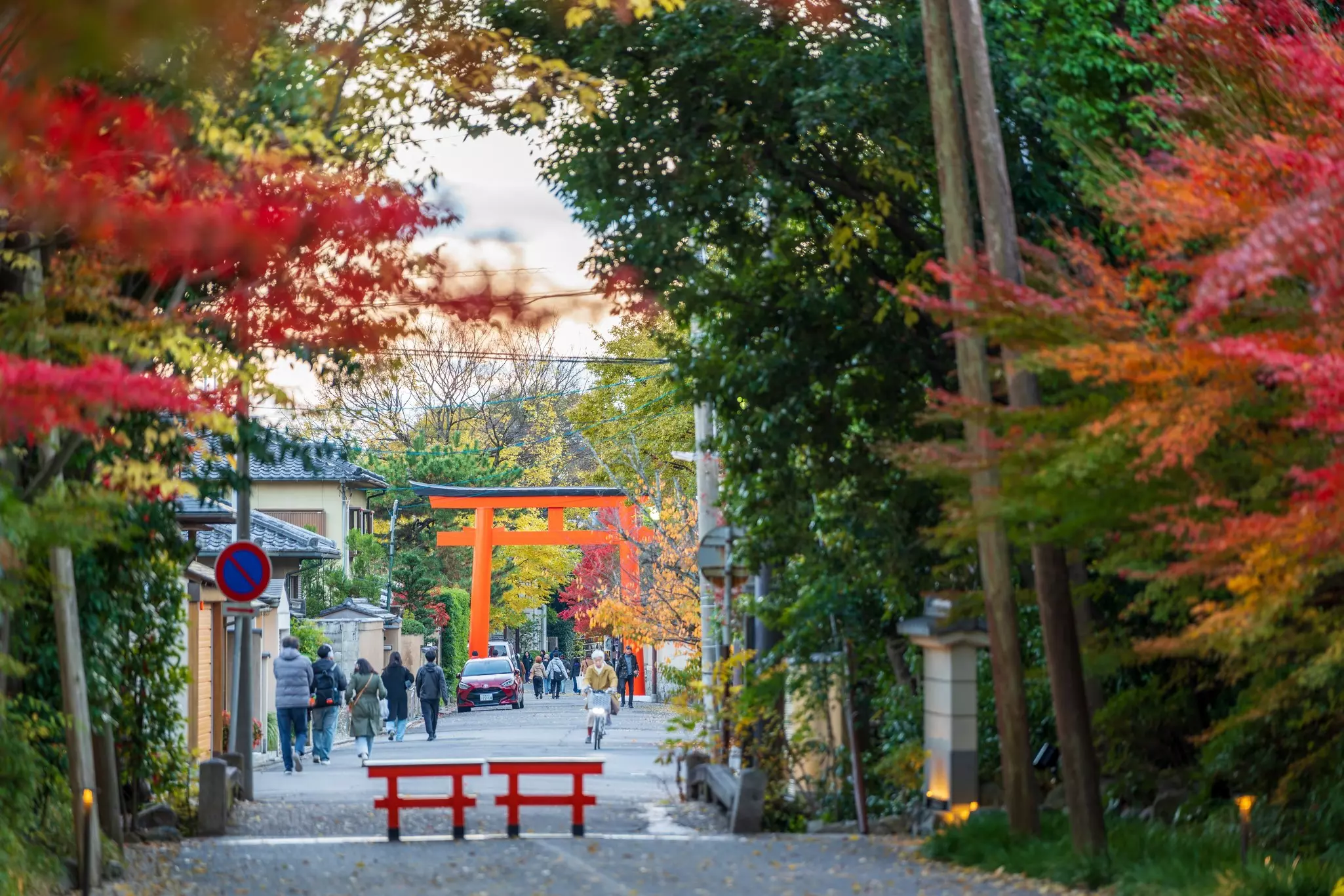
Best known for an ancient shrine and lovely tree-lined approach
A UNESCO World Heritage site, this Shintō shrine dates back to the 7th century, making it one of the oldest and most important in Japan. Nestled close to the convergence of the Kamo-gawa and Takano-gawa, the Shimogamo-jinja main shrine is best approached along a path through the atmospheric Tadasu-no-mori, a forest where 600-year-old trees grow and where, it is said, li cannot be concealed.
A number of smaller shrines dot the site (including an intriguing one dedicated to rugby). Kawai-jinja bestows visitors with beauty, Aioi-no-yashiro is for luck in love, and at Mitarashi-sha people wade through the nearby stream in the summer for purification and respite from the heat. You can dip your own omikuji (fortune paper) in the water to reveal its hidden message (use a translating app to decipher it).
Location: Near the Imperial Palace
Opening hours: Open year-round, 6am-5pm (subject to change due to religious ceremonies)
Admission: Free
Accessibility: The shrine is mostly barrier-free and easily accessible for those in wheelchairs.
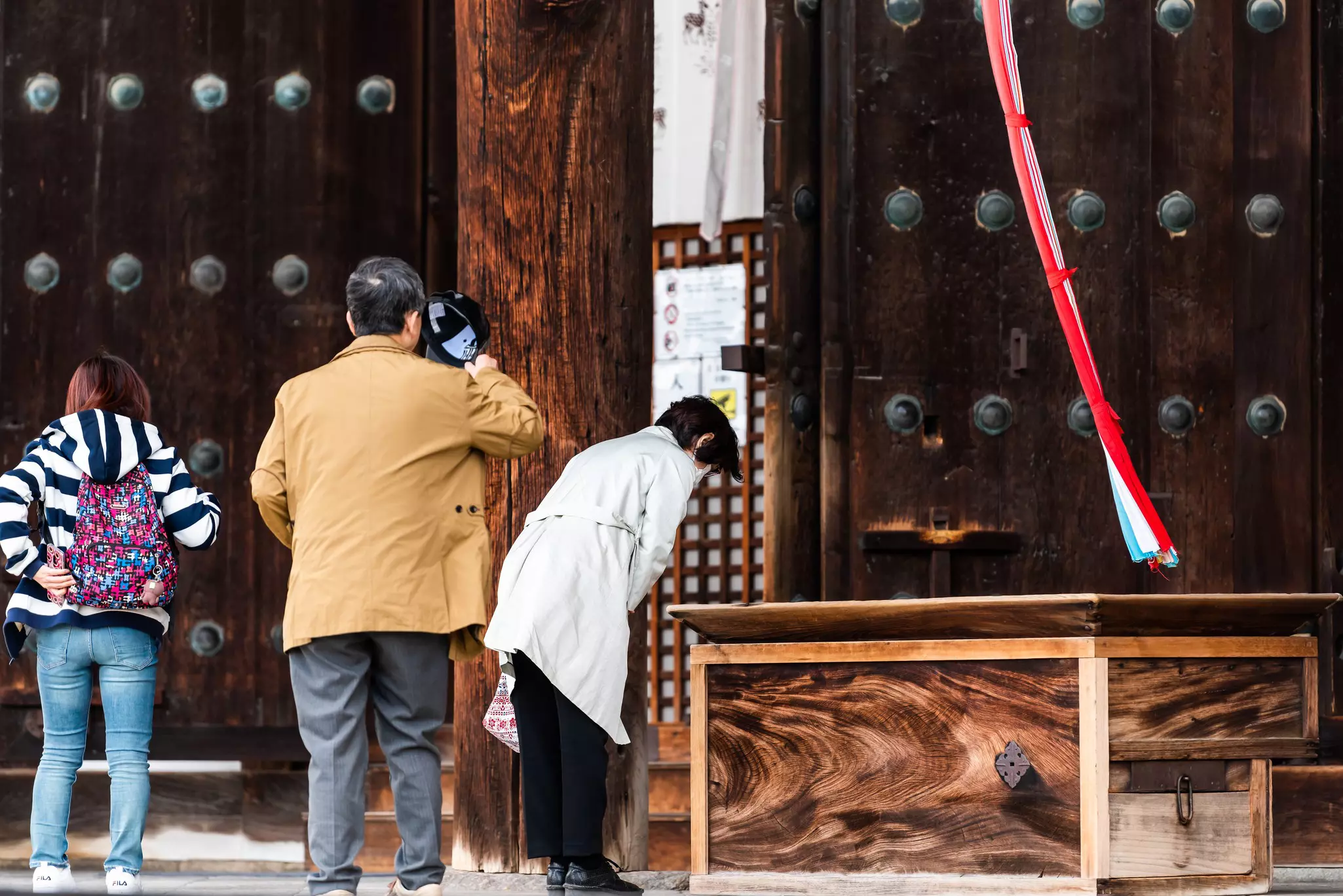
Here are essential tips of etiquette to keep in mind when visiting Kyoto’s various religious sites.
Unless you’re taking part in meditation or some other instruction, there are no particular rules for visiting a Buddhist temple – other than that removing your shoes when climbing the stairs to the main hall is required, and that indoor photography is generally prohibited.
Although they are not explicitly required to, shrine visitors traditionally follow a basic procedure.
First, at the stone chōzuya (basin), rinse both hands and use the hishaku (bamboo ladle) to pour water into a cupped hand to rinse your mouth. Spit it out onto the gravel, never in the basin.
Next, head to the haiden (worshippers’ hall) in front of the main hall, where you can toss a coin into the offering box. Then, shake the rope that hangs below a bell to “wake the gods.”
Bow twice, loudly clap twice and bow twice more (once deeply, then lightly) before stepping back and to the side.
Most shrines are open 24 hours a day; temples, from around 9am to 5pm daily. This varies by season at some temples, with slightly shorter hours in winter and longer hours in summer. Some also have evening light-ups and other seasonal events.
The best time to visit will almost always be early in the morning or earlier in the day, before crowds of worshippers and visitors arrive.
Kyoto is easy to navigate, and has an excellent public transportation system and mostly flat streets, making it a great destination for exploring by bike or on foot.
This article was adapted from Lonely Planet’s Kyoto guidebook, published in November 2024.
Explore related stories