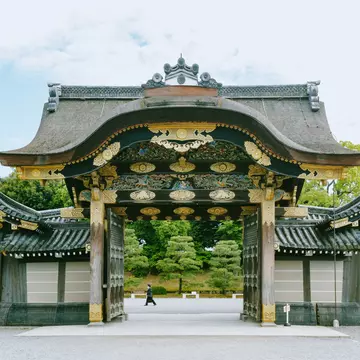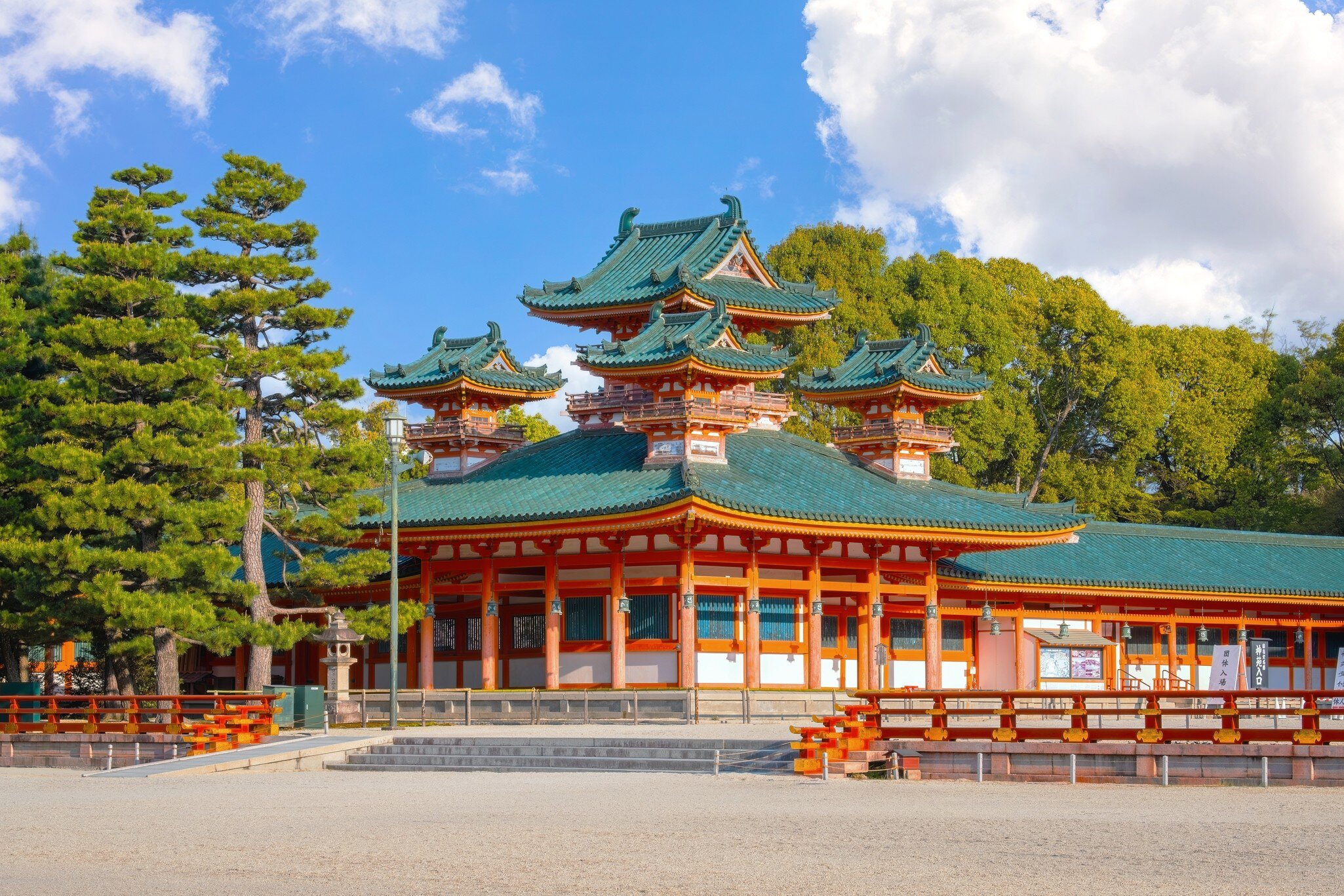
One of Kyoto’s more popular sights, Heian-jingū (平安神宮; heianjingu.or.jp) was built in 1895 to commemorate the 1100th anniversary of the founding of the city. The shrine buildings are colorful replicas, reduced to a two-thirds scale, of the Imperial Court Palace of the Heian period (794–1185). Two emperors of that period are enshrined here. About 500m in front of the shrine is a massive steel torii. Although it appears to be entirely separate, this is actually considered the main entrance to the shrine itself.
Entry is free but it's worth paying to enter the vast, 33,000-sq-meter garden (adult/child ¥600/300) behind the buildings. Four sections each represent an era of Kyoto history, using seasonal plants and water features.
One of Kyoto’s biggest festivals, the Jidai Matsuri, is held here on 22 October. On 2 and 3 June, Takigi nō is also held here. Takigi nō is a picturesque form of nō (stylized dance-drama performed on a bare stage) staged in the light of blazing fires. Tickets cost ¥3000 if you pay in advance (ask at the Kyoto Tourist Information Center for the location of ticket agencies) or you can pay ¥4000 at the entrance gate.