Hōryū-ji (法隆寺; horyuji.or.jp/en/annai) was founded in 607 by Prince Shōtoku, considered by many to be the patron saint of Japanese Buddhism. It has stayed true to its original blueprint, an image of how Nara might have looked some 1300 years ago shortly after Buddhism’s arrival via Korea and China. It's renowned not only as one of the oldest temples in Japan but also as a repository for some of the country’s rarest and most outstanding examples of early Buddhist sculpture. There's an entire gallery of Hōryū-ji treasures at the Tokyo National Museum and some of the temple’s buildings are considered to be the world's oldest existing wooden structures.
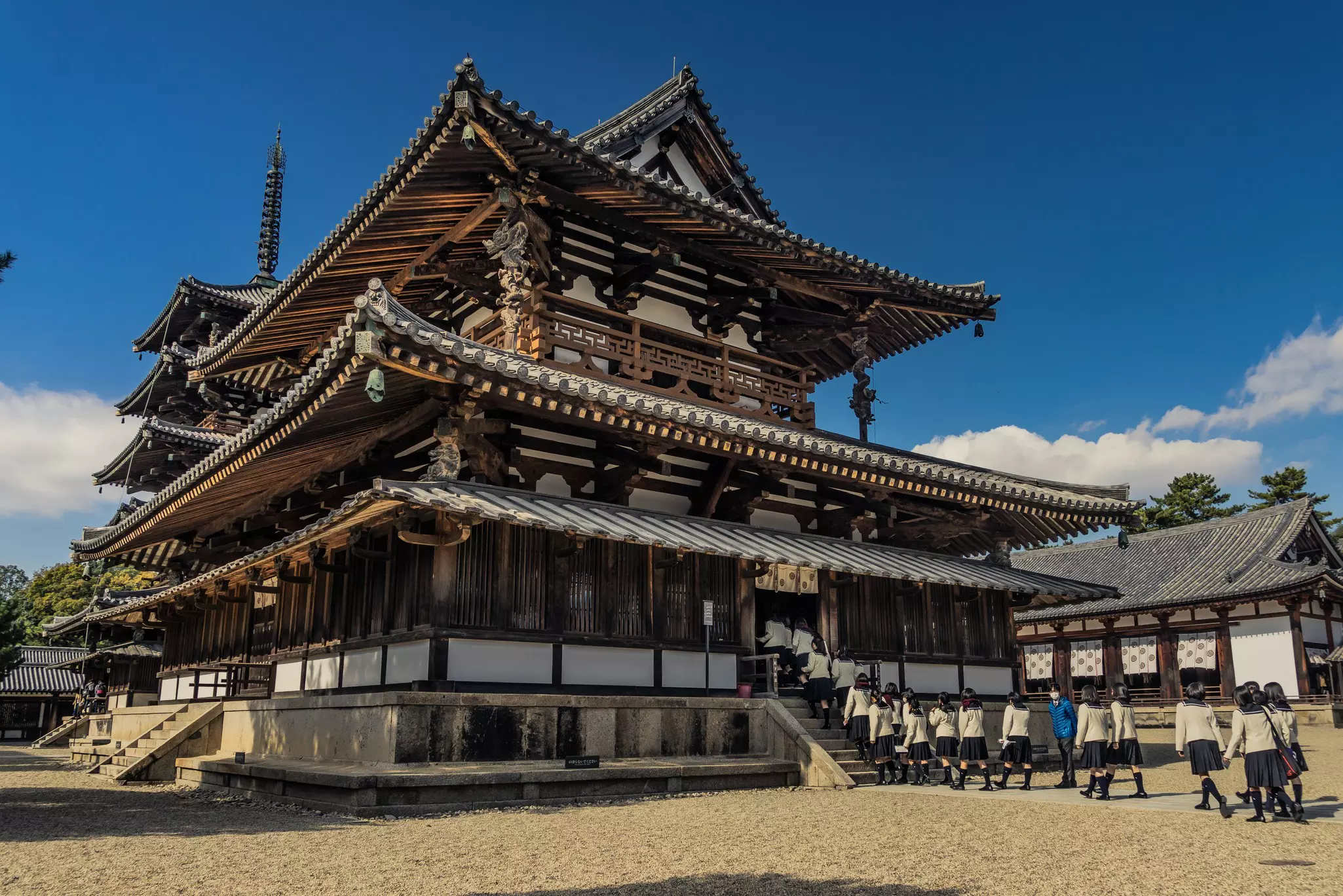
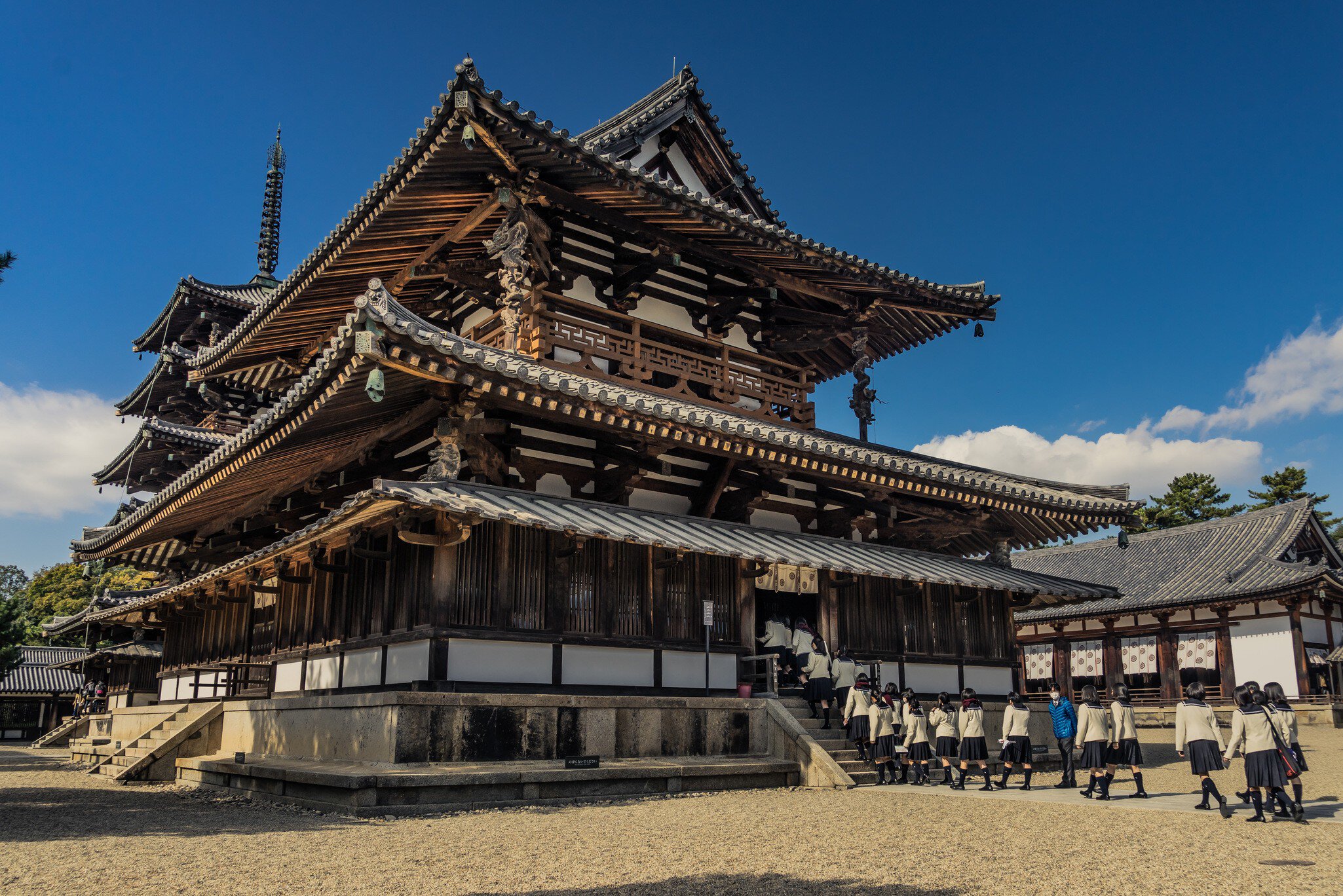
Hōryū-ji is a temple of two halves: Sai-in (West Temple) comprises the main garan (building cluster) dominated by the Kondō (Main Hall), believed to be one of the world’s oldest wooden buildings, and the adjacent Five-Story Pagoda, supported by a central pillar made from a Japanese cypress tree felled in 594. Set into niches around the pagoda’s base are clay dioramas depicting scenes of Buddha, one of which shows him mourned by disciples as he enters Nirvana.
Moving across to Tō-in (East Temple) takes you past the modern Great Treasure Hall, housing antiquities like an exquisite Kudara Kannon statue, to the octagonal Yumedono (Hall of Dreams), built in 739 as a place to pray for Prince Shōtoku, the temple’s founder. It houses another famous work of art: the Guze Kannon, a 7th-century sculpture of the bodhisattva Kannon (Buddhist goddess of mercy) carved from a single piece of camphor wood and sheathed in gold leaf.
The quickest way to get to Hōryū-ji is by train: take a JR Yamatoji-line train from JR Nara Station to Hōryū-ji Station, then pick up bus 72 to Hōryū-ji Sandō, right at the temple entrance.