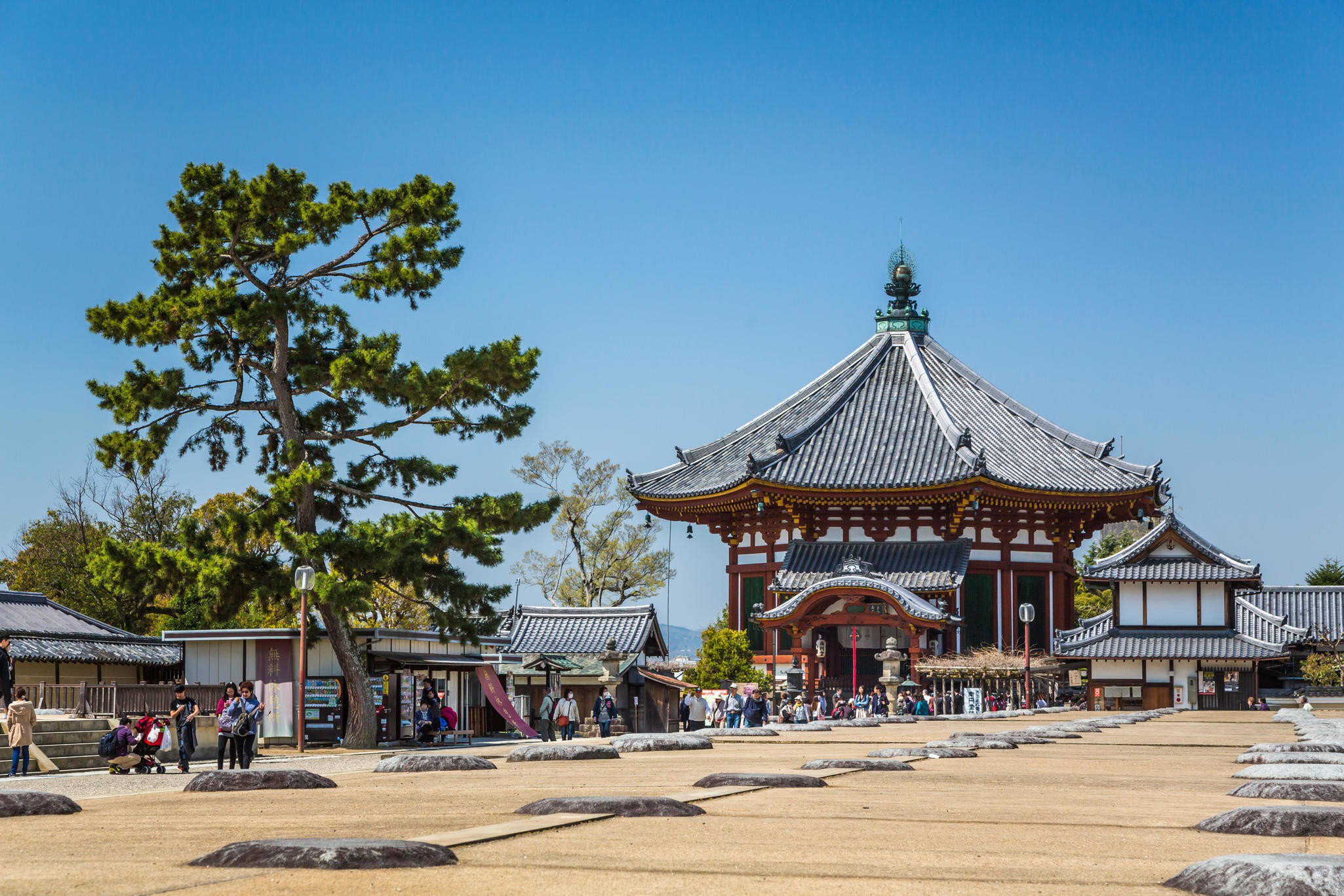
One of the "Seven Great Temples of Nara," Kōfuku-ji (興福寺; kohfukuji.com/english) was built in 710 at the behest of the all-powerful Fujiwara clan. The original Nara temple complex had 175 buildings. Meaning "the temple that generates blessings," Kōfuku-ji expanded over the centuries, though fire, war and anti-Buddhist persecutions took their toll. Of the buildings that remain, the Five-Storied Pagoda is Japan’s second tallest, behind the one at Tō-ji Temple in Kyoto. Its current iteration dates from 1426, but is under wraps for renovations until 2031. The smaller Three-Storied Pagoda dates to 1181 and is considered an outstanding example of Buddhist architecture from the Heian period (794–1185).
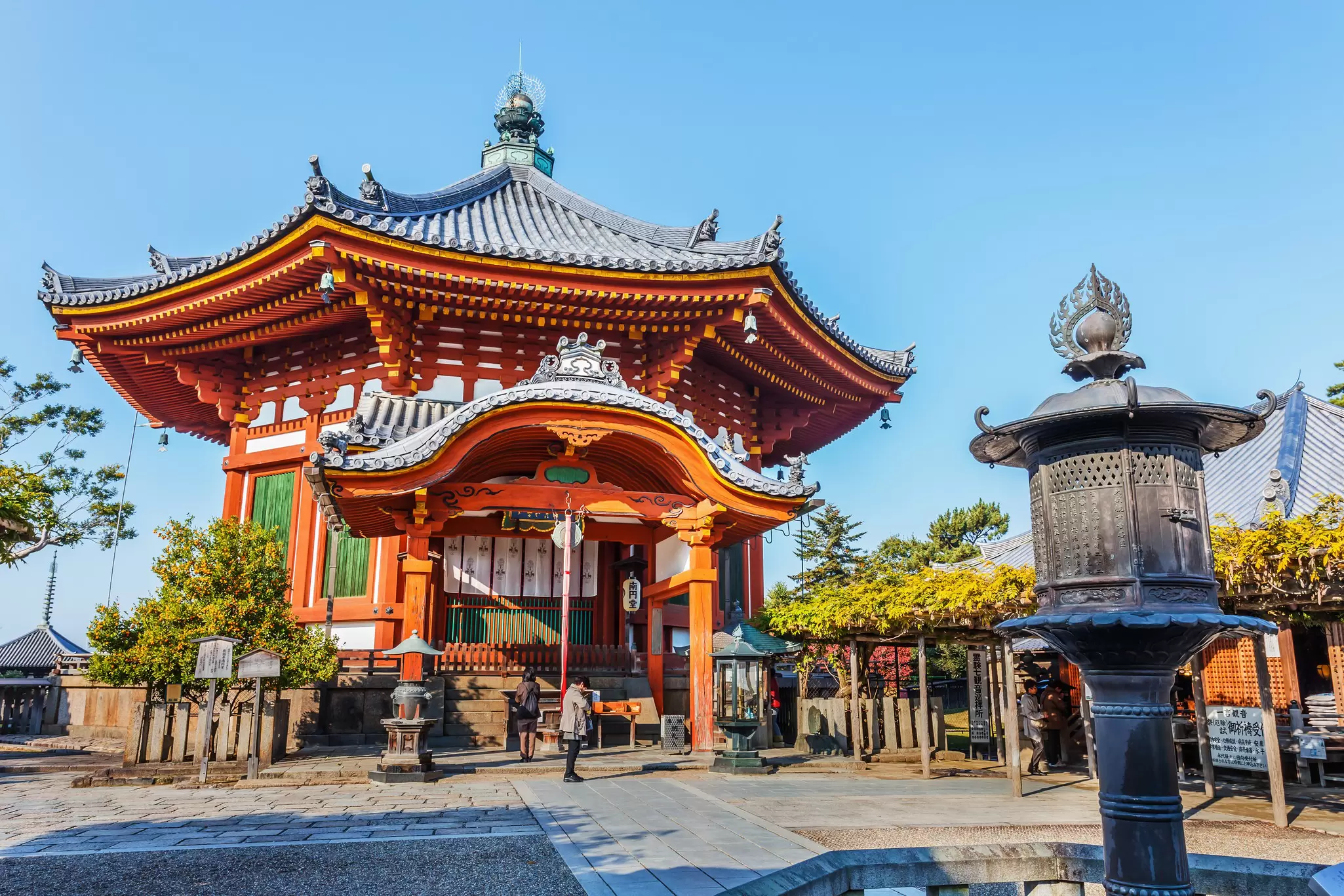
In order to pray for his sick aunt, Emperor Shōmu ordered the Tōkondō (Eastern Golden Hall) built in 726. Its main icon is a statue of Yakushi Nyorai, the Buddha of medicine. During repairs in 1937, the head of the original Buddha (whose body was lost to fire in the 15th century) was discovered concealed inside the throne of the newer one. You can see it on display at the Kōfuku-ji National Treasure Museum next door (combination ticket for adult/child ¥1600/1100), along with the vividly expressive "Twelve Heavenly Generals," fashioned from thin boards of cypress and considered masterpieces of Japanese wood relief carving.
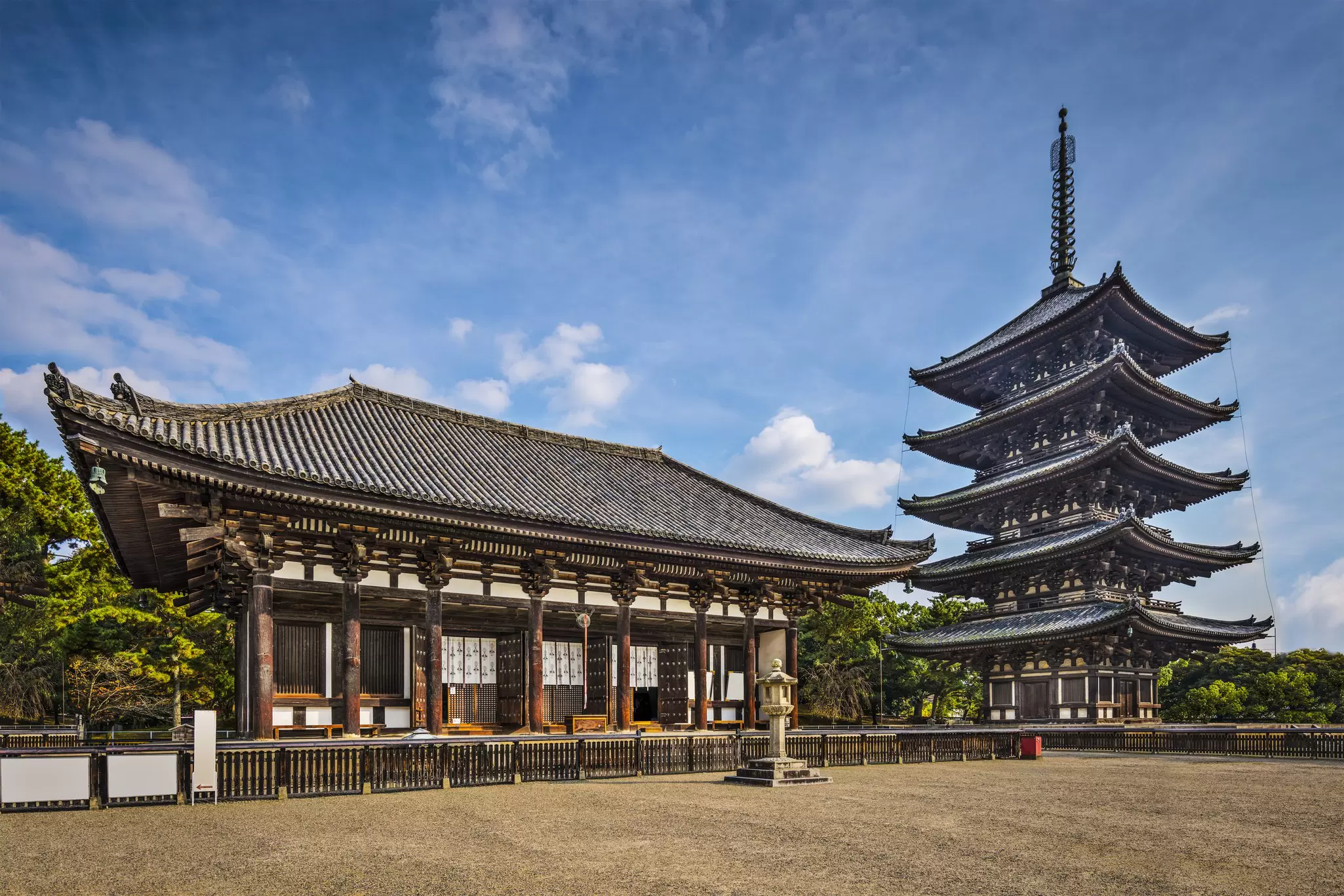
The temple's Chūkondō (Central Golden Hall) was rebuilt in 2018 – the first time it had been properly rebuilt since it burned down for the seventh time in 1717; that said, it does look a bit out of place among Kōfuku-ji's more historic structures. The temple grounds are free to visit, though admission is required to enter some of the structures. If you have to pick just one, make it the Kōfuku-ji National Treasure Museum, which houses the most outstanding pieces of the temple's vast collection of art.