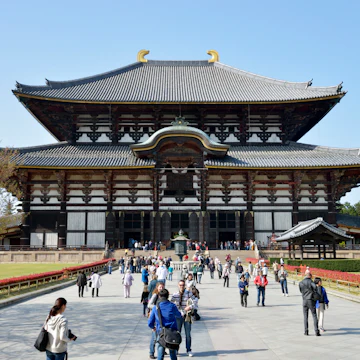
This world-class museum of Buddhist art is divided into two sections. Built in 1894 and strikingly renovated in 2016, the Nara Buddhist Sculpture Hall & Ritual Bronzes Gallery displays a rotating selection of about 100 butsu-zō (statues of Buddhas and bodhisattvas) at any one time, about half of which are National Treasures or Important Cultural Properties. Chinese bronzes in the ritual bronzes gallery date as far back as the 15th century BC. Each image has detailed English explanations.
The newer east and west wings, a short walk away, contain the permanent collections (sculptures, paintings and calligraphy) and also host special exhibitions.
Particularly noteworthy is the fall special exhibition featuring the artefacts from Shōsō-in Hall, which holds the treasures of Tōdai-ji. The exhibits include priceless items from the cultures along the Silk Road. This exhibit (admission ¥1100) is well worth it, but be prepared for crowds.
It's free to enter the underground passageway connecting the wings, where wall displays explain in detail the history, the making process and the symbolism of different styles of Buddhist sculpture – a good primer for appreciating Nara's sights.