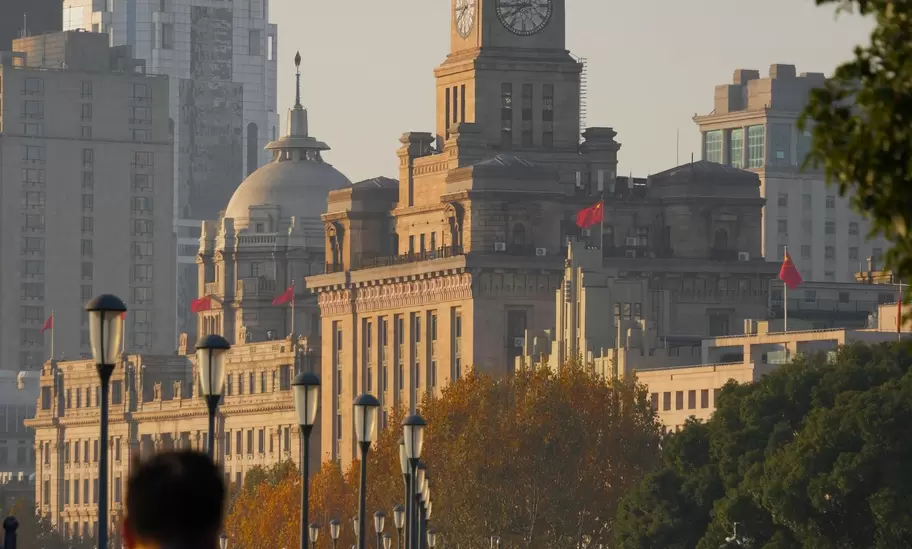
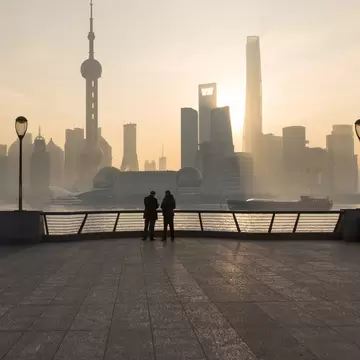
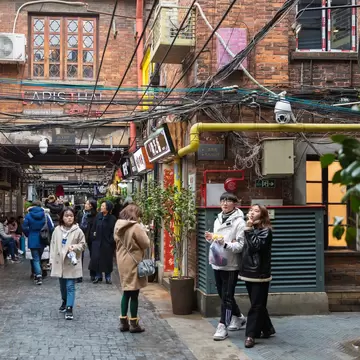
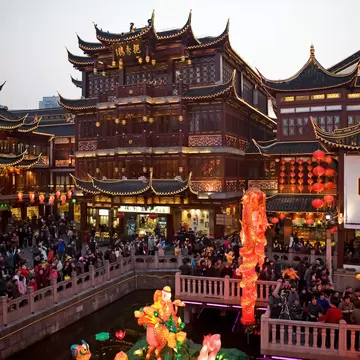
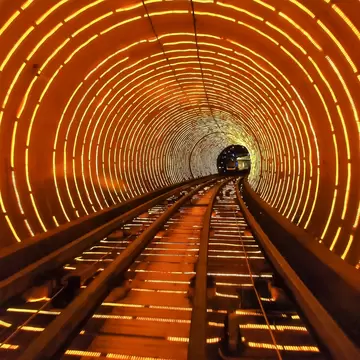
Shanghai lies in central-eastern China, exposed to the East China Sea. Broadly, central Shanghai is divided into two areas: Pudong (east of the Huangpu River) and Puxi (west of the river). Shanghai has no real single focus and the feel of the city still owes much to the original concessions. For visitors, most attractions are in Puxi, including the Bund - the tourist centrepiece, though not the physical centre of town. West of the Bund is the former International Settlement and one of Shanghai's main shopping streets, Nanjing Lu. South of the Bund is the Chinese city, a maze of narrow lanes. West of the old town and hidden in the backstreets north and south of Huaihai Lu (Shanghai's premier shopping street) is the former French Concession, with tree-lined streets, 1930s architecture, and cafes and bars. At its western end is a collection of Western-style restaurants and bars.
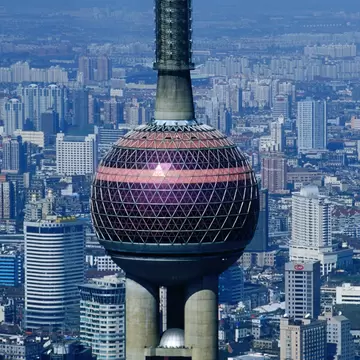
Continuing southeast, you come to the massive shopping intersection of Xujiahui. Further south is Shanghai Stadium. Western Shanghai is dominated by Hongqiao, a hotel/conference centre/office zone. Further west is Gubei, an expat area. Northeastern Shanghai has an industrial feel and is home to several universities. Further northwest is Zhapei and Shanghai train station. On the east side of the Huangpu, Pudong is a special economic zone of banks, skyscrapers and new residential complexes.
Shanghai is easy to get to. It is China's second-largest international air hub (third-largest if you count Hong Kong) and if you can't fly direct, you can go via Beijing or Hong Kong. With rail and air connections to places all over China, ferries travelling up the Yangzi River, many boats along the coast, and buses to destinations in adjoining provinces, you'll be hard pushed to find somewhere you can't get to.
Shanghai has a few long-distance bus stations; the most useful is probably Hengfeng Lu. It's a 13-hour trip to Beijing from this station.
Boats are one of the fastest ways of leaving Shanghai and are often the cheapest. Ferries travel up the Yangzi River and there are many boats that stop along the coast - although these are probably an endangered species. There are also regular ships and ferries to Korea and Japan.
Shanghai is at the junction of the Beijing-Shanghai and Beijing-Hangzhou train lines. Since these branch off in various directions, many parts of the country can be reached by direct train from Shanghai. Most trains arrive and depart from Shanghai station.
Shanghai has two international airports and is a nexus for international flights. A new airport opened in 1999 near Pudong - about an hour's drive from the city centre - handling most international and some domestic flights. Buses and taxis connect this new airport to the city centre and the second aiport, Hongqiao. There's also the Maglev, one of the world's fastest trains, which speeds you into Pudong. Hongqiao airport is 18km (11mi) from the Bund and reachable via bus, shuttle or taxi. It has some international and most domestic flights. Departure tax is US$11.00 (international) and US$6.00 (domestic) - although there is a plan to incorporate these into the ticket price. Both taxes are paid at the airport from which you depart.
Shanghai isn't exactly a walker's paradise. There are some fascinating areas to stroll around, but new road developments, building sites and shocking traffic conditions conspire to make walking an exhausting, stressful and sometimes dangerous experience. Travelling on buses can also be hard work; the routes, and particularly the stops, are not easy to figure out and buses are packed at rush hour. The metro and light railway system, on the other hand, work like a dream. Taxis are cheap and hassle-free as long as you avoid the rush hours. As private cars become increasingly affordable to the new middle class, traffic is becoming noticeably heavier, a trend that will only worsen. The city took a big swipe at traffic congestion in 1999, investing more than a billion dollars in transport - building overpasses, a second metro line and a light railway within a year. Unfortunately there is still not enough space for everyone at rush hour and from around to and to it's every frail old man for himself. Cool aggression and elusive speed, along with a friendly smile, keep things from getting ugly.
Local buses are hard work. During the rush hour and the weekends they are packed to the hilt and virtually impossible to board. Stops can also be unpredictable: you may be helplessly carried past your destination. Pickpockets are another drawback.
Only residents can hire a car in Shanghai; besides, it's really not worth the hassle unless you're familiar with the nightmare one-way system and the appalling conditions on the roads.
While there are some fascinating places to stroll through in Shanghai, new road developments, building sites, jam-packed walkways and shocking traffic conditions conspire to make walking in most areas an exhausting experience.
Shanghai's Volkswagen taxis are reasonably cheap and easy to flag down, except during rush hour. Only a few take credit cards. Most taxi drivers are surpisingly honest, but you should always go by the meter.
Shanghai's subway system is a dream, and probably the best way to get around town. Trains are fast, cheap, clean and easy, although they can be crowded at peak hour. The new Mag Lev (Magnetic Levitation) line has started regular services between the city and Pudong airport. The 30km (19mi) trip will take just eight minutes.
Shanghai has few facilities geared for disabled travellers, but that doesn't necessarily put it out of bounds for those with a physical disability (and a sense of adventure). Many hotels have lifts, so booking ground-floor rooms is not essential, unless you are staying in very budget accommodation. Some hotels at the four- and five-star level have specially designed rooms for people with physical disabilities.
The roads and pavements make things awkward for the wheelchair-bound or those with a walking disability. Pavements can often be crowded, in a rundown condition and with high kerbs. People whose sight, hearing or walking ability is impaired must be extremely cautious of the traffic, which almost never yields to pedestrians. Escalators leading from subways frequently go up only.
Advertisement
Booking hotels is simple with Lonely Planet. See our reviewed and recommended hotels in one place and book online. Browse hotels ›
Updates, offers and inspiration - straight to your inbox.
Subscribe now ›
Disclaimer: We've tried to make the information on this web site as accurate as possible, but it is provided 'as is' and we accept no responsibility for any loss, injury or inconvenience sustained by anyone resulting from this information. You should verify critical information (like visas, health and safety, customs and transportation) with the relevant authorities before you travel.