Getting there & around
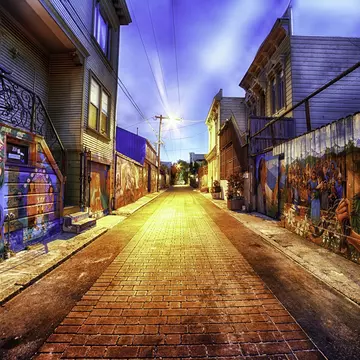
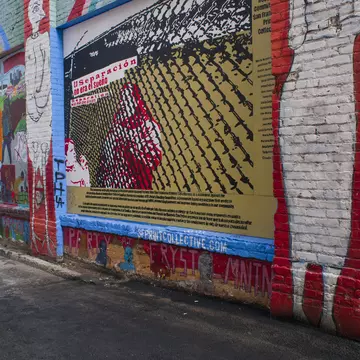
Back during the Gold Rush, prospectors would run, gallop, and swim to get to San Francisco pronto. But since those days the city has mellowed out, and now being in a rush seems very un-San Francisco. Dude, this isn’t Los Angeles or New York. When San Franciscans don’t have somewhere else to be right quick – and even when they do – most people walk, bike, or take Muni instead of a car or cab. Those slackers are smart: This is the best way to take in San Francisco, and helps preserve the city’s many all-natural charms by curbing carbon emissions and other pollutants. The scenic route is always the right choice in the Bay Area, where an errand can take you over the Golden Gate Bridge, through mural-filled Mission alleyways, onto a cable car, down crooked Lombard St, and even into an artistic public parking garage.
As Jack Kerouac says, the journey to San Francisco can blow your mind – but you don’t have to endure months On the Road to make it memorable. Take your sweet time getting here by train, boat, or bicycle instead of a car or plane, and you can actually relax and enjoy the spectacular coastal scenery without all the wrong turns, traffic jams, flight delays, airport security hassles, and excess carbon emissions. The hippies had it right: San Francisco isn’t just a destination, it’s a total trip. Flights, tours and rail tickets can be booked online at www.lonelyplanet.com/travel_services.
Contents
Local transport
Taxi
Fares start at $3.30 at the flag drop and run about $2.25 per mile. Add at least 10% to the taxi fare as a tip (starting at $1, even for fares under $6). Cabs are easiest to hail along downtown streets; elsewhere you may need to call. Credit cards are accepted with increasing frequency, but ask before getting into the cab (you can ask the cabbie to stop at an ATM along the way). These taxi companies have 24-hour dispatches:
Arrow Taxicab (415-648-3181)
DeSoto Cab (415-970-1300)
Green Cab (415-626-4733; www.greencab.com) Hybrid, fuel-efficient vehicles; worker-owned collective with eight vehicles currently in circulation.
Luxor Cab (282-4141)
Yellow Cab (415-333-3333)
Bus & tram
Bus, streetcar & cable car
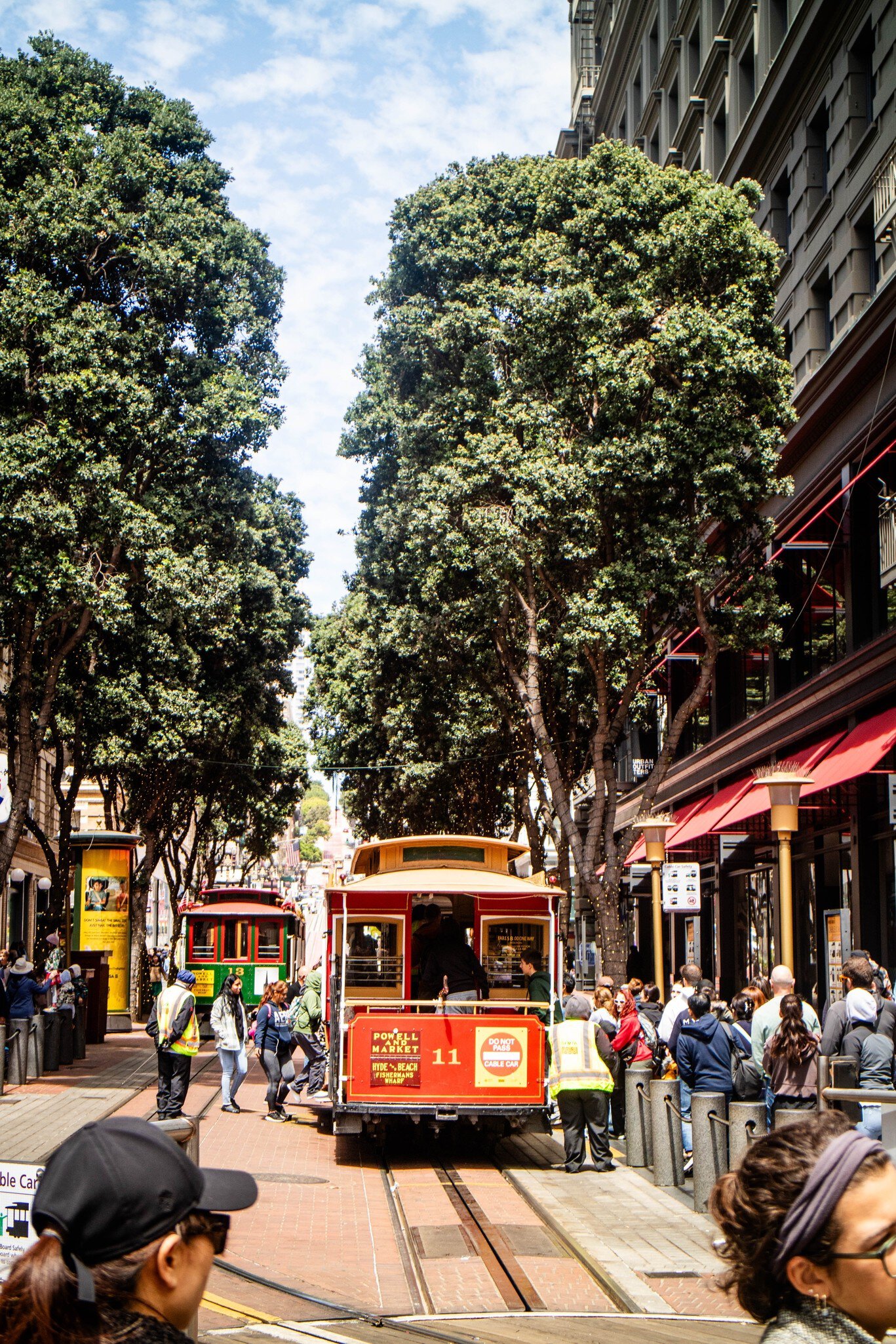
The city’s principal public transportation system Muni operates nearly 100 bus lines, the streetcar system, and the city’s signature cable cars.
Some areas are better connected than others, but public transport spares you the costly hassle of driving and parking in San Francisco, and is often faster than driving during rush hour (7:30 to 9:30am and 4:30 to 6:30pm). Nighttime and weekend service is less frequent. For fastest routes and the most exact departure times, consult transit.511.org.
Tickets can be bought on board buses and streetcars, or at Muni stations for the underground streetcars. On most Muni lines, free transfer tickets are available at the start of your journey and you can then use them for two connecting trips within 90 minutes or so, but not BART or the cable car. Hang onto your ticket or transfer even if you’re not planning to use it again – if you’re caught without one by the transit police, you’re subject to a $75 fine.
You can get a one-day Muni Passport good for unlimited travel on buses, streetcars, and cable cars, a three-day Passport, or a week-long Passport. Passports can be purchased at the Muni kiosk at the Powell St cable car stop on Market, from the half-price ticket kiosk on Union Square, and from a number of hotels.
Monthly Muni Fast Passes are good only for buses and streetcars. Fast Passes are available at the Muni kiosk at the Powell St cable car stop and from businesses that display the Muni Pass sign in their window. Pass prices can be found at www.sfmta.com/cms/mfares/passports.htm
Streetcar
Muni Metro streetcars run both above and below ground, beginning at 5am weekdays until midnight and with more limited schedules on weekends. The L and N lines operate 24 hours, but between 12:30am and 5:30am, ‘Owl’ buses replace the streetcars.
To get on streetcars underground, you’ll need to get your ticket at the underground Muni station; you can change bills using the BART ticket machines. Above-ground, tickets can be bought on board in the front car, but you’ll need exact change. Streetcar arrival times are indicated on digital displays in stations and on some street-level transit shelters.
The most scenic route is the F-Market line, which runs antique streetcars from around the world along Market from Castro to the Embarcadero, where they hook left en route to Fisherman’s Wharf. All the classic vehicles that run on this line have been lovingly restored to better-than-original condition.
Streetcars run below Market St downtown, beginning at the Embarcadero. Beyond the Van Ness Ave station, the Metro lines split into five routes: J-Church, K-Ingleside, L-Taraval, M-Oceanview and N-Judah. The J-Church and N-Judah then continue aboveground for most of the remainder of their journeys.
Key streetcar destinations
F Fisherman’s Wharf & Embarcadero to Castro
J Downtown to Mission/Castro
K, L, M Downtown to Castro
N Caltrain & SBC Ballpark to Haight and Ocean Beach
T Embarcadero to Caltrain, China Basin, and Bayview
Air
***For information on the updated requirements for the Visa Waiver Program see the US Visa section of this website.***Deals can be found year-round to San Francisco, where service from multiple domestic and international airlines in three Bay Area airports keeps prices competitive. Listed below are some of the major carriers serving the Bay Area. Check online for the best deals, and if you’re flying into San Jose or Oakland instead of San Francisco, don’t forget to factor in additional transit time and costs to get to SF. To take the scenic route along the West Coast, consider taking the train instead – you’ll be doing the environment a favor by cutting back on carbon emissions too.
Airlines
Alaska Airlines (AS; 800-252-7522; www.alaskaair.com) Covers much of the western USA, Canada and Mexico.
British Airways (BA; 800-247-9297; www.britishairways.com) Offers nonstop flights to London.
Continental Airlines (CO; 800-523-3273; www.continental.com) Serves a wide range of domestic and international cities.
Delta Airlines (DL; 800-221-1212; www.delta.com)
Jet Blue (B6; 800-538-2583; www.jetblue.com) Flies from Oakland and San Francisco (SFO). Often has the cheapest flights to New York City, and has nonstop service to Boston; Salt Lake City; Long Beach, California; Washington, D.C.; and Fort Lauderdale, Florida.
Northwest Airlines (NW; domestic 800-225-2525; www.nwa.com) Partners with Dutch carrier KLM to serve 1000 cities in 160 countries.
Southwest Airlines (SW; 800-435-9792; www.southwest.com) Low rates on flights throughout the western USA and Chicago from Oakland, San Francisco, and San Jose.
United Airlines (UA; 800-864-8331; international 800-538-2929; www.ual.com) Serves a wide range of destinations to and from its hub at SFO.
Virgin Atlantic (VS; 800-862-8621; www.virgin-atlantic.com) Flies nonstop to London.
San Francisco International Airport
This one of the busiest airports in the country, serving over 40 million passengers annually. Flights to/from Asia, Europe and Latin America go through the International terminal; the North and South terminals handle domestic flights. The entire airport is nonsmoking.
There are information booths (8am- 1:30am) and white courtesy phones (information 7-0018) on the lower (arrivals) level of all three terminals, and Traveler’s Aid information booths (9am- 9pm daily) on the upper levels. There is also an airport ground transportation hotline (800-736-2008; 7:30am-5pm Mon-Fri).
A clinic (7-0444; 24 hrs) is contactable from white courtesy phones and is found on the lower level of the International terminal.
All terminals have ATMs, and there is a currency exchange in the International terminal. Lockers ($2 per 24hrs) are located at all boarding areas, and there is luggage storage in the travel agency area, in the upper-level connector between the South and International terminals.
SFO is on the bayside of the peninsula, 14 miles south of downtown San Francisco. Highway 101 connects the airport directly to downtown. If you’re driving, the trip between the airport and the city can take as little as 20 minutes, but give yourself an hour to be safe during the morning and evening rush hours. If you’re headed to the airport via Hwy 101, don’t be tempted by the Airport Rd exit, which just leads to parking lots and warehouses. Be sure to take the San Francisco International Airport exit.
Transportation arrives and departs at the upper and lower levels, and color-coded zones identify the correct places to catch buses going to rental-car lots, long-term parking lots, other airports, and nearby hotels. This can be confusing, so read the terminal signs carefully before stepping outside.
Oakland International Airport
Travelers arriving at Oakland airport, 15 miles east of downtown, will have a little further to go to reach San Francisco. The least expensive way to San Francisco from the Oakland Airport is via BART train and the AirBART shuttle (510-465-2278; adult/child & senior $3/1; 5am-midnight Mon-Sat, 8am-midnight Sun). The AirBART shuttle leaves both terminals every 10 to 20 minutes for the BART Coliseum Station; buy your AirBART shuttle ticket from the ticket machine before exiting the airport. Upon arrival at Coliseum Station, purchase your BART ticket ($3.35) from the machine for the 30-minute trip to downtown San Francisco.
Norman y Mineta San Jose International Airport
San Jose airport is 50 miles south of downtown San Francisco, and it’s a straight shot into the city by car via Highway 101. The VTA Airport Flyer (bus 10; $1.75; 5am-midnight) makes a continuous run between the Santa Clara Caltrain station (Railroad Ave and Franklin St) and the airport terminals, departing every 10 to 15 minutes. From Santa Clara station, Caltrain ($7.50 one-way; 80 minutes) runs several trains every day to the terminal at 4th and King Sts in San Francisco.
Car & motorcycle
If you can, avoid driving in San Francisco: traffic is a given, street parking is harder to find than true love, and meter readers are ruthless. Gas prices are rising steadily, and driving on these hills means shifting gears and applying brakes often – and contending with drivers who think they’re Steve McQueen in Bullitt. But if you’re planning a break in wine country or the redwoods, you might want to get motorized. Before you set out to any bridge or other traffic choke-point, though, call 511 toll-free for a traffic update.
Rentals
All the big rental car operators can be found in the Bay Area, particularly at the airports, along with a host of smaller or local operators. Booking ahead usually ensures the best rates, and airport rates are generally better than those in the city.
Typically, a small car might cost $40 to $60 a day or $175 to $300 a week, plus the 8.5% sales tax. Unless your credit card covers car rental insurance, you’ll need to add in $10 to $15 a day for a loss/damage waiver. Most rates include unlimited mileage; if a rate is unbelievably cheap, there is probably a per-mile charge after a certain distance.
If you want to rent a motorcycle call Dubbelju (415-495-2774; www.dubbelju.com; 689A Bryant St; rates start at $99 per day).
Share cars
With advance planning, Zipcar is a sweet deal for in-city travel. Zipcar lets you rent a Prius Hybrid or Mini (with XM satellite radio) by the hour for flat rates starting at $7.88/hour, including gas and insurance, or by day for $58.50. Zipcar’s Extra Value Plan requires a $25 application fee and $50 pre-paid usage in advance. Anyone without a US driver’s license will need to fax a copy of their driving record in English to Zipcar at (617) 995-4300 (instructions at www.zipcar.com/apply/foreign-drivers). Once approved, you can reserve a car online at www.zipcar.com or by phone at 866-4ZIPCAR. You can usually pick up and drop off your car at a designated spot within blocks of where you’re staying. Car-sharing also does the environment a favor: fewer cars on the road mean less congestion and pollution, especially given the fuel-efficient and hybrid models.
Boat
The opening of the Bay Bridge in 1936 and the Golden Gate Bridge in 1937 spelled the near demise of the ferries, although in recent years they have enjoyed a modest revival for both commuters and tourists. Below are the main Bay Area boat services.
ALCATRAZ CRUISES
415-981-7625; alcatrazcruises.com; daytime adult/child/senior $21.75/$13.75/$20.75, nighttime adult/child/senior $28.75/$17.25/$26.25; call center hours 8am-7pm
Ferries depart from Pier 33 for Alcatraz every half hour from 9:30am to 2:15pm, and at 4:20pm for the night tour.
415-705-5555; www.blueandgoldfleet.com; one-way to Oakland $5.50, one-way to Tiburon, Sausalito $8.50
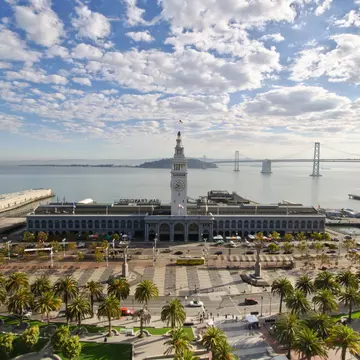
This ferry operates from the Ferry Building, Pier 39 and Pier 41 at Fisherman’s Wharf to Jack London Square in Oakland, Tiburon or Sausalito in Marin County, and Angel Island. During the baseball season, a Giants ferry service runs directly from the landing at the Seals Plaza entrance to AT&T Park to Oakland and Alameda. Ticket booths are located at the Ferry Building and Piers 39 and 41 (both Map p65).
Golden Gate Transit Ferries
415-923-2000; www.goldengateferry.org; one-way to Larkspur & Sausalito $6.45; 6am-10pm Mon-Fri, 10am-6pm Sat & Sun
Part of Golden Gate Transit, these ferries operate regular services from the Ferry Building in San Francisco to Larkspur and Sausalito in Marin County. Transfers are available to Muni bus services, and bicycles are permitted.
Bicycle
San Francisco is fairly bike friendly, but traffic downtown can be dangerous; biking is best east of Van Ness Ave. Bicycles can be rented for $7 to $10 per hour, $28 to $50 per day, and $100+ per week. Try Blazing Saddles on Hyde St (414-202-8888) or Avenue Cyclery on Stanyan St (415-387-3155). To buy a bicycle, prices start at about $200, with top-of-the-range models starting at $650; check shops and CraigsList (www.craigslist.org) for sales and used bikes.
Biking around the bay area
Within SF Muni has racks that can accommodate two bikes on some of its community-service routes, including 17, 35, 36, 37, 39, 53, 56, 66, 76, 91 and 108.
Marin County Bikes are allowed on the Golden Gate Bridge, so getting north to Marin County is no problem. Ferries also allow bikes aboard when space allows.
East Bay Cyclists can’t use the Bay Bridge, so you’ll need to take your bike on BART. Bikes are allowed on BART at all hours, but during rush hours some limits apply. Between 6:30am and 9am, people with bikes are only allowed to travel in the ‘reverse commute’ direction from Embarcadero station in San Francisco to points in the East Bay. From 4pm to 6:30pm, people with bikes can travel only from points in the East Bay to San Francisco, and they must exit at Embarcadero station. During commute hours, you can also travel with your bike across the Bay via the CalTrans Bay Bridge Bicycle Commuter Shuttle (510-286-0876; tickets $1; 6:30am-8:30am & 3:50-6:50pm Mon-Fri), which operates between San Francisco’s Transbay Terminal and the MacArthur BART station in Oakland.
San Francisco
Things to do
- All things to do (1,002)
- Activities (174)
- Entertainment (248)
- Restaurants (220)
- Shopping (175)
- Sights (155)
- Tours (30)