go to content go to search box go to global site navigation

Istanbul

Things to do in Istanbul

‹ Prev

of 22

  1. A

    Jennifer's Hamam

    Owned by Canadian Jennifer Gaudet, the two Arasta Bazaar branches of this shop stock top-quality hamam items including towels, robes and peştemals (bath wraps) produced on old-style hand-shuttled looms. It also sells natural soaps and keses (coarse cloth mittens used for exfoliation).

    reviewed

  2. Aşşk Kahve

    The city's glamour set loves this garden cafe to bits, and its weekend brunches are an institution. Go early to snaffle a table by the water and don't forget to have a Botox shot before you go – that way you'll fit in nicely. It's accessed via the stairs behind the Macrocenter.

    reviewed

  3. B

    Aya Sofya

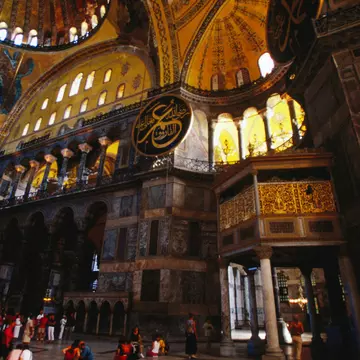
    Sophia in Latin, Haghia Sofia in Greek and the Church of the Divine Wisdom in English, this extraordinary building is İstanbul's most famous monument.

    Emperor Justinian had the Aya Sofya built as part of his effort to restore the greatness of the Roman Empire. It was completed in 537 and reigned as the greatest church in Christendom until the Conquest in 1453. Mehmet the Conqueror had it converted into a mosque and so it remained until 1935, when Atatürk proclaimed it a museum.

    On entering his great creation for the first time almost 1500 years ago, Justinian exclaimed, 'Glory to God that I have been judged worthy of such a work. Oh Solomon! I have outdone you!' Entering…

    reviewed

  4. C

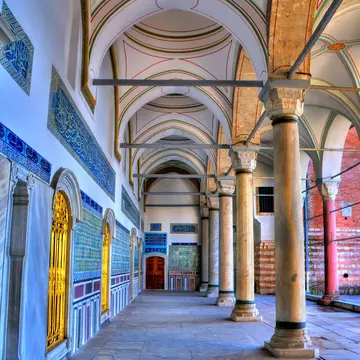
    Topkapı Palace

    This opulent palace complex is the subject of more colourful stories than most of the world's royal residences put together. It was home to Selim the Sot, who drowned after drinking too much champagne; İbrahim the Mad, who lost his reason after being imprisoned for 22 years by his brother MuratIV; and the malevolent Roxelana, a former concubine who became the powerful consort of Süleyman the Magnificent. And they're just three among a long progression of mad, sad and downright bad Ottomans who lived here between 1453 and 1839.

    Mehmet the Conqueror started work on the palace shortly after the Conquest in 1453 and lived here until his death in 1481. Subsequent sultans…

    reviewed

  5. D

    Galata House

    This would have to be one of the most eccentric restaurants in town. Run by the charming husband-and-wife team of Nadire and Mete Göktuğ, it is housed in the Old British Jail, just down from Galata Tower. Nadire uses recipes handed down from her Georgian mother to concoct simple comfort food and also plays the piano and sings for guests.

    The jail functioned from 1904 to 1919, and has been sympathetically but comfortably restored by Mete, who is one of İstanbul's most prominent heritage architects.

    reviewed

  6. E

    Buhara Restaurant & Ocakbaşi

    If you’re craving a kebab, this unassuming eatery might be the solution. Management can be gruff and the servings are on the small side, but the quality of the meat is good. You can order an Efes to accompany your meal.

    reviewed

  7. F

    Dance of Colours

    This popular two-part performance features a whirling dervish and Sufi music segment followed by dances from 10 different regions of Turkey. Colourful costumes and professional dancers make for a good evening’s fun, with the added bonus that you don’t have to fork out for an indifferent meal.

    reviewed

  8. G

    Blue Mosque

    With his eponymously named mosque, Sultan Ahmet I (r1603–17) set out to build a monument that would rival and even surpass the nearby Aya Sofya in grandeur and beauty. Today it's more widely known as the Blue Mosque.

    The mosque's architect, Mehmet Ağa, managed to orchestrate the sort of visual wham-bam effect with the mosque's exterior that Aya Sofya achieved with its interior. Its curves are voluptuous, it has six minarets and the courtyard is the biggest of all of the Ottoman mosques. The interior has a similarly grand scale: the blue tiles that give the building its unofficial name number in the tens of thousands, there are 260 windows and the central prayer space is…

    reviewed

  9. H

    Basilica Cistern

    When those Byzantine emperors built something, they certainly did it properly! This extraordinary cistern, built by Justinian in 532, is a great place to while away half an hour, especially during summer when its cavernous depths stay wonderfully cool.

    Like most sites in İstanbul, the cistern has a colourful history. Known in Byzantium as the Basilica Cistern because it lay underneath the Stoa Basilica, one of the great squares on the first hill, it was used to store water for the Great Palace and surrounding buildings. Eventually closed, it seemed to have been forgotten by the city authorities sometime before the Conquest. Enter scholar Petrus Gyllius, who was…

    reviewed

  10. Bosphorus Night Cruise

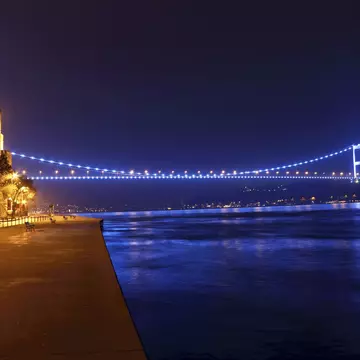
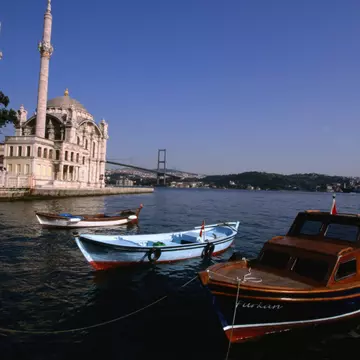
    One of the most enjoyable, and certainly most romantic, night-time activities in İstanbul is to take a Bosphorus ferry. Enjoy the view back to the Old City, the twinkling lights, the fishing boats bobbing on the waves and the powerful searchlights of the ferries sweeping the sea lanes.

    The best ferry to catch for this purpose is the one from Karaköy (just over the Galata Bridge from Eminönü) to Kadıköy. Just go to Karaköy, buy two tokens (for the voyages out and back) and walk on board. When you reach Kadıköy you could head into the backstreets and grab a bite to eat.

    A shorter ride is the one from Eminönü to Üsküdar. When you alight in Üsküdar, you could have a…

    reviewed

  11. Advertisement

  12. I

    Tarihi Sultanahmet Köftecisi Selim Usta

    This is one of the most famous eateries in the city, and to be frank, we’re at a total loss to understand why. The ever-present queues of locals obviously adore its rubbery ızgara köfte (grilled meatballs) served with bread, white beans, salad and pickled chillies, but we have always been underwhelmed. Why not try it yourself, though? The place has been serving since 1920 and is certainly clean, cheap and cheerful.

    reviewed

  13. J

    Sali Pazari

    On Tuesday there is a massive market in Kadıköy, on the Asian side: the Sali Pazari. The cheapest clothes in town are on sale here, so if you've been on the road for a while and your underwear needs replenishing, this is the place to do it! To get there, get off the ferry and move straight ahead along the major boulevard of Söğütlüçeşme Caddesi for about 500m until you come to a busy intersection, Altıyol Square.

    Cross over, take the right fork and continue eastward along Kuşdili Caddesi for another 250m (three cross streets). At Hasırcıbaşı Caddesi turn left and you'll see the tent-city market spread out before you. It's open between 08:00 and 18:00. On Sunday…

    reviewed

  14. K

    Leb-i Derya

    On the top floor of a dishevelled building off İstiklal, Leb-i Derya has wonderful views across to the Old City and down the Bosphorus, meaning that seats on the small outdoor terrace or at the bar are highly prized. There's also food on offer.

    reviewed

  15. L

    Topkapı Harem

    These were the imperial family quarters, and every detail of Harem life was governed by tradition, obligation and ceremony. The word harem literally means 'private'.

    Every traditional Muslim household had two distinct parts: the selamlık (greeting room) where the master greeted friends, business associates and tradespeople; and the harem (private apartments), reserved for himself and his family.

    If you decide to tour the Harem at Topkapı Palace – and we highly recommend that you do – you’ll need to buy a dedicated ticket from the ticket office outside the Harem’s entrance. The fact that there is an extra entry charge means that many stingy tour companies neglect to bring…

    reviewed

  16. M

    Dolmabahçe Palace

    These days it’s fashionable for architects and critics influenced by the less-is-more aesthetic of the Bauhaus masters to sneer at buildings such as Dolmabahçe. The crowds that throng to this imperial pleasure palace with its neoclassical exterior and over-the-top interior fit-out clearly don’t share their disdain, though.

    More rather than less was certainly the philosophy of Sultan Abdül Mecit I, who, deciding that it was time to give the lie to talk of Ottoman military and financial decline, decided to move from Topkapı to a lavish new palace on the shores of the Bosphorus. For a site he chose the dolma bahçe (filled-in garden) where his predecessors Sultans Ahmet…

    reviewed

  17. Princes' Islands

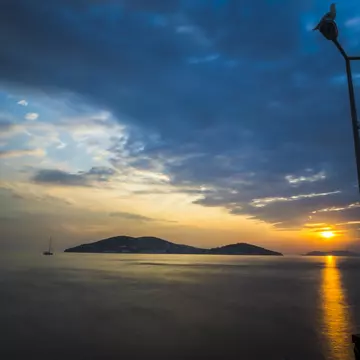
    Most İstanbullus refer to the Princes' Islands as 'The Islands' (Adalar), as they are the only islands around the city. They lie about 20km southeast of the city in the Sea of Marmara, and make a great destination for a day escape from the city.

    You'll realise after landing that there are no cars on the islands, something that comes as a welcome relief after the traffic mayhem of the city. Except for the necessary police, fire and sanitation vehicles, transportation is by bicycle, horse-drawn carriage and foot, as in centuries past.

    All of the islands are busy in summer, particularly on weekends. For that reason, avoid a Sunday visit. If you wish to stay overnight during…

    reviewed

  18. N

    Galata Tower

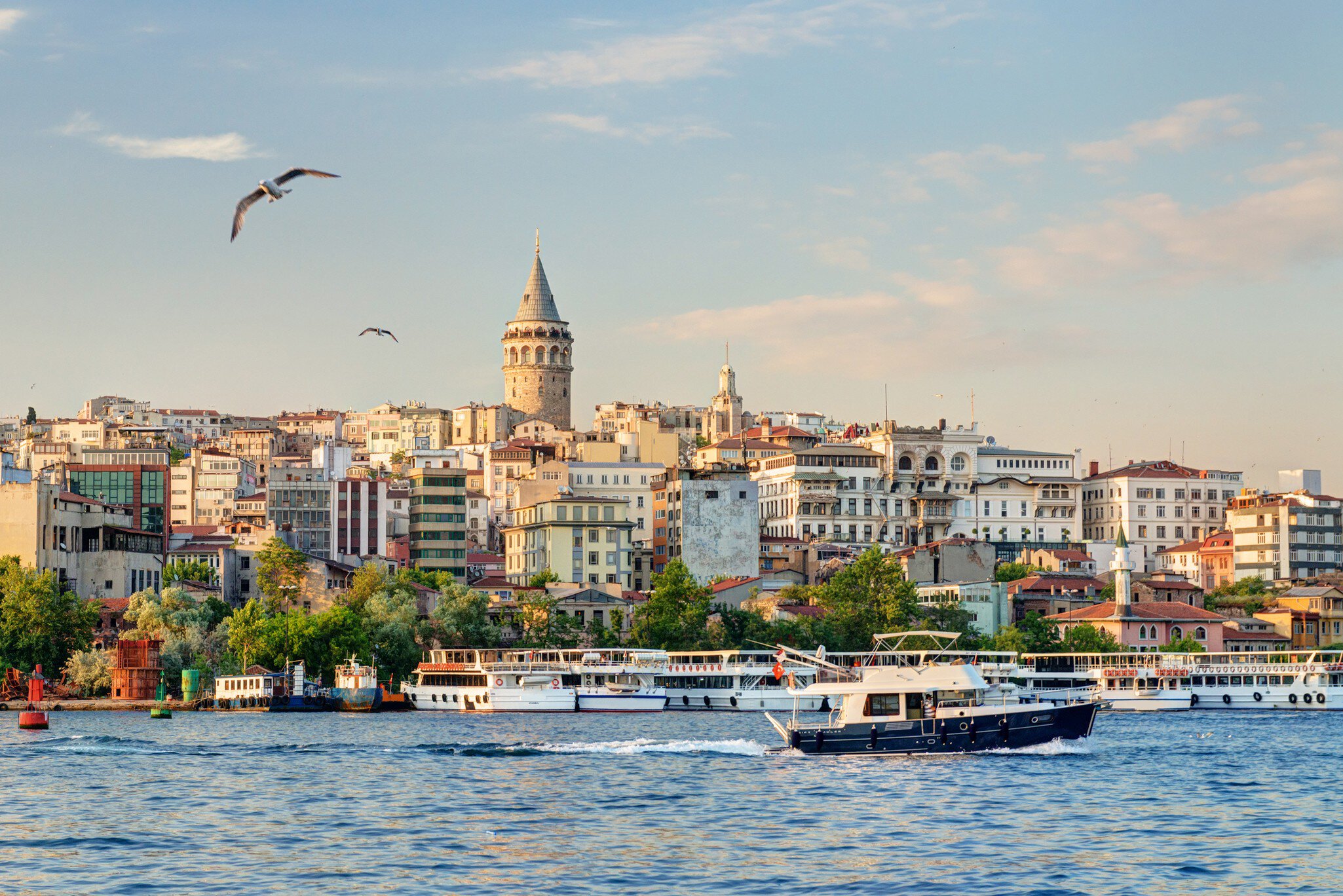
    The cylindrical Galata Tower stands sentry over the approach to 'new' İstanbul. Constructed in 1348, it was the tallest structure in the city for centuries, and it still dominates the skyline north of the Golden Horn. Its vertiginous upper balcony offers 360-degree views of the city, but we're not convinced that the view (though spectacular) justifies the steep admission cost.

    reviewed

  19. O

    Ambassador Spa

    There’s no Ottoman ambiance on offer at the shabby spa centre of this hotel just off Divan Yolu, but all treatments are private, meaning that you get the small hamam all to yourself. Best of all is the fact that the signature 60- or 75-minute 'Oriental Massage' package includes both a hamam treatment and an expert 30-minute oil massage.

    The spa's massage therapist Zeki Ulusoy is trained in sports, remedial and aromatherapy massage and he really knows his stuff – you’ll float out of here at the end of a session. The 'Oriental Massage' treatment costs between €50-60; a 50-minute 'Back to Traditions' package comprises a 20-minute body scrub and a 30-minute foam massage and…

    reviewed

  20. P

    Khorasani

    When considering ocakbaşıs, the word stylish doesn’t often come to mind. Succulent, yes. Smoky, sometimes. But stylish? Hmm. The owners of this new place off Divan Yolu are aiming to challenge preconceptions with Khorasani, and it seems to be working for their predominantly tourist clientele. Here, the meat plays second fiddle to the surrounds, which are extremely attractive. The chef hails from Antakya, and the kebap style is that of southeastern Anatolia, meaning that a few spicy dishes adorn the menu. A welcome addition to the Sultanahmet eating scene.

    reviewed

  21. Q

    Kuru Fasülyeci Erzincanlı Ali Baba

    Join the crowds of hungry locals at this long-time institution located opposite the Süleymaniye Mosque. It's been dishing up its signature kuru fasulye (Anatolian-style white beans cooked in a spicy tomato sauce) since 1924 and it's delicious when accompanied by pilaf (rice) and pickles. Next-door Kanaat Fasülyeci is nearly as old and serves up more of the same. No alcohol.

    reviewed

  22. Advertisement

  23. R

    Gönül Paksoy

    Gönül Paksoy creates and sells pieces that transcend fashion and step into art. In fact, her work was the subject of a 2007 exhibition at İstanbul's Rezan Haş Gallery. These two shops showcase her distinctive clothing, which is made using naturally dyed fabrics and is often decorated with vintage beads. She also creates and sells delicate silk and cotton knits and exquisite jewellery based on traditional Ottoman designs.

    reviewed

  24. S

    Albura Kathisma

    Albura Kathisma is a welcome addition to the otherwise mediocre array of restaurants along Akbıyık Caddesi. Its streetside tables are usually occupied by tourists sampling Turkish dishes such as hünkar beğendi (lamb or beef goulash served on a mound of rich aubergine puree) or mantı (Turkish ravioli topped with yoghurt, tomato and butter). The food is decent, with lots of vegetarian options.

    reviewed

  25. T

    İstanbul Archaeology Museums

    It may not pull the number of visitors that flock to nearby Topkapı, but this superb museum complex shouldn't be missed. It can be reached easily by walking down the slope from Topkapı's First Court, or by trudging up the hill from the main gate of Gülhane Park. Allow at least two hours for your visit.

    The complex is divided into three buildings: the Archaeology Museum (Arkeoloji Müzesi), the Museum of the Ancient Orient (EskiŞark Eserler Müzesi) and the Tiled Kiosk (Çinili Köşk). These museums house the palace collections, formed during the 19th century by archaeologist and artist Osman Hamdi Bey (1842–1910) and added to greatly since the republic was proclaimed.…

    reviewed

  26. U

    Kariye Museum (Chora Church)

    İstanbul has more than its fair share of Byzantine monuments, but few are as drop-dead gorgeous as the Chora Church. The fact that it's tucked away in the little-visited Western Districts of the city means that many visitors overlook it, but we counsel you not to do the same.

    The church was originally known as the Church of the Holy Saviour Outside the Walls, but what you see today is not the first church-outside-the-walls on this site. This one was built in the late 11th century, and underwent repairs, restructuring and conversion to a mosque in the succeeding centuries. Virtually all of the interior decoration dates from 1312 and was funded by Theodore Metochites, a…

    reviewed

  27. V

    Hippodrome

    The Byzantine Emperors loved nothing more than an afternoon at the chariot races, and this rectangular arena was their venue of choice. In its heyday, it was decorated by obelisks and statues, some of which remain in place today. Recently re-landscaped, it is one of the city's most popular meeting places and promenades.

    Originally, the arena consisted of two levels of galleries, a central spine, starting boxes and the semicircular southern end known as the Sphendone, parts of which still stand. The level of galleries that once topped this stone structure was damaged during the Fourth Crusade and ended up being totally dismantled in the Ottoman period – many of the…

    reviewed