MadridThings to do

Things to do in Madrid

‹ Prev

of 27

  1. A

    Centro de Arte Reina Sofía

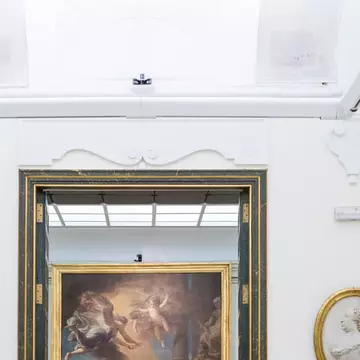
    Home to Picasso’s Guernica, arguably Spain’s single-most famous artwork, and a host of other important Spanish artists, the Centro de Arte Reina Sofía is Madrid’s premier collection of contemporary art. The collection principally spans the 20th century up to the 1980s.

    In addition to Picasso’s Guernica, which is worth the admission fee on its own, the work of the Madrid-born Juan Gris (1887–1927) or Georges Braque (1882–1963) may appeal. The work of Joan Miró (1893–1983) is defined by often delightfully bright primary colours, but watch out also for a handful of his equally odd sculptures; his paintings became a symbol of the Barcelona Olympics in 1992.

    Th…

    reviewed

  2. B

    Plaza Mayor

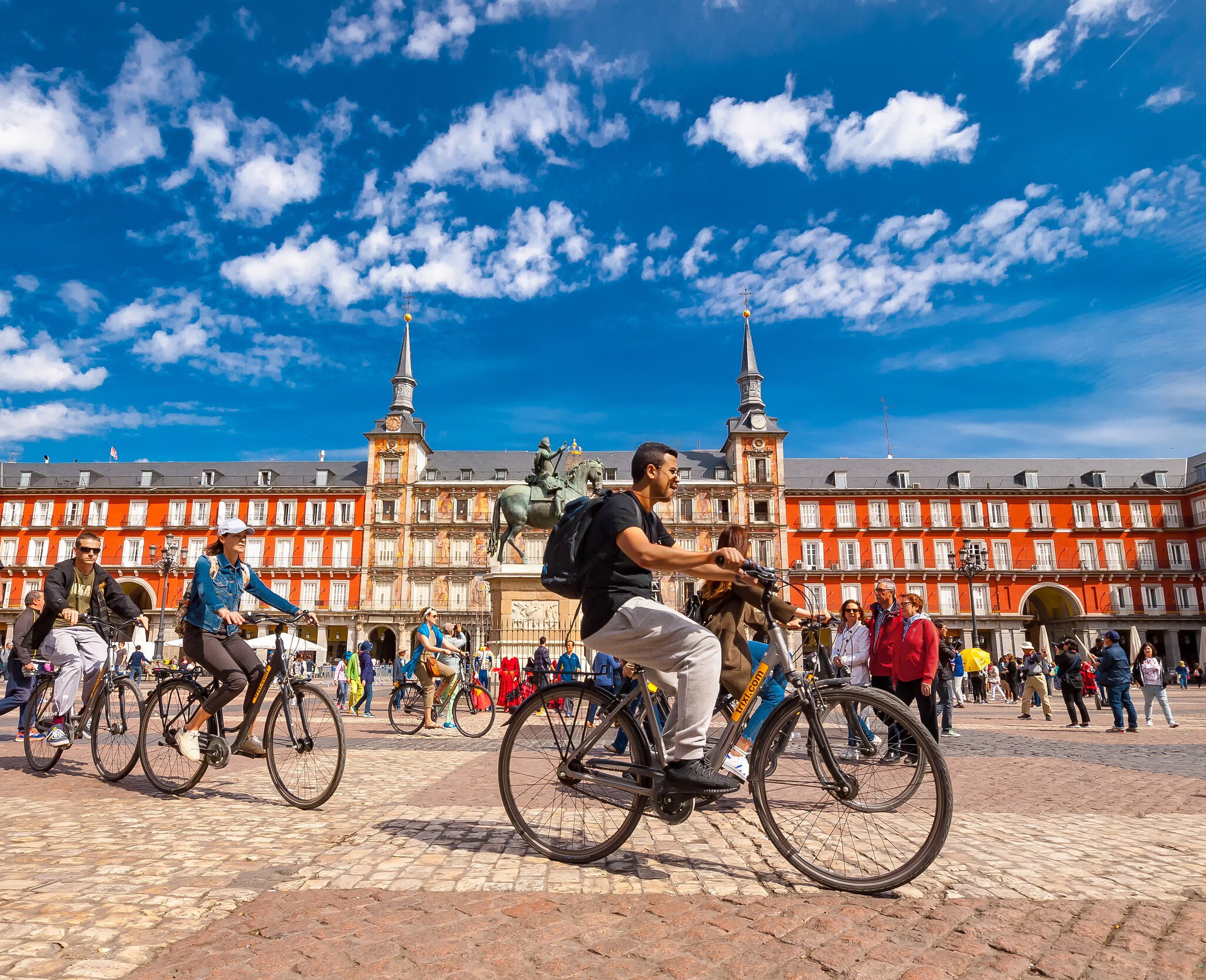
    Designed in 1619 by Juan Gómez de Mora, the stunningly beautiful Plaza Mayor is a highlight of any visit to Madrid. The grandeur of its buildings is one thing, but this is a living, breathing entity, from the outdoor tables of the terrazas to the students strewn across the cobblestones on a sunny day.

    The plaza’s first public ceremony was the beatification of San Isidro Labrador, Madrid’s patron saint. Thereafter, bullfights watched by 50,000 spectators were a recurring spectacle until 1878, while the autos-da-fé (the ritual condemnation of heretics) of the Spanish Inquisition also took place here. Fire largely destroyed the square in 1790, but it was rebuilt and became …

    reviewed

  3. C

    Parque del Buen Retiro

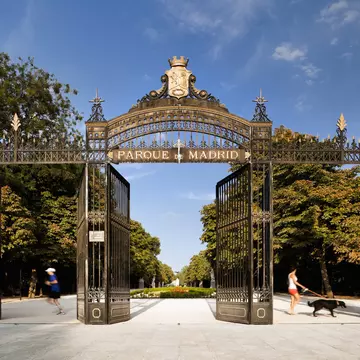
    The glorious gardens of El Retiro are as beautiful as any you’ll find in a European city. Littered with marble monuments, landscaped lawns, the occasional elegant building and abundant greenery, it’s quiet and contemplative during the week but comes to life on weekends. Put simply, this is one of our favourite places in Madrid. Laid out in the 17th century by Felipe IV as the preserve of kings, queens and their intimates, the park was opened to the public in 1868 and ever since, whenever the weather’s fine and on weekends in particular, madrileños from all across the city gather here to stroll, read the Sunday papers in the shade, take a boat ride or nurse a cool drink at…

    reviewed

  4. D

    Museo Thyssen-Bornemisza

    One of the most extraordinary private collections of predominantly European art in the world, the Museo Thyssen-Bornemisza is a worthy member of Madrid’s ‘Golden Triangle’ of art. Where the Museo del Prado or Centro de Arte Reina Sofía enable you to study the body of work of a particular artist in depth, the Thyssen is a place to immerse yourself in a breathtaking breadth of artistic styles. Most of the big names are here, sometimes with just a single painting, but the Thyssens’ gift to Madrid and the art-loving public is to have them all under one roof. Not surprisingly, it often ends up being many visitors’ favourite Madrid art gallery.

    reviewed

  5. E

    Tupperware

    A Malasaña stalwart and prime candidate for the bar that best catches the enduring rockero spirit of Malasaña, Tupperware draws a 30-something crowd, spins indie rock with a bit of soul and classics from the ’60s and ’70s, and generally revels in its kitsch (eyeballs stuck to the ceiling, and plastic TVs with action-figure dioramas lined up behind the bar). By the way, locals pronounce it ‘Tupper-warry’.

    reviewed

  6. F

    Los Bebés de Chamberí

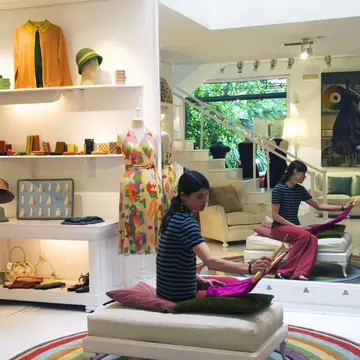
    This small shop showcases that wonderful individuality of Spanish children’s clothes; you’ll leave laden with bags for your own kids and for friends back home.

    reviewed

  7. G

    Museo del Prado

    This is one of the premier art galleries in the world. The more than 7000 paintings held in the Museo del Prado’s collection (although only around 1500 are currently on display) are like a window on the historical vagaries of the Spanish soul, at once grand and imperious in the royal paintings of Velázquez, darkly tumultuous in Las Pinturas Negras (the Black Paintings) of Goya and outward-looking with sophisticated works of art from all across Europe. Spend as long as you can at the Prado or, better still, plan to make a couple of visits – it can be a little overwhelming if you try to absorb it all at once.

    Entrance to the Prado is via the eastern Puerta de los Jerón…

    reviewed

  8. H

    Teatro Joy Eslava

    The only things guaranteed at this grand old Madrid dance club (housed in a 19th-century theatre) are a crowd and the fact that it will be open. (The club claims to have opened every single day for the past 29 years.) The music and the crowd are a mixed bag, but queues are long and invariably include locals and tourists, and even the occasional famoso.

    reviewed

  9. I

    El Rastro

    El Rastro, Europe’s largest flea market, is a Madrid institution. It’s been an open-air market for half a millennium.

    The madness begins at Plaza de Cascorro and the maze of streets branching off it. Cheap clothes, luggage, antiques, old photos of Madrid, old flamenco records, faux designer purses, grungy T-shirts, household goods and electronics are the main fare, but for every 10 pieces of junk, there’s a real gem waiting to be found.

    A word of warning: pickpockets love El Rastro as much as everyone else.

    reviewed

  10. J

    La Isla del Tesoro

    La Isla del Tesoro is loaded with quirky charm – the dining area is like someone’s fantasy of a secret garden come to life. The cooking here is assured and wide-ranging in its influences; the jungle burger is typical in a menu that’s full of surprises. The weekday, lunchtime menú del día (€10) is more varied than most in Madrid. Our only complaint? The otherwise friendly waiters are often too keen to free up your table for the next punters on weekends.

    reviewed

  11. Advertisement

  12. K

    Las Vistillas, Viaduct & Calle de Segovia

    Jardines de las Vistillas, the leafy area around and beneath the southern end of the viaduct that crosses Calle de Segovia, is an ideal spot to pause and ponder the curious history of one of Madrid’s oldest barrios. Probably the best place to do this is just across Calle de Bailén where the terrazas (oper-air cafés) of Las Vistillas offer one of the best vantage points in Madrid for a drink, with views towards the Sierra de Guadarrama. During the civil war, Las Vistillas was heavily bombarded by Nationalist troops from the Casa de Campo, and they in turn were shelled from a republican bunker here. The adjacent viaduct, which was built in the 19th century and replaced …

    reviewed

  13. Plaza de la Cebada

    Just west of La Latina metro station, the busy and bar-strewn corner of Madrid marked by the ill-defined ‘Barley Square’ is important to understanding what medieval Madrid was like, although it requires a little imagination. In the wake of the Christian conquest the square was, for a time, the site of a Muslim cemetery, and the nearby Plaza de la Puerta de Moros (Moors’ Gate) underscores that this area was long home to the city’s Muslim population. The square later became a popular spot for public executions – until well into the 19th century, the condemned would be paraded along Calle de Toledo, before turning into the square and mounting the gallows. The Teatr…

    reviewed

  14. L

    Palacio Real

    Spain’s lavish Palacio Real is a jewel box of a palace, although it’s used only occasionally for royal ceremonies; the royal family moved to the modest Palacio de la Zarzuela years ago.

    When the Alcázar burned down on Christmas Day 1734, Felipe V, the first of the Bourbon kings, decided to build a palace that would dwarf all its European counterparts. Felipe died before the palace was finished, which is perhaps why the Italianate baroque colossus has a mere 2800 rooms, just one-quarter of the original plan.

    The official tour leads through 50 of the palace rooms, which hold a good selection of Goyas, 215 absurdly ornate clocks and five Stradivarius violins still used …

    reviewed

  15. Toledo Half-Day or Full-Day Trip from Madrid

    Toledo Half-Day or Full-Day Trip from Madrid

    5 or 8 hours (Departs Madrid, Spain)

    by Viator

    Spend a morning, afternoon or full day in Toledo, Spain's medieval capital and a treasure trove of El Greco artworks. You'll discover a glorious city filled wit…

    Not LP reviewed

    from USD$50.73 $56 SAVE $5
  16. M

    Plaza de Neptuno

    Officially known as Plaza de Cánovas del Castillo, the next roundabout south of Cibeles is something of a crossroads of Spanish nobility. The Ritz and the Palace, two of Madrid’s longest-standing and most exclusive hotels, glower at each other across the plaza with self-righteous grandeur, while the Museo Thyssen-Bornemisza and the Prado do likewise in competition for the title of Madrid’s best loved repository of fine art. The centrepiece is an ornate fountain and 18th-century sculpture of Neptune, the sea god, by Juan Pascual de Mena. But madrileños, never the most reverent lot, know it better as the celebration venue of choice for fans of Atlético de Madrid who lose al…

    reviewed

  17. N

    Plaza de Oriente

    A royal palace that once had aspirations to be the Spanish Versailles. Sophisticated cafes watched over by apartments that cost the equivalent of a royal salary. The Teatro Real, Madrid’s opera house and one of Spain’s temples to high culture. Some of the finest sunset views in Madrid. Welcome to Plaza de Oriente, a gloriously alive monument to imperial Madrid.

    At the centre of the plaza, which the palace overlooks, is an equestrian statue of Felipe IV, designed by Velázquez. If you’re wondering how a heavy bronze statue of a rider and his horse rearing up can actually maintain that stance, the answer is simple: the hind legs are solid while the front ones are hollow.…

    reviewed

  18. Warner Brothers Movie World

    This movie theme-park, 25km south of central Madrid, has much to catch the attention. Kids will love the chance to hang out with Tom and Jerry, while the young-at-heart film buffs among you will be similarly taken with the Wild West or remakes of the studio sets for such Hollywood ‘greats’ as Police Academy. Entrance to the park is via Hollywood Boulevard, not unlike LA’s Sunset Boulevard, whereafter you can choose between Cartoon World, the Old West, Hollywood Boulevard, Super Heroes (featuring Superman, Batman and the finks of Gotham City) and finally Warner Brothers Movie World Studios. It’s all about the stars of the silver screen coming to life as life-sized cart…

    reviewed

  19. O

    Plaza de la Cibeles

    Plaza de la Cibeles evokes the splendour of imperial Madrid. The jewel in the crown is the astonishing Palacio de Comunicaciones. Completed in 1917 by Antonio Palacios, Madrid’s most prolific architect of the belle époque, it combines elements of the North American monumental style of the period with Gothic and Renaissance touches. It serves as Madrid’s town hall (ayuntamiento), with the central post office occupying the southwestern corner.

    The spectacular fountain of the goddess Cybele at the centre of the plaza is also one of Madrid’s most beautiful. Ever since it was erected in 1780 by Ventura Rodríguez, it has been a Madrid favourite. The Cibeles fountain has al…

    reviewed

  20. P

    Plaza de España

    It’s hard to know what to make of this curiously unprepossessing square. The 1953 Edificio de España (Spain Building) on the east side clearly sprang from the totalitarian recesses of Franco’s imagination such is its resemblance to austere Soviet monumentalism, but there’s also something strangely grand and pleasing about it. To the north stands the rather ugly and considerably taller 35-storey Torre de Madrid (Madrid Tower). Taking centre stage in the square is a statue of Cervantes. At the writer’s feet is a bronze of his immortal characters, Don Quijote and Sancho Panza. The monument was erected in 1927. But Plaza de España is at its best down in its lower (west…

    reviewed

  21. Plaza de Lavapiés

    The triangular Plaza de Lavapiés is one of the few open spaces in Lavapiés and it’s a magnet for all that’s good (a thriving cultural life) and bad (drugs and a high police presence) about the barrio. The Teatro Valle-Inclán, on the southern edge of the plaza, is a stunning contemporary addition to the eclectic Lavapiés streetscape. To find out what makes this barrio tick, consider dropping in to the Asociación de Vecinos La Corrala, just up the hill from the plaza, where staff are happy to highlight all that’s good about Lavapiés without dismissing its problems.

    reviewed

  22. Advertisement

  23. Q

    Convento de las Descalzas Reales

    The grim plateresque walls of the Convento de las Descalzas Reales offer no hint that behind the facade lies a sumptuous stronghold of the faith. Founded in 1559 by Juana of Austria, the widowed daughter of the Spanish king Carlos I, the convent quickly became one of Spain’s richest religious houses thanks to gifts from Juana’s noble friends. On the obligatory guided tour you’ll see a gaudily frescoed Renaissance stairway, a number of extraordinary tapestries based on works by Rubens, and a wonderful painting entitled The Voyage of the 11,000 Virgins. Some 33 nuns still live here and there are 33 chapels dotted around the convent.

    reviewed

  24. R

    Plaza de la Puerta del Sol

    The official centre point of Spain is a gracious hemisphere of elegant facades that’s often very crowded. In Madrid’s earliest days, the Puerta del Sol (Gate of the Sun) was the eastern gate of the city. Plaza de la Puerta del Sol comes into its own on New Year’s Eve, when madrileños pack into the square in their tens of thousands, waiting for the clock that gives Spain its official time to strike midnight. Look out for the statue of a bear nuzzling a madroño (strawberry tree); this is the official symbol of the city.

    reviewed

  25. S

    Sala el Sol

    This opened in 1979, just in time for la movida, and quickly established itself as a leading stage for all the icons of the era, such as Nacha Pop and Alaska y los Pegamoides. La movida may have faded into history, but it lives on at El Sol, where the music rocks and rolls and usually resurrects the ’70s and ’80s while soul and funk also get a run. It’s a terrific venue and opening times vary – most concerts start around 11pm but can be as ‘early’ as 10pm. Check the website (which also allows you to book online) for upcoming acts.

    reviewed

  26. T

    Museo Chicote

    The founder of this Madrid landmark is said to have invented more than a hundred cocktails, which the likes of Hemingway, Ava Gardner, Grace Kelly, Sophia Loren and Frank Sinatra all enjoyed at one time or another. It’s still frequented by film stars and top socialites, and it’s at its best after midnight when a lounge atmosphere takes over, couples cuddle on the curved benches and some of the city’s best DJs do their stuff. The 1930s-era interior only adds to the cachet of this place.

    reviewed

  27. U

    El Berlín Jazz Club

    El Berlín has been something of a Madrid jazz stalwart since the 1950s and it’s the kind of place that serious jazz fans rave about as the most authentic in town – it’s all about classic jazz here, with none of the fusion performances that you find elsewhere. The art-deco interior ads to the charm and the headline acts are a Who’s Who of world jazz. The headline acts take to the stage at 11.30pm on Fridays and Saturdays, with other performances sprinkled throughout the week.

    reviewed