Gibraltar Sights

  1. Alameda Botanic Gardens

    Lush gardens greet you a short distance south of Trafalgar Cemetery.

    Read more about Alameda Botanic Gardens

  2. Apes' Den

    The Rock's most famous inhabitants are the tailless Barbary Macaques, the only free-living primates in Europe. Some of the 240 apes hang around the Apes' Den near the middle cable-car station; the others can often be seen at the top cable-car station and the Great Siege Tunnels. Legend has it that when the apes (which may have been introduced from north Africa in the 18th century) disappear from Gibraltar, so will the British.

    Read more about Apes' Den

  3. Gibraltar Museum

    The Gibraltar Museum contains good historical, architectural and military displays, among which are a well-preserved Muslim bathhouse and a copy of a 100,000-year-old female Neanderthal skull, found on Gibraltar in 1848.

    Read more about Gibraltar Museum

  4. Gibraltar, A City Under Siege Exhibition

    This little exhibition is worth glancing through on your way back to town if you've just come from a visit to the impressive Rock and Nature Reserve.

    Read more about Gibraltar, A City Under Siege Exhibition

  5. Great Siege Tunnels

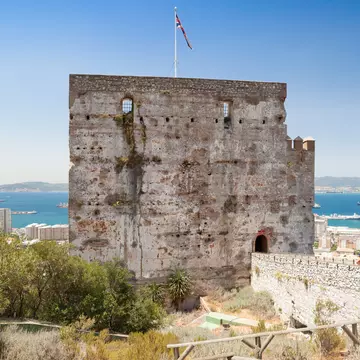
    The Great Siege Tunnels were gun emplacements hewn out by hand by the British during the 1779-83 siege. They constitute a tiny portion of the more than 70km (43mi) of tunnels in the Rock, most of which are off limits to the public. Nearby is the Tower of Homage, the last vestige of Gibraltar's Muslim castle, built in 1333.

    Read more about Great Siege Tunnels

  6. Ibrahim-Al-Ibrahim Mosque

    A symbol of the racial and religious symbiosis of Gibraltar's past and, to some degree its present, is the Ibrahim-Al-Ibrahim Mosque, opened in 1997. It was built at the behest of King Fahd of Saudi Arabia to cater for all the Moroccans working on the Rock and is said to be the largest mosque in a non-Islamic country.

    Read more about Ibrahim-Al-Ibrahim Mosque

  7. Lower St Michael's Cave Tour

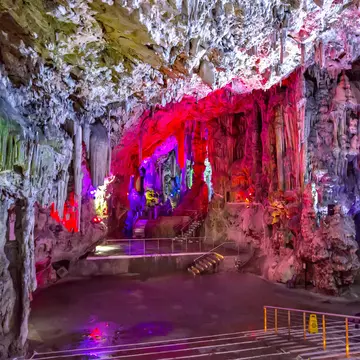
    For a more extensive look at the cave system the Lower St Michael's Cave Tour is a three-hour guided adventure into the lower cave area, which ends at an underground lake. This tour involves scrambling and minor climbing with ropes, so a reasonable degree of physical fitness and appropriate footwear are essential. The cave is in its original state but is fully lit. Children must be over 10 years. Contact the tourist office to arrange your guide.

    Read more about Lower St Michael's Cave Tour

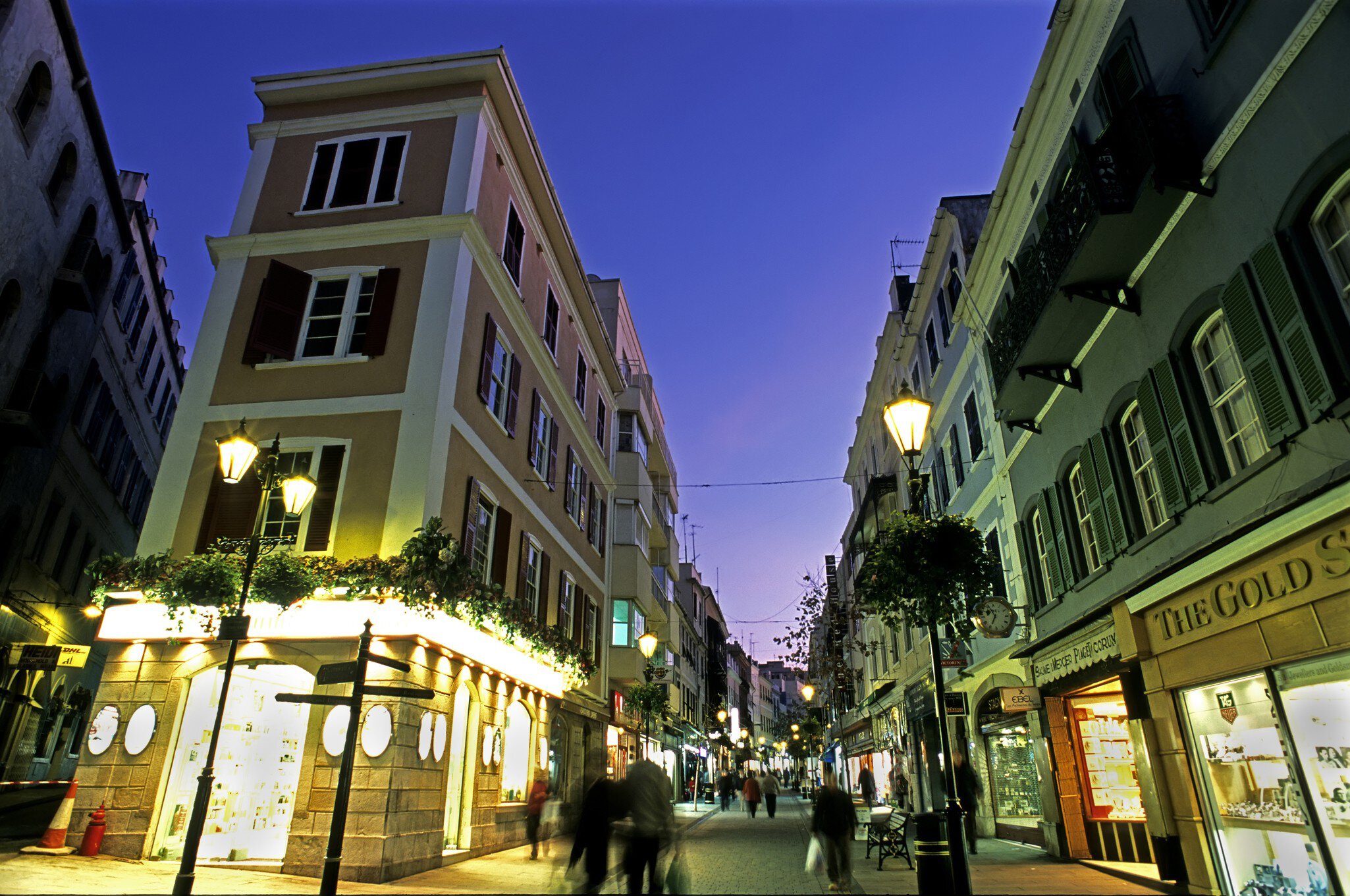
  8. Main Street

    This pedestrianised street has an emphatically British appearance, but the Spanish lilt in the air is a reminder that this is still Mediterranean Europe. Most Spanish and Islamic buildings on Gibraltar were destroyed in 18th-century sieges, but the Rock bristles with British fortifications, gates and gun emplacements.

    Read more about Main Street

  9. Military Heritage Centre and Great Siege Tunnels

    Princess Caroline's Battery, a half-hour walk north (downhill) from the top cable-car station, houses a Military Heritage Centre. From here a road leads up to the impressive Great Siege Tunnels, hand-hewn by the British for gun emplacements during the 1779-to-1783 siege. They constitute a tiny proportion of the more than 70km of tunnels in the Rock, most of which are off limits.

    Read more about Military Heritage Centre and Great Siege Tunnels

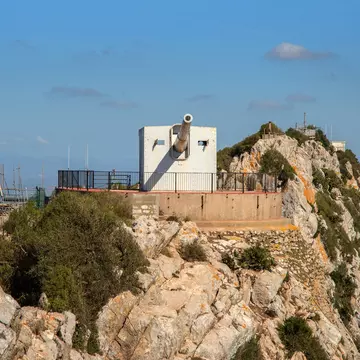
  10. Nelson's Anchorage

    South of Trafalgar Cemetary, Nelson's Anchorage pinpoints the site where Nelson's body was brought ashore from HMS Victory - preserved in a rum barrel, so legend says. A 100-tonne Victorian supergun, made in Britain in 1870, commemorates the spot.

    Read more about Nelson's Anchorage

  11. Advertisement

  12. Parson's Lodge

    South of Nelson's Anchorage is Parson's Lodge, a gun battery atop a 40m cliff. Beneath the gun emplacements is a labyrinth of tunnels with former ammunition stores and living quarters.

    Read more about Parson's Lodge

  13. Princess Caroline's Battery

    About 30 minutes' walk north (downhill) from the top cable-car station is Princess Caroline's Battery, housing the Military Heritage Centre. From here one road leads down to the Princess Royal Battery - more gun emplacements - while another leads up to the Great Siege Tunnels (or Upper Galleries), a complex defence system hewn out of the Rock by the British during the siege of 1779-83 to provide gun emplacements.

    Read more about Princess Caroline's Battery

  14. Shrine of Our Lady of Europe

    The southern tip of Gibraltar is known as Europa Point, the location of Gibraltar's first lighthouse, sacked by the infamous corsair (pirate), Barbarossa. It is also the site of the Christian Shrine of Our Lady of Europe, whose 15th-century statue of the Virgin and Child was miraculously unscathed during the pirate's devastating attack.

    Read more about Shrine of Our Lady of Europe

  15. Smugglers' Cove

    Once a den of smugglers who supplied the mountain bandits of Ronda with contraband, Gibraltar in the 21st century has continued to receive complaints from the Spanish authorities about the smuggling of physical goods and also about the alleged laundering of illicit funds that end up invested in construction or property in Spain.

    Read more about Smugglers' Cove

  16. St Michael's Cave

    If you walk for around twenty minutes, south down St Michael's Rd from the top cable-car station (or up from the Apes' Den), St Michael's Cave is a big natural grotto that was once home to Neolithic inhabitants of the Rock. Today, apart from attracting tourists in droves, it's used for concerts, plays, even fashion shows. There's a café outside.

    Read more about St Michael's Cave

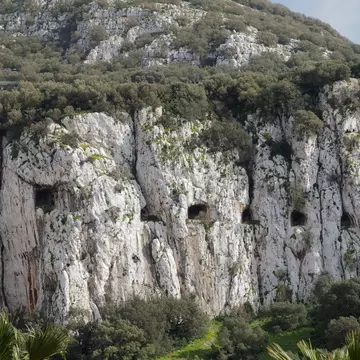
  17. The Rock

    Naturally, the main sight is the awesome rock; a vast limestone ridge that rises to 426m, with sheer cliffs on its northern and eastern sides. For the ancient Greeks and Romans this was one of the two pillars of Hercules, split from the other, Jebel Musa in Morocco, in the course of Hercules' arduous twelve labours. The two great rocks marked the edge of the ancient world.

    Read more about The Rock

  18. Tower of Homage

    The last vestige of Gibraltar's Islamic castle, built in 1333.

    Read more about Tower of Homage

  19. Trafalgar Cemetery

    A poignant lesson in history can be found in the atmospherically overgrown Trafalgar Cemetery just south of Southport Gate. The graves are those of British sailors who died at Gibraltar after the Battle of Trafalgar (1805).

    Read more about Trafalgar Cemetery

  20. Upper Rock Nature Reserve

    The most exciting thing about Gibraltar is the Rock itself. Most of the upper Rock, starting just above the town, is a nature reserve, with spectacular views and several interesting spots to visit. A great way to get up here is by cable car. During a westerly wind, the Rock is often a fine spot for observing migrations of birds, especially raptors and storks, between Africa and Europe.

    Read more about Upper Rock Nature Reserve

  21. Advertisement