-
Academia Istrpolitana
Academia Istrpolitana. Founded in 1465 as the first university in the Kingdom of Hungary, it lasted only until King Mathias Corvinus' death in 1490. The building is now the Academy of Music & Drama.
-
Bibiana
Bratislava isn't overly populated with playgrounds, or restaurants with children's menus for that matter, but there are a couple of places to keep the little ones entertained. Bibiana calls itself an 'International House of Art for Children'. There's an art gallery aimed at little ones and it sponsors frequent puppet and musical performances and craft classes.
-
Blue Church
A mosaic depicting the revelation of the roses hangs at the entrance to the Church of St Elizabeth, more commonly known as the Blue Church ; Bezručova 2; admission free; ; - ). The cool sky-blue-and-white church (1911) is an Art-Nouveau fantasy. On Saturdays it acts as a wedding machine - rather appropriate as it does look like an elaborate cake.
-
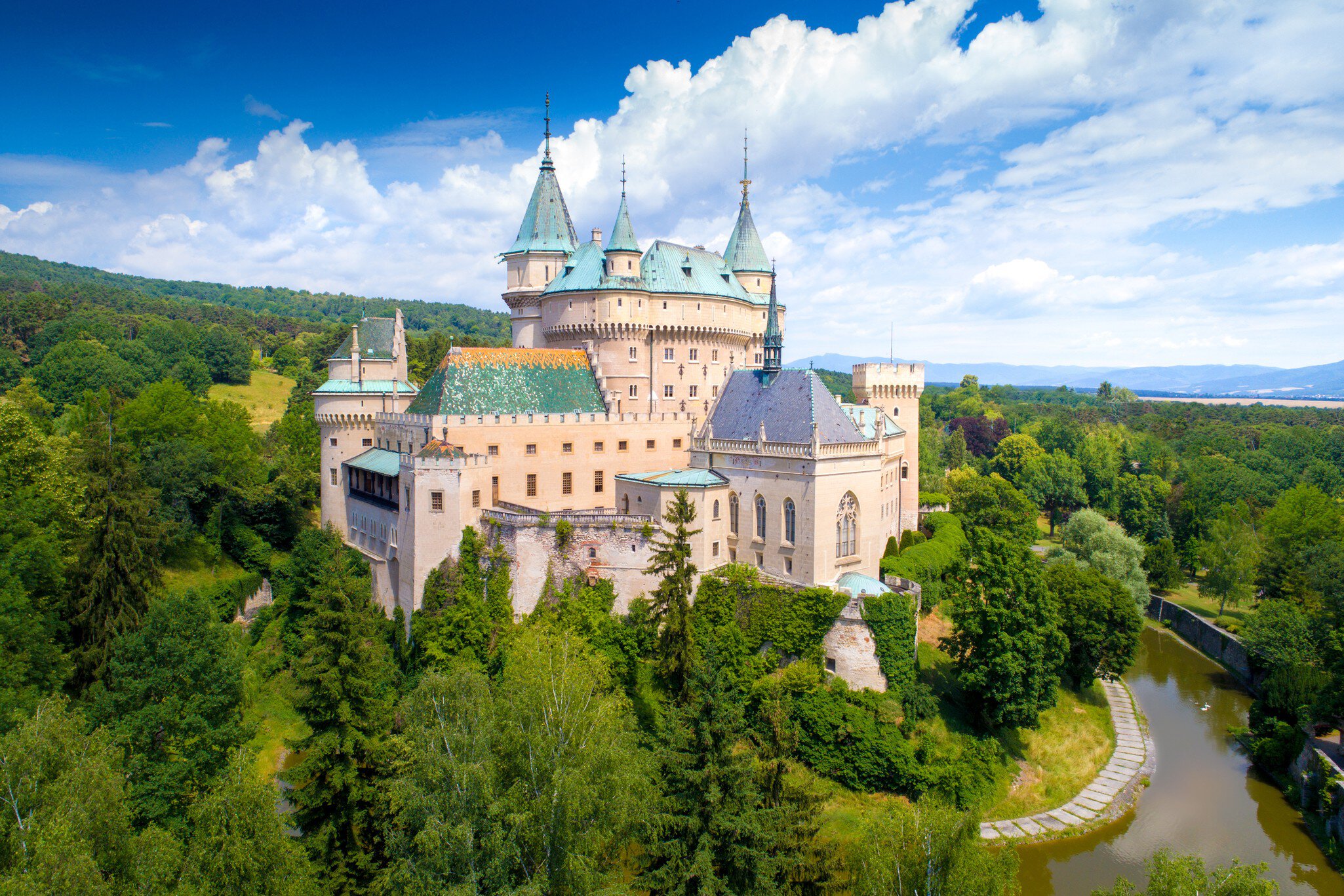
Bratislava Castle
Lording over the west side of the old town, Bratislava Castle dominates the hill above the Danube. The winding ramparts and grounds provide a great vantage point for comparing ancient and communist Bratislava, the barrel-tile roofs of the old town versus the vast concrete housing estates of Petržalka. There are a couple of cafés and craft shops on the grounds.
-
Bratislava Castle Historical Museum
The saving grace of the ho-hum Bratislava Castle Historical Museum is you can climb up the crown tower (korunná veža) . In good weather you can see Austria (3km southwest) and Hungary (16km south).
-
Chatam Sofer's tomb
The staff at the Museum of Jewish Culture can help arrange a visit to rabbi Chatam Sofer's tomb near the tram tunnel under castle hill.
-
Church of the Clarissine Order
The Church of the Clarissine Order has an ornate 14th-century Gothic tower. No longer active, it is sometimes used as a concert hall. Nearby Kapitulská is one of the oldest and quietest streets in the city.
-
Church of the Holy Trinity
The baroque Church of the Holy Trinity is worth a look for the trompe l'oeil dome painted on the ceiling.
-
City Gallery of Bratislava
The City Gallery of Bratislava has two palatial show spaces: Mirbach Palace and Pálffy Palace.
-
Devin Castle
Hardcore castle aficionados will want to don their daypack and head out to Devin Castle, 9km (5.6mi) west of Bratislava. Once the military playground of 9th-century warlord Prince Ratislav, Devin is packed solid with historical intrigue. Bus 29 links Devin with Bratislava's Nový Most bus terminal.
-
Advertisement
-
Franciscan Church of the Annunciation
Scattered about the pedestrian centre are numerous churches, the oldest of which is the Franciscan Church of the Annunciation. Consecrated in 1297, it was later 'baroquified' by the Jesuits. It's normally open only for services.
-
Hlavné nám
The historic, pedestrian centre of the old town has some beautiful baroque palaces, built after the Hungarians moved their capital here. Once the centre and main market of the old town, Hlavné nám still fills up with craft stalls during the Easter and Christmas markets.
-
Holocaust Memorial
Cross under the Staromestská highway to the pedestrian old town and there's a small Holocaust Memorial near where the old synagogue once stood.
-
Hviezdoslavovo nám
The narrow, tree-lined Hviezdoslavovo nám traces a filled-in moat outside the old town walls. It's named after Pavol Orságh Hviezdoslav.
-
Leopold de Pauli Palace
At Leopold de Pauli Palace, now a university building, nine-year-old Franz Liszt gave one of his early recitals in 1820.
-
Michael Tower
The town's only surviving tower gate, Michael Tower, has a 14th-century base, a 16th-century top and an 18th-century steeple. Go inside to climb up and see the view across the rooftops. There's also a small display of antique swords, armour and guns.
-
Milan Dobeš Museum
Milan Dobeš Museum is a cool little contemporary museum that hosts international exhibits.
-
Mirbach Palace
Mirbach Palace, built in 1770, is a beautifully restored rococo building housing older baroque art.
-
Monument of the Slovak National Uprising
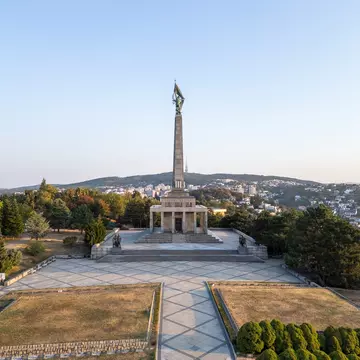
The central feature of the vast Nám SNP is a bronze Monument of the Slovak National Uprising, honouring to the antifascist uprising for which the square is named. In November 1989 huge crowds assembled here in the days leading up to the fall of the communist regime, and it was also here that Slovaks gathered before the Velvet Divorce from the Czech Republic.
-
Mozart House
In 1762 six-year-old Wolfgang Amadeus Mozart performed at a Pálffy family residence generally known today as Mozart house.
-
Advertisement
-
Municipal Museum
Flanking one side of the square is the Old Town Hall (1421) containing the Municipal Museum. Buzz past the tedious archaeological cases and look for the stairs down to the torture chambers in the cellar; they come complete with illustrated murals.
-
Museum of Clocks
A series of old homes wind down the castle hill along Židovská in what remains of the former Jewish quarter. The reputedly skinniest house in Central Europe contains a little Museum of Clocks.
-
Museum of Jewish Culture
Inside the Museum of Jewish culture there are moving exhibits about Slovakia's Jewish community that was decimated during WWII, the buildings that were demolished in the 1960s and on Judaism in general.
-
Museum of Music
Far more interesting than the Museum of Music is the chance to walk down into the bastion in the castle wall.
-
New Bridge
The New bridge, or the UFO (pronounced ew-fo ) bridge, is a modernist marvel from 1972. After a three-year renovation, the UFO-on-a-stick reopened in 2006. There's an overhyped nightclub aloft, in addition to the prerequisite overpriced restaurant and viewing platform.