St Petersburg Sights

  1. Academy Of Arts Museum

    Art-lovers should not bypass the research museum of the Russian Academy of Arts, which contains works by students and faculty since the founding of this institution in 1857. Two 3500-year-old sphinx monuments guard the entrance of this time-tested institution. This is the original location of the academy, where boys would live from the age of five until they graduated at age 15. It was an experiment to create a new species of human: the artist.

    Read more about Academy Of Arts Museum

  2. Admiralty

    Across the road from Dvortsovaya pl, the gilded spire of the old Admiralty is a prime St Petersburg landmark. It is visible from Gorokhovaya ul, Voznesensky pr and Nevsky pr, as all of these roads radiate outwards from this central point. Despite the spire's solid gold appearance, it's actually made from wood and was almost rotted through before restoration efforts began in 1996.

    Read more about Admiralty

  3. Alexander Blok House-Museum

    This museum occupies the flat where poet Alexander Blok spent the last eight years of his life (1912-1920). The revolutionary Blok believed that individualism had caused a decline in society's ethics, a situation that would only be rectified by a communist revolution.

    Read more about Alexander Blok House-Museum

  4. Alexander Nevsky Monastery

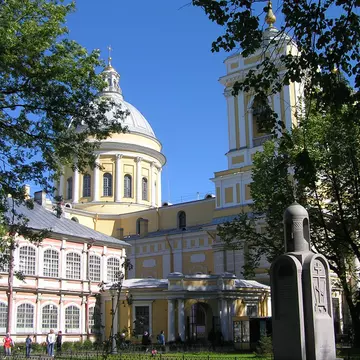
    The Alexander Nevsky Monastery - named for the patron saint of St Petersburg - is the city's most ancient and eminent monastery. Peter the Great made a mistake when he founded the Alexander Nevsky Monastery on this spot at the far end of Nevsky pr. He wrongly thought that this was where Alexander of Novgorod had beaten the Swedes in 1240. Nonetheless, in 1797 it became a lavra, the most senior grade of Russian Orthodox monasteries.

    Read more about Alexander Nevsky Monastery

  5. Alexandrovsky Park

    As you make your way from the metro you will pass through or close to this bustling park. Don't come here looking for peace and quiet: it is too close to traffic and perpetually thronged with people. If you have kids in tow, however, there are a couple of entertainment options worth considering: the Planetarium and the St Petersburg Zoo.

    Read more about Alexandrovsky Park

  6. Anichkov Palace

    Occupying an entire block between pl Ostrovskogo and the Fontanka River, the Anichkov Palace was built between 1741 and 1750, with input from a slew of architects, including Rastrelli and Rossi. The palace was twice a generous gift for services rendered: Empress Elizabeth gave it to her favourite Count Razumovsky and later Catherine the Great presented it to Potemkin.

    Read more about Anichkov Palace

  7. Anna Akhmatova Museum In The Fountain House

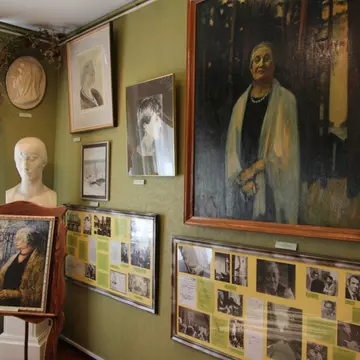
    Housed in the south wing of the Sheremetyev Palace (1750-55), this touching and fascinating literary museum celebrates the life and work of Anna Akhmatova. St Petersburg's most famous 20th-century poet lived here from 1924 until 1952, as this was the apartment of her common-law husband Nikolai Punin. The apartment is on the 2nd floor and is filled with mementos of the poet and correspondence with other writers.

    Read more about Anna Akhmatova Museum In The Fountain House

  8. Armenian Church Of St Catherine

    Continuing with a tradition of non-Orthodox churches being welcome on Nevsky pr, the Armenian merchant Ovanes Lazarian paid for the city's first Armenian church to be erected here in 1771. It was designed and built by German architect Georg Veldten and completed in 1780. The Soviet regime deemed it reasonable to bash the place to bits and install a 2nd floor, which blocked the view of the cupola. The church has been fully restored now, however, and it's open to visitors.

    Read more about Armenian Church Of St Catherine

  9. Artillery Museum

    The Artillery Museum is housed in the Peter & Paul Fortress's original arsenal, across the moat from the Peter & Paul Fortress. It chronicles Russia's military history, with examples of weapons dating all the way back to the Stone Age. The centrepiece is Lenin's armoured car, which he rode in triumph from Finland Station. Even if you are not impressed by guns and bombs, who can resist climbing around on the tanks and trucks that adorn the courtyard?

    Read more about Artillery Museum

  10. Bell Tower

    The 122.5m-high Bell Tower, in the grounds of Peter & Paul Fortress, remains the city's tallest structure. It offers a small exhibition about the renovation of the tower, as well as an up-close inspection of the bell-ringing mechanism. The main reason to climb all these steps is for the magnificent 360-degree panorama. The bell tower is open only with a guided tour, so call in advance or check the information office for the schedule, which is likely to change. Tickets are sold at the boathouse.

    Read more about Bell Tower

  11. Advertisement

  12. Beloselsky-Belozersky Palace

    The salmon pink exterior of the 1840s Beloselsky-Belozersky Palace provides a photogenic backdrop to Anichkov most. The palace was formerly a home of Communist Party officials, and now continues to serve in various official capacities.

    Read more about Beloselsky-Belozersky Palace

  13. Bolshoy Dom

    Noi Trotsky's monolithic design for the local KGB headquarters (and current Interior Ministry headquarters) is referred to by everyone as the 'Bolshoy Dom' or 'Big House'. It's a fierce-looking block of granite built in 1932 in the late-constructivist style and was once a byword for fear among the people of the city: most people who were taken here during the purges were never heard of again. Employees who have worked here include former president Vladimir Putin during his days as a KGB man.

    Read more about Bolshoy Dom

  14. Botanical Gardens

    On eastern Aptekarsky (Apothecary) Island, this quiet jungle was once was once a garden of medicinal plants that gave the island its name. The gardens date to 1714, when they were founded by Peter the Great himself.

    The botanic gardens contain 26 greenhouses on a 22-hectare site. It is a lovely place to stroll and a fascinating place to visit - and not just for botanists.

    Read more about Botanical Gardens

  15. Brodsky House-Museum

    This is the former home of Isaak Brodsky, one of the favoured artists of the revolution (not to be confused with Joseph Brodsky, one of the least favourite poets of the same regime). Besides being a painter himself, Brodsky was also an avid collector, and his house-museum contains his collection of thousands of works, including lesser-known works by top 19th-century painters such as Repin, Levitan and Kramskoy.

    Read more about Brodsky House-Museum

  16. Bronze Horseman

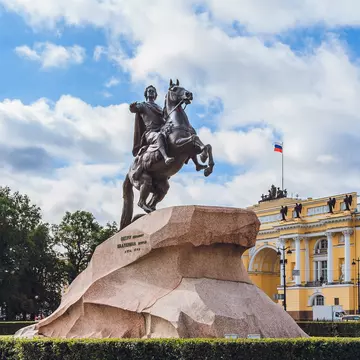
    The most famous statue of Peter the Great was immortalised as the Bronze Horseman in the poem by Pushkin. With his mount rearing above the snake of treason, Peter's enormous statue stands at the river end of pl Dekabristov. The statue was sculpted over 12 years for Catherine the Great by Frenchman Etienne Falconet. Its inscription reads 'To Peter I from Catherine II - 1782'.

    Read more about Bronze Horseman

  17. Buddhist Temple

    This beautiful datsan (temple) was built between 1909 and 1915 at the instigation of Pyotr Badmaev, a Buddhist physician to Tsar Nicholas II. Money was raised from all over Russia, and as far afield as Thailand and England, by various Buddhist organisations; it even gained the support of the Dalai Lama in Lhasa.

    Read more about Buddhist Temple

  18. Cathedral Of The Transfiguration Of Our Saviour

    The interior of this marvellous 1743 cathedral, which has been beautifully restored and repainted both outside and in, is one of the most gilded in the city. The grand gates bear the imperial double-headed eagle in vast golden busts, reflecting the fact that the cathedral was built on the site where the Preobrazhensky Guards (the monarch's personal protection unit) had their headquarters. Architect Vasily Stasov rebuilt the cathedral from 1827 to 1829 in the neoclassical style.

    Read more about Cathedral Of The Transfiguration Of Our Saviour

  19. Catherine the Great Statue

    An enormous statue of Catherine the Great stands amid the chess, backgammon and sometimes even mah jong players that crowd the benches of this airy square. The statue was created by Carlo Rossi in the 1820s and 1830s. At the Empress' heels are some of her renowned statesmen, including her lovers Orlov, Potemkin and Suvorov.

    Read more about Catherine the Great Statue

  20. Central Naval Museum

    Housed in the Old Stock Exchange, the Central Naval Museum is a grand, expansive museum full of maps, model ships, flags and photos. It covers the history of the Russian navy up to the present day - a must-see for naval enthusiasts. The highlight of the display is Botik, Peter's first boat and in his own words the 'grandfather of the Russian Navy'. Other interesting exhibits include a two-seater submarine and some big oars.

    Read more about Central Naval Museum

  21. Chaliapin House Museum

    Opera buffs will want to make the trek out to this house-museum (a branch of the State Museum of Theatre & Music) where the great singer Fyodor Chaliapin lived before fleeing the Soviet Union in 1922. The kindly babushkas - clearly music-lovers themselves - will probably play some of the singer's recordings for you as you peruse his personal effects.

    Read more about Chaliapin House Museum

  22. Advertisement

  23. Chesme Church

    One of the city's most wonderful buildings, this red-and-white Gothic beauty looks not unlike a candy cane, with long, vertical white stripes giving the impression that it's rising straight up from the earth like a mirage and shooting upwards. Designed by Yury Felten, it was built between 1777 and 1780 in honour of the Battle of Chesme (1770).

    Read more about Chesme Church

  24. Church Of St John The Baptist

    This extraordinary building has one of the most striking exteriors in the city - its Byzantine façade is totally incongruous with the rest of the street, although few people seem to notice it, hemmed in on both sides by other terraced buildings on ul Nekrasova. The church once had the whole building, but currently it shares the premises with a hospital. Go past the waiting patients to the 2nd floor where you can see the small church and chat with the charming nuns who look after it.

    Read more about Church Of St John The Baptist

  25. Church Of The Assumption

    When Tsarevich Nikolai (later Nicholas II, the last Romanov tsar) was attacked by a Japanese fanatic while on a tour of Asia in 1891, he sustained a serious blow to the head but miraculously survived. The customs officers of St Petersburg's docklands gathered money and constructed a bell tower in thanks for the survival of the heir to the throne.

    Read more about Church Of The Assumption

  26. Church Of The Saviour On Spilled Blood

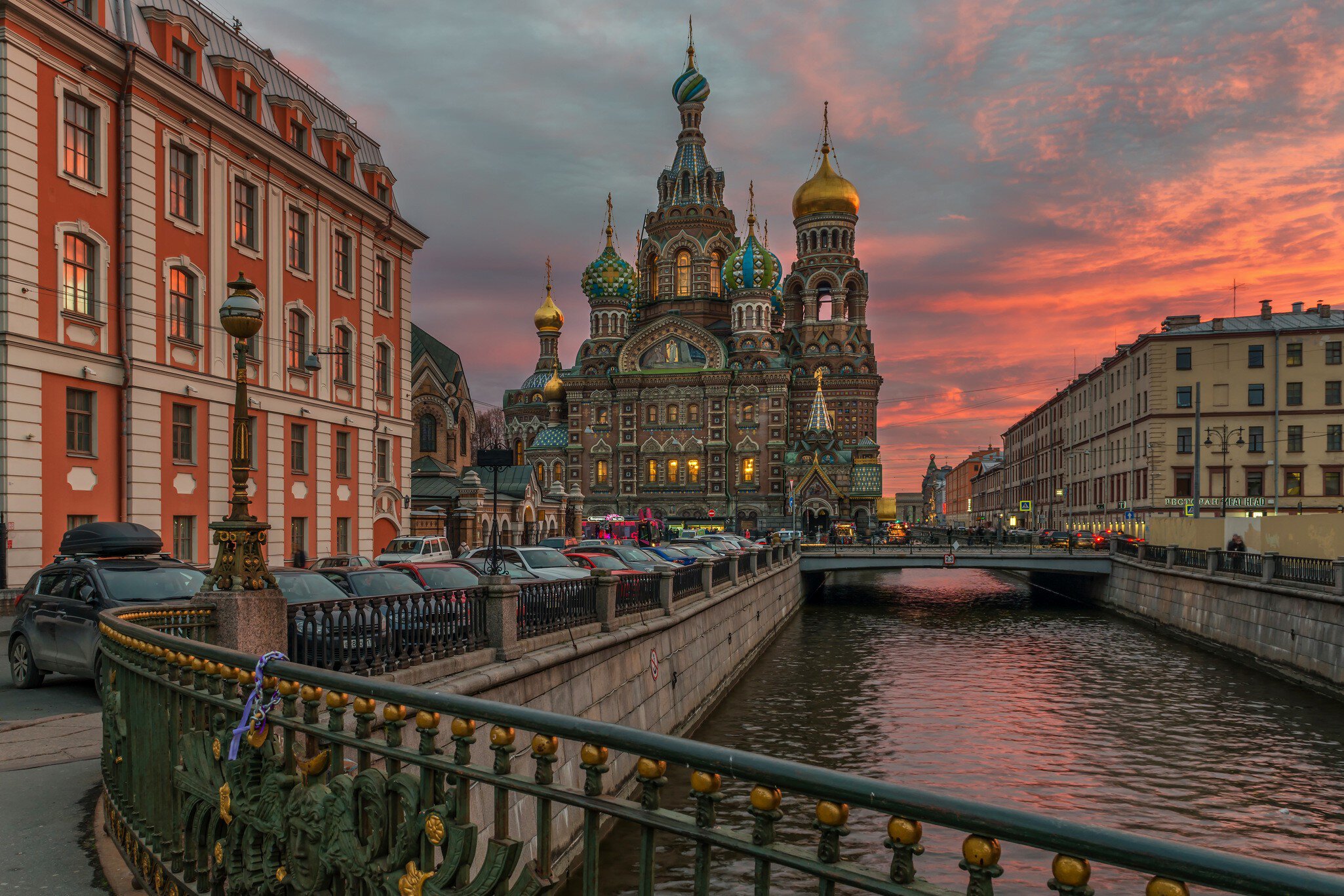
    This multidomed dazzler, partly modelled on St Basil's Cathedral in Moscow, was built between 1883 and 1907 in memory of reformist Tsar Alexander II. On this spot in 1881, a terrorist group known as the People's Will attempted to assassinate the tsar by blowing up his carriage, which did eventually result in his death. Officially called the Church of the Resurrection of Christ, it was intended as a private place of mourning for the life of the tsar.

    Read more about Church Of The Saviour On Spilled Blood

  27. City Sculpture Museum

    In the main lavra complex of the Alexander Nevsky Monastery, the first main building on the left is the 1717-22 baroque Annunciation Church (Blagoveshchenskaya Tserkov), now the City Sculpture Museum. Except for the cupola, this interior is hardly recognisable as a church, as only a few fragments of frescoes remain. The exhibition includes the downstairs crypt and some sculptures of headstones upstairs.

    Read more about City Sculpture Museum