go to content go to search box go to global site navigation

Vladivostok

Sights in Vladivostok

  1. A

    Vladivostok Fortress Museum

    Attention fort fans: Vladivostok teems with sprawling, rather unique subterranean forts (130 in all) built between the 1880s and early 20th century to ward off potential Japanese (or American) attacks. Neophytes are best sticking with the easily accessible Vladivostok Fortress Museum, overlooking Sportivnaya Harbour. This hilltop museum is built in a fort that operated from 1882 to 1923, and is now home to many cannons and a five-room indoor exhibit of models, photos and artefacts – all refreshingly subtitled in English. You can climb onto (and aim) anti-aircraft guns pointing towards Hokkaido. You reach the fort from ul Zapadnaya.

    reviewed

  2. Antique Automobile Museum

    If you’re a bit of a car (or Soviet) nerd, the newish Antique Automobile Museum – stranded under the smoke of a nearby factory in east Vladivostok – is an absolute classic. A room full of Sovietmobiles (motorcycles, too) from the 1930s to 1970s, includes a 1948 M&M-green GAZ-20 ‘Pobeda’ (Victory). If they start selling reproductions of the poster with an acrobat on a motorcycle holding a Stalin flag, send us one, please! Take bus 31 along ul Svetlanskaya and exit after it reaches ul Borisenko’s end.

    reviewed

  3. B

    Arsenev Regional Museum

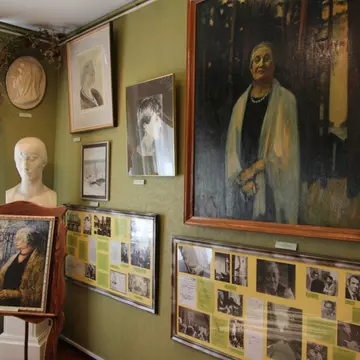
    Grey-haired ladies keep watch over every Russian museum in existence, but none do it more sweetly than at the interesting Arsenev Regional Museum, which dates from 1890. You’re likely to befriend at least a couple of ‘guards’ while walking through the three floors of exhibits recounting Vladivostok history. Exhibits are in Russian only, but it’s still enjoyable for non-Russian speakers. On the 1st floor note the stuffed tiger and bear interlocked as if dancing; the 2nd floor is filled with great 19th-century photos of Vlad’s early days, including a display of the Brynner family; also note the turn-of-the-last-century telephone booth and a collection of samovars anchored…

    reviewed

  4. C

    Primorsky Art Gallery

    Vladivostok’s bipolar art museum, the Primorsky Art Gallery, has a small collection at its original locale (ul Aleutskaya 12), but the main collection has moved indefinitely to two separate halls east of Park Provotsky (with separate admissions). The one to the west features 19th- and early 20th-century oil masters (including Feshin’s sassy Golden Hairs from 1914), packed onto limited wall space. The east gallery features changing exhibits of local painters (when we dropped by they featured fascinating graphic artwork from ’60s Soviet-ho! books).

    reviewed

  5. Fort No 7

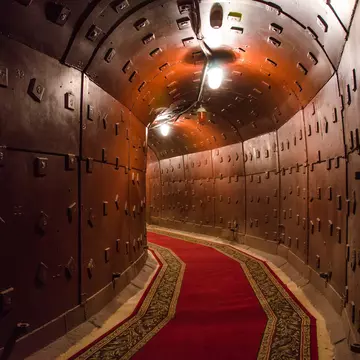
    Sixteen protective forts encircle Vladivostok. The best (but pricey) is the hill-top Fort No 7, 14km north of the centre. It has 1.5km of tunnels, pretty much untouched since the last 400 soldiers stationed here left. (The sole inhabitants now include two pet cats to keep rats out.) Views are good too. Visiting on your own is very difficult, as the fort doesn't keep regular hours and it's hard to find. Organise a trip through an agency instead.

    reviewed

  6. D

    S-56 Submarine

    Keeping with the aquatic theme, the S-56 submarine is worth a look. The first half is a ho-hum exhibit of badges and photos of men with badges (all in Russian). Keep going: towards the back you can climb through porthole doors to peek at various rooms, including a lounge of sorts and a bunk room with Christmas-coloured torpedos. Outside note the ‘14’, marking the WWII sub’s ‘kills’.

    reviewed

  7. E

    Museum of the Battle Fame

    At the Museum of the Battle Fame, in a fine old pillared building, a guy in a navy outfit will probably help you put shoe covers on for the carpeted floors of the three-floor exhibit. The museum is geared chiefly to border patrol history (despite its more marketable war-oriented name), with imaginative 'boat' and 'plane' doors to such-themed rooms. Up top you can spy on hipsters outside through high-definition binoculars.

    reviewed

  8. Yul Brynner’s House

    On ul Aleutskaya you’ll find Yul Brynner’s house where The King and I actor was born. Don’t tribute Yul by smoking: though the plaque on the four-storey house shows Yul with a cigarette, lung cancer took his life in 1985.

    reviewed

  9. Artetazh

    Artetazh is DVGTU’s humble modern art showcase (in the second aluminium-siding building). The permanent exhibits have a few intriguing piss-takes at the country’s red past, such as the 12 full commandments painted in Soviet style.

    reviewed

  10. F

    Monument to the Fighters for Soviet Power in the Far East

    Pl Bortsov Revolutsy has the impressive Monument to the Fighters for Soviet Power in the Far East as its centrepiece. The square, a focal point for performers and protesters of all kinds, hosts a market every Friday.

    reviewed

  11. Advertisement

  12. Vladivostok Train Station

    Vladivostok Train Station, originally built in 1912 and smartly renovated since, is an exotic architectural concoction with bold murals inside. Across the road stands an unusually animated, finger-pointing Lenin.

    reviewed

  13. No 15

    Ul Aleutskaya is lined with once-grand buildings. The house at No 15 (the yellow building next door to the offices of the Far Eastern Shipping Company) was the home of actor Yul Brynner.

    reviewed

  14. G

    Arka Art Gallery

    In the centre, drop by to see the free, changing exhibits at the Arka Art Gallery, located in an alley.

    reviewed

  15. H

    White House

    The monolithic slab at the western end of pl Bortsov Revolutsy is the White House, home to the regional administration.

    reviewed

  16. I

    Pushkinsky Theatre

    You'll find the base of the funicular beside the elegantly restored Pushkinsky Theatre.

    reviewed

  17. J

    Aquarium

    Just north of Sportivnaya Harbour is an aquarium.

    reviewed