Things to do in Romania
-
Alexandru Borza Botanic Gardens
West through the student ghetto campus housing, head past fast-food joints up Str Bogdan P Haşdeu to Str Pasteur to reach the fragrant 1930 Alexandru Borza Botanic Gardens, which covers 15 hectares, with shaded green lawns, a super Japanese garden and rose garden with some 600 different varieties, and an observation tower.
reviewed
-
Bistro de l'Arte
In the bottom of a cosy 15th-century building, the Bistro is the place for sit-back wine sessions, breakfasts with wi-fi for your laptop, or lively dinners with mingling Romanian couples (who sometimes come for plays). The menu drifts from French and includes daily fish dishes, big salads and pasta.
reviewed
-
A
Caru cu Bere
Bucharest's oldest beer hall plays home to serious Gothic style and an irresistible atmosphere, although it was closed for renovation when we visited. Check to see its new state - it's likely they'll bring back the Roma bands, but revive the sour service.
reviewed
-
B
Grand Plaza
Not far from the train station, this simple and busy Romanian restaurant passes on the gimmicks and focuses on tasty Romanian food, which the locals file in for.
reviewed
-
C
Black Church
Braşov's main landmark, just south of the Piaţa Sfatului (Council Square), is the Black Church, the largest Gothic church between Vienna and Istanbul and still used by German Lutherans today. Built between 1383 and 1480 (delayed by an Ottoman razing), its name comes from its appearance after a fire in 1689.
The original statues on the exterior of the apse are now inside (look back after you enter) and some 120 fabulous Turkish rugs hang from the balconies (gifts from merchants who returned from shopping sprees in the southern Ottoman lands). Worshippers drop coins through the wooden grates in the floor and hope for the best.
The church's 4000-pipe organ, built by Buchhol…
reviewed
-
Mount Tâmpa
Towering above town from the east is Mount Tâmpa, where Braşov's original defensive fortress was built. Vlad Ţepeş attacked it in 1458, finally dismantling it two years later and - out of habit - impaling some 40 merchants atop the peak. These days it's an easy, and irresistible, trip up. Many visitors go via the Tâmpa cable car offering stunning views from the top of Mt Tâmpa and a communist-era dining room. There's access to hiking trails up here.
Walk south to reach the 'Hollywood'-style Braşov sign, with a viewing platform. You can also hike to the top in an hour following zigzag trails from the cable-car station (red triangles) or from the northeastern edge of …
reviewed
-
D
Pharmaceutical Museum
Here's why we travel - for superb, fully rewarding, ever-surprising quirks like this, the small three-room Pharmaceutical Museum, housed in Cluj's first - and Romania's fourth - apothecary (1573), as a bronze-plate map painstakingly attests. Led by a hilarious pharmacist in a white lab coat, who points like a game-show model towards (seemingly ho-hum) glass cases of ground mummy dust, medieval alchemist symbols and painted 18th-century aphrodisiac bottles.
He speaks some English. If you utter a 'wow' you may get a deadpanned 'For you… interesting… for me… it is normal.'
reviewed
-
First Romanian School Museum
Beside St Nicholas' Cathedral is the two-room 1495 First Romanian School Museum, which packs a staggering far-reaching selection of old books and pieces, including the first Russian Bible (1581), King Ferdinand's coronation flag from 1922 (found in 2006), and 15th-century schoolbooks that warned 'he who will steal this book will be CURSED…his blood shall melt on his body…his left eye shall dry out!' Resist the temptation then. No English; guides are available.
reviewed
-
Bucegi
The easiest way up into the Bucegi from Sinaia is up two cable-car rides, one from the centre to the Cota 1400 station, then another up to Cota 2000 station. In the centre, the 30-person cable-car station leaves half-hourly with two station points marked by elevation. Lines are more likely in winter than summer. Buses just below the station also go up to Cota 1400 when full; there are also taxis.
reviewed
-
E
Roata
Housed in a back-alley building, with tasty traditional Romanian dishes served in clay plates, this joint is best for sitting on the small terrace and vying for space amidst potted plants and moss-covered stones. Traditional music puts a little bounce into the air. People know it's good, and it's almost always busy.
reviewed
Advertisement
-
Str Storii
Between Piaţa Sfatului and the Mt Tâmpa cable car is Str Storii, which is 1.32m by 83m - one of Europe's narrowest 'streets'. The cobbled pedestrian-only alley has been scrubbed up, with nice views of the 'Braşov' sign on the mountain, and connects Str Porta Schei and Str Cerbului.
reviewed
-
F
Trattoria Il Calcio
Run by 'Romania's George Best' (football legend Gino Lorgucescu), this pasta/pizza place looks Tuscan, if not for the framed Futbol journals from the 1960s on the walls. The food's great, with hearty meals and good salads. It gets busy at lunch.
reviewed
-
G
Quinta Café
High ceilings, cushy sofas, antique furniture and wood panelling give this lounge bar a familiar feel; in fact, this is a restored grand house. The weekday subdued music and lighting gives way to pounding bass and darkness on weekends.
reviewed
-
H
Crama Sibiul Vechi
This popular, evocative brick-cellar spot off the main crawl reels in locals for its tasty Transylvanian armoury of mutton, sausages and beef and fish. There's live music most nights.
reviewed
-
I
Don Taco
Romania's only 'Mexican' restaurant (um, half the menu sticks with Romanian fare) does an inventive but pretty good take on burritos, enchiladas and carnitas (stewed pork).
reviewed
-
J
Ethnographic Museum
An Ethnographic Museum was under renovation at last pass, but its collection of folk costumes and decorations should be reopened before your visit. There's a small shop here too.
reviewed
-
K
Fire Club
This is a big red-brick room with student groups crouched on stools around small tables, bottles of Tuborg in hand. Rock and punk shows are staged in the basement.
reviewed
-
L
Grand Cafe Galleron
A block east of Piaţa Revoluţiei, this stylish cafe has indoor nooks and outdoor seats for ice-cream, sandwiches, drinks and all-day breakfast.
reviewed
-
M
Speed/Alcatraz
Busy fast-food option with good seating options, including an outdoor deck and an enigmatic Alcatraz basement with seating in Al Capone-style cages.
reviewed
-
N
Club A
Run by students, this club is a classic and beloved by all who go there. Indie pop/rock tunes play until very late Friday and Saturday nights.
reviewed
Advertisement
-
O
Twice
DJs and amateur stripping are part of the hip-to-hip youth dancing to two beats in two rooms. Prepare to sweat.
reviewed
-
Peleş Castle
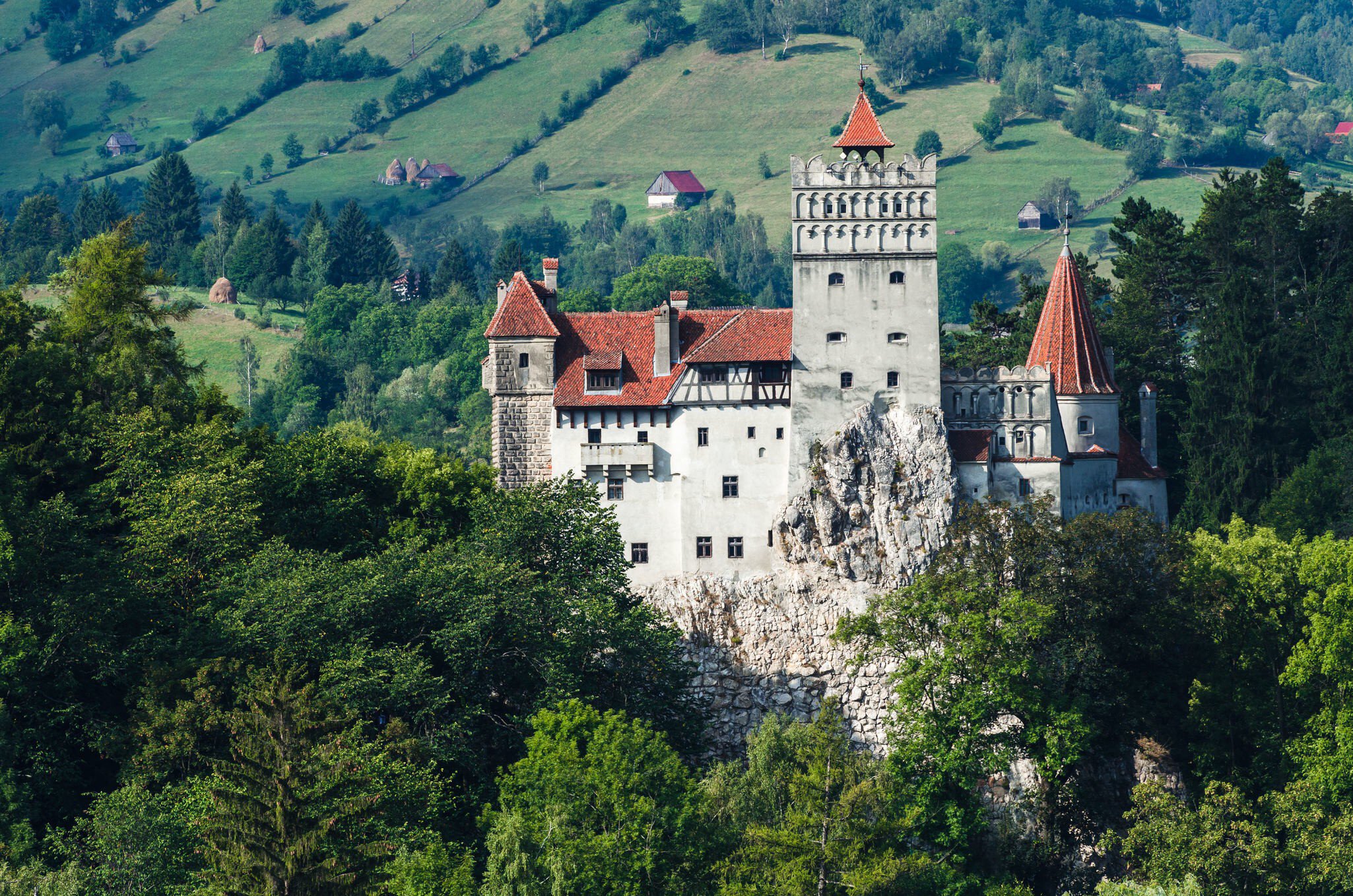
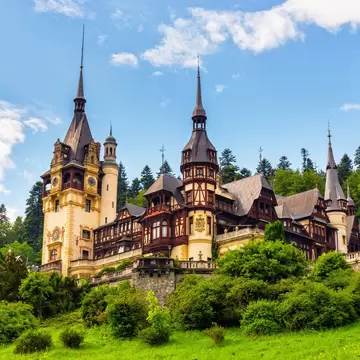
Full of pomp and brimming with confidence of a new Romanian monarchy, the magnificent century-old Peleş Castle, a 20-minute walk up from the centre, is really a palace. Fairy-tale turrets rise above acres of green meadows and grand reception halls fashioned in Moorish, Florentine and French styles, with heavy wood-carved ceilings and gilded pieces overwhelm our wee mortal minds. Even if you're bent on chasing 'Dracula', it's hard not to get a thrill visiting this castle.
The first European castle to have central heating, electricity and vacuuming(!), Peleş was intended to be the summer residence of Romania's longest-serving monarch, King Carol I (the hand-to-hip statue o…
reviewed
-
P
National Art Museum
Housed in the Royal Palace, the massive, three-part National Art Museum - all signed in English - could take, along with Piaţa Revoluţii and lunch, the bulk of a day. Start at the north door with the Gallery of Romanian Art, a three-floor survey of Romania's art from several hundred icons and jaw-dropping carved wood altars saved from communist-destroyed churches - all laid out on funky purple and crimson walls.
The country's oil masters - from the impasto stokes of Gheorghe Petrascu to Nicolae Grigorescu's arrestingly frank portraits of Roma and peasant folk - are on the top floor. Walking through the chronological collection, note the phase out/in of 'Eastern' Turk-s…
reviewed
-
Q
Palace of Parliament
Facing B-dul Unirii is the impossible-to-miss Palace of Parliament, the world's second-largest building (after the US Pentagon) and Ceauşescu's most infamous creation. Built in 1984 (and still 10% unfinished), the building's 12 storeys and 3100 rooms covers 330,000 sq metres - an estimated around €3.3 billion project.
Rushed, but interesting, 45 minutes tours go every half-hour or so and lead into a handful of marble rooms - still hired out for conferences - finishing at the balcony Nicolae didn't live long enough to speak from. The whopping €9.60 photography or video fee is widely ignored. Facing from B-dul Unirii, the entrance is around to the right (a 12-minute walk…
reviewed
-
R
Ghencea Civil Cemetery
About 3km west of the Palace of Parliament, Ghencea Civil Cemetery has two infamous inhabitants: Nicolae Ceauşescu and his wife Elena (dubbed the 'Romanian Eva Perón'). The pair were secretly buried here - and notably not at Belu Cemetery, the city's most reputable resting place - on 30 December 1989, in hastily prepared graves. Both lie before the small chapel that faces the entry.
Nicolae lies in row I-35, to the left of the path. No stone tomb adorns his earth grave, dug into a pathway, but two crosses mark his grave. One is a stone cross with a red star, the other is a black steel cross which is inscribed with his name, date of birth and death (26 January 1918-24 De…
reviewed